 English
 中文简体
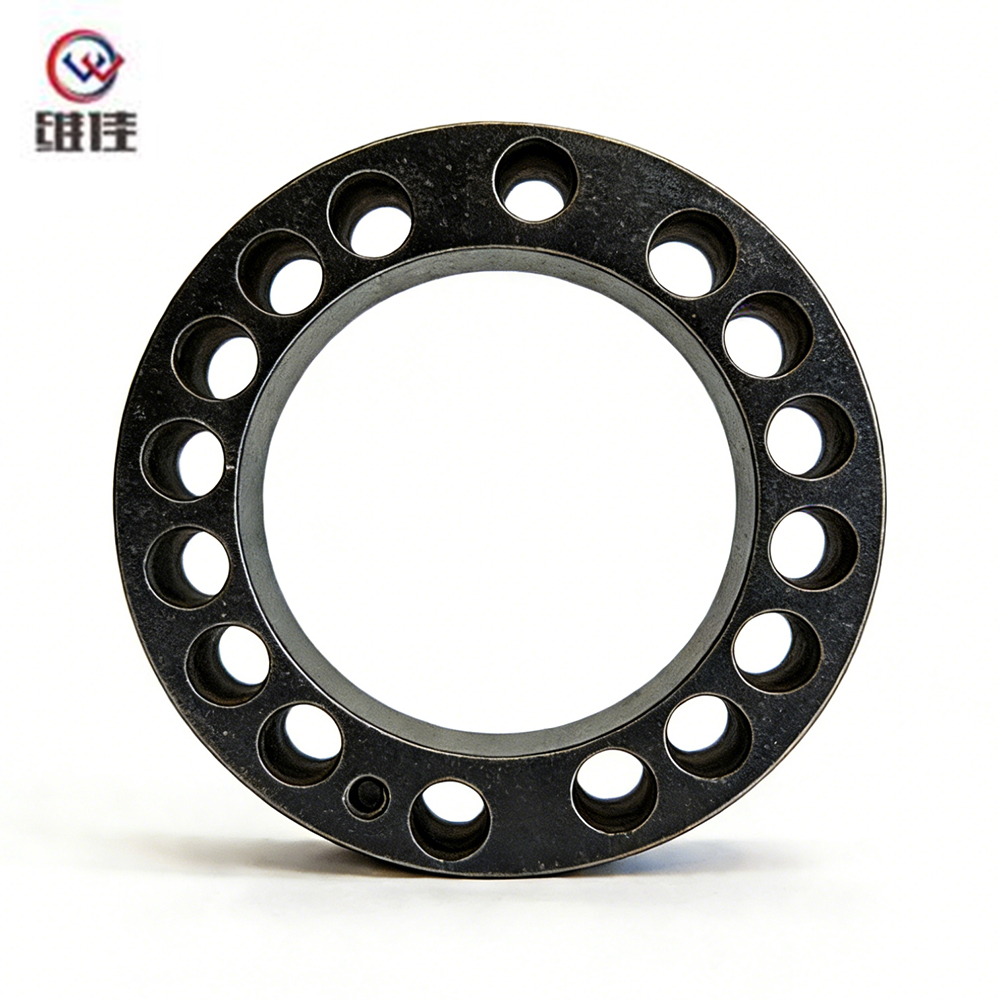
Premium Material: Our flange bushing is crafted from Sint B50 oil-impregnated bronze, featuring an 18% oil content. The high-quality tin bronze material ensures exceptional hardness, wear resistance, ...
See DetailsE-mail us: [email protected]
Tel: +86-15239857375


 Home / News / Industry News / Bronze vs. Iron-Based Oil-Impregnated Bushings: How to Choose for Your Application
Bronze vs. Iron-Based Oil-Impregnated Bushings: How to Choose for Your Application
 2026.11.03
 Industry News
Content
- 1 Why the Base Metal Matters in an Oil-Impregnated Bushing
- 2 Bronze-Based Oil-Impregnated Bushings: When Smooth Wins
- 3 Iron-Based Oil-Impregnated Bushings: When Strength Wins
- 4 Bronze vs. Iron: A Side-by-Side Comparison
- 5 Matching Material to Your Application Conditions
- 6 A Selection Checklist Before You Cut a Purchase Order
- 7 From Material Choice to Shipped Parts
Reach into a bin of oil-impregnated bushings and the parts can look nearly identical: the same porous surface, the same dull metallic tone, the same promise of lifetime lubrication. Yet the base metal inside decides how that bushing behaves after thousands of hours in service. We have sintered both bronze and iron-based bushings for well over two decades, and the failure pattern we see most often is not a manufacturing defect at all. It is the right bushing made from the wrong base material.
This guide compares bronze and iron-based oil-impregnated bushings across load capacity, speed limits, corrosion behavior, noise, shaft compatibility, and cost, so you can choose from your application data instead of from habit.
Why the Base Metal Matters in an Oil-Impregnated Bushing
Both families are produced the same way. Fine metal powder is compacted in a die, sintered in a controlled-atmosphere furnace, and then vacuum-impregnated with lubricating oil. Sintering leaves a network of interconnected pores that typically holds 15 to 25 percent oil by volume, and capillary action keeps feeding that oil to the running surface as the shaft turns.
The process route is shared, but the metal skeleton is not. A bronze skeleton, usually a tin bronze such as CuSn90/10, is softer, more conformable, and a better conductor of heat. An iron-based skeleton, often alloyed with copper, carbon, or graphite, is harder and stronger but behaves very differently against a steel shaft. Those differences, not the oil, determine where each material belongs.
Bronze-Based Oil-Impregnated Bushings: When Smooth Wins
Bronze is the traditional choice for self-lubricating bearings, and for good reason. Its lower hardness lets the bushing conform to small amounts of shaft misalignment, edge loading, and housing imperfection instead of transferring that stress into the mating surface. Running noise and vibration are usually lower than with iron, and the material is naturally non-magnetic, which matters in assemblies mounted close to sensors or magnetic fields.
Typical advantages include:
- High conformability and embeddability, so abrasive particles sink into the bearing instead of scoring the shaft
- Quiet, smooth running at moderate to high surface speeds
- Good corrosion resistance, particularly in tin-rich bronze grades
- Better heat dissipation, which helps in continuous-duty motors
- Non-magnetic behavior and good machinability for secondary operations
Bronze bushings are the natural fit for fractional-horsepower motors, fans, pumps, office equipment, small appliances, and precision instruments. Their limits appear when static loads climb or when the duty cycle is dominated by slow, heavy rotation, because the softer matrix can deform under sustained pressure.
If you would like a broader primer before narrowing down grades and tolerances, our article on oil-impregnated bushing materials and specification selection walks through the fundamentals.
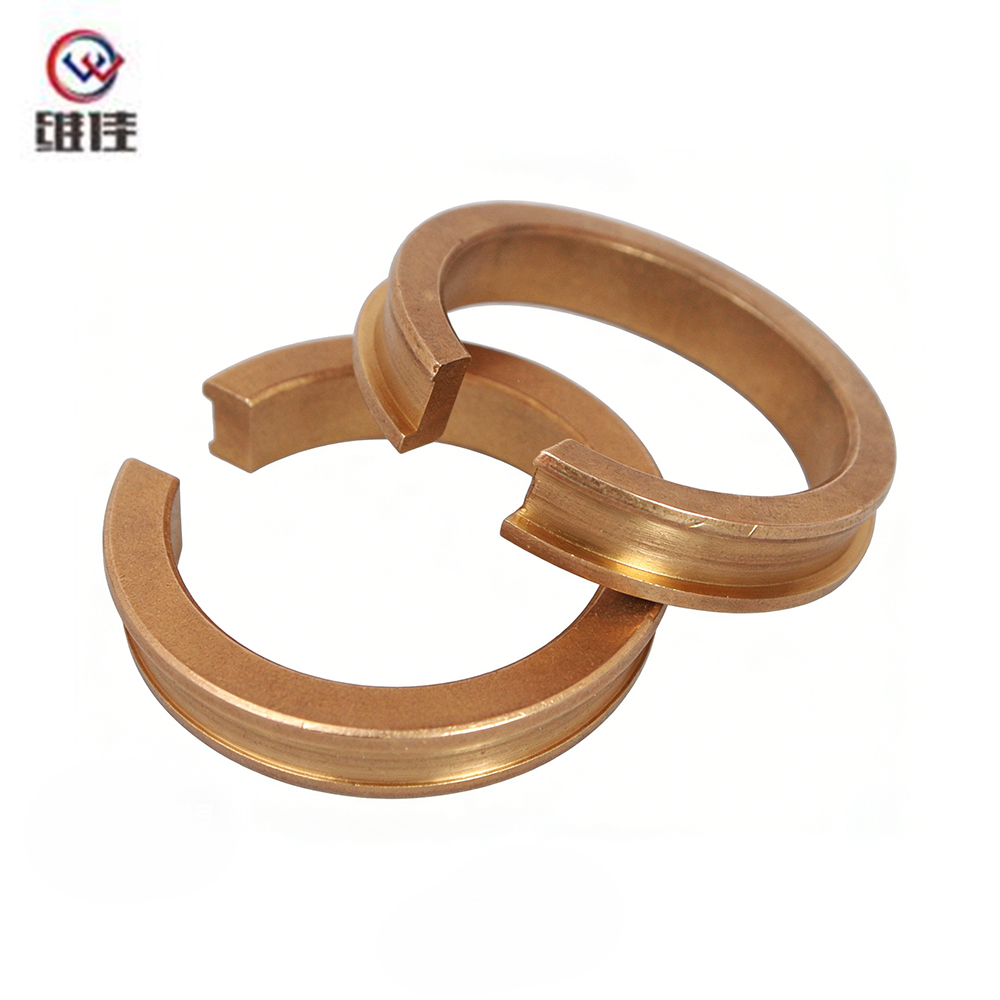 SAE841 Tin Bronze Bushing Open-Type ComponentThis product is an open-type structural component made of SAE841 Tin Bronze powder metallurgy material, professionally designed for vegetable greenhouse top applicatio...View Product →
Iron-Based Oil-Impregnated Bushings: When Strength Wins
Iron-based bushings trade conformability for load capacity. The iron skeleton, usually strengthened with copper and carbon, resists compressive loads that would deform a bronze bushing, and it retains that strength better as operating temperature rises. Raw material cost is lower and far less exposed to copper and tin price swings, which is why iron-based bearings dominate high-volume, cost-sensitive programs.
Typical advantages include:
- Higher compressive strength for heavy static and shock loads
- Lower and more stable material cost at high volumes
- Good retention of strength and hardness at elevated temperatures
- Excellent wear resistance against hardened steel shafts in slow-speed duty
The trade-offs deserve equal attention. Iron rusts, so an iron-based bushing depends on a continuous oil film or a well-protected, coated shaft. Iron is also more abrasive on its mating surface; a shaft that survives thousands of hours against bronze may wear noticeably against iron unless hardness and surface finish are specified correctly. Finally, iron-based material is magnetic, which can disturb position sensors or magnetic encoders.
Think of iron as the choice for automotive motors, gearbox and actuator support points, power tools, and industrial machinery where loads are high, speeds are moderate, and unit cost matters.
 Powder Metallurgy Part High Precision PM Component (A3678)Product Description: High-precision powder metallurgy part (S14*7*10) made of iron material from Jiande Wefine, customized PM components with strict tolerance control.View Product →
Bronze vs. Iron: A Side-by-Side Comparison
The table below summarizes how the two families typically compare. The values are general guidance for sintered, oil-impregnated grades; exact figures depend on density, alloy composition, and porosity.
| Property | Bronze-Based | Iron-Based |
|---|---|---|
| Compressive strength | Moderate | High |
| Maximum surface speed | High | Moderate |
| Conformability and embeddability | Excellent | Limited |
| Corrosion resistance | Good | Poor without oil film or coating |
| Noise and vibration | Low | Higher |
| Magnetic response | Non-magnetic | Magnetic |
| Shaft requirement | Standard finish and hardness | Hardened, finely finished shaft |
| Raw material cost | Higher, price-volatile | Lower, more stable |
| Typical duty | High speed, light to medium load | Low speed, heavy load |
Matching Material to Your Application Conditions
High Load, Low Speed
Specify iron-based material. The higher compressive strength resists deformation, and slow rotation is gentle on the oil film, so rust risk stays manageable. This is the classic profile of an actuator, a latch mechanism, or a lift-truck linkage.
High Speed, Light to Moderate Load
Bronze usually wins. Lower friction, better heat removal, and quieter running matter more than raw strength once surface speed rises. Cooling fans, small pumps, and household appliances fall into this group.
Moisture, Chemicals, or Frequent Wash-Down
Neither standard iron nor plain bronze enjoys standing water. Iron corrodes quickly; bronze is better but still not immune. In these cases we often move up to a sintered stainless steel self-lubricating bushing, which keeps the porous oil reservoirs while adding genuine corrosion resistance for food processing equipment, chemical dosing pumps, and outdoor machinery.
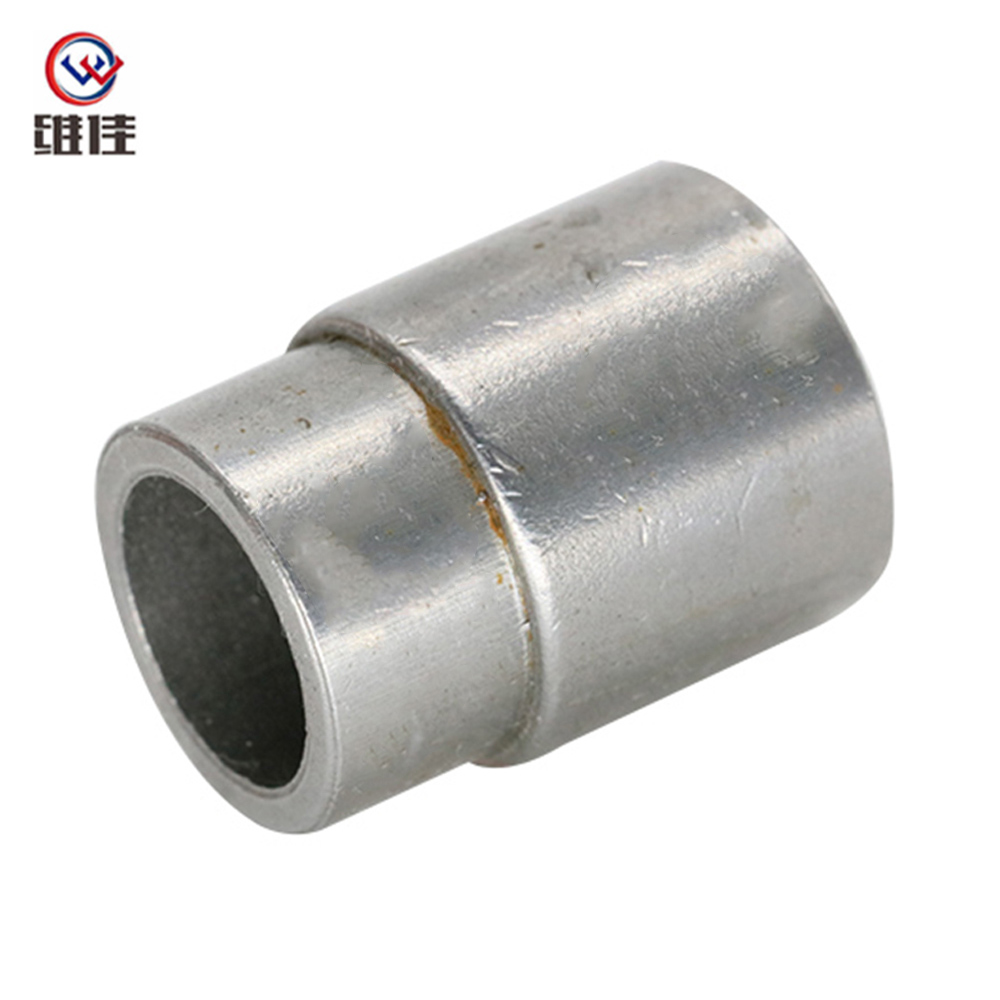 Sintered Stainless Steel Self-lubricating BushingsOur Sintered Stainless Steel Self-Lubricating Bearings are crafted from premium stainless steel materials, designed for long-term use in harsh environments. These bear...View Product →
Cost and Annual Volume
At low volume, bronze's easier machining and gentler shaft requirements often make it cheaper overall. At high volume, iron-based material cost and strength usually prevail, provided the shaft is hardened and the environment stays dry.
A Selection Checklist Before You Cut a Purchase Order
- Define the load, both static and dynamic, using peak values rather than averages.
- Confirm surface speed and check the pressure-velocity limit for the intended material.
- Check the operating temperature range, since the upper limit drives oil selection and running clearance.
- Assess the environment for moisture, dust, chemicals, and wash-down cycles.
- Review the shaft: material, hardness, surface finish, and tolerance stack-up.
- Check magnetic sensitivity if the assembly includes sensors nearby.
- Verify the press fit, housing material, and oil retention through assembly and storage.
- Validate the choice with a prototype or pilot run before committing to tooling.
From Material Choice to Shipped Parts
Once the material family is settled, the remaining work is dimensional and process control: density and porosity targets, oil type and fill rate, bore tolerance, and running clearance. This is where an experienced powder metallurgy partner earns its keep.
Welfine has produced sintered bushings and structural parts since 2001 from a 13,039 square meter facility with more than 150 employees. Our production runs under ISO 9001:2015 and IATF 16949:2016 management systems, and we build bronze, iron-based, iron-copper, and stainless steel oil-impregnated bushings to customer drawings or samples through OEM and ODM programs. If you would like a material recommendation based on your real load, speed, and environment data, send us your drawing or a worn sample and our engineers will respond with a proposal.
Bronze and iron-based oil-impregnated bushings are less competitors than two answers to different questions. Bronze asks for smooth, quiet, corrosion-tolerant running; iron asks for strength and cost efficiency under heavy load in a dry environment. Match the material to the duty, verify it with a prototype, and the bushing will quietly outlast the machine around it.
Related products
-
-
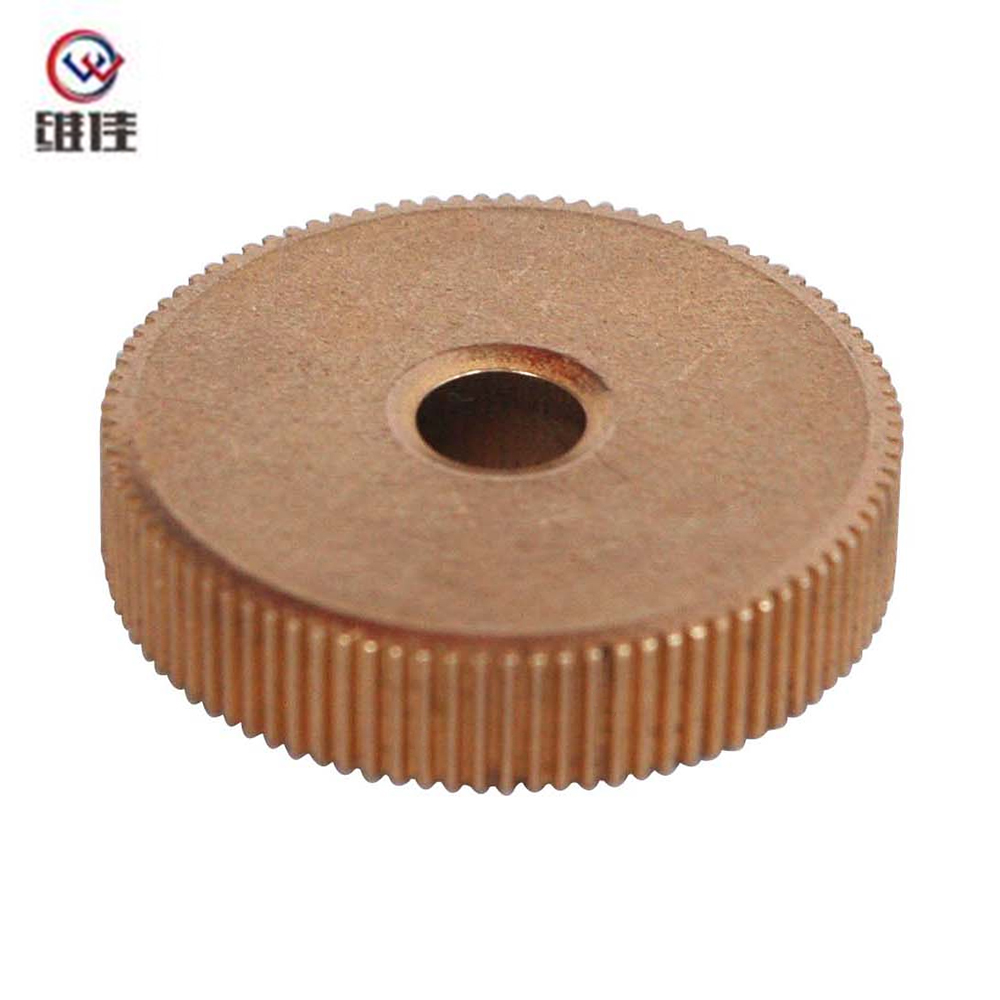
This 4×11.5×5.2mm powder metallurgy gear is manufactured through a precise press-sinter-through hole-oil impregnation process, with strict control of press density (6.7–6.8g/cm³) and sintering tempera...
See Details -
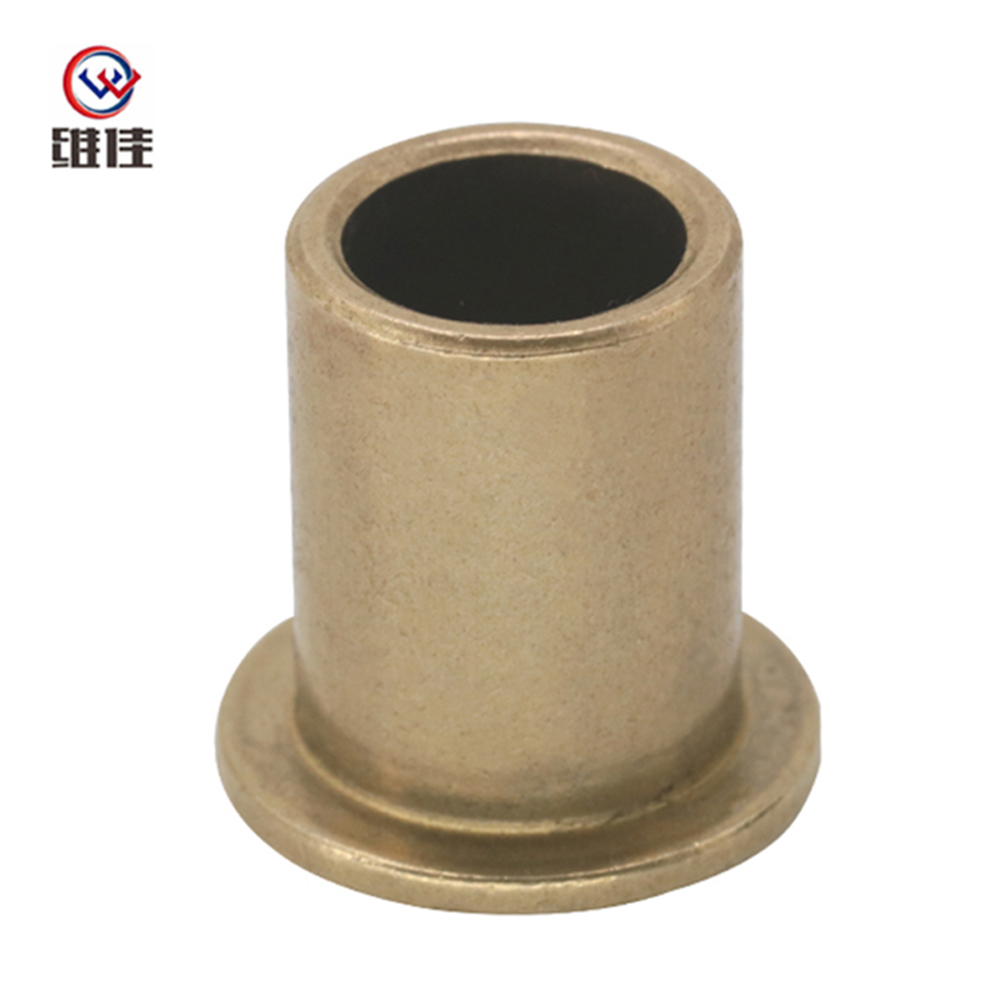
Our sintered bronze self-lubricating bearings are engineered for demanding industrial applications where traditional lubrication is impractical. Designed with advanced powder metallurgy technology, th...
See Details -
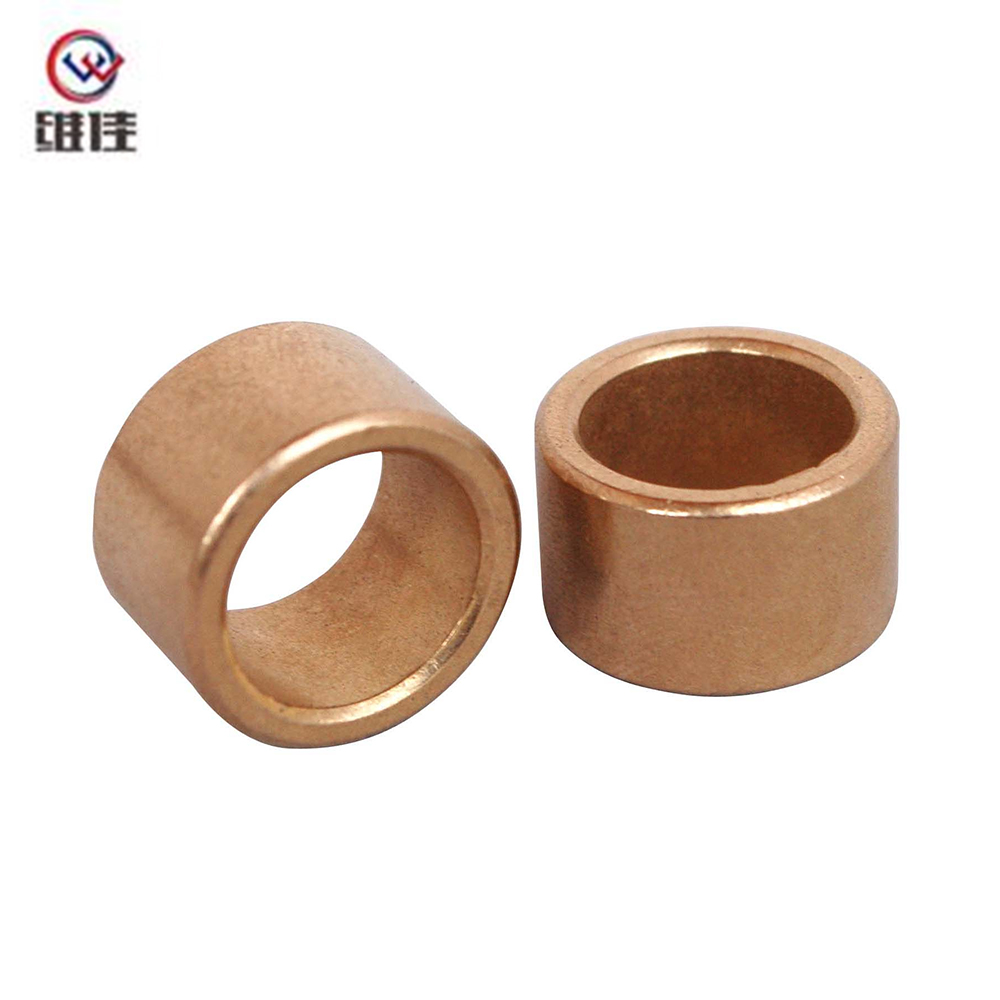
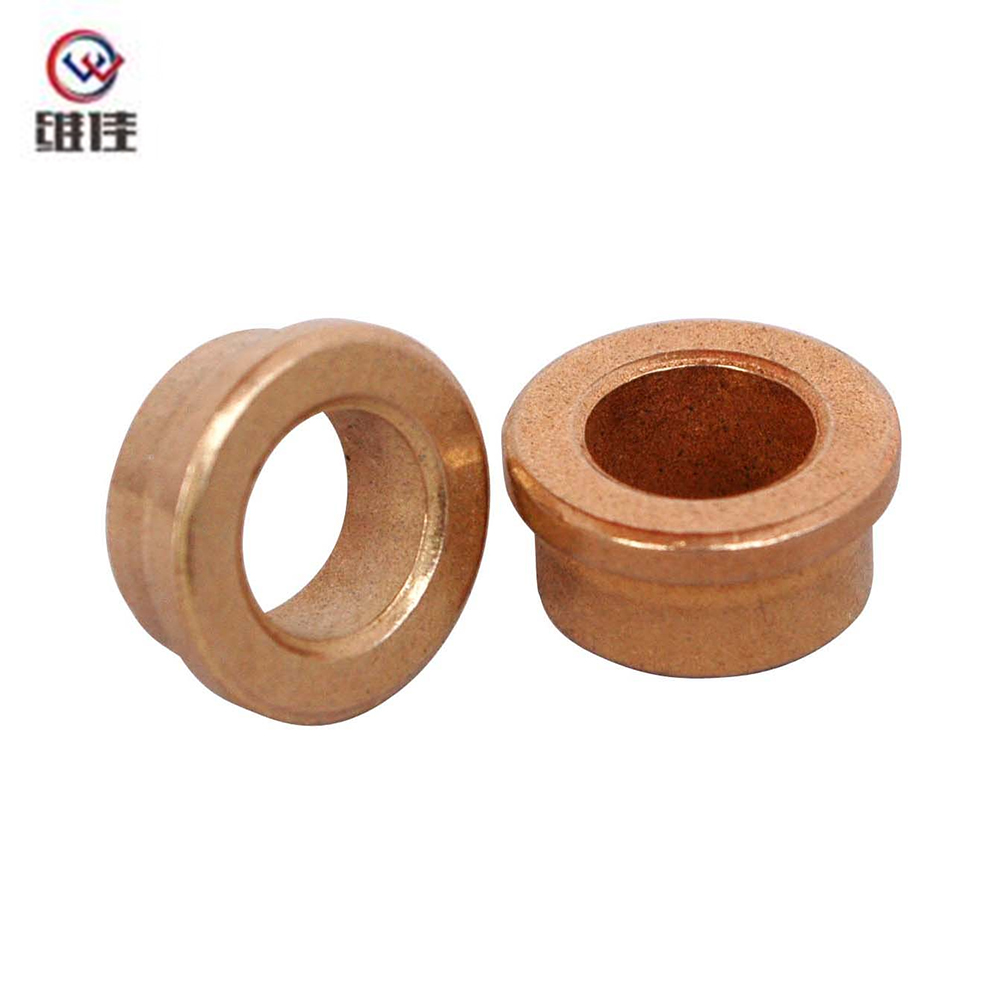
This copper-based powder metallurgy bushing is manufactured through an integrated process of compaction, sintering, sizing, and oil impregnation. It features excellent wear resistance and self-lubrica...
See Details
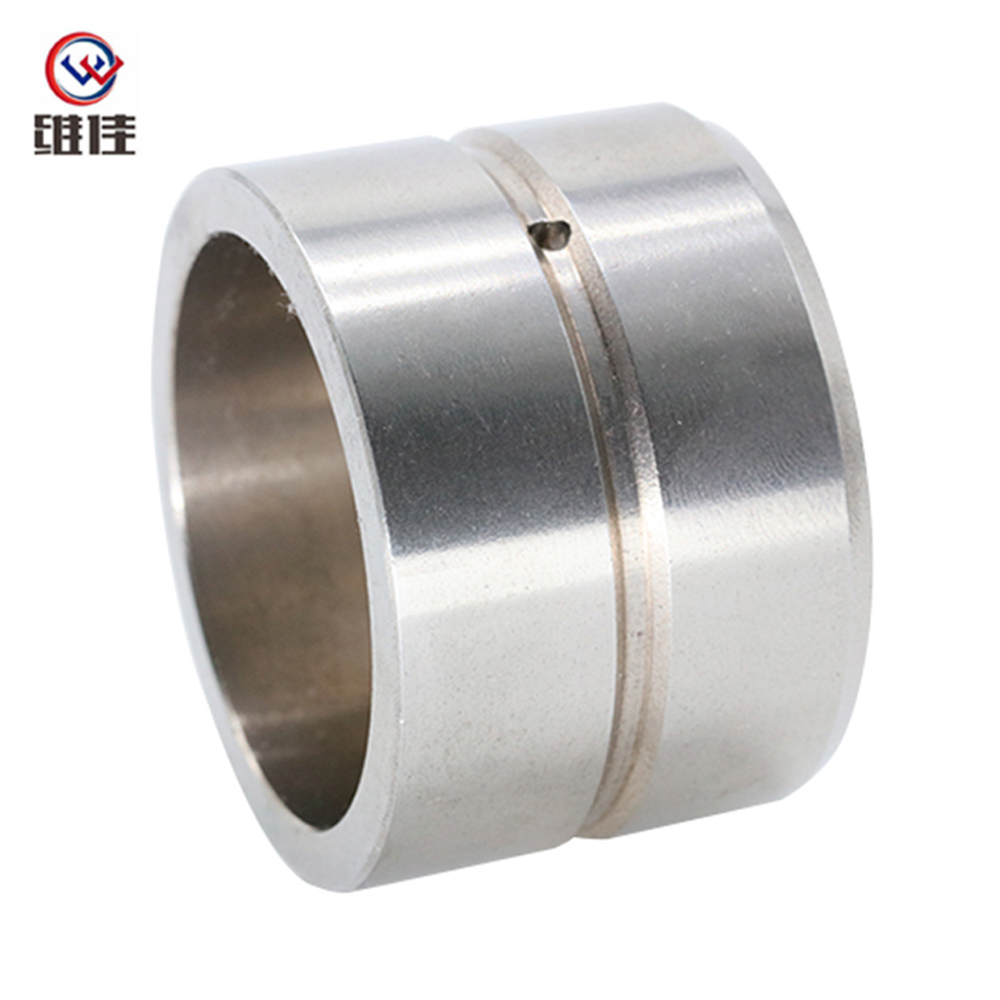
Copyright © Jiande Welfine Technology Co., Ltd. All Rights Reserved. Privacy Custom Self-lubricating Sintered Bushing Manufacturers
