 English
 中文简体
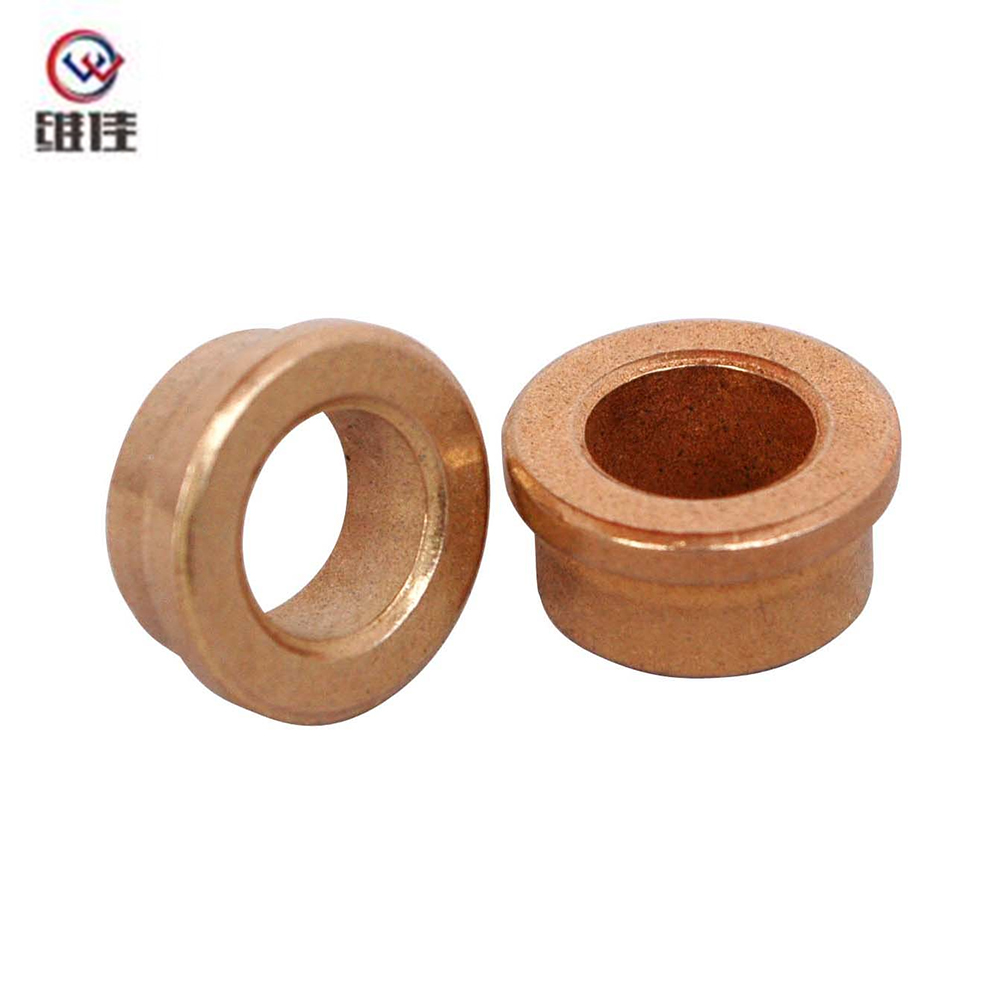
中文简体Premium Material: Our flange bushing is crafted from Sint B50 oil-impregnated bronze, featuring an 18% oil content. The high-quality tin bronze material ensures exceptional hardness, wear resistance, ...
See DetailsE-mail us: [email protected]
Tel: +86-15239857375


 Home / News / Industry News / Oil Impregnated Bronze Bushings: Performance, Selection, and Sourcing Guide
 Oil Impregnated Bronze Bushings: Performance, Selection, and Sourcing Guide
 2026.08.14
 Industry News
When a gearbox, pump, or electric motor needs a bearing that can run for years without routine relubrication, oil impregnated bronze bushings are often the most practical answer. They are self-lubricating, quiet, and significantly cheaper than rolling-element bearings in moderate-duty applications. The trade-off is that they are not designed for heavy shock loads, so the final choice comes down to load, speed, and the PV value.
What Are Oil Impregnated Bronze Bushings?
Oil impregnated bronze bushings, also called sintered bronze bushings or powder metal bronze bushings, are manufactured by the powder metallurgy process. Bronze powder, typically a blend of 90 percent copper and 10 percent tin, is compacted in a die and then sintered below the melting point of the alloy. The result is a strong component with a controlled network of pores.
These pores, normally 15 to 25 percent by volume, are interconnected and filled with lubricating oil under vacuum so that the oil reaches every void. During operation, heat and capillary action push oil to the running surface, forming a thin film between the bushing and the shaft. When the shaft stops, the film is pulled back into the pores. This closed cycle is why an oil impregnated bronze bushing needs no oil lines, grease fittings, or periodic relubrication for most of its service life.Housing
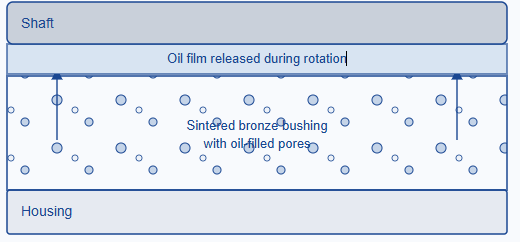
The most common material specification is SAE 841, a sintered 90/10 bronze with an oil content of roughly 19 percent by volume. Most catalog bushings are made to this grade, and the same standard can be reproduced in custom geometries without difficulty.
Key Properties and Design Limits
Design engineers usually start with the PV limit, the product of bearing pressure and surface velocity, because it defines the safe operating envelope of an oil impregnated bronze bushing. The table below summarizes typical SAE 841 values.
| Property | Typical value | Why it matters |
| Oil content | 19% by volume | Determines how long the bushing runs without external oil |
| Porosity | 19% by volume | Creates the reservoir that makes self-lubrication possible |
| Density | 6.4-6.8 g/cm3 | Balances mechanical strength against oil retention |
| Max continuous PV | 50,000 psi-fpm (about 1.75 MPa-m/s) | Above this limit the oil film breaks down and wear accelerates |
| Operating temperature | -10 C to +120 C (standard oil) | Higher temperatures degrade the oil and shorten bearing life |
| Friction coefficient | 0.04-0.08 | Keeps running temperature and power loss in check |
In practice, the PV limit means an oil impregnated bronze bushing can handle high speed when the load is light, or higher loads when the speed is low, but not both at the same time. Oscillating and start-stop motions are handled well because the oil film forms quickly. For a detailed look at how this behavior extends service life, read how oil-impregnated bronze bushings improve equipment reliability.
SAE 841 and equivalent standards
SAE 841 is the most widely recognized grade, but equivalent materials also exist under ISO 5755 and national sintered metal standards. The important point is not the grade name but the measured oil content and porosity; a bushing with low oil content will wear faster even if its dimensions are correct.
Oil-Impregnated vs. Cast Bronze Bushings
Oil impregnated bronze bushings are often confused with machined cast bronze bushings, but the two behave very differently. Cast bronze is solid, stronger, and can be machined to a precise bore, yet it has no built-in lubrication and normally runs with grease or an external oil supply. Sintered oil-impregnated bronze carries its own oil and is maintenance-free, but the porous structure gives it less strength under impact or edge loading.
| Comparison | Oil-impregnated sintered bronze | Cast bronze |
| Manufacturing | Powder compacted and sintered to net shape | Cast, then machined to size |
| Lubrication | Self-lubricating from internal oil-filled pores | External oil or grease required |
| Load capacity | Low to moderate, limited by PV value | Higher, better for shock loads |
| Speed tolerance | Good at low load with high speed | Moderate, depends on lubrication method |
| Maintenance | Minimal | Regular relubrication |
| Part cost at volume | Low, little machining | Higher when machining is extensive |
The choice is therefore not about which material is better in general, but which fits the duty cycle. If the bearing sits inside a sealed appliance that will never be lubricated again, sintered bronze wins. If the part carries a heavy, shock-like load in a hydraulic linkage, a machined cast bronze bushing with grease supply is the safer route.
Most standard oil-impregnated bronze bushings, such as an SAE 841 tin bronze open-type bushing, are produced directly from the sintering process, with the bore tolerance held by a final sizing operation.
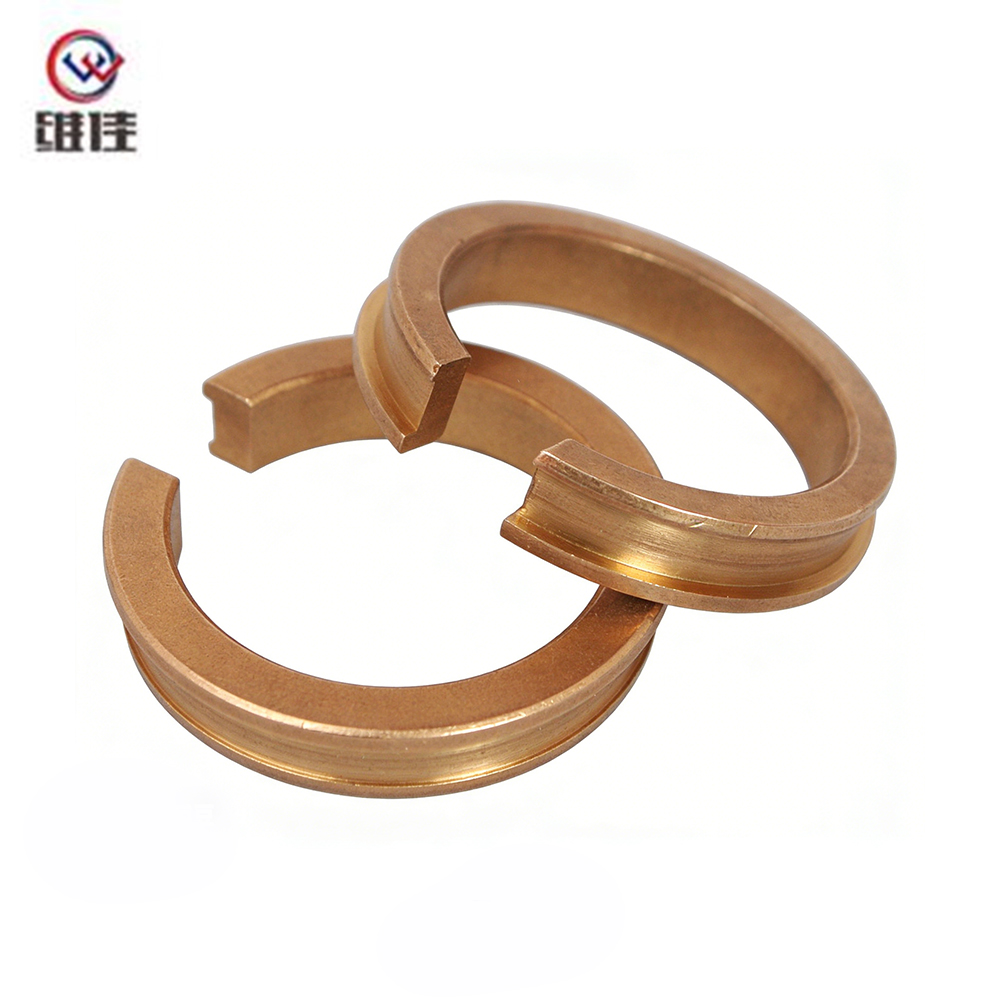 Wholesale SAE841 Tin Bronze Open Type Bushing ManufacturersJiande Welfine Technology Co., Ltd. is China SAE841 tin bronze open type bushing manufacturers and factory, supplying wholesale sintered bronze bushings with sized bore tolerances.View Product
Selecting the Right Oil Impregnated Bronze Bushing
A quick way to narrow the selection is to match the application scenario to the material family.
Light load, high speed Choose a standard SAE 841 bronze bushing and verify that the PV value stays below 50,000 psi-fpm.
Moderate load, oscillating motion Bronze oil-impregnated bushings excel at slow oscillation; add a flange if axial location is required.
Heavy load, low speed Move to iron-based or iron-copper sintered materials, which tolerate higher pressure at lower velocity.
Humid or corrosive environment Bronze resists corrosion better than iron-based grades; use sintered stainless steel in severe cases.
Five parameters to check
Beyond the application scenario, every design should confirm these five parameters:
- Load: pressure on the projected area, in psi or MPa.
- Speed: surface velocity of the shaft, in fpm or m/s.
- PV value: the product of the two, compared with the material limit.
- Shaft condition: hardness of 45 HRC or higher and a finish of 8 to 16 microinches Ra are recommended.
- Running clearance: typically 0.0005 to 0.0015 inch per inch of shaft diameter, depending on tolerance class.
A common rule is to choose the material by load, but to confirm it by PV. A bushing that passes on pressure alone can still fail early if the velocity is high, because the oil film is sheared away faster than the pore network can replenish it.
Typical Applications
The combination of compact size, low cost, and no maintenance makes oil impregnated bronze bushings a standard solution in products that are assembled once and never serviced again.
- Electric motors and small gearboxes: sleeve bearings on rotor and output shafts.
- Home appliances: washing machines, fans, and power tools.
- Automotive components: wiper motors, seat adjusters, and throttle assemblies.
- Industrial equipment: pumps, compressors, conveyors, and textile machines.
- Office and medical equipment, where quiet running matters.
For applications that require axial location, a self-lubricating tin bronze flanged bushing combines the bearing surface with a thrust face, eliminating the need for a separate washer. Our range of oil-impregnated bearings and bushings covers most of these application profiles in standard and custom forms.
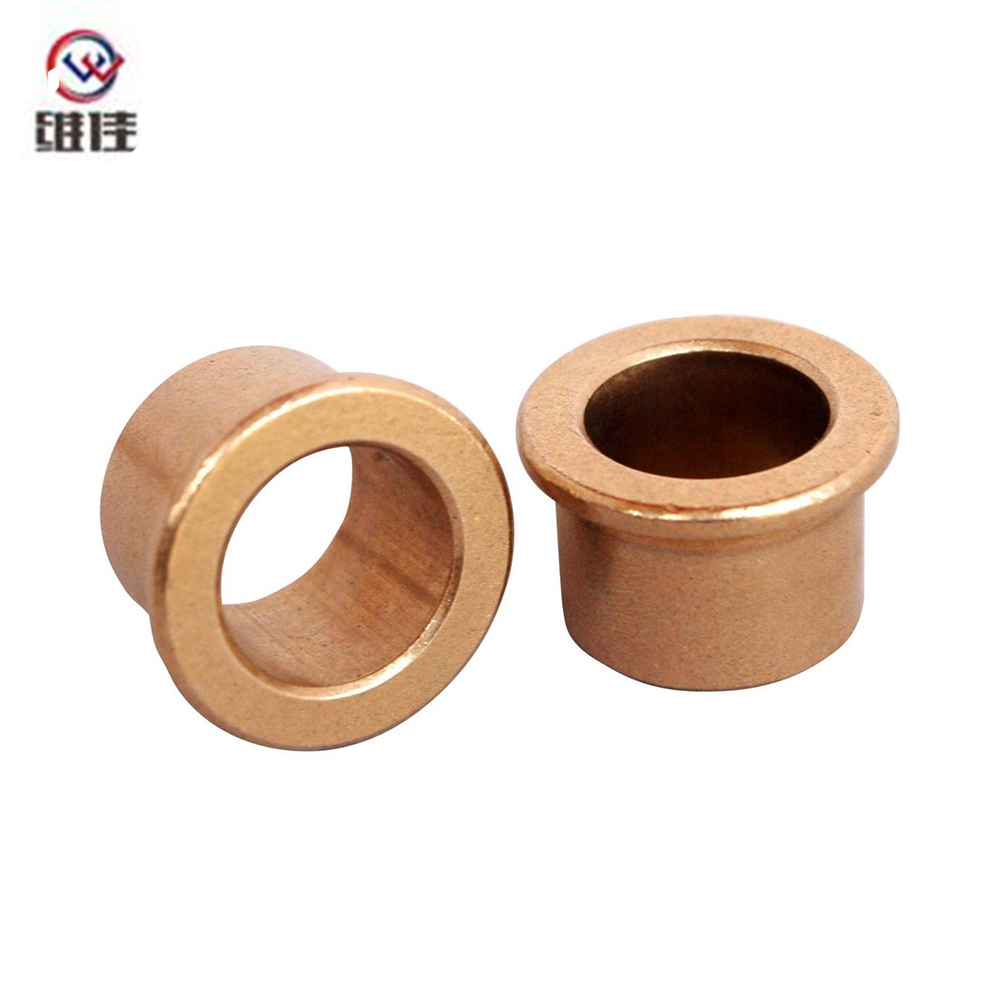 Self Lubricating Flanged Bronze Bushing for Pump ManufacturersJiande Welfine Technology Co., Ltd. is China self lubricating flanged bronze bushing for pump manufacturers and factory, combining bearing and thrust faces in one part.View Product
Custom Manufacturing from Drawing to Production
Equipment builders often start with a catalog bushing and later switch to a custom sintered part once volumes justify it. Because powder metallurgy produces net or near-net shapes, custom bronze bushings are usually more economical than machining solid bronze, especially above a few thousand pieces per year. The typical flow is shown below.
- 1Design review: your drawing or sample is checked for material grade, tolerances, and load conditions.
- 2Tooling and prototyping: a compaction die is built and prototype samples are produced for testing.
- 3Compaction and sintering: parts are pressed and sintered to create the required porosity and strength.
- 4Sizing and finishing: bore tolerances are held by precision sizing, with optional grooves or machining.
- 5Oil impregnation and inspection: vacuum oil filling, then checks for oil content, dimensions, and hardness.
An example of this process is the powder metallurgy bronze bushing from our product range, which is sintered, sized, and oil-impregnated in-house. The production facility covers 13,039 square meters and operates under ISO 9001:2015 and IATF 16949:2016 quality systems, which matters when the bushing enters an automotive supply chain. Batch-level reports for oil content and porosity can be provided on request.
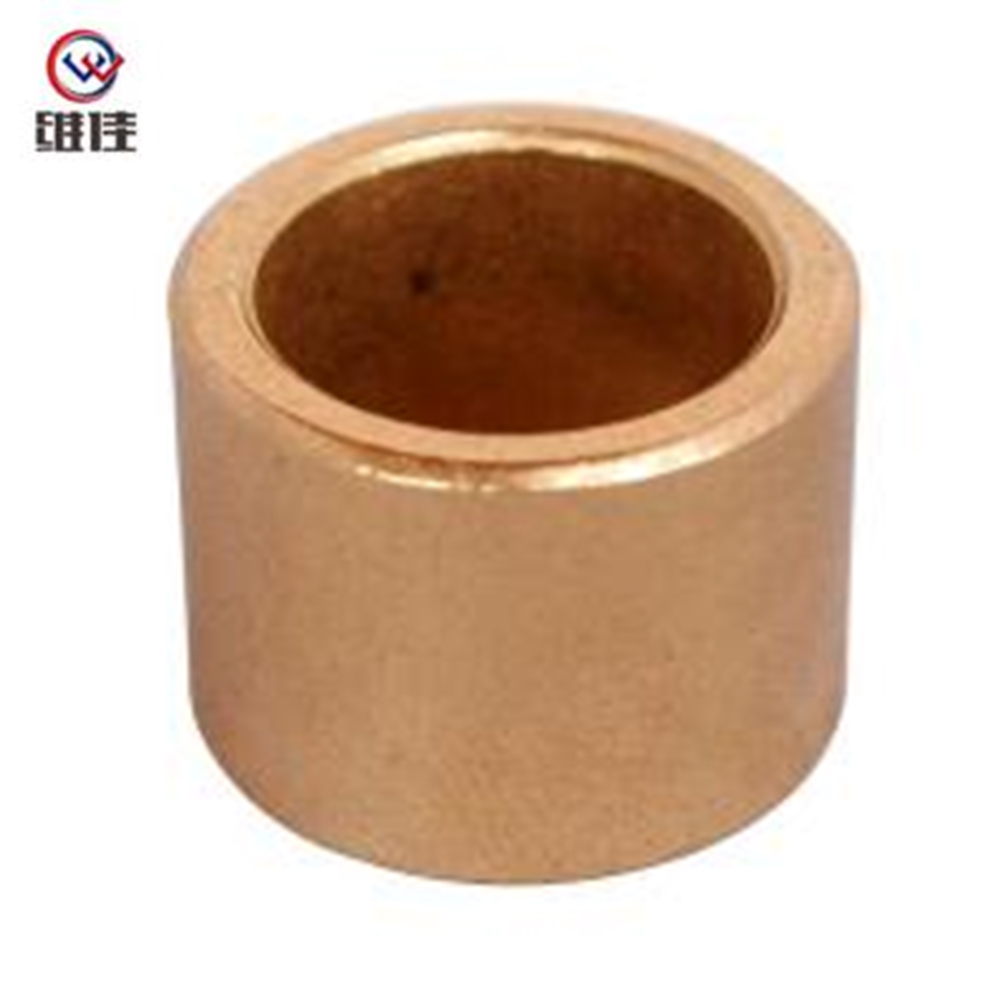 Custom CuSn10 Powder Metallurgy Bronze Bushing ManufacturersJiande Welfine Technology Co., Ltd. is China custom CuSn10 powder metallurgy bronze bushing manufacturers and factory, providing customized sintered bushings from drawing to production.View Product
When evaluating a supplier, ask for porosity and oil content test data, a clear tolerance statement, and evidence of process control. These three items separate a consistent oil impregnated bronze bushing from one that will fail unpredictably. To discuss a custom part, contact our engineering team with your drawing or sample.
Frequently Asked Questions
Can oil impregnated bronze bushings run without any additional lubrication?
Yes, for the life of the bushing, provided the operating PV value stays within the material limit. In dusty or wet environments, additional sealing or a grease fitting may be needed.
What happens when the PV limit is exceeded?
The oil film thins, friction rises, and temperature increases. The result is accelerated wear and, in severe cases, seizure of the shaft.
Can an oil impregnated bushing be re-impregnated with oil?
In principle yes. The part can be cleaned and vacuum-impregnated again, but most maintenance teams simply replace the bushing because the part cost is low.
Are these bushings suitable for reversing or oscillating motion?
Yes. Oscillation is one of the best applications because the oil film reforms quickly and the bushing benefits from a full pore reservoir at every startup.
Related products
-
-
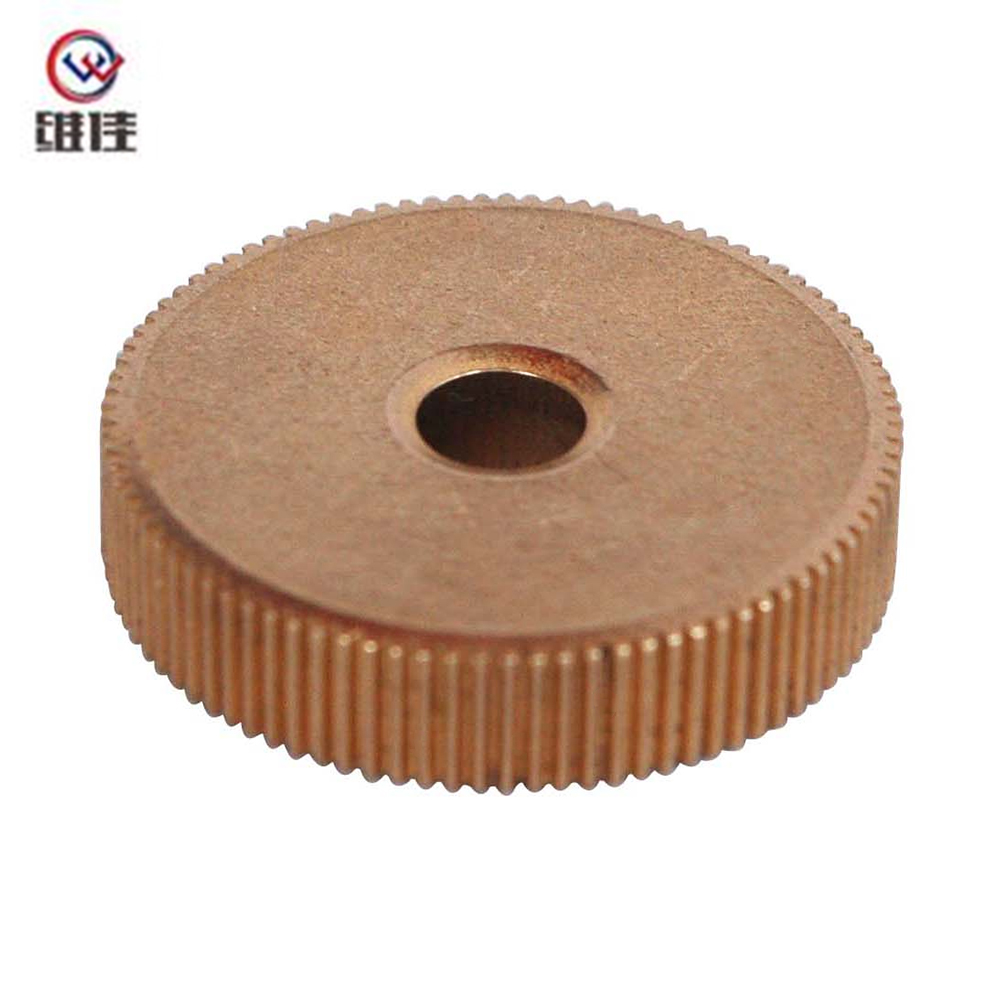
This 4×11.5×5.2mm powder metallurgy gear is manufactured through a precise press-sinter-through hole-oil impregnation process, with strict control of press density (6.7–6.8g/cm³) and sintering tempera...
See Details -
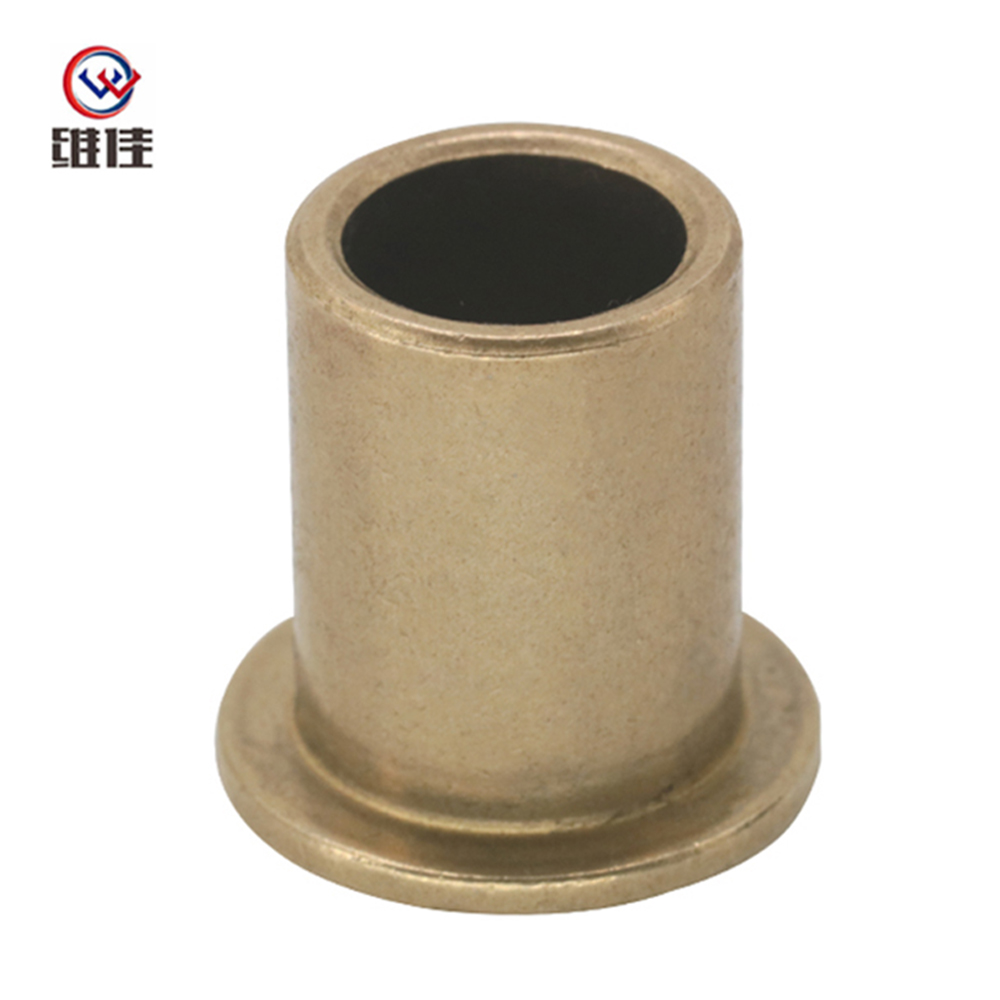
Our sintered bronze self-lubricating bearings are engineered for demanding industrial applications where traditional lubrication is impractical. Designed with advanced powder metallurgy technology, th...
See Details -
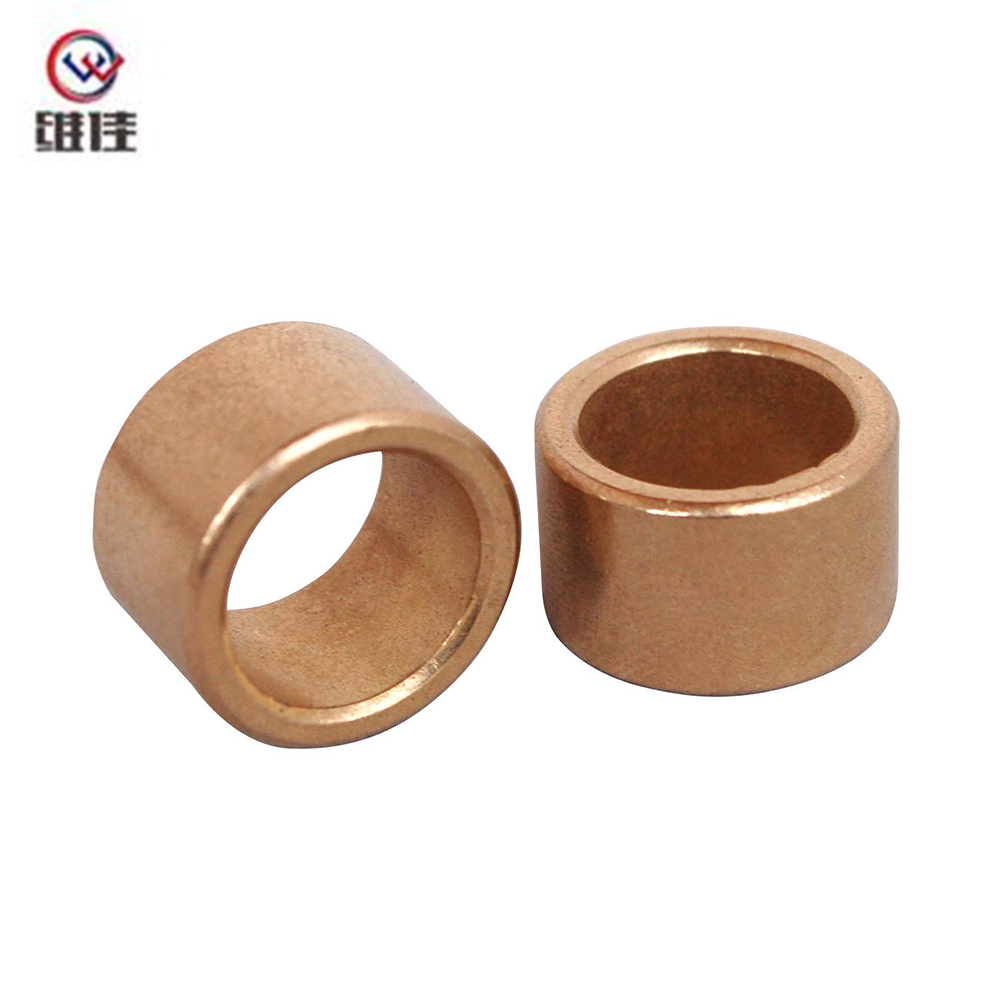
This copper-based powder metallurgy bushing is manufactured through an integrated process of compaction, sintering, sizing, and oil impregnation. It features excellent wear resistance and self-lubrica...
See Details
Copyright © Jiande Welfine Technology Co., Ltd. All Rights Reserved. Privacy Custom Self-lubricating Sintered Bushing Manufacturers
