Why Iron-Copper Composition Matters in Sintered Bushings
Pure iron-based and pure copper-based sintered bushings each carry inherent trade-offs. Iron offers compressive strength and load-bearing capacity but lacks the surface lubricity needed to protect rotating shafts at low speeds or under intermittent motion. Copper delivers excellent conformability and thermal conductivity but falls short in applications demanding structural rigidity under radial load.
Iron-copper sintered oil impregnated bushings resolve this compromise by combining both metal systems in a single porous matrix. The iron skeleton provides the mechanical backbone — typically yielding radial crush strength above 140 MPa — while copper constituents lower the friction coefficient and improve the wettability of the oil held within the pores. The resulting material behaves as a self-lubricating bearing that releases oil under thermal expansion during operation and reabsorbs it when the shaft stops, creating a continuous lubrication cycle without external grease replenishment.
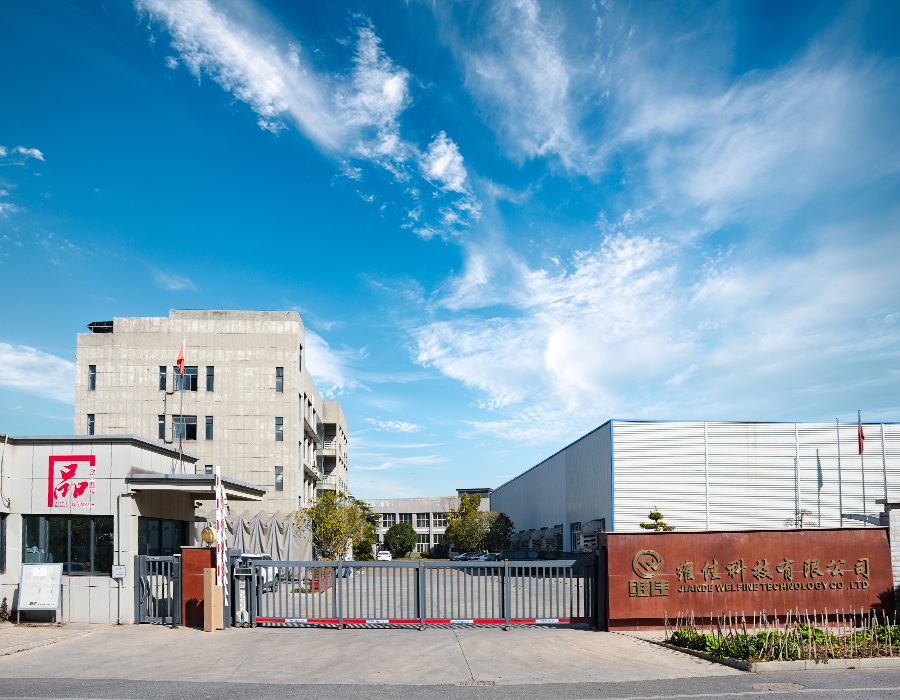
At Jiande Welfine Technology Co., Ltd., the iron-to-copper ratio and powder particle distribution are carefully controlled at the compaction stage to achieve repeatable porosity levels — typically 18–25% by volume — ensuring consistent oil retention and uniform release behavior across production batches.
Matching the Bushing to the Application: Power Tools, Automotive Motors, and Beyond
Iron copper oil impregnated bushings for industrial use appear across a wide spectrum of shaft support scenarios, but their adoption is particularly concentrated in four application categories where their combined properties offer a clear performance advantage.
Power tools such as angle grinders, jigsaws, and reciprocating saws subject bushings to rapid speed changes, vibration, and fine metallic dust ingress. The closed pore structure of a well-sintered iron-copper bushing prevents particulate contamination from entering the lubricant reservoir while the copper phase maintains a stable boundary film even during aggressive load transients.
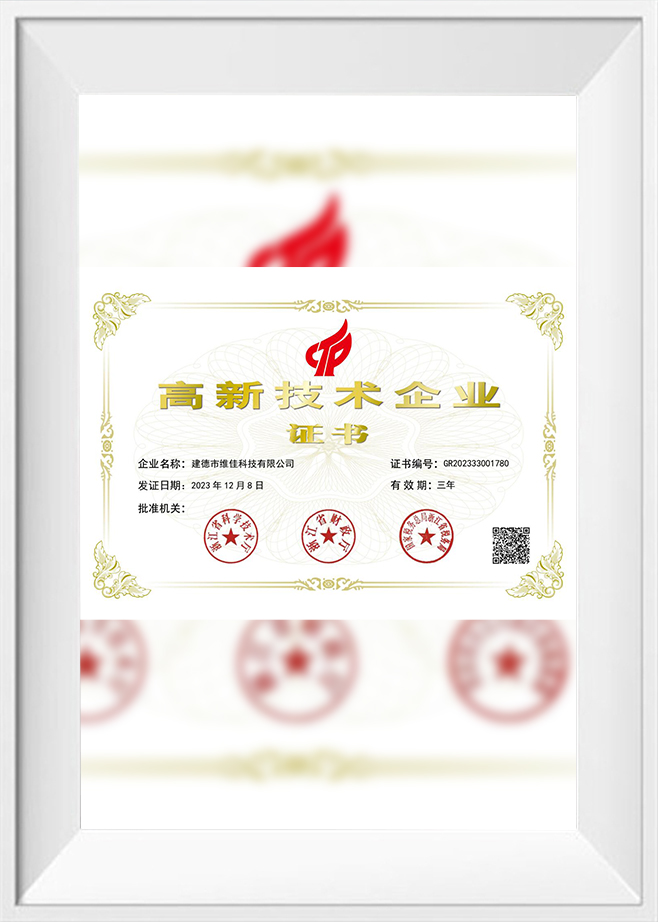
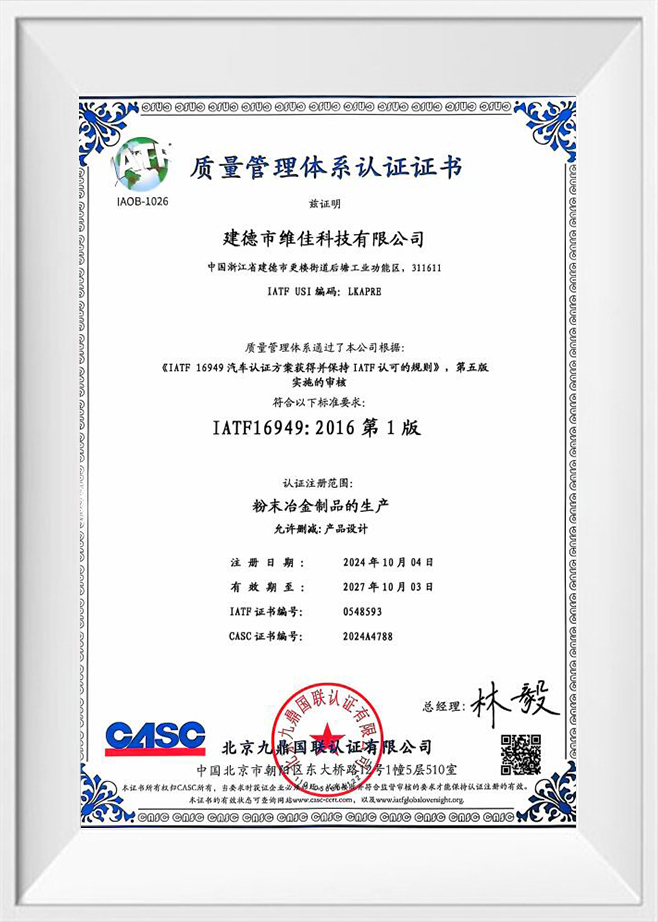
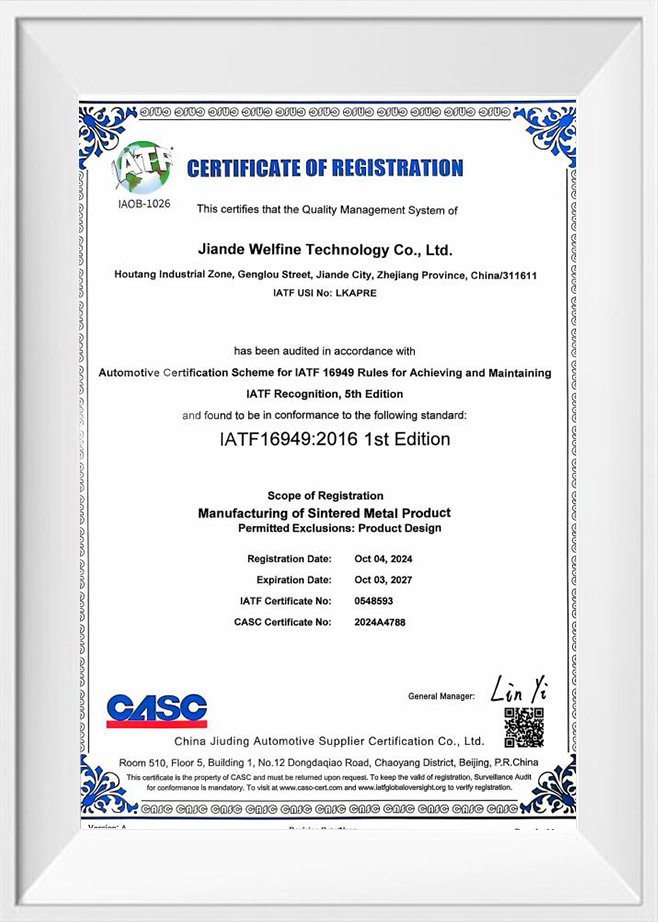
Automotive wiper motors and sunroof motors impose a different challenge: intermittent duty cycles with extended idle periods between activations. Oil-impregnated bushings handle this particularly well because the capillary oil delivery mechanism activates on the first shaft rotation rather than requiring a warm-up period, making them preferable to grease-packed rolling bearings in this low-speed, high-cycle context. Dimensional stability under thermal cycling from −40 °C to over 120 °C is a critical selection criterion for automotive-grade components, which is why IATF 16949 process controls are essential in this supply chain.
In general-purpose machinery — conveyor idlers, small gearboxes, agricultural equipment, and household appliances — the maintenance-free nature of self-lubricating bushings translates directly into lower lifetime operating costs, particularly in equipment that is difficult to access for scheduled re-lubrication.
Dimensional Accuracy and Sizing Tolerances in Sintered Oil Bushing Manufacturing
Sintered powder metallurgy components undergo volumetric change during the sintering cycle, and controlling final bore diameter, outer diameter, and flange thickness to tight tolerances requires calibration pressing after sintering — a secondary compaction step that restores dimensional precision and closes any distortion introduced by the furnace cycle.
For iron copper sintered oil impregnated bushings used in precision motor applications, inner diameter tolerances are typically held to IT6 or IT7 grade (ISO 286), equivalent to ±5–15 µm depending on nominal bore size. Roundness and cylindricity deviations must be controlled below the tolerance band to prevent uneven oil film distribution and premature shaft wear on one side of the bore.
Surface finish of the bore directly affects the running-in behavior. A bore Ra of 0.4–1.6 µm supports rapid shaft conformance without removing too much material from the copper-rich surface layer that governs initial lubrication. Coarser finishes accelerate early wear; overly fine finishes can reduce the micro-pore openings at the bore surface that allow oil migration. Welfine's production workflow integrates in-process gauging at the sizing station and statistical sampling at final inspection to verify that each shipment meets the dimensional specifications defined in customer drawings or standard tolerance tables.
Selecting the Right Oil Grade and Impregnation Standards
The performance of an oil-impregnated bushing is inseparable from the lubricant impregnated into its pores. ISO 5755 and MPIF Standard 35 define oil content requirements for sintered metal bearings by material grade, but oil viscosity selection requires additional consideration of the actual operating PV value — the product of bearing pressure (P, in MPa) and sliding velocity (V, in m/s).
- Low-speed, high-load applications (PV below 0.05 MPa·m/s) — ISO VG 68 to VG 100 turbine or spindle oils, providing sufficient film thickness at minimal shaft velocity.
- Medium-speed general machinery (PV 0.05–0.15 MPa·m/s) — ISO VG 32 to VG 46, the most common range for power tools and small motor applications.
- High-speed, light-load (PV above 0.15 MPa·m/s) — ISO VG 10 to VG 22, where lower viscosity reduces viscous drag and heat generation within the pore network.
Vacuum impregnation — drawing lubricant into the porous structure under controlled vacuum pressure — ensures oil penetration into the full depth of the sintered matrix, not just the surface layer. A properly vacuum-impregnated bushing retains 85–95% of its total oil volume even after repeated thermal cycling, compared to surface-soaked alternatives that deplete lubricant significantly faster in service. Specifying the oil grade as part of the bushing procurement rather than leaving it as an afterthought is one of the most impactful decisions a design engineer can make when evaluating long-term bearing reliability.
 English
 中文简体
中文简体