E-mail us: [email protected]
Tel: +86-15239857375
 English
 中文简体
中文简体

 Home / News / Industry News / How to Select Self-Lubricating Stainless Steel Bushings for Corrosive Environments
 How to Select Self-Lubricating Stainless Steel Bushings for Corrosive Environments
 2026.09.30
 Industry News
Content
- 1 What Are Self-Lubricating Stainless Steel Bushings?
- 2 Why Stainless Steel Matters in Corrosive Environments
- 3 How Self-Lubricating Sintered Bushings Work
- 4 Key Selection Criteria for Corrosive Applications
- 5 Sintered Stainless Steel Bushings from Welfine
- 6 Quality Assurance and Custom Bushing Solutions
- 7 Final Thoughts
Self-lubricating stainless steel bushings are a reliable answer when equipment must run in harsh chemical, marine, or washdown environments. Unlike standard bronze or iron-based plain bearings, these sintered components combine corrosion-resistant stainless steel with a built-in lubrication system. This guide explains what makes them work, how to evaluate them, and what to check before specifying a bushing for your next project.
What Are Self-Lubricating Stainless Steel Bushings?
Self-lubricating stainless steel bushings are produced through powder metallurgy (PM). Stainless steel powders are compacted into a precisely shaped preform and then sintered at high temperature in a controlled atmosphere. The result is a porous component that can be vacuum-impregnated with oil or filled with solid lubricants. When the shaft rotates, the bushing warms slightly, causing the oil to expand and migrate to the surface through capillary channels. This creates a continuous, thin lubricating film that reduces friction and wear without an external lubrication system.
Stainless steel grades such as 304L and 316L are commonly used because they maintain their corrosion resistance after sintering. The alloy choice is important: bushings for aggressive chemical service often use 316L, while milder environments may only require 304L. Both offer far better corrosion performance than carbon steel or conventional bronze materials.
Key benefits of this bearing type include:
- Corrosion resistance in wet or chemical-filled environments
- Lower maintenance because re-lubrication intervals are eliminated or greatly extended
- Good load-carrying capacity for a sintered bearing
- Operation over a wide temperature range
- Consistent dimensional quality from the PM process
- Compatibility with both rotating and reciprocating shafts
For engineers who have previously specified oil-impregnated bronze bushings, stainless steel versions offer similar self-lubricating behavior with a higher level of chemical compatibility.
Why Stainless Steel Matters in Corrosive Environments
Corrosive attack is not just a surface problem. Pitting, crevice corrosion, and chloride stress cracking can quickly reduce the functionality of a plain bearing. Carbon steel and iron-based bushings are often adequate in clean, dry applications, but when moisture, chlorides, acidic fumes, or washdown chemicals are present, they can fail prematurely. Stainless steel bushings resist these forms of attack because of the protective chromium oxide layer that naturally forms on the surface.
Molybdenum-bearing grade 316L provides additional resistance to chloride-induced pitting and is frequently selected for marine instruments, food processing machinery, and chemical pumps. In less severe conditions, 304L is a cost-effective choice, particularly where only light corrosion protection is needed.
When comparing materials, also think about galvanic corrosion. If the bushing and the shaft are made from very different metals, an electrolytic cell can form in the presence of a conductive fluid. Pairing the bushing material with a compatible shaft material or applying a suitable surface coating reduces this risk.
- Chemical media: Identify the exact chemicals and concentrations the bushing will see.
- Moisture/humidity: Frequent washdowns accelerate corrosion in non-stainless materials.
- Temperature: Higher temperatures accelerate chemical attack, so alloy selection must account for maximum operating temperature.
- Galvanic compatibility: Check the electrochemical potential between bushing and shaft materials.
How Self-Lubricating Sintered Bushings Work
The self-lubricating action of a sintered stainless steel bushing depends on its internal pore network. High-quality powder metallurgy parts can control pore size and porosity, enabling optimized oil retention and release. During operation, the shaft rotation creates heat, which expands the oil and pushes it outward onto the bearing surface. When the system cools, the oil is drawn back into the pores. This cycle can run for thousands of hours with minimal maintenance.
Some bushing designs incorporate solid lubricants such as graphite or molybdenum disulfide. These solid lubricants can be dispersed in the sintered matrix or applied to the surface. They are especially useful in vacuum systems, at low sliding speeds, or where oil contamination must be avoided. The choice between oil-impregnated and solid-lubricated bushings depends on the operating environment, lubrication requirements, and duty cycle.
To get the best performance from a self-lubricating bushing:
- Select the appropriate base material and alloy for the environment.
- Choose the lubricant system that matches the temperature, speed, and load.
- Specify proper clearances between the shaft and the bushing bore.
- Consider surface finish of the shaft, because it affects the formation of the lubricating film.
- Review the PV (pressure-velocity) value against the bushing material’s rated limit.
Key Selection Criteria for Corrosive Applications
Choosing the right bushing requires a clear definition of operating conditions. The table below summarizes the main parameters to evaluate. Every application is unique, but these criteria provide a solid starting point.
| Parameter | Why It Matters | Typical Considerations |
|---|---|---|
| Corrosive media | Determines required alloy composition | Chlorides favor 316L; strong acids may require specialty alloys |
| Operating load | Affects wear rate and bearing life | Check PV (pressure-velocity) rating of the bushing |
| Surface speed | Influences lubricant film formation | Higher speeds may need better oil feed |
| Temperature | Affects oil viscosity and material strength | Stay within the oil’s recommended hot range |
| Shaft hardness | Harder shaft reduces adhesive wear | Use hardened shaft when possible |
| Bushing dimensions | Must fit housing and shaft clearances | PM process allows close tolerances and custom geometry |
It is also wise to review the expected service life and the cost of replacing a bushing. In corrosive environments, an inexpensive bushing that fails early can be far more expensive in the long run than a slightly higher-quality metal bushing that lasts years. For this reason, many engineering teams choose stainless steel self-lubricating bushings as a value-added upgrade over standard bronze.
Sintered Stainless Steel Bushings from Welfine
At Welfine, we have been producing powder metallurgy bearings and structural parts since 2001. Our 13,000+ square meter facility and 150-plus employees support high-volume production of sintered stainless steel self-lubricating bushings. We know that corrosive environments are not all the same; therefore, we offer custom dimensions, alloy variations, and finishing options to meet specific performance targets.
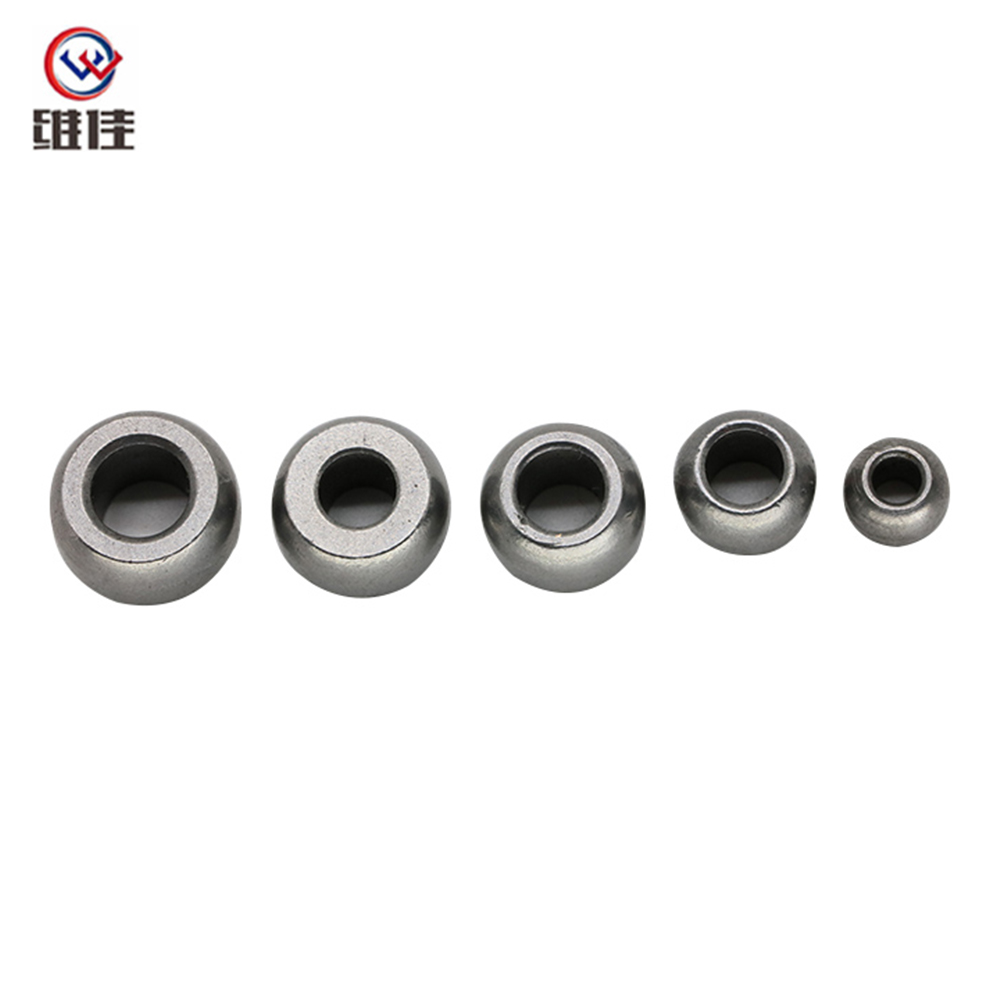
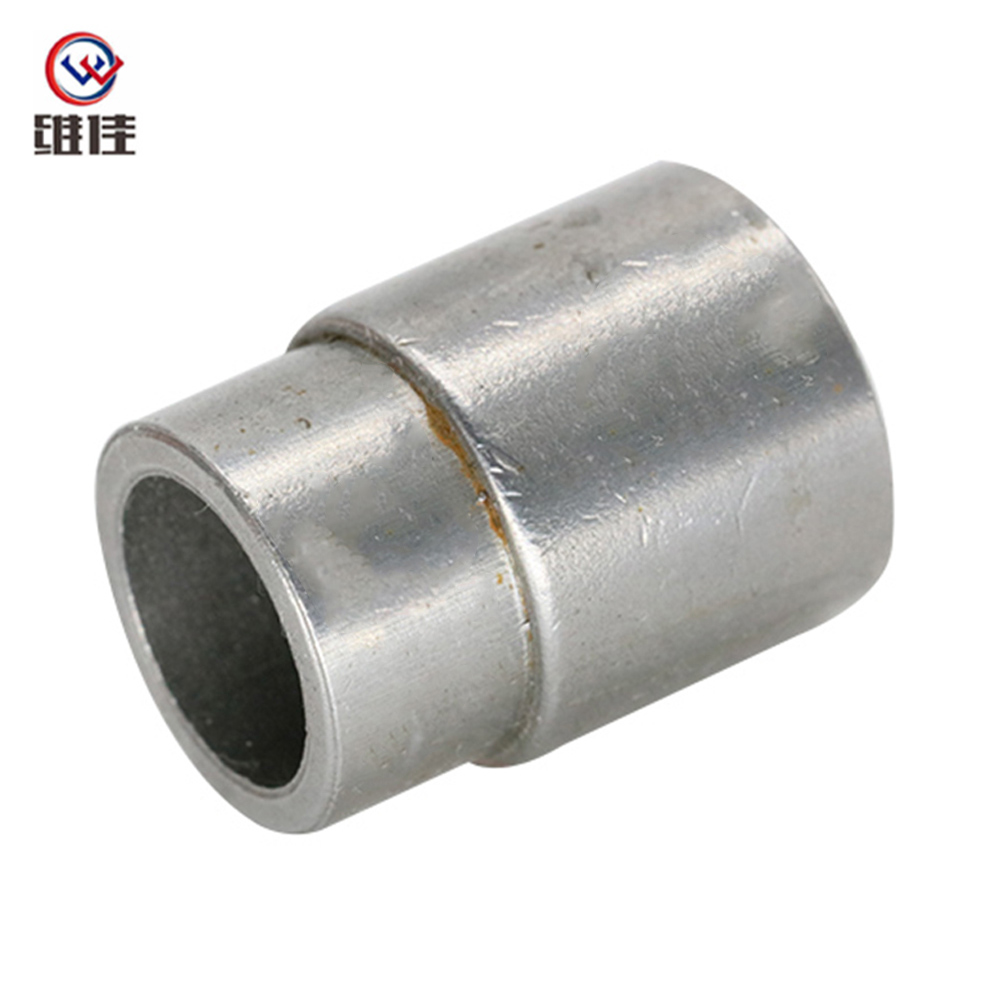 Sintered Stainless Steel Self-Lubricating BushingsAvailable with varied oil types, graphite additions, and precision sizing, these bushings support high-volume production while allowing material, porosity, and lubricant choices matched to operating conditions.View Product →
Our sintered stainless steel self-lubricating bushings are available with different oil types, graphite additions, and precision sizing. We work with customers to define the best combination of material, porosity, and lubricant for the operating conditions. This collaborative approach helps avoid both premature failure and unnecessary cost.
In addition to stainless steel, we manufacture bronze-based and iron-based self-lubricating bushings, as well as structural powder metallurgy parts. This gives us a broad view of bearing applications and allows us to recommend the best material for each situation, even when stainless steel is not the final choice.
Quality Assurance and Custom Bushing Solutions
Choosing a manufacturing partner is as important as selecting the material. Welfine operates under ISO 9001:2015 and IATF 16949:2016 management systems, which keeps our processes traceable and consistent. Our inspection capabilities include metallographic analysis, porosity checks, dimensional measurement, and material verification. This is especially important for stainless steel parts because sintering must be carefully controlled to avoid chromium carbide precipitation and preserve corrosion resistance.
We also provide OEM/ODM services. If you have a drawing or a sample, we can develop a bushing that meets exact specifications and then move smoothly from prototype to volume production. Our experience across iron, bronze, and stainless steel materials means we can advise on the most economical route to satisfy your mechanical and chemical requirements.
For more background on the technology, see our article on how self-lubricating bushings extend equipment life.
Final Thoughts
Selecting self-lubricating stainless steel bushings for corrosive environments does not have to be a guessing game. Define the operating parameters, choose the right stainless steel alloy, confirm the self-lubrication mechanism, and partner with an experienced powder metallurgy manufacturer. This approach reduces risk and delivers a bushing that lasts longer while lowering maintenance costs.
If you are ready to discuss your application or need a custom sintered stainless steel bushing, please contact our engineering team. We can help you turn a demanding corrosive environment into a reliable, long-lived bearing solution.
Related products
-
-
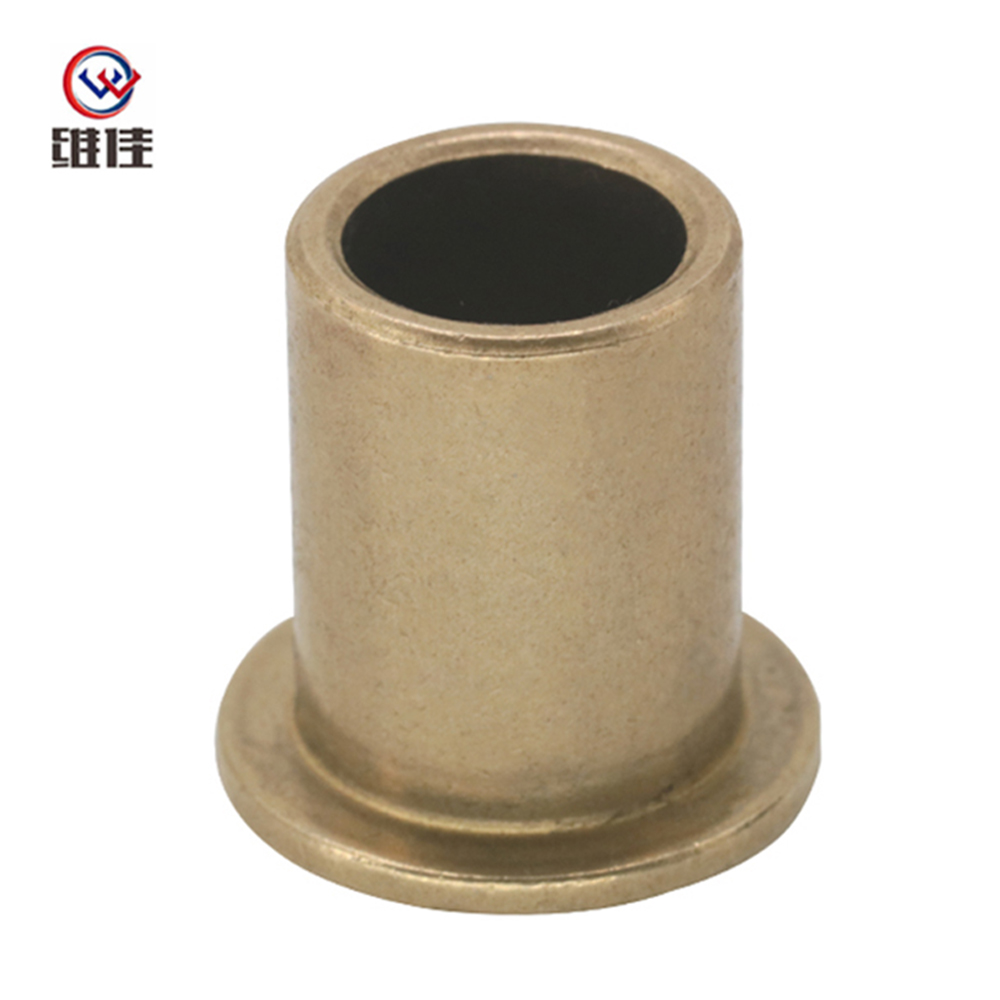
Our sintered bronze self-lubricating bearings are engineered for demanding industrial applications where traditional lubrication is impractical. Designed with advanced powder metallurgy technology, th...
See Details
Copyright © Jiande Welfine Technology Co., Ltd. All Rights Reserved. Privacy Custom Self-lubricating Sintered Bushing Manufacturers
