 English
 中文简体
中文简体
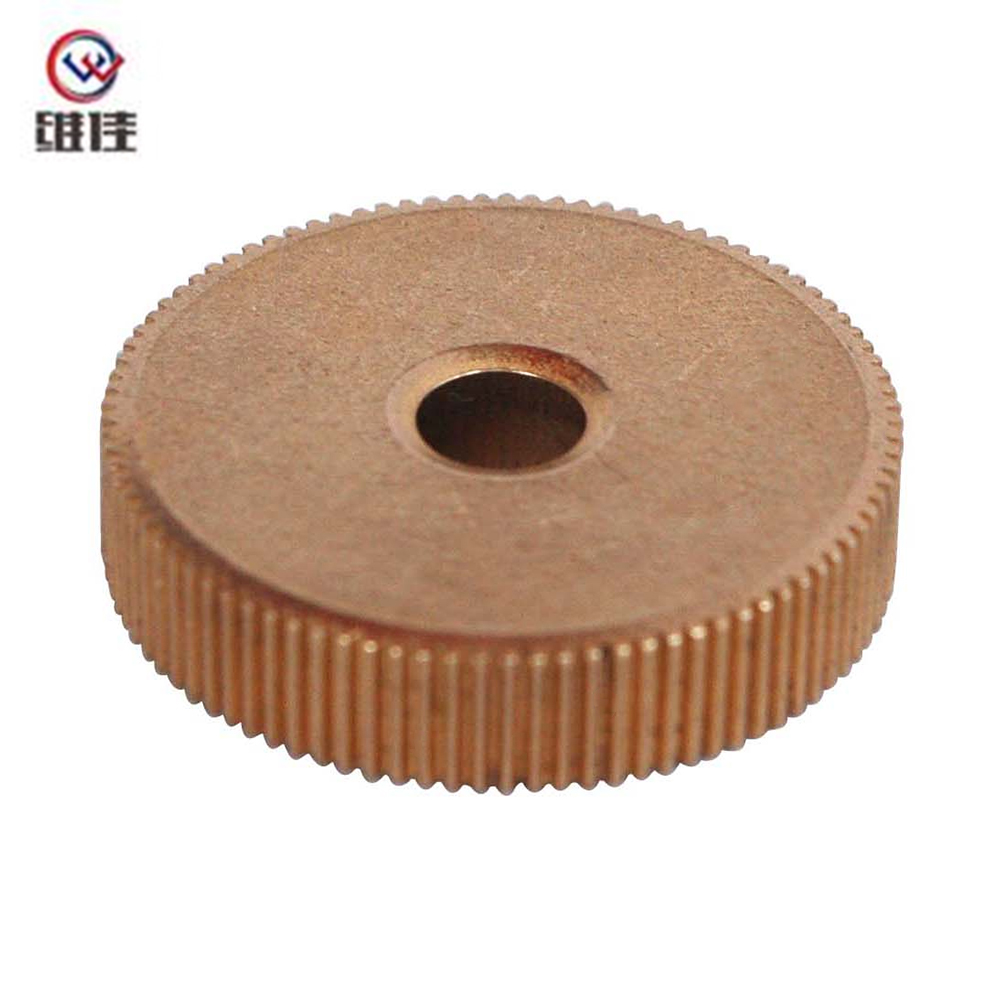
This 4×11.5×5.2mm powder metallurgy gear is manufactured through a precise press-sinter-through hole-oil impregnation process, with strict control of press density (6.7–6.8g/cm³) and sintering tempera...
See DetailsE-mail us: [email protected]
Tel: +86-15239857375


Oil-Impregnated Bushings Explained: Materials, Specs & Selection
 2026.08.07
 Industry News
When a design engineer specifies a bearing for a small electric motor or a conveyor roller, the decision often comes down to space, duty cycle, and maintenance access. Rolling element bearings require precise housings and regular re-lubrication. Cast bronze needs an external oil supply. Plastic bushings soften under heat. Oil-impregnated bushings solve these constraints with a simple yet effective principle: the bearing itself stores the lubricant inside its porous structure and releases it exactly where it is needed. This guide explains how they work, how they are made, which materials suit which applications, and how to select the right one for your next project.
What Are Oil-Impregnated Bushings?
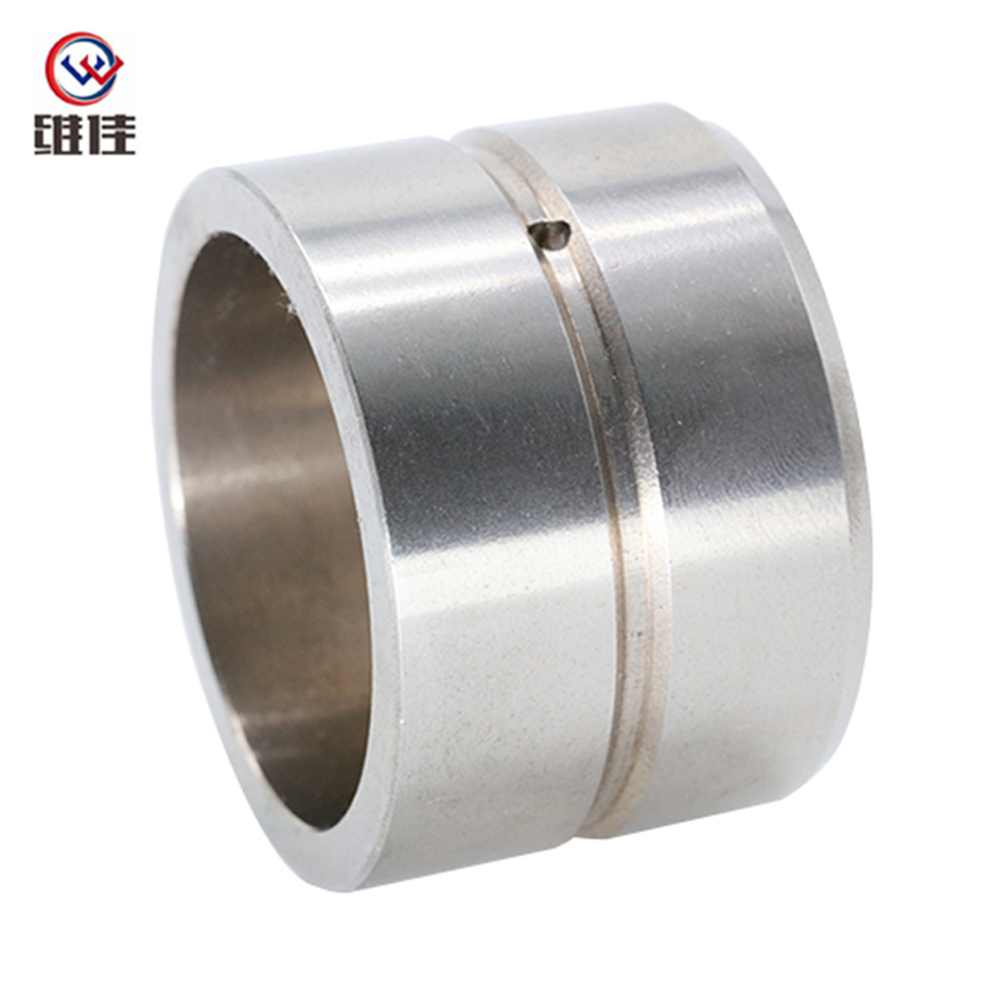
Oil-impregnated bushings are self-lubricating plain bearings manufactured through powder metallurgy. Instead of being machined from solid metal, they are pressed from metal powder and sintered to create a structure with 15% to 30% interconnected porosity by volume. These pores are then filled with lubricating oil under vacuum. During operation, the oil migrates to the shaft surface through capillary action, forming a thin film that reduces friction and wear. When the shaft stops, the oil is drawn back into the pores by capillary forces, ready for the next start-up cycle. This thermal expansion and cooling-reabsorption cycle is what makes them effectively maintenance-free for long service intervals.
The self-lubricating mechanism relies on the continuous interaction between the porous matrix, the oil, and the rotating shaft. As the bearing warms up from friction, the oil expands beneath the surface and flows out through the pore network. Manufacturers control the porosity level carefully to balance oil volume against mechanical strength. For a deeper look at the operating principles, read how self-lubricating bushings extend service life. If you need an overview of available configurations, explore our full range of oil-impregnated bushings.
How Are Oil-Impregnated Bushings Manufactured?
The powder metallurgy process for oil-impregnated bushings is precise and repeatable. Five critical steps determine the final porosity, strength, and dimensional accuracy of the component:
- Blending – Metal powders, alloying elements, and a temporary lubricant are mixed in a controlled ratio. The blend should be homogeneous to ensure consistent microstructure after sintering.
- Compacting – The blended powder is pressed in a die at pressures ranging from 10 to 45 tsi (tons per square inch). The compacting pressure directly affects the green density and final porosity.
- Sintering – The pressed part is heated in a protective atmosphere furnace to a temperature below the melting point of the base metal. The particles weld together metallurgically, and the temporary lubricant burns off, leaving behind a controlled network of pores.
- Calibrating or Repressing – The sintered part is pressed again through a sizing die to correct distortion and achieve tight dimensional tolerances, often within 0.01 mm–0.03 mm on the bore.
- Oil Impregnation – The porous part is immersed in oil inside a vacuum chamber. The vacuum draws out trapped air, and the oil is forced into every open pore. The amount of oil absorbed depends on the target oil content specification.
The ability to control porosity is what separates a competent manufacturer from a commodity supplier. A tighter porosity distribution means more predictable oil delivery and a more consistent PV rating across production batches.
Key Materials for Oil-Impregnated Bushings
Selecting the correct base material is the most consequential decision in the entire design process. Four material families dominate the market: bronze, iron, iron-copper, and stainless steel. Each offers a different balance of load capacity, corrosion resistance, lubricity, and cost.
Bronze-Based Bushings
Bronze-based oil-impregnated bushings are the industry default for general-purpose applications. The most common specification is SAE841, a tin bronze alloy containing approximately 88% copper and 10% tin. Typical oil content ranges from 18% to 25% by volume. These bushings offer excellent surface compatibility with steel shafts, moderate load capacity, and good corrosion resistance in indoor environments. They are the first choice for fractional horsepower electric motors, household appliances, and office equipment. For detailed technical data, refer to SAE841 tin bronze open-type bushing specifications.
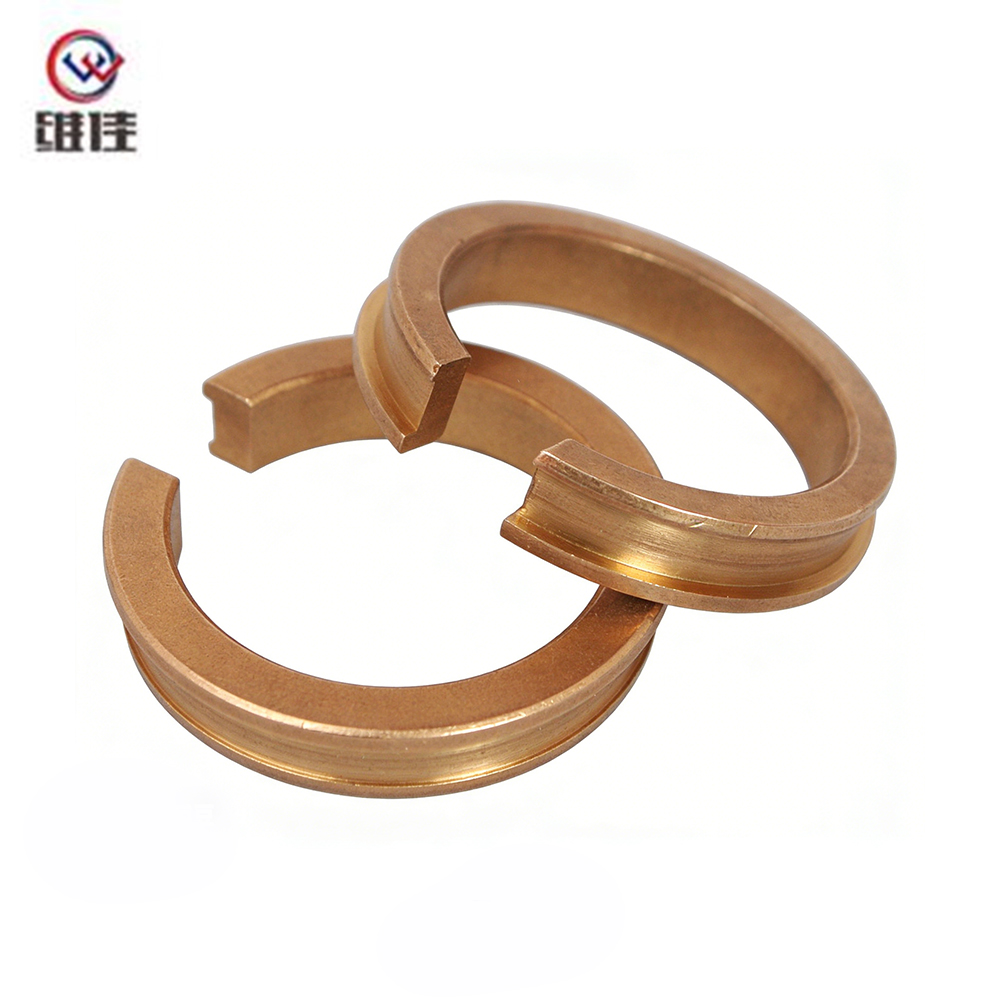 Wholesale SAE841 Tin Bronze Open Type Bushing ManufacturersJiande Welfine Technology Co., Ltd. is China SAE841 tin bronze open type bushing manufacturers and SAE841 tin bronze open type bushing fa...View Product →
Iron-Based Bushings
Iron-based formulations prioritize load capacity over lubricity. The higher strength of sintered iron allows these bushings to handle heavier loads and lower speeds where bronze would deform. However, the oil content is typically lower, around 15% to 20%, because higher density is required for structural integrity. Iron-based bushings are common in automotive components, agricultural machinery, and heavy-duty linkages. They also cost substantially less per part than bronze equivalents.
Iron-Copper Bushings
Iron-copper blends attempt to capture the best of both worlds. The iron matrix provides strength, while infiltrated or admixed copper improves conformability and friction characteristics. These bushings are frequently used where a structural component must double as a bearing surface, such as transmission parts or pivot points. Expect a trade-off: moderate load capacity, moderate oil content, and a slightly higher price than pure iron.
Stainless Steel Bushings
When the environment includes moisture, chemicals, or frequent washdowns, stainless steel is the only reliable option. Sintered stainless steel bushings retain the porous structure needed for oil retention while resisting rust and corrosion far better than bronze or iron. They are specified in food processing equipment, pharmaceutical machinery, marine hardware, and outdoor installations. The trade-off is higher initial cost and slightly lower oil content due to the alloy's densification behavior. For corrosive and hygienic environments, review sintered stainless steel self-lubricating bushings for corrosive environments.
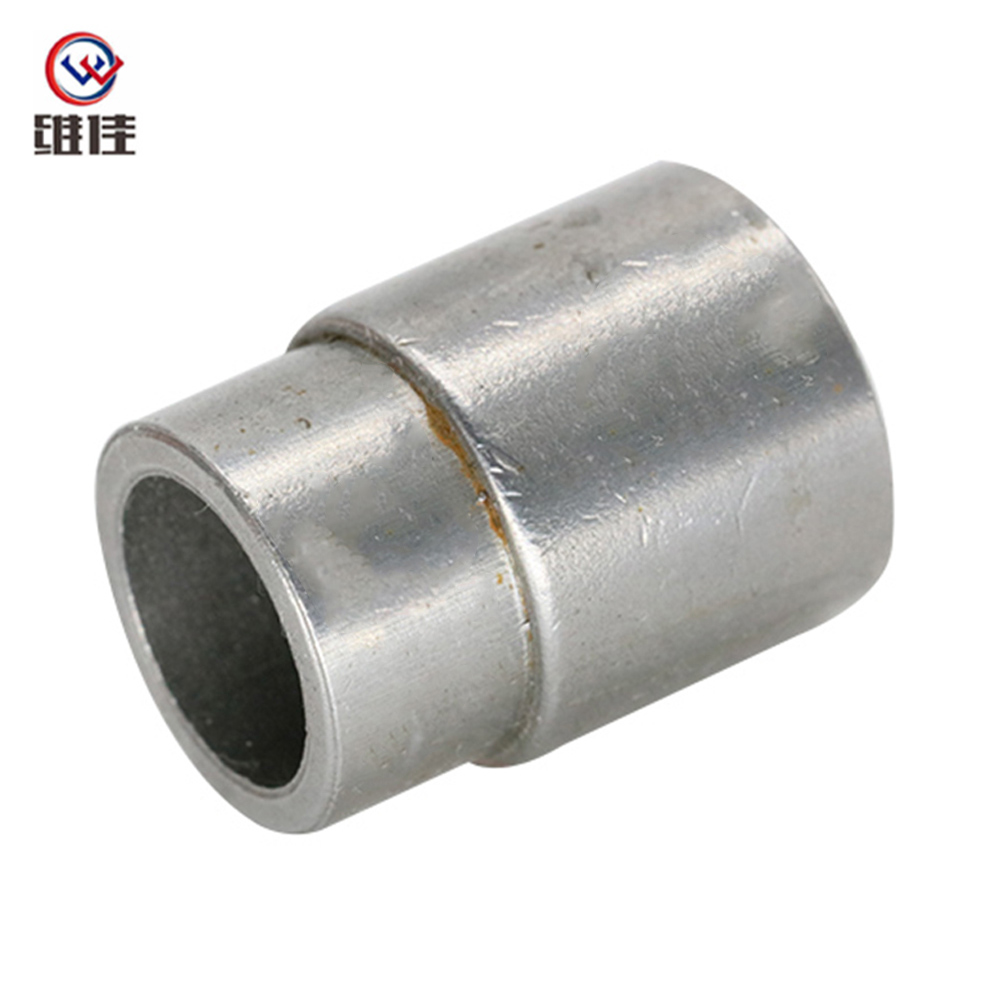 Sintered Stainless Steel Self Lubricating Bushing ManufacturerJiande Welfine Technology Co., Ltd. is China sintered stainless steel self lubricating bushing manufacturers and factory, provide wholesa...View Product →
| Material | Density (g/cm³) | Oil Content (vol.%) | Load Capacity | Corrosion Resistance | Relative Cost |
|---|---|---|---|---|---|
| Bronze (SAE841) | 6.4 – 6.8 | 18 – 25 | Moderate | Good | $$ |
| Iron | 6.2 – 6.6 | 15 – 20 | High | Fair | $ |
| Iron-Copper | 6.0 – 6.5 | 16 – 22 | Moderate-High | Fair-Good | $$ |
| Stainless Steel | 6.5 – 7.0 | 15 – 20 | Moderate | Excellent | $$$ |
These ranges represent typical industry values. Always confirm the actual parameters from the manufacturer's datasheet for your specific application.
Oil-Impregnated Bushings vs. Other Bearing Types
Choosing between an oil-impregnated bushing and an alternative bearing type requires assessing the full lifetime cost, not just the unit price. Here is how porous self-lubricating bushings compare against the most common substitutes:
- vs. Cast Bronze Bushings – Cast bronze is solid and requires either a pressurized oil feed system or periodic manual grease application. Oil-impregnated bushings eliminate the lubrication plumbing, reducing part count and assembly time. The limitation is a lower maximum load rating because the porous structure reduces the effective cross-section carrying the load.
- vs. Rolling Element Bearings – Ball and roller bearings have lower starting friction and handle higher speeds. But they require hardened shafts, precise housing bores, and sealing systems. Oil-impregnated bushings occupy a smaller radial space, produce less noise, and tolerate slight misalignment better. The trade-off is higher starting friction and a lower maximum speed capability.
- vs. Plastic Bushings – Polymer bearings offer excellent chemical resistance and quiet operation, but they are limited to lower temperatures and lower loads. Oil-impregnated metal bushings handle temperatures up to 120°C with mineral oil (and up to 150°C with synthetic oil), while many plastics begin to creep at 80°C. Metal bushings also dissipate heat more effectively.
In practice, oil-impregnated bushings are the strongest fit for applications that operate continuously at low to moderate loads, require minimal maintenance, and cannot tolerate lubrication system complexity. For a practical perspective on reliability, see how oil-impregnated bronze bushings improve equipment reliability.
How to Select the Right Oil-Impregnated Bushing
Selection is a systematic process. Skipping any step can lead to premature failure or unnecessarily high cost. Follow this framework for your next design:
Step 1: Calculate the PV Value
The PV value (pressure × velocity) is the primary selection criterion. It is calculated by multiplying the bearing pressure in N/mm² by the surface speed in m/s. A typical safe limit for standard bronze oil-impregnated bushings in continuous operation is 1.75 N/mm²·m/s. If your application exceeds this, consider a different material or a larger bearing surface to reduce pressure.
Step 2: Define the Operating Temperature Range
The lubricant type determines the temperature limit. Mineral oil is suitable for -20°C to +120°C. Synthetic oils extend the upper limit to approximately +150°C, while specialized formulations can go higher. Choose the oil type based on your ambient environment and the heat generated by continuous running.
Step 3: Assess the Environment
Humidity, dust, chemical vapors, and washdown procedures all demand specific materials. Stainless steel is mandatory for food-grade or heavily corrosive environments. Bronze resists general atmospheric corrosion but is not appropriate for acidic or strongly alkaline conditions. Iron-based bushings should only be used in dry, clean environments.
Step 4: Determine the Structural Form
Straight cylindrical bushings are the simplest and most economical. Flanged bushings provide axial location without a separate thrust washer, saving space and simplifying assembly. Open-type (slotted) bushings allow easy snap-in installation in blind housings. For assemblies where axial positioning is critical, consider powder metallurgy flanged tin bronze bushings.
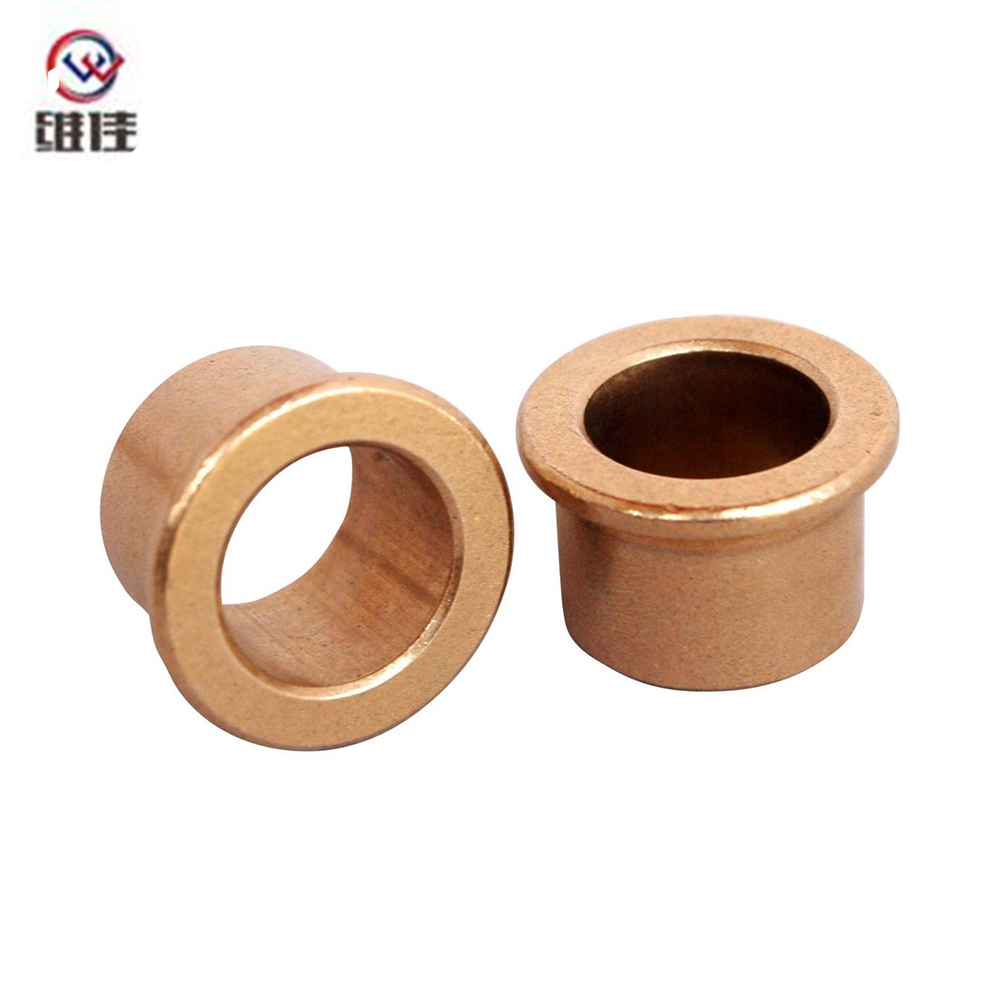 Self Lubricating Flanged Bronze Bushing for Pump ManufacturersJiande Welfine Technology Co., Ltd. is China self lubricating flanged bronze bushing for pump manufacturers and factory, provide wholesal...View Product →
Step 5: Submit Your Requirements to the Manufacturer
Once the material and geometry are fixed, the manufacturer must confirm the achievable tolerances and oil content. For custom designs, provide a detailed drawing with the bore diameter, outer diameter, length, chamfers, and target surface finish. A sample part is often the fastest way to validate the design. Our company holds both IATF 16949 and ISO 9001 certifications, which ensures rigorous process control across the entire production chain. OEM/ODM orders are supported, and the engineering team can review your drawing to suggest material or tolerance improvements before tooling begins.
Typical Applications of Oil-Impregnated Bushings
You will find oil-impregnated bushings in nearly every sector that involves rotating shafts. The following list highlights representative uses rather than exhaustive examples.
- Household Appliances – Washing machine drive components, fan motors, and blender shaft supports benefit from the self-lubricating property in sealed, maintenance-free assemblies.
- Automotive Components – Wiper motor gearboxes, window lift motors, seat adjuster linkages, and AC damper actuators all use small-format sintered bushings because they survive vibration and require no oil lines.
- Industrial Equipment – Conveyor belt rollers, textile machinery spindles, and office printer roller assemblies run continuously for years on a single oil charge.
- Power Tools – Drills, sanders, and angle grinders use bronze-based bushings in the motor support to reduce noise and electrical isolation issues.
- Agricultural and Outdoor Machinery – The wide temperature tolerance (-20°C to +120°C) makes them suitable for tractor linkages, irrigation pumps, and outdoor ventilation motors exposed to weather cycling.
Every application above assumes that the PV limit is respected and the correct base material is selected. When these conditions are met, the bushing will provide hundreds of thousands of cycles with minimal maintenance required.
Conclusion
Oil-impregnated bushings remain one of the most cost-effective engineered solutions for rotating shaft support where space is tight and maintenance access is limited. The key to successful deployment is straightforward: understand the PV limit, match the base material to the environment, and work with a manufacturer that can control porosity and tolerances reliably. Whether you need a standard SAE841 bronze bushing or a custom flanged design for a high-volume OEM program, the specification process does not need to be complex. Bring your operating conditions and a drawing if you have one, and the technical team will confirm the material, oil content, and finish. Contact our engineering team to discuss your specific application and obtain a tailored recommendation.
Related products
-
-
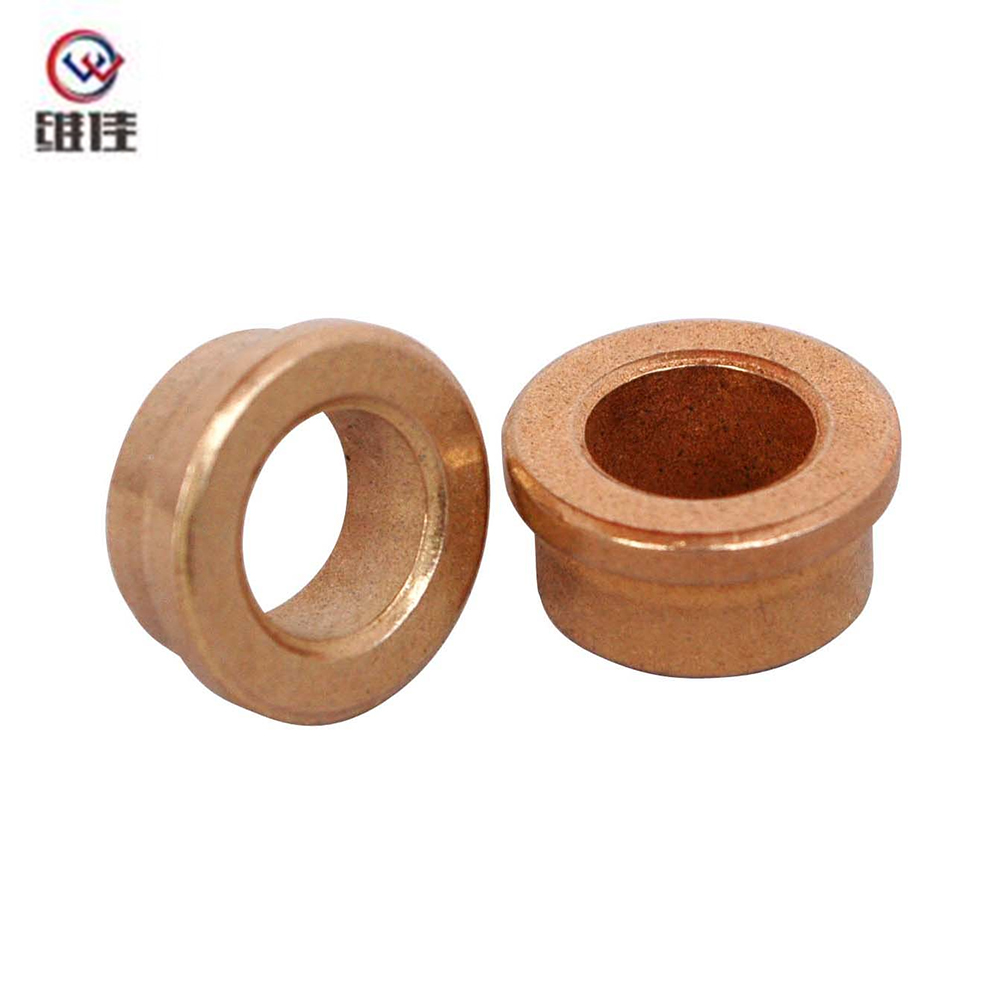
Premium Material: Our flange bushing is crafted from Sint B50 oil-impregnated bronze, featuring an 18% oil content. The high-quality tin bronze material ensures exceptional hardness, wear resistance, ...
See Details -
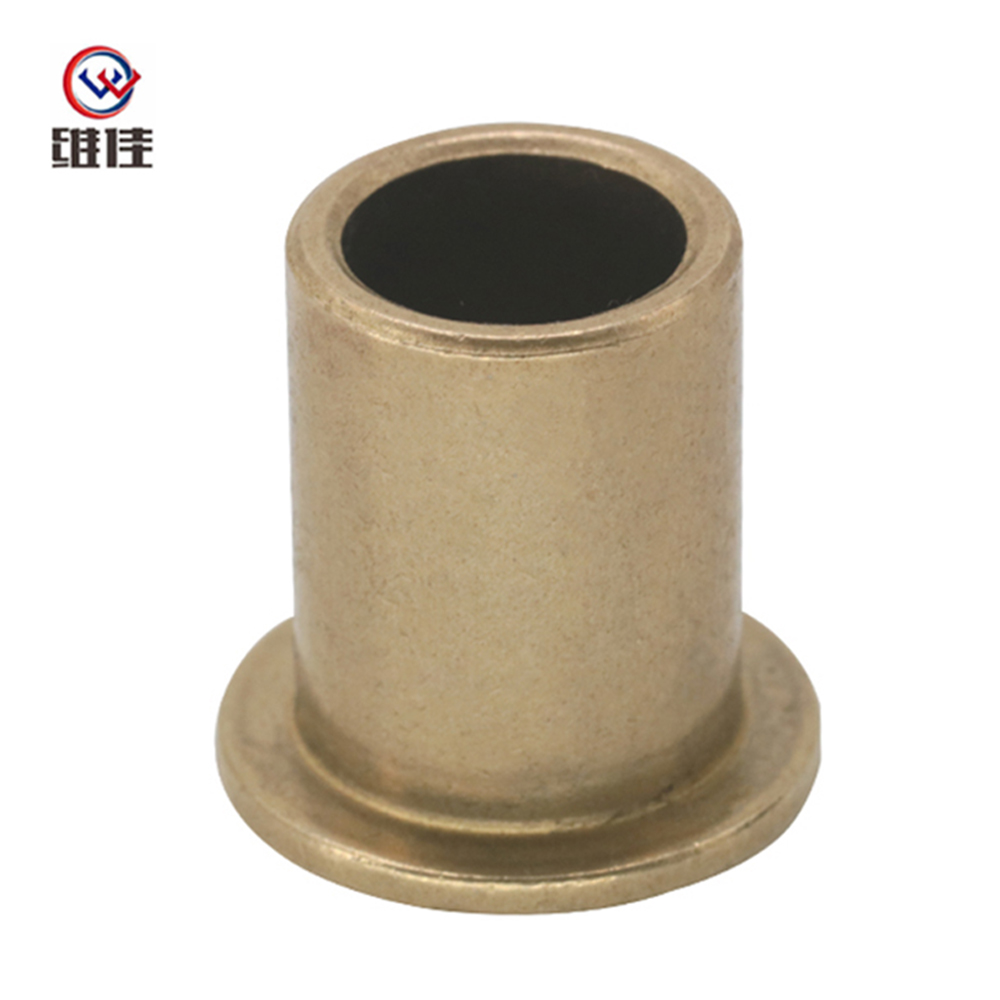
Our sintered bronze self-lubricating bearings are engineered for demanding industrial applications where traditional lubrication is impractical. Designed with advanced powder metallurgy technology, th...
See Details
Copyright © Jiande Welfine Technology Co., Ltd. All Rights Reserved. Privacy Custom Self-lubricating Sintered Bushing Manufacturers
