 English
 中文简体
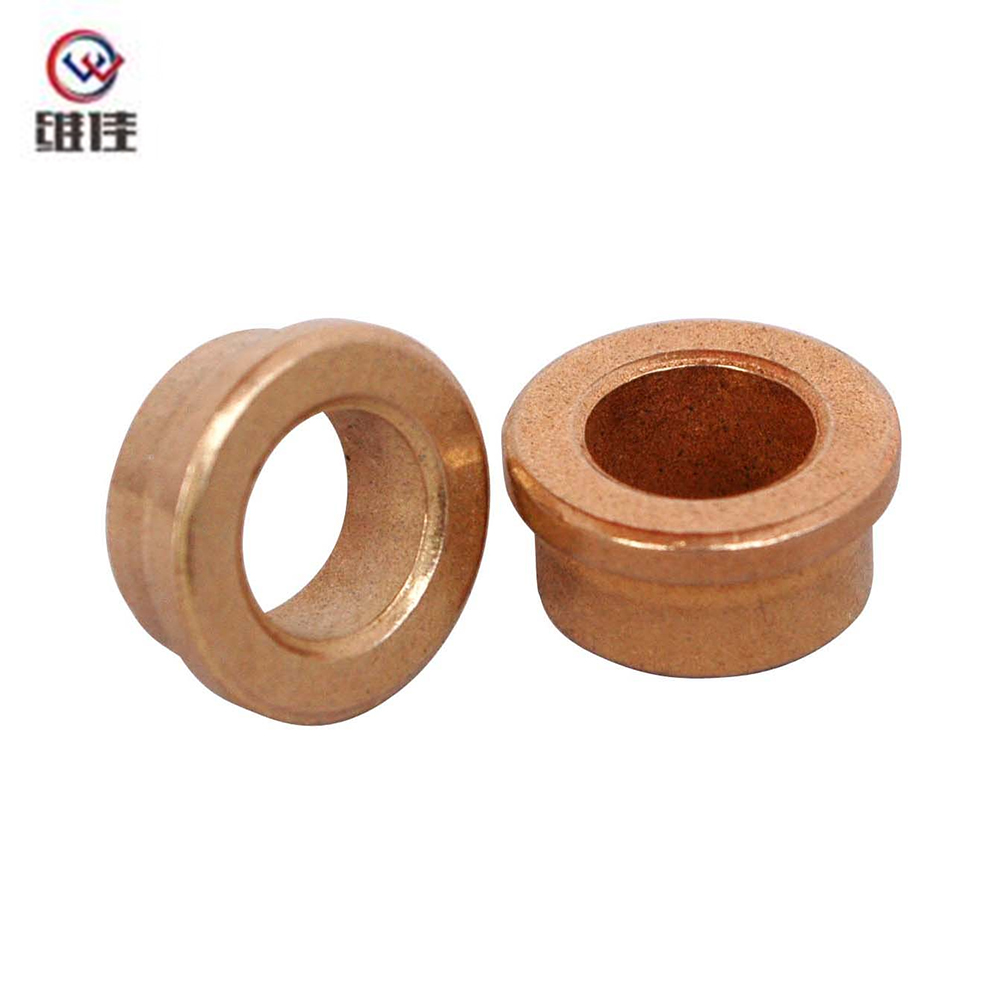
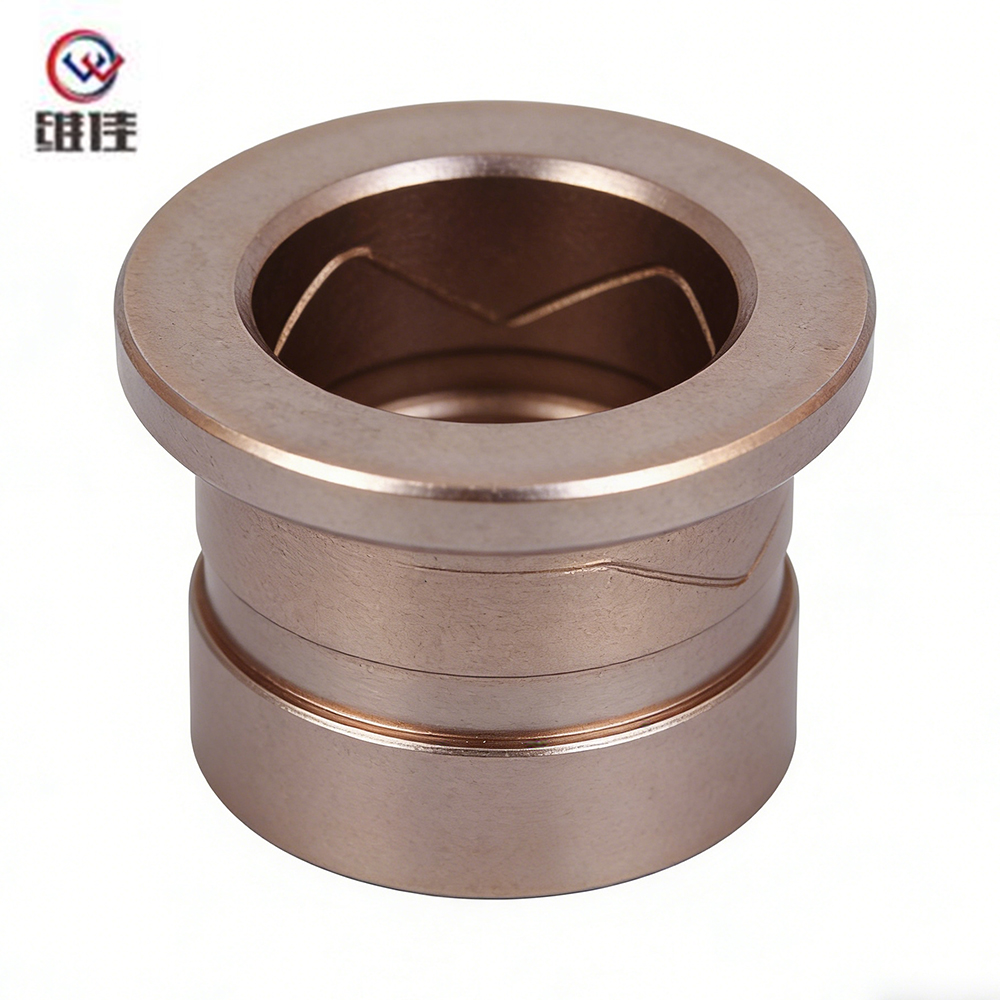
中文简体Premium Material: Our flange bushing is crafted from Sint B50 oil-impregnated bronze, featuring an 18% oil content. The high-quality tin bronze material ensures exceptional hardness, wear resistance, ...
See DetailsE-mail us: [email protected]
Tel: +86-15239857375


 Home / News / Industry News / Iron-Copper Based Oil-Impregnated Bearings: When to Choose Them Over Bronze
 Iron-Copper Based Oil-Impregnated Bearings: When to Choose Them Over Bronze
 2026.10.04
 Industry News
At Welfine, we have spent more than two decades manufacturing powder metallurgy bearings and structural parts for industrial customers. During that time, we have seen designers default to bronze simply because it is familiar. The question we hear most often is whether iron-copper based oil-impregnated bearings can replace bronze bushings without sacrificing reliability. The honest answer is that it depends on the operating conditions. This guide compares iron-copper and bronze in practical terms so you can select the right material with confidence.
What Are Iron-Copper Based Oil-Impregnated Bearings?
Iron-copper based bearings are sintered components made from a blended metal powder. The base is iron powder, and copper powder is added in a controlled proportion, typically between 20% and 40% of the mixture. After the powder is blended, it is compacted into a bushing preform and sintered in a protective atmosphere furnace. Sintering creates a strong metallurgical bond while leaving a network of interconnected pores throughout the component.
In the next step, these pores are filled with lubricating oil under vacuum or pressure. The result is a self-lubricating bearing that releases oil during operation and absorbs it again when the shaft stops. Because the iron skeleton carries the load and the oil prevents metal-to-metal contact, these bearings can provide low maintenance service in many compact assemblies.
The copper in the mix changes the material in several important ways. It improves strength, slightly raises the corrosion resistance compared with plain iron, and allows the bearing to be tailored for different load and speed conditions. While it is not a direct match for bronze in every property, the combination of iron and copper occupies a useful middle ground between low-cost iron and high-performance bronze.
For applications where this material family fits, we offer a range of standard and custom sizes.
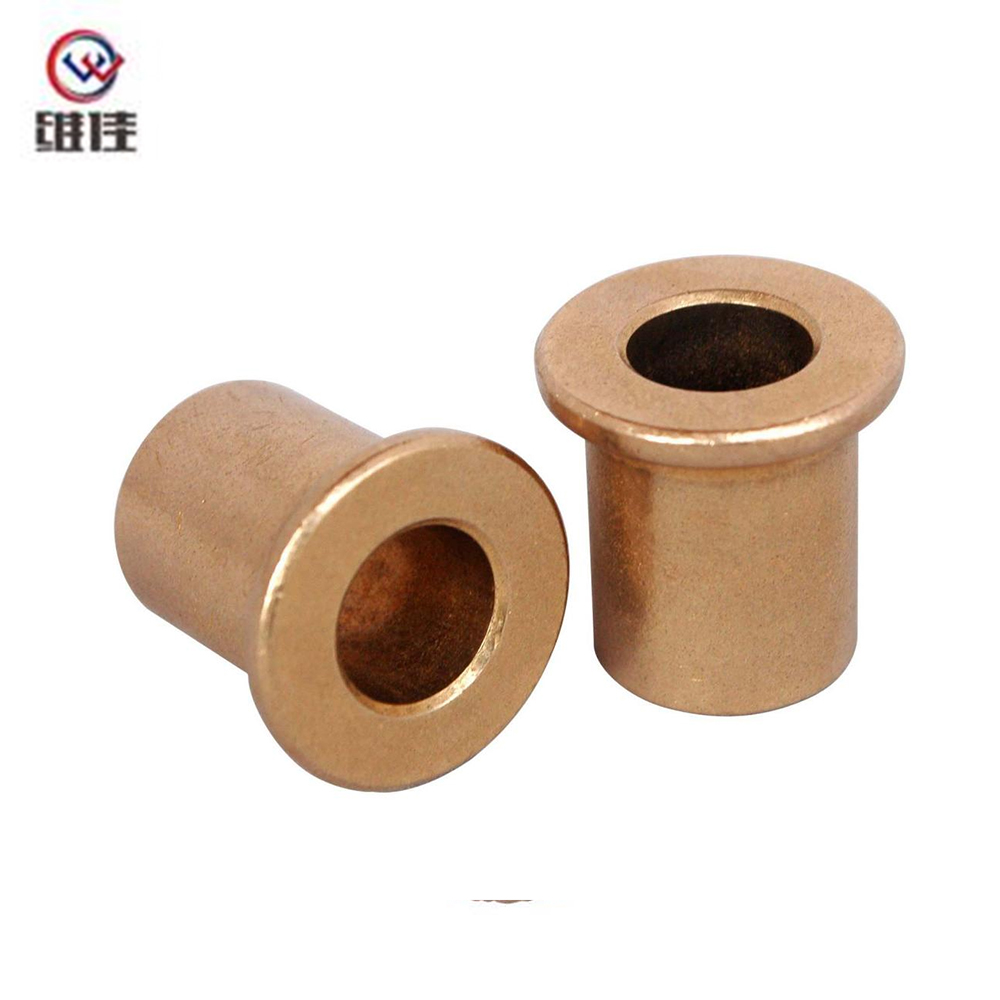
 Iron-Copper Sintered Oil-Impregnated Bushing for Balanced Strength and LubricationThis material combines iron's strength with copper's lubricity, making it a versatile choice for power tools and automotive motors. Compare its performance against bronze using the table below to see if it fits your operating criteria.View Product →
Iron-Copper vs. Bronze: Key Differences
To understand when iron-copper should replace bronze, you need to compare the materials against the same operating criteria. The table below summarizes the general trends we see in sintered bearing applications.
| Factor | Bronze | Iron-Copper |
|---|---|---|
| Relative material cost | Higher | Lower |
| Compressive strength | Good for many loads | Higher at moderate temperatures |
| Speed capability | Better for higher shaft speeds | Better for low to moderate speeds |
| Corrosion resistance | Generally better | Moderate; improved over plain iron |
| Conformability | Better | Slightly lower |
| Typical value | High performance | Cost-efficient strength |
These differences translate into a practical rule of thumb. Choose bronze when speed, corrosion resistance, or shaft misalignment is the dominant concern. Choose iron-copper when the bearing will see heavy loads, stable shafts, controlled environments, and a need to reduce material cost without stepping down to a weaker plain iron part.
When to Choose Iron-Copper Instead of Bronze
Every application is different, but the following scenarios are the ones where we most often recommend iron-copper over bronze.
Heavy Loads at Low to Moderate Speeds
Iron-copper sintered bearings are well suited to applications with relatively high specific loads and shaft speeds below the range where bronze’s superior thermal properties become important. Gearbox pivot points, hydraulic pump bushings, agricultural machinery linkages, and material handling components often run in this zone. The iron skeleton provides structural rigidity, while the copper phase strengthens the bond between particles and helps distribute stress more evenly.
Cost-Sensitive Production Volumes
Because copper is a major cost driver in bearing production, iron-copper can offer meaningful savings when you need thousands or millions of parts. The saving does not come from lower quality; it comes from using less copper in the cross-section. In high-volume sectors such as home appliances, power tools, and automotive auxiliary systems, a small material saving per part adds up quickly. The bearing still receives the same sintering and oil impregnation treatments as our bronze line.
Stable Alignment and Precision Housings
Bronze has good conformability, which means it can tolerate slight shaft deflection and minor misalignment by wearing in locally. Iron-copper is less forgiving in that respect. If your housing bores are machined accurately and the shaft is supported on close centers, the lower conformability of iron-copper is rarely a limitation. This is another reason why iron-copper works well in stamped housings and precision-machined assemblies used in modern industrial equipment.
Limited Exposure to Moisture or Chemicals
Iron-copper is more corrosion-resistant than plain iron, but it is still not a substitute for bronze in wet, acidic, or saltwater environments. In clean, dry indoor applications where lubricating oil separates the shaft from the bearing, iron-copper performs reliably. If there is a chance of water ingress, condensation, or process chemicals, choose bronze instead. When in doubt, test the iron-copper part in the actual environment before committing to a large production run.
Use the following questions as a quick selection checklist:
- Is the load high enough to justify a stronger iron skeleton?
- Is the operating speed low to moderate rather than high?
- Is the housing and shaft alignment well controlled?
- Is corrosion exposure limited or absent?
- Is material cost a key factor in the design target?
If most answers are yes, iron-copper is worth serious consideration. For applications that call for plain iron without the copper addition, we offer a separate product line.
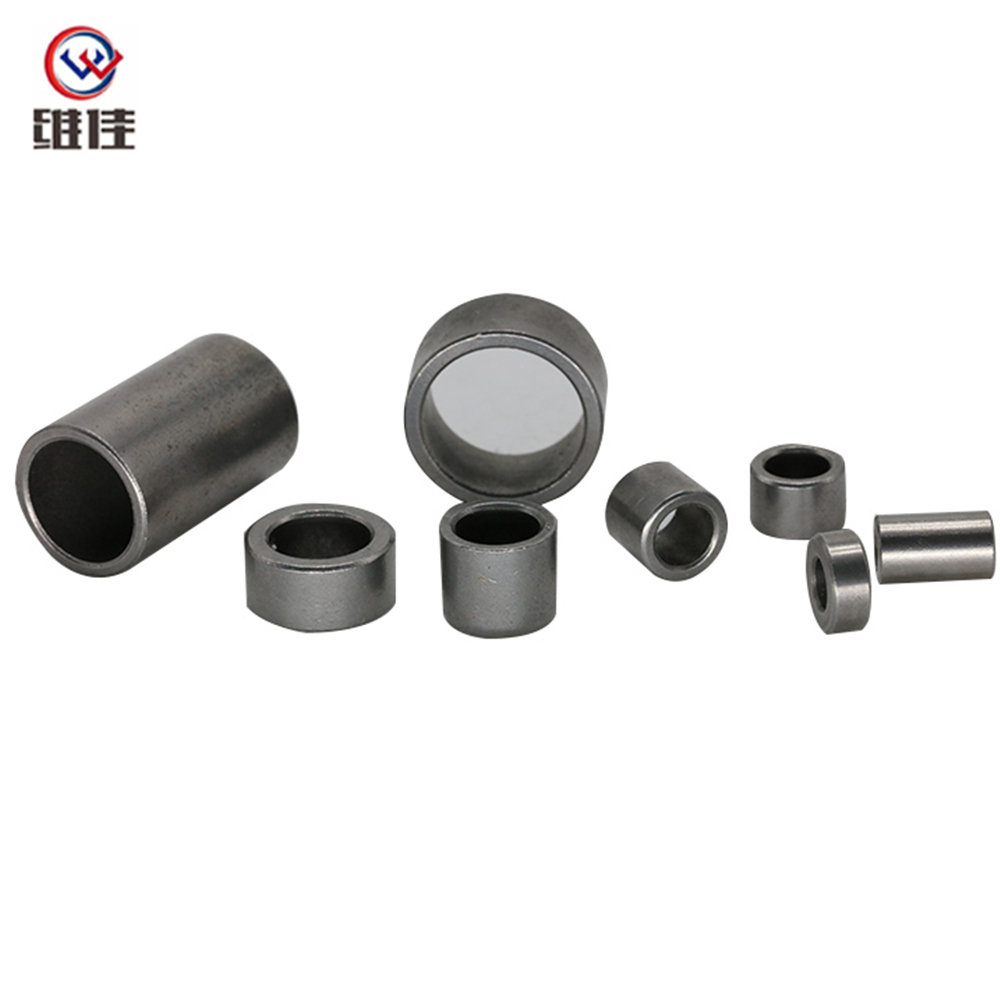 Sintered Iron Self-Lubricating Bushing for Cost-Effective Industrial UseThese iron-based bearings offer high load capacity and wear resistance at lower cost than bronze. They self-lubricate without additional oil, ideal for dry or boundary conditions. Check the examples following this card to see typical industrial applications.View Product →
Common Applications for Iron-Copper Bearings
Iron-copper based oil-impregnated bearings appear in a wide range of commercial and industrial machines. Typical examples include:
- Gearbox shafts and pivot points in construction equipment
- Bushings in hydraulic pumps and motors
- Small motor bearings in household appliances and office equipment
- Chassis and linkage bearings in agricultural machinery
- Actuator and solenoid bearings in industrial automation
These applications share one pattern: the load is meaningful, the shaft speed is moderate, and the housing is designed to keep the bearing aligned. They also benefit from the self-lubricating behavior of sintered materials, which reduces the need for external lubrication points in compact assemblies.
Engineering Considerations and Quality Assurance
Switching from bronze to iron-copper is more than a simple material substitution. The bushing wall thickness, inner diameter clearance, oil viscosity, and shaft surface finish all influence how the bearing behaves. At Welfine, we evaluate these factors with each customer before production. Our engineers look at the pressure-velocity (PV) value, expected operating temperature, oil film thickness, and potential shock loads to decide whether an iron-copper grade can deliver the required service life.
For long-running installations, it helps to know how the bearing will age. Our article on the service life of oil-impregnated bearing bushings explains the main wear mechanisms and the role of re-oiling in real applications. That background makes it easier to set realistic maintenance intervals.
Our 13,039-square-meter production facility gives us full control over sintering, oil impregnation, and final machining. In-house testing helps us monitor porosity, oil content, hardness, and dimensional accuracy. We maintain ISO 9001:2015 and IATF 16949:2016 quality management systems, which are designed specifically to keep consistent quality across both prototype and mass-production orders.
Customization is also part of our daily work. We can adjust the copper content, porosity, oil type, and bushing geometry to meet your drawing or sample. Our OEM/ODM capabilities mean we can move from a concept or reverse-engineered sample to a reliable production part without changing your internal engineering workload. Whether you need a small batch for a pilot run or a long-term supply agreement, our team is ready to support the transition from bronze to iron-copper.
If you have an application in mind, contact our engineering team with your load, speed, and environment details. We will help you decide whether iron-copper is the right move or whether bronze is still the better fit.
Iron-copper based oil-impregnated bearings are not designed to replace bronze in every situation. They are designed to offer a smarter balance between load capacity, material cost, and reliable operation in the right conditions. When heavy loads, controlled alignment, moderate speeds, and cost efficiency are your priorities, iron-copper is the material to evaluate alongside bronze. Talk to Welfine if you want to compare samples and production costs for your next bearing project.
Related products
-
-
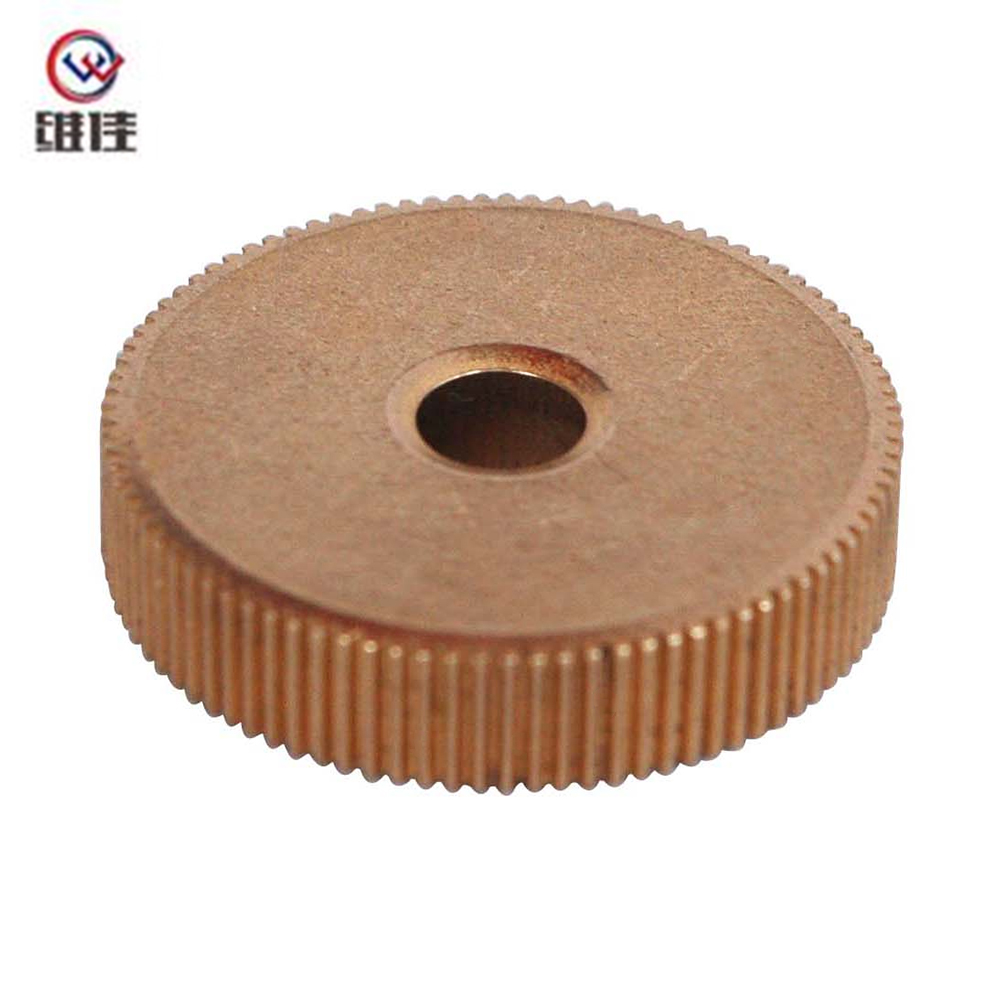
This 4×11.5×5.2mm powder metallurgy gear is manufactured through a precise press-sinter-through hole-oil impregnation process, with strict control of press density (6.7–6.8g/cm³) and sintering tempera...
See Details -
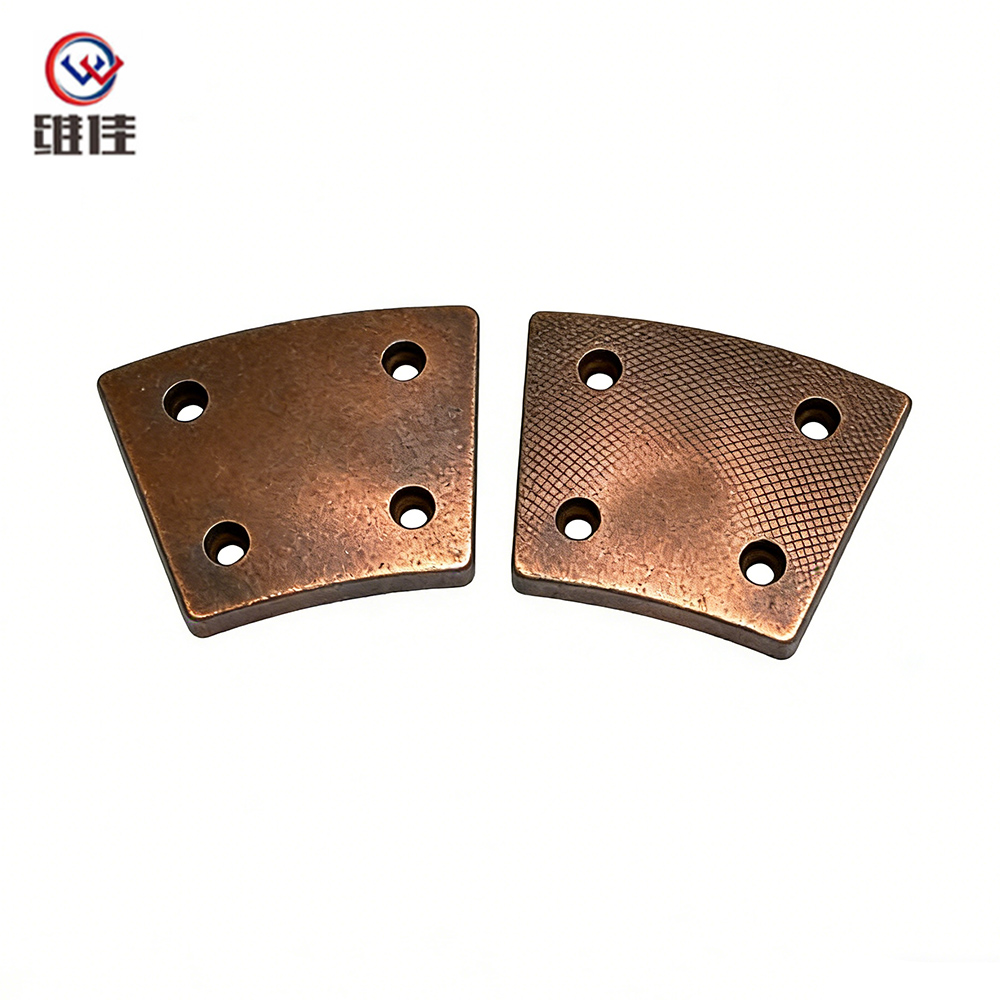
Description: 79.5×62×7.3mm copper-based brake pad with 4-hole design. Density 6.2g/cm³, weight 195g. Free from graphite segregation, cracks, and defects. Ideal for heavy-duty industrial braking system...
See Details -
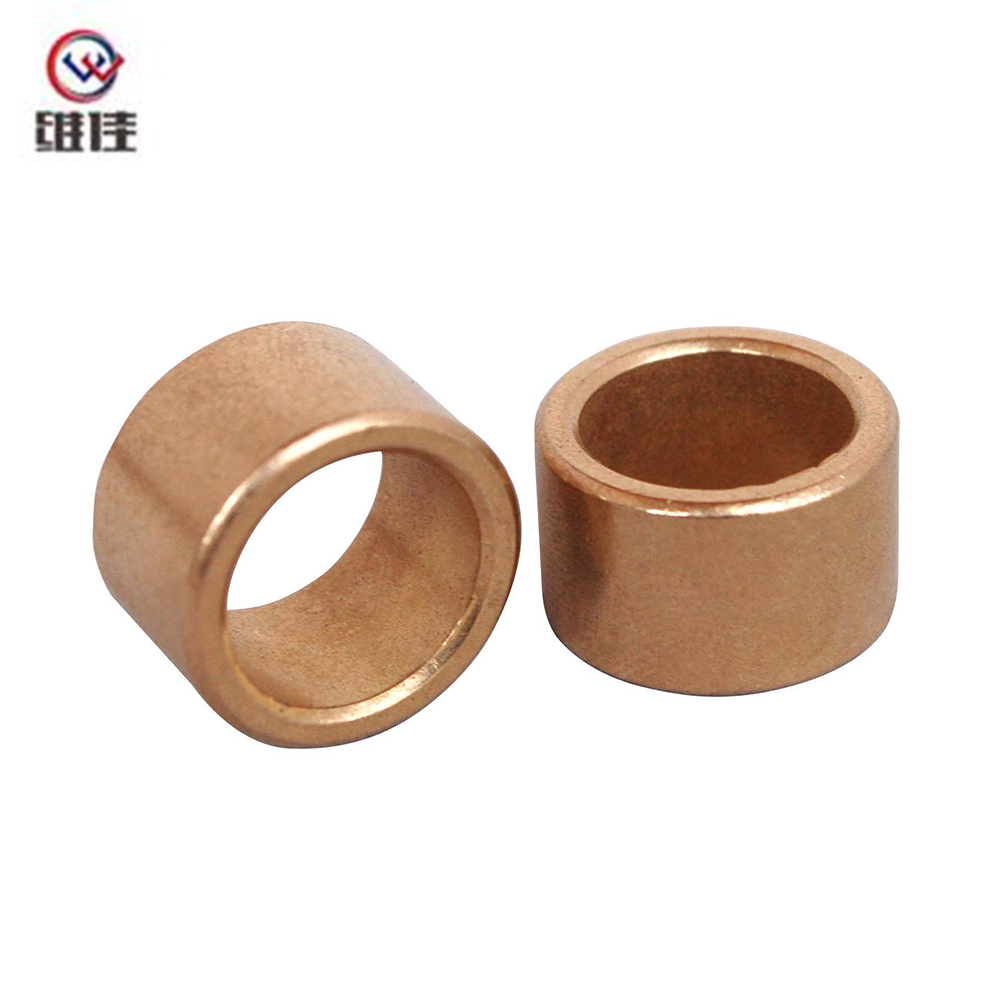
This copper-based powder metallurgy bushing is manufactured through an integrated process of compaction, sintering, sizing, and oil impregnation. It features excellent wear resistance and self-lubrica...
See Details
Copyright © Jiande Welfine Technology Co., Ltd. All Rights Reserved. Privacy Custom Self-lubricating Sintered Bushing Manufacturers
