Why do some irregular shaped parts require secondary machining after sintering?
The manufacturing of powder metallurgy irregular shaped parts presents unique challenges due to their complex geometries and stringent functional requirements. These components, often used in precision actuation systems such as cams, connecting rods, and other motion-control elements, are produced using powder metallurgy techniques that allow for near-net-shape fabrication. However, despite the high precision achievable through sintering, certain irregular shaped parts require secondary machining to achieve the dimensional tolerances, surface finishes, and mechanical properties necessary for optimal performance.
Mechanical Components with Complex Geometries
The first category of powder metallurgy irregular shaped parts consists of mechanical components with highly intricate shapes, designed to achieve specific motion profiles. These include cams, eccentric shafts, and precision levers used in automation and textile machinery. The primary advantage of powder metallurgy is the ability to form complex geometries without the extensive material waste associated with traditional machining. However, the inherent porosity and slight dimensional deviations resulting from sintering often necessitate secondary processing for critical surfaces and interfaces.
Core Functions and Technical Features
- High dimensional stability for motion accuracy
- Optimized surface hardness through material composition and sintering parameters
- Self-lubricating features achievable via material selection
- Customizable internal structures to accommodate load-bearing requirements
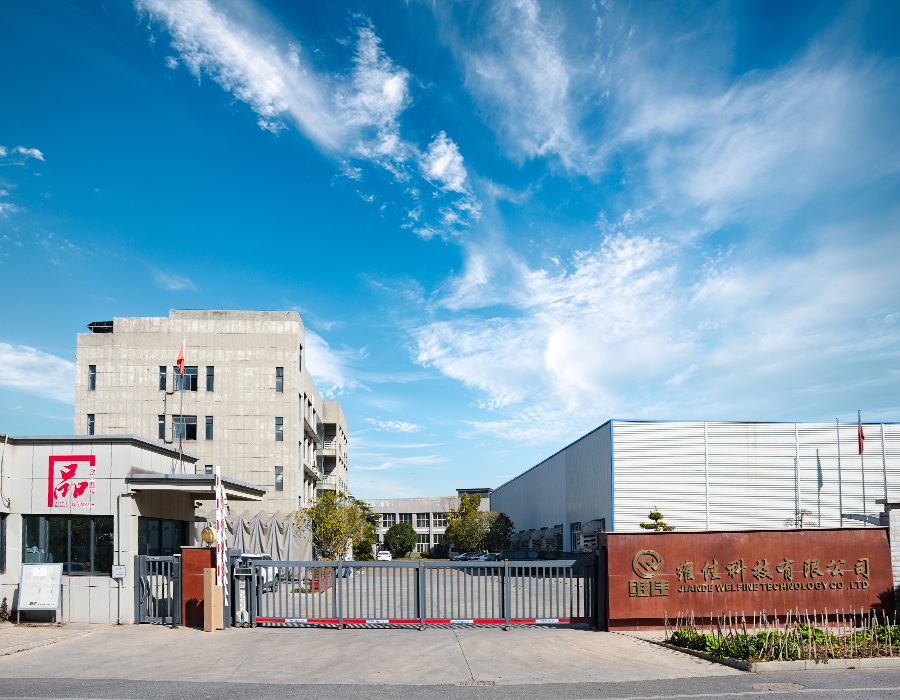
In this context, secondary machining such as CNC shaping, drilling, or tapping ensures that critical functional surfaces meet the exact specifications. Companies like Jiande Welfine Technology Co., Ltd. leverage advanced production lines and experienced engineering teams to optimize sintering processes while providing tailored secondary machining solutions to maintain high standards for industrial applications.
Typical Applications
- Automation equipment components for precise motion control
- Textile machinery drive parts
- Sewing machine cams and actuators
- Custom bushings and linkages in assembly lines
Self-Lubricating Bushings and Load-Bearing Parts
A second classification of powder metallurgy irregular shaped parts includes self-lubricating bushings and load-bearing components. These parts are frequently used in high-wear environments, where continuous operation without maintenance is critical. The sintering process allows for controlled porosity, which can retain lubricants, providing self-lubrication. However, irregular shapes may have tight assembly fits or require specific surface finishes that cannot be achieved solely through sintering, making secondary machining indispensable.
Technical Characteristics
- Customizable material systems: iron-based, copper-based, bronze, and composites
- Enhanced wear resistance through tailored hardness and density
- Precision tolerance ranges to meet stringent assembly requirements
- Optional secondary processing such as grooving or shaping for optimized fit
Jiande Welfine Technology Co., Ltd. specializes in producing these high-performance bushings, integrating both advanced sintering and secondary machining processes. By combining high-efficiency presses, high-temperature sintering furnaces, and precision forming machines, the company ensures that even complex powder metallurgy irregular shaped parts maintain dimensional accuracy, durability, and reliability.
| Part Type |
Material Options |
Typical Applications |
Secondary Processing |
| Cams and connecting rods |
Iron-based, steel, composite |
Automation equipment, textile machinery |
CNC shaping, drilling |
| Self-lubricating bushings |
Bronze, copper-based alloys |
High-wear industrial assemblies |
Grooving, shaping, precision finishing |
| Precision linkages |
Stainless steel, composite materials |
Textile machinery, sewing machines |
Tapping, CNC milling |
Precision Actuation Systems and Custom Components
The third category focuses on precision actuation system components. These powder metallurgy irregular shaped parts are designed for highly specific motion profiles, where even minor deviations can compromise performance. For these components, secondary machining after sintering is not optional but essential. Surfaces that engage with other mechanical elements must meet strict flatness, roundness, or profile specifications to avoid excessive wear, vibration, or functional failure.
Differentiated Advantages
- Ability to produce complex shapes with near-net dimensions
- Enhanced control of mechanical properties through material selection
- Integration of secondary machining to achieve tight tolerances and surface finishes
- Customizable designs to match specific assembly and performance requirements
Jiande Welfine Technology Co., Ltd. addresses these challenges by providing OEM/ODM customized solutions, where parts are designed according to customer drawings or functional specifications. The company’s structured R&D and production teams optimize both sintering and secondary machining to ensure that powder metallurgy irregular shaped parts achieve exceptional reliability in high-precision applications.
Implementation Steps for Secondary Machining
- Assessment of critical surfaces and dimensional requirements after sintering
- Selection of appropriate machining methods (CNC milling, drilling, tapping, grinding)
- Application of surface finishing techniques to meet functional specifications
- Quality inspection to verify tolerances, hardness, and surface integrity
- Final assembly testing for motion accuracy and operational performance
Frequently Asked Questions
Q1: What is the difference between mechanical components and self-lubricating bushings?
Mechanical components are primarily designed for specific motion profiles and precise actuation, while self-lubricating bushings focus on load-bearing and wear resistance with integrated lubrication properties. Both require secondary machining for critical tolerances and surface finishes.
Q2: How does Jiande Welfine Technology Co., Ltd. ensure the quality of irregular shaped parts?
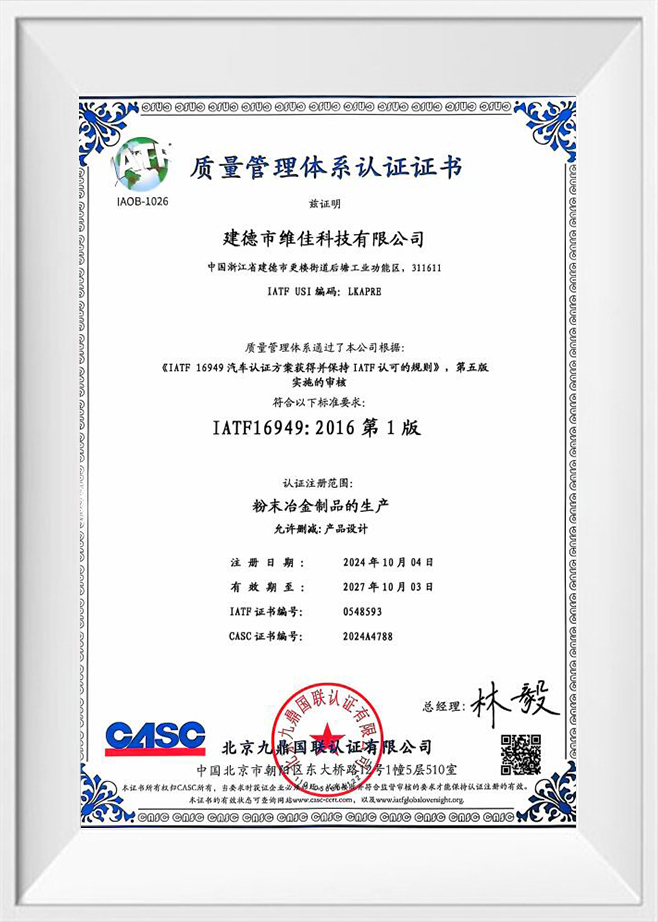
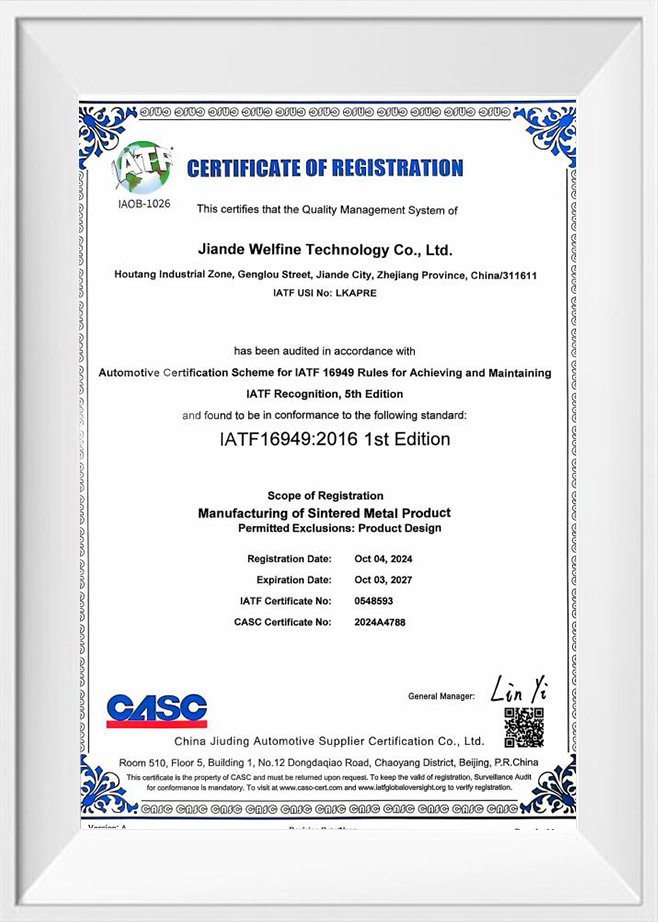
The company implements ISO 9001:2015 and IATF 16949:2016 certified quality management systems. Advanced sintering equipment, high-efficiency presses, and precision machining facilities enable consistent dimensional accuracy, density, and surface quality for all powder metallurgy irregular shaped parts.
Q3: Why are some irregular shaped parts unsuitable for net-shape production alone?
Due to complex geometries, critical dimensions, and functional surface requirements, sintering alone cannot achieve all tolerances and finishes. Secondary machining corrects deviations, ensures proper assembly fit, and enhances operational reliability.
 English
 中文简体
中文简体