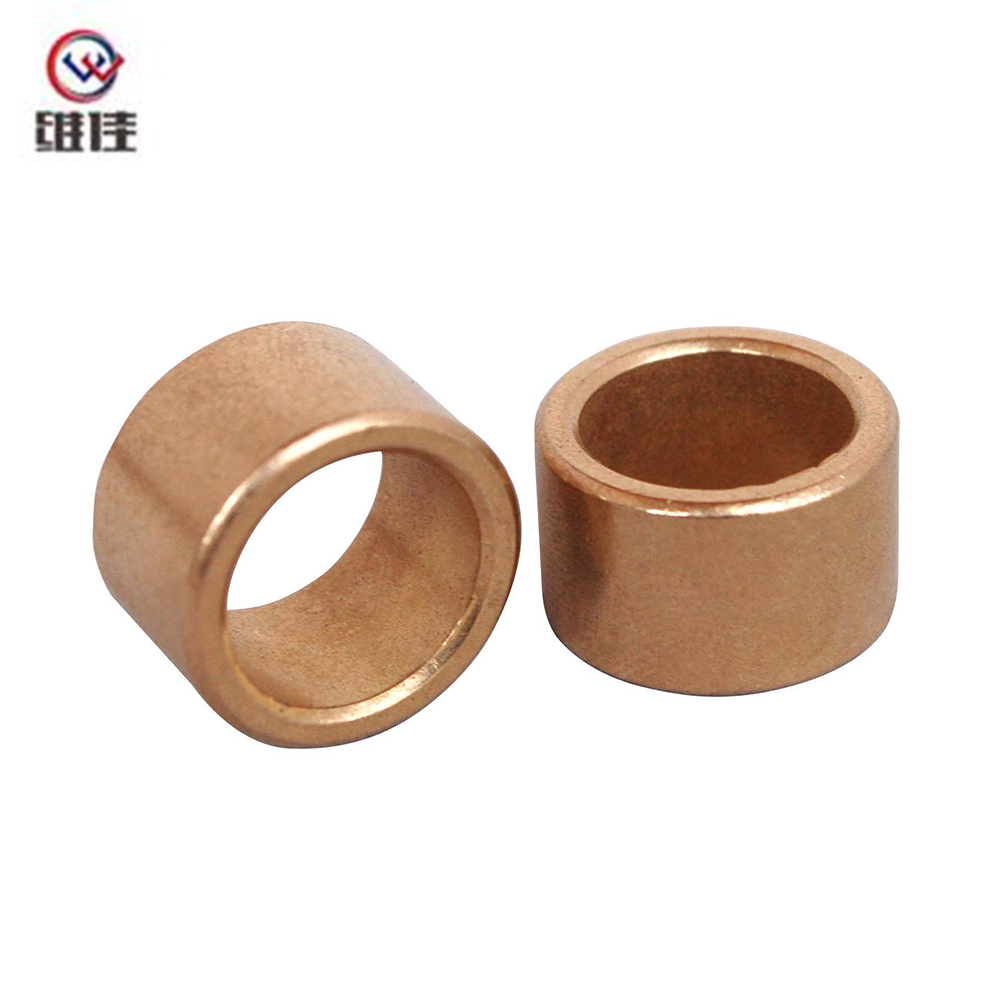
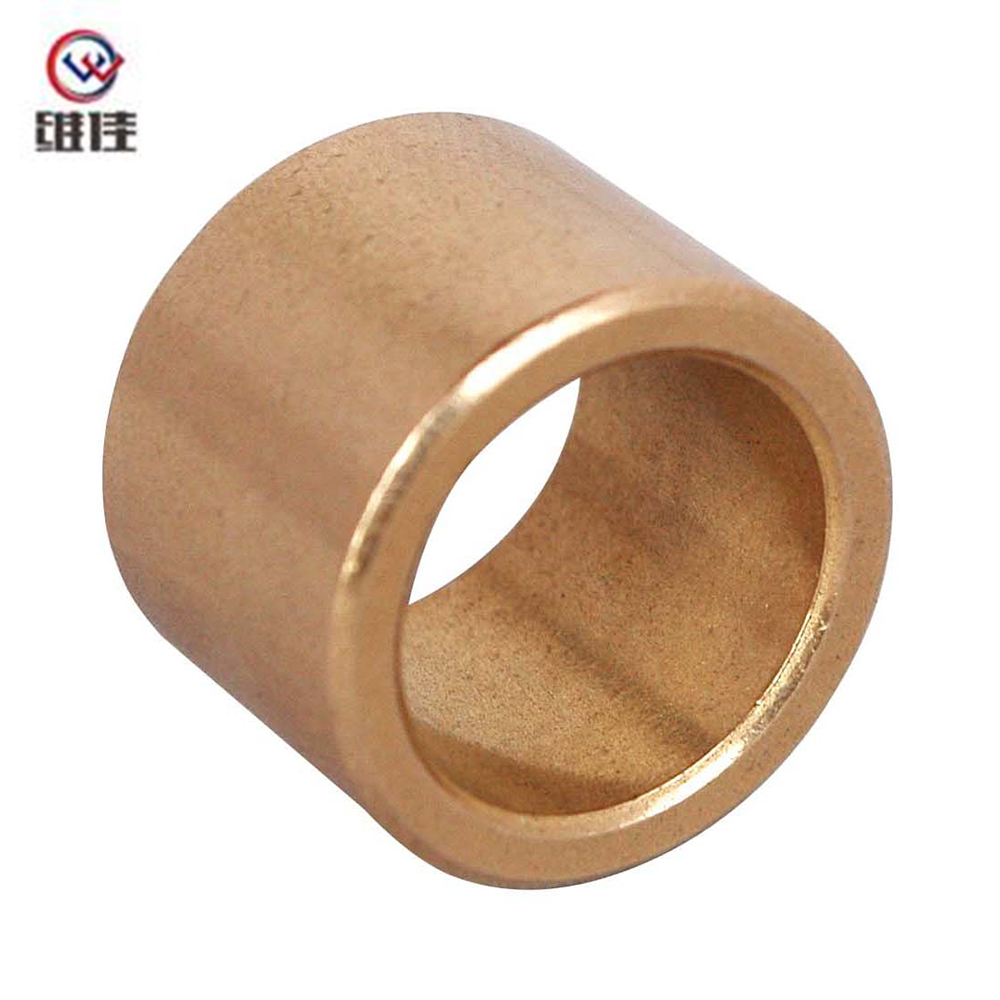
Why Is the CuSn10 Powder Metallurgy Bronze Bushing an Ideal Choice for High-Load Applications?
As modern machinery continues to evolve toward higher efficiency, longer service life, and lower maintenance requirements, the performance of bearing bushings has become increasingly important. In industries such as construction machinery, electric motors, agricultural equipment, hydraulic systems, and automation machinery, bushings not only provide support and guidance but also withstand complex loads, friction, and environmental challenges.
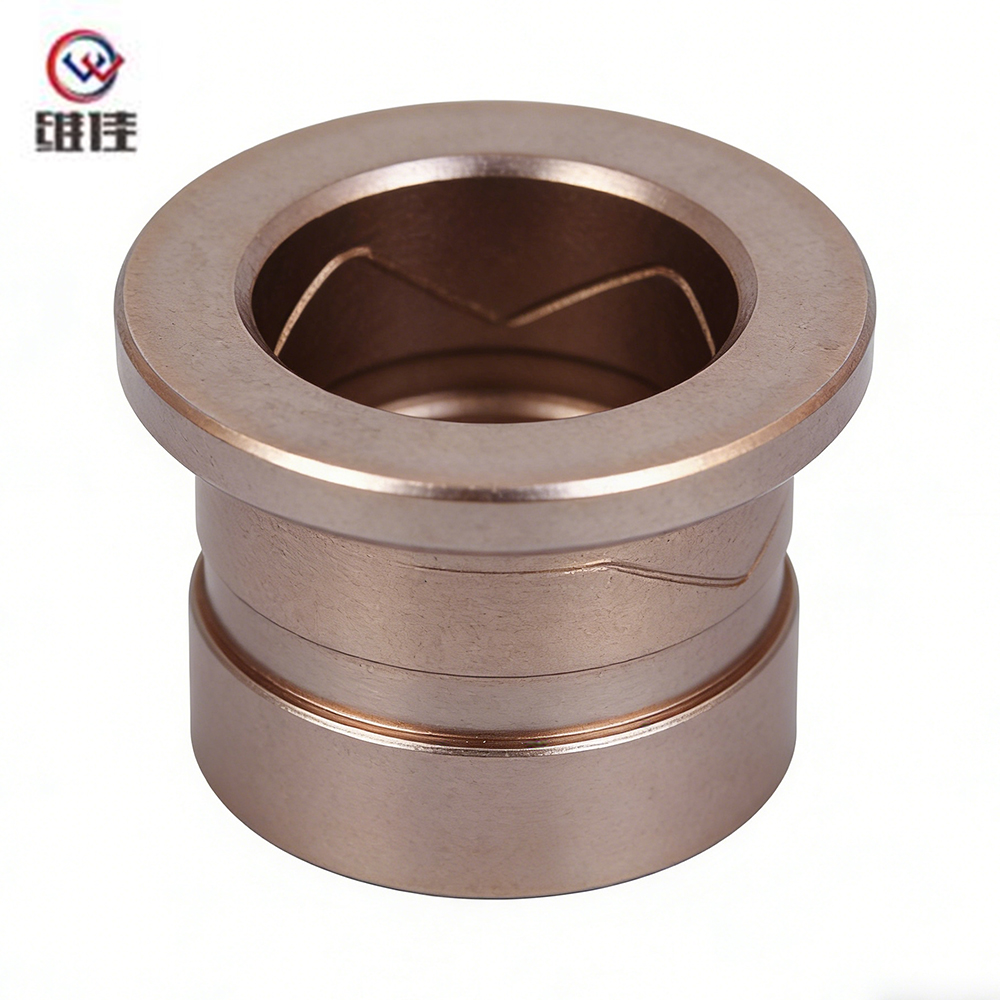
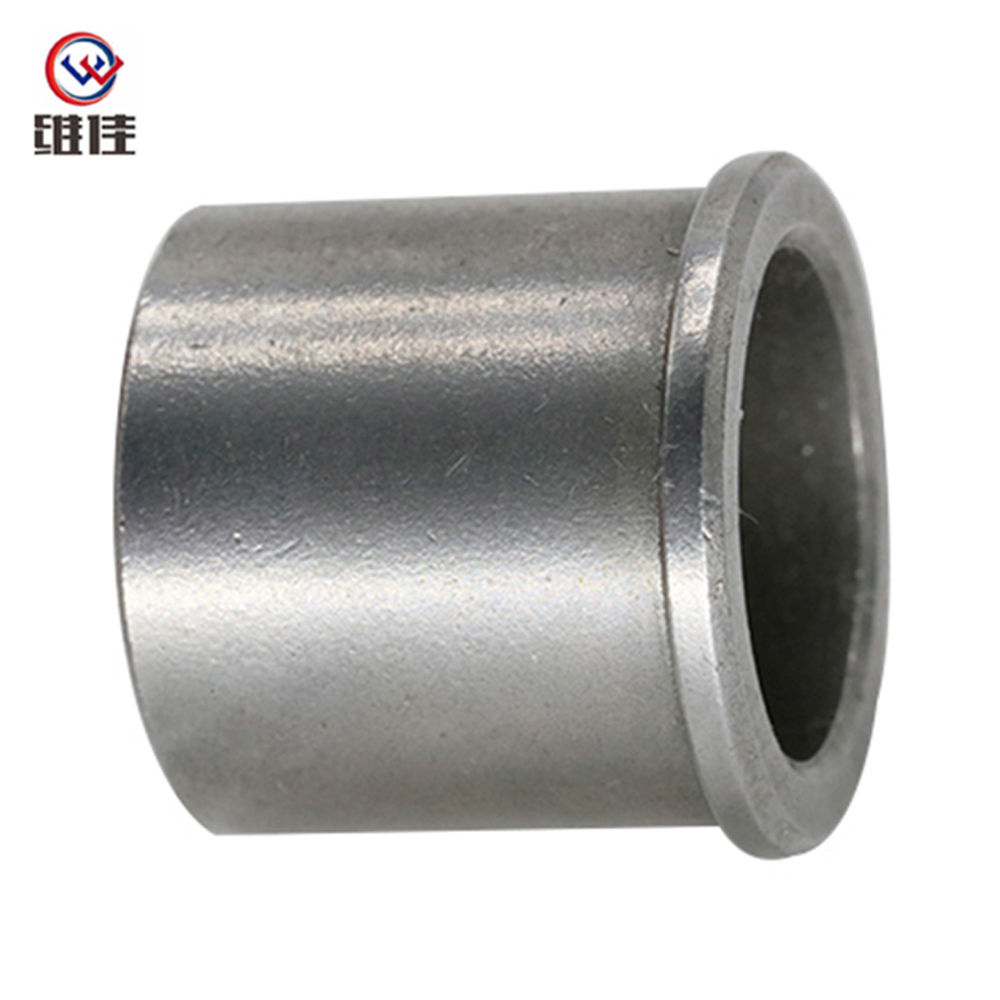
Among various copper-based powder metallurgy materials, the CuSn10 Powder Metallurgy Bronze Bushing has become a preferred solution across many industrial sectors due to its excellent wear resistance, high load-carrying capacity, and outstanding self-lubricating properties. But what makes CuSn10 powder metallurgy bronze bushings so unique, and where are they most commonly used?
What Is a CuSn10 Powder Metallurgy Bronze Bushing?
CuSn10 is a bronze alloy containing approximately 10% tin. When manufactured using powder metallurgy technology, the material develops a uniform and controllable porous structure. These microscopic pores can store lubricating oil and gradually release it during operation, reducing friction and minimizing wear.
Compared with traditional cast bronze bushings, powder metallurgy manufacturing offers superior dimensional consistency, higher material utilization, and lower post-processing costs.
The following table compares CuSn10 powder metallurgy bronze with standard brass materials:
| Performance Item |
CuSn10 Powder Metallurgy Bronze |
Standard Brass |
| Wear Resistance |
Excellent |
Moderate |
| Load Capacity |
High |
Medium |
| Oil Retention Capability |
Excellent |
Low |
| Friction Coefficient |
Low |
Higher |
| Service Life |
Long |
Shorter |
Because of these advantages, CuSn10 powder metallurgy bronze bushings are widely used in machinery that requires long-term stable operation.
Why Does CuSn10 Offer Both Wear Resistance and Load Capacity?
Engineers often face a challenge when selecting bushing materials: highly wear-resistant materials may lack toughness, while tougher materials may not provide sufficient wear resistance.
CuSn10 achieves an effective balance between these two requirements.
The addition of tin significantly improves the hardness and wear resistance of the bronze matrix. At the same time, the uniform microstructure formed during the powder metallurgy sintering process helps distribute internal stresses more evenly, enhancing the overall mechanical performance.
During continuous operation, the bushing surface can maintain a stable lubricating film, reducing direct metal-to-metal contact and slowing wear progression. This characteristic is especially valuable in motors, gearboxes, and hydraulic equipment.
How Does Powder Metallurgy Technology Improve Bushing Performance?
Material selection is important, but manufacturing technology plays an equally critical role in determining final product quality.
The primary advantage of powder metallurgy lies in its ability to precisely control density, porosity, and dimensional accuracy. Through pressing, sintering, sizing, and precision machining processes, manufacturers can produce bushings with highly consistent performance.
The following comparison highlights the advantages of powder metallurgy over conventional machining methods:
| Comparison Item |
Powder Metallurgy Process |
Traditional Machining |
| Material Utilization |
High |
Lower |
| Dimensional Consistency |
Excellent |
Average |
| Mass Production Capability |
Strong |
Moderate |
| Secondary Processing Requirements |
Minimal |
Extensive |
| Overall Cost Efficiency |
More Competitive |
Higher Cost |
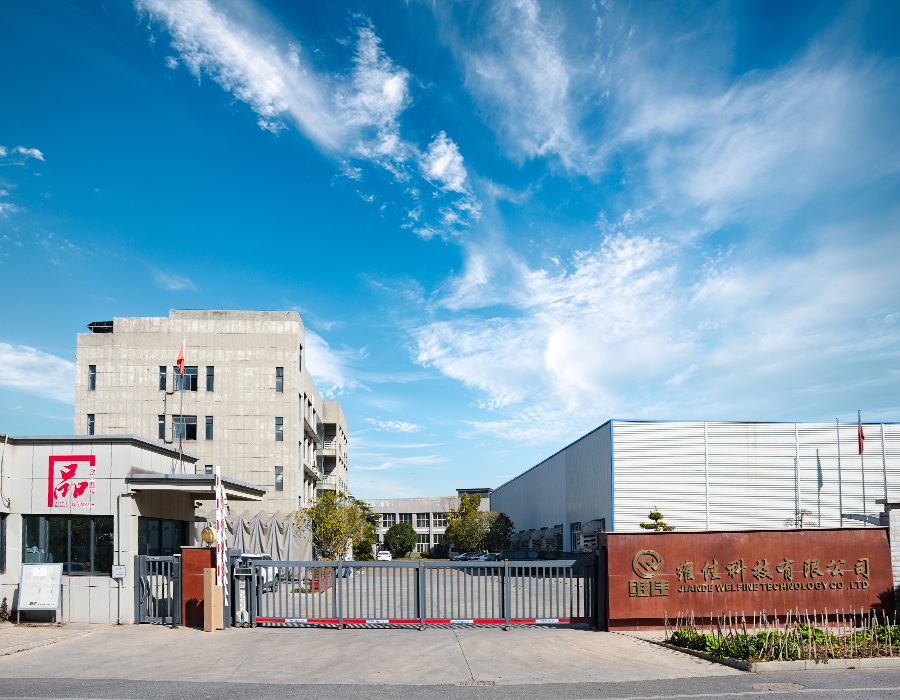
Founded in 2001, Jiande Weijia Technology Co., Ltd. has focused on the research, development, and manufacturing of powder metallurgy bushings, self-lubricating bearings, and precision components. With a modern production facility covering 13,039 square meters and equipped with advanced manufacturing and testing equipment, the company continuously optimizes its sintering and precision machining processes.
By leveraging extensive industry experience, Jiande Weijia Technology Co., Ltd. consistently improves dimensional accuracy, porosity control, and durability, ensuring stable performance for CuSn10 bronze bushings in demanding industrial applications.
Which Industries Benefit Most from CuSn10 Powder Metallurgy Bronze Bushings?
The application range of CuSn10 bushings is much broader than many people realize.
Electric Motor Industry
In electric motors, bushings must withstand continuous rotational friction. CuSn10 materials effectively reduce wear between shafts and bushings, helping extend equipment lifespan.
Agricultural Machinery
Agricultural equipment often operates in dusty and contaminated environments with frequent start-stop cycles. The excellent oil retention capability of CuSn10 bushings helps maintain lubrication over extended periods.
Hydraulic and Automation Systems
Hydraulic equipment and automated machinery require high precision and reliability. Powder metallurgy bushings provide consistent dimensional accuracy, contributing to stable and precise equipment performance.
The table below illustrates common application areas:
| Industry |
Application Area |
Primary Requirement |
| Electric Motors |
Shaft Support |
Low Friction and Long Service Life |
| Hydraulic Systems |
Guide Components |
High Load Capacity |
| Construction Machinery |
Articulated Joints |
Impact and Wear Resistance |
| Automation Equipment |
Motion Assemblies |
High Precision Operation |
| Agricultural Machinery |
Transmission Systems |
Contamination Resistance |
As smart manufacturing continues to expand, demand for high-performance bushings is expected to grow significantly.
How Can You Evaluate the Quality of a CuSn10 Bronze Bushing?
Not all CuSn10 bushings on the market deliver the same level of quality. Focusing solely on price may lead to compromised performance and shorter service life.
High-quality products require strict control over raw materials, powder formulation, sintering conditions, machining accuracy, and final inspection procedures.
For example, excessive porosity may reduce mechanical strength, while insufficient porosity can negatively affect oil retention capability. Achieving the ideal balance requires extensive manufacturing expertise and advanced process control.
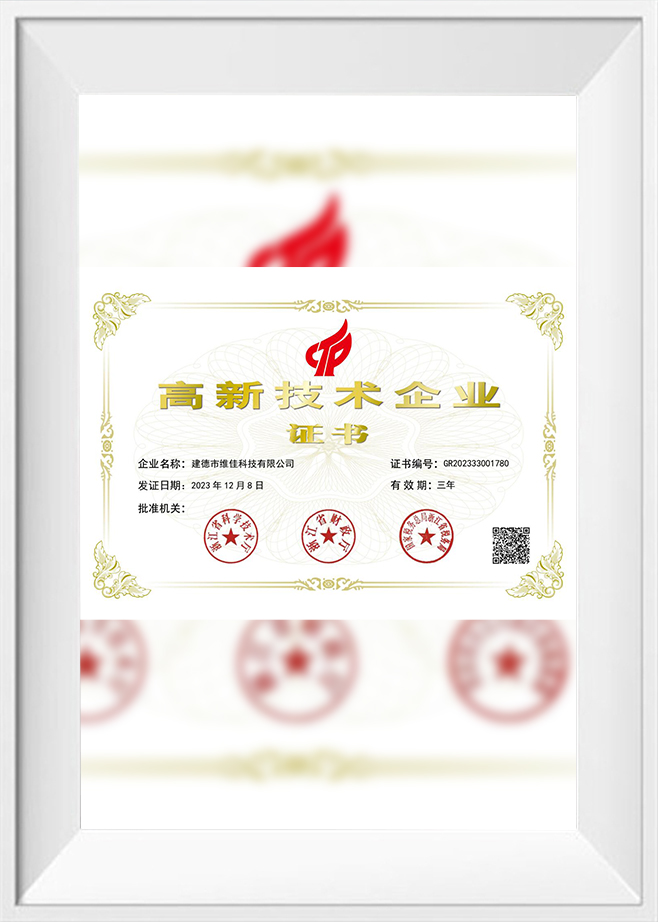
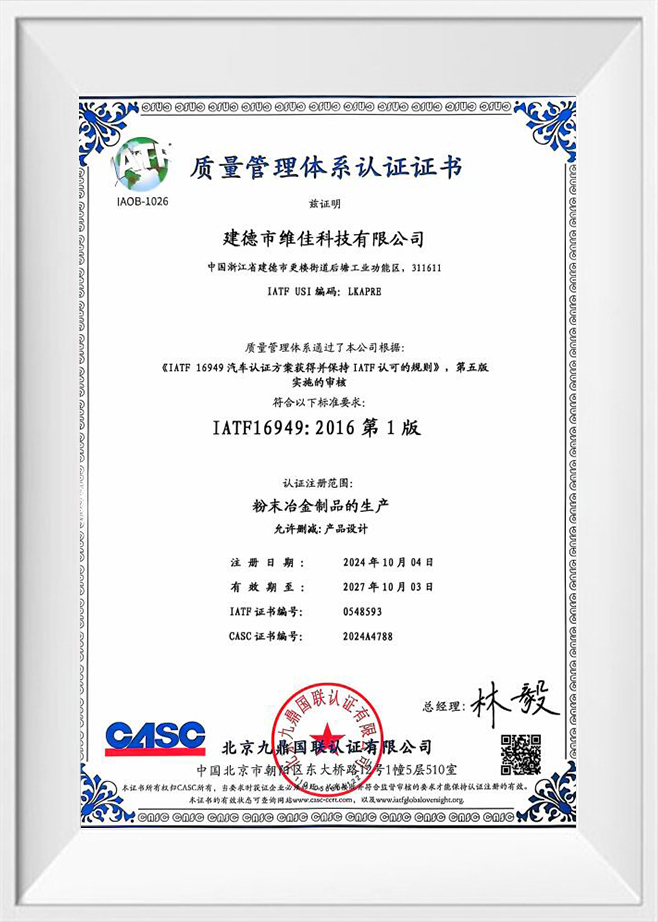
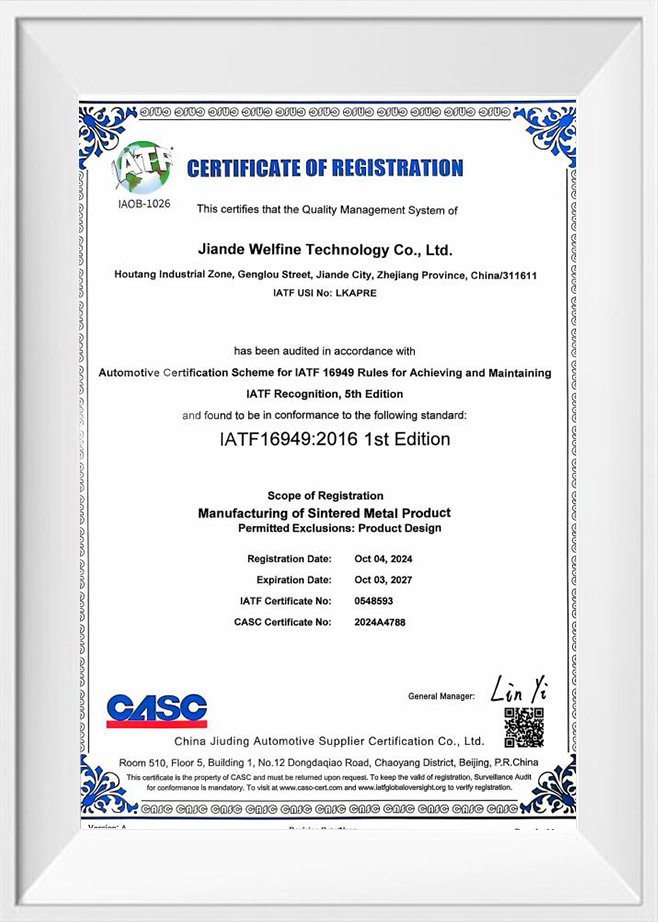
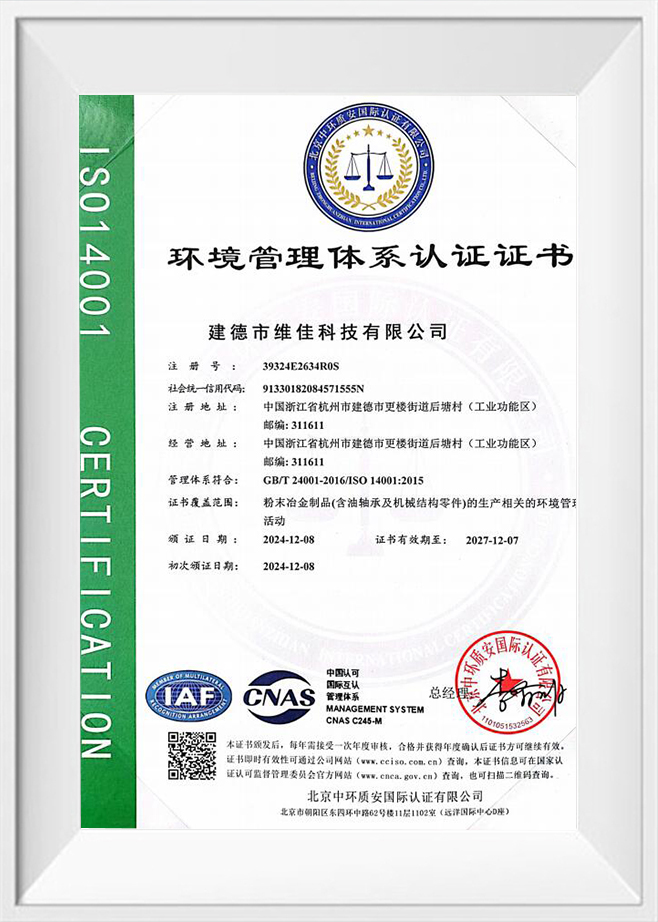
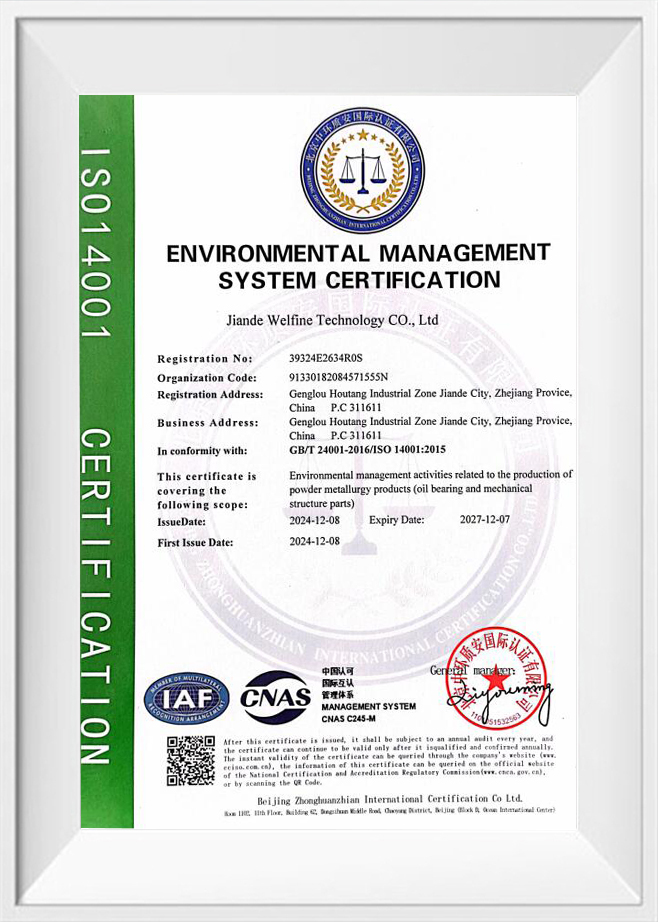
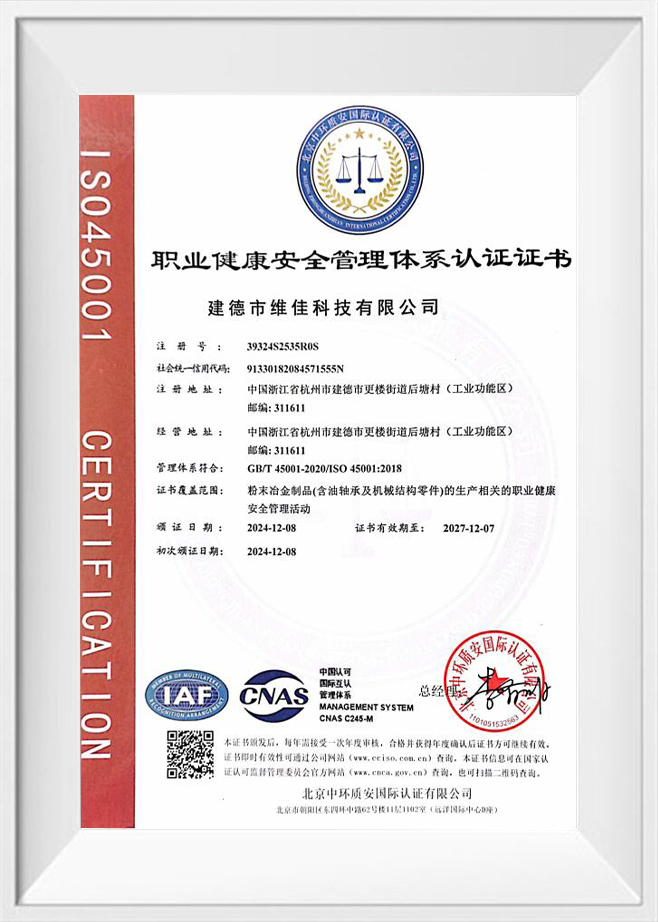
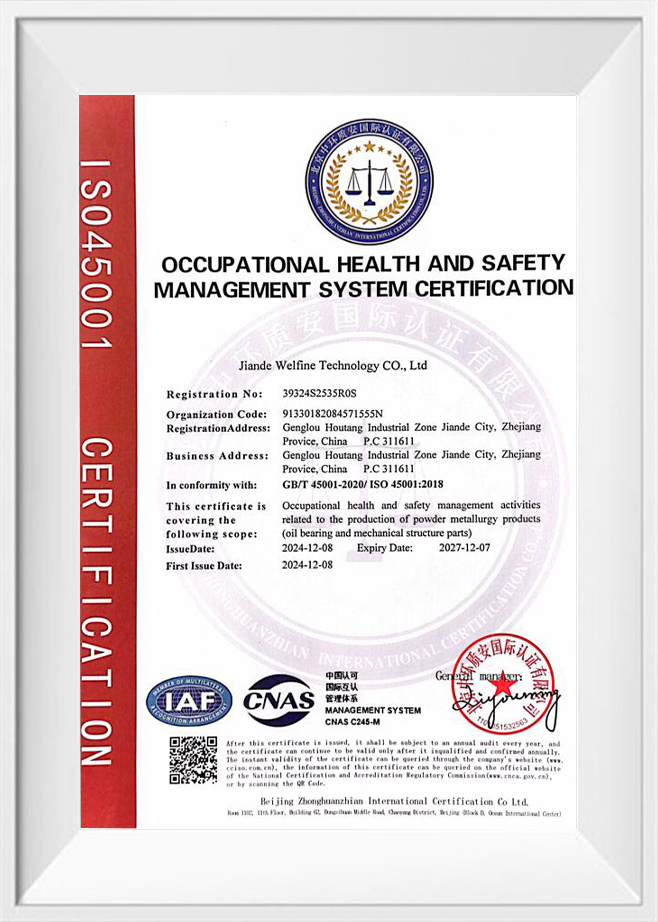
Jiande Weijia Technology Co., Ltd. operates under rigorous quality management standards and has obtained ISO 9001:2015 and IATF 16949:2016 certifications. Supported by experienced engineers and quality management professionals, the company provides OEM and ODM custom bushing solutions based on customer drawings or samples, ensuring stable delivery and flexible production capabilities.
What Is the Future of CuSn10 Powder Metallurgy Bronze Bushings?
As industrial equipment moves toward greater energy efficiency, automation, and reliability, traditional lubrication methods continue to evolve. Powder metallurgy bushings featuring self-lubrication, high precision, and long service life are becoming increasingly important.
In the future, CuSn10 powder metallurgy bronze bushings will continue serving traditional mechanical industries while expanding into emerging sectors such as new energy vehicles, electric tools, intelligent manufacturing equipment, and advanced automated production lines.
For equipment manufacturers, selecting stable and reliable bushing solutions can reduce maintenance costs, improve operational efficiency, and enhance overall product competitiveness. The CuSn10 Powder Metallurgy Bronze Bushing is well-positioned to play a vital role in achieving these objectives.
FAQ
Can CuSn10 Powder Metallurgy Bronze Bushings Operate Without Maintenance?
Under normal operating conditions, the porous oil-retaining structure provides continuous lubrication and significantly reduces maintenance requirements compared to conventional bushings. However, periodic inspection is still recommended in high-load or high-temperature environments.
Are CuSn10 Bushings Suitable for High-Speed Rotating Equipment?
Yes. Their low friction coefficient and good heat dissipation characteristics make them suitable for many medium- and high-speed applications. Specific operating limits should be verified according to actual working conditions.
What Is the Difference Between Powder Metallurgy and Cast Bronze Bushings?
Powder metallurgy bushings feature oil-retaining porous structures, better dimensional consistency, improved mass-production stability, and often provide more cost-effective performance than traditional cast bronze bushings.
Does Jiande Weijia Technology Co., Ltd. Provide Custom Manufacturing Services?
Yes. The company offers OEM and ODM manufacturing services based on customer drawings, samples, and technical requirements, supporting a wide range of industrial applications.
What Factors Affect the Service Life of a CuSn10 Bushing?
Service life depends on factors such as load, operating speed, lubrication conditions, working temperature, installation accuracy, and environmental conditions. Proper selection and installation can significantly extend product lifespan.
 English
 中文简体
中文简体