 English
 中文简体
中文简体This 4×11.5×5.2mm powder metallurgy gear is manufactured through a precise press-sinter-through hole-oil impregnation process, with strict control of press density (6.7–6.8g/cm³) and sintering tempera...
See DetailsE-mail us: [email protected]
Tel: +86-15239857375


 Home / News / Industry News / What Is the Powder Metallurgy Process? 4 Steps, Materials, and Key Applications
 What Is the Powder Metallurgy Process? 4 Steps, Materials, and Key Applications
 2026.09.04
 Industry News
Content
- 1 How the Powder Metallurgy Process Works, Step by Step
- 2 Secondary Operations: Sizing, Impregnation and Finishing
- 3 Materials: From Iron and Bronze to Soft Magnetic Composites
- 4 Powder Metallurgy vs. Machining and Casting
- 5 When the Process Fits — and When It Does Not
- 6 Frequently Asked Questions About the Powder Metallurgy Process
The bushing inside a washing-machine motor, the pump gear in an industrial fuel heater and the friction pad in an industrial brake share one manufacturing trait: none of them starts as a solid bar. Each is pressed from metal powder and heated — sintered — in a furnace, never fully melted. That is the powder metallurgy process in one sentence: fine metal powders are compacted into a shaped die and heated to just below the melting point, so the particles bond into a solid, precise part.
Three consequences of that definition matter to engineers and buyers. First, the process is near-net-shape: typically more than 90 percent of the powder charged into the press ends up in the finished part, because nothing is cut away. Second, porosity is a design variable rather than a defect — it is the reason a sintered bronze bushing can hold lubricating oil inside its own walls and run for years without greasing. Third, once tooling exists, every part in the batch is dimensionally alike, which suits repeat production in the tens of thousands.
The sections below cover the four process stages, the finishing operations, the materials involved, and an honest comparison with machining and casting.

How the Powder Metallurgy Process Works, Step by Step
Conventional press-and-sinter production runs through four stages. Each stage leaves a fingerprint on the finished part, so it is worth knowing what happens where.
1
Powder production
Metal is converted into fine particles, most often by atomization: a stream of molten metal is broken apart by high-pressure water or gas jets. Chemical reduction and mechanical milling are also used. Particle size — anywhere from a few micrometers to a few hundred — controls how the powder flows into the die and how densely it packs.
2
Mixing and blending
The base powder is blended with alloying additions such as graphite, copper or nickel, plus a small dose of pressing lubricant. Uniformity matters more here than in melt metallurgy, because every particle is its own dosage: a poorly blended lot shows up as weak spots in the sintered part.
3
Compaction
Powder is fed into a hardened die and pressed at roughly 200 to 700 MPa for iron-based mixes. The result is a "green" compact that holds its shape but is fragile. Compaction density largely decides final strength, and press capacities range from a few tons to well over 1,000.
4
Sintering
Green compacts pass through a continuous furnace under a protective atmosphere at 70 to 90 percent of the alloy's melting point — about 1,120°C for iron-based parts and roughly 760 to 870°C for bronzes. Necks grow between adjacent particles, the part shrinks slightly, and most of its final strength develops.
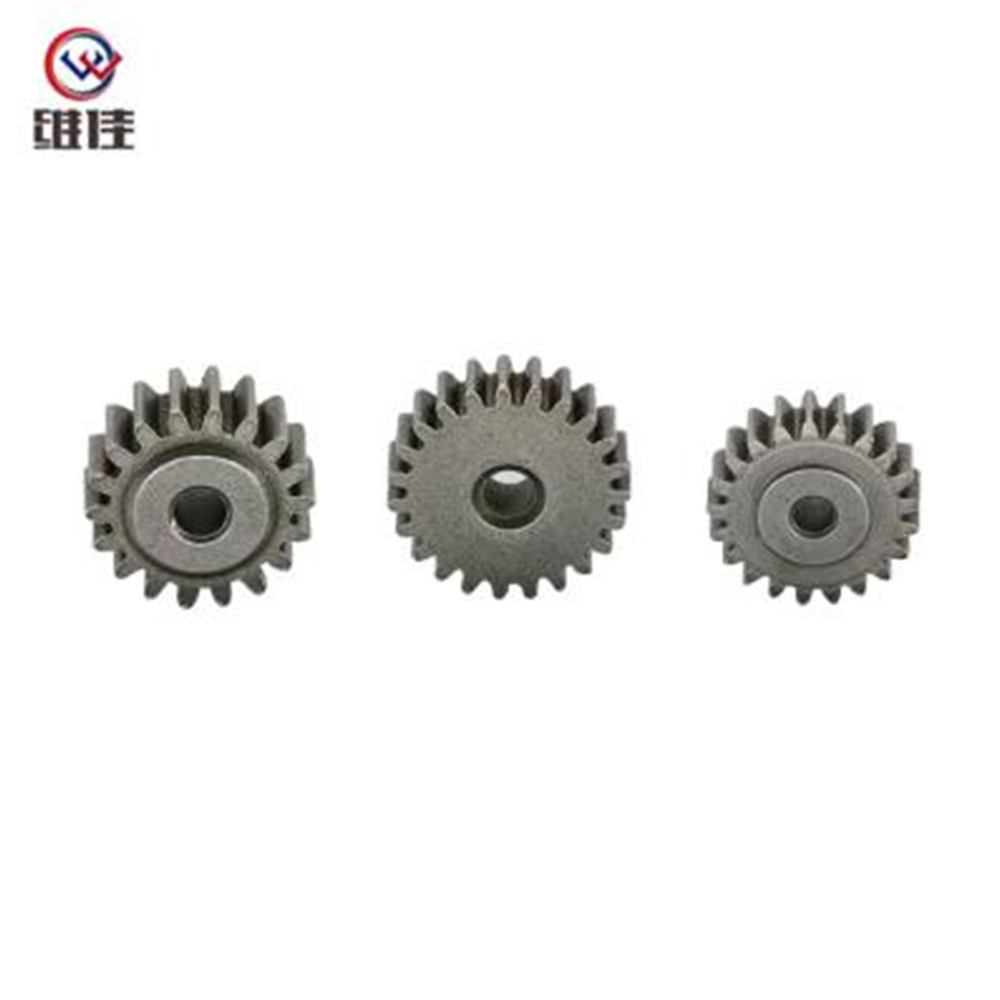
Geometry that would take several machining operations can be formed in a single press stroke. A powder metallurgy planetary gear, for instance, leaves the die with its tooth profile already formed; after sintering it needs little more than sizing and finishing of critical bores.
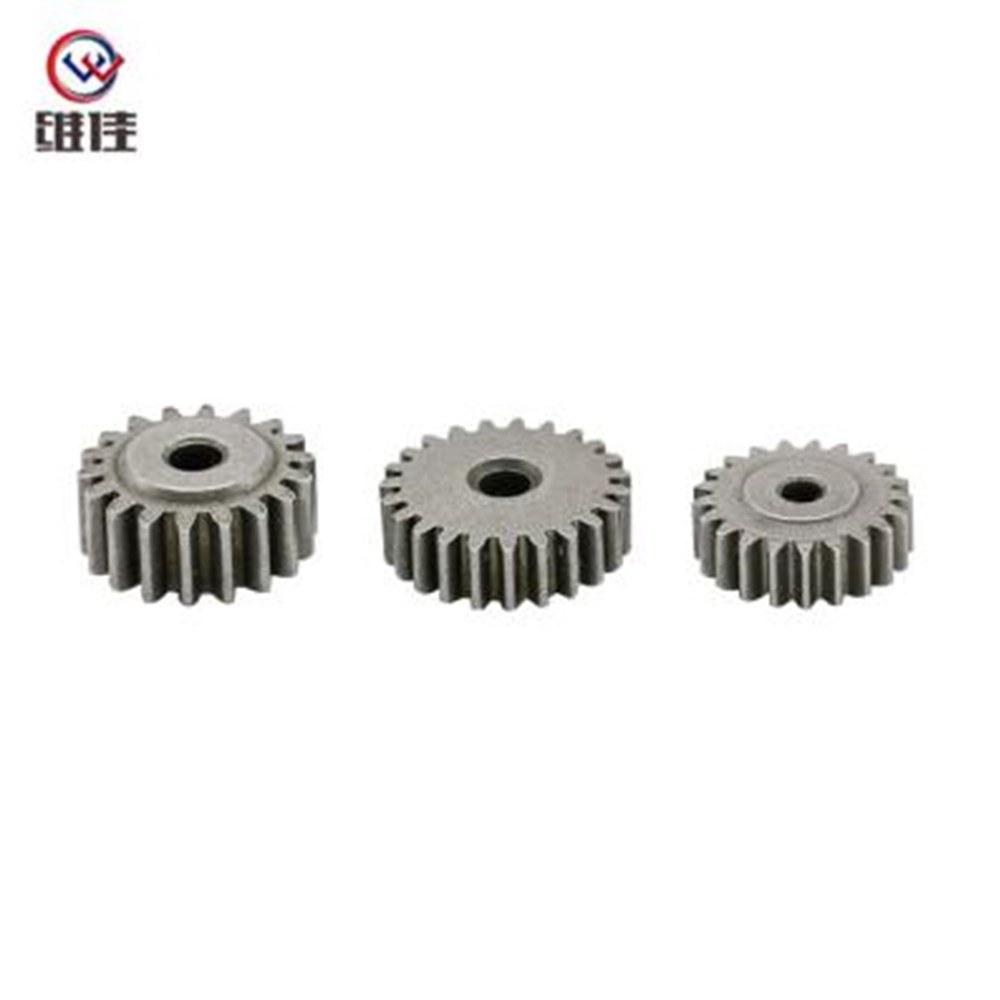 Powder Metallurgy Planetary GearPressed with its tooth profile fully formed in a single stroke, this planetary gear needs only sizing and finishing afterward, a good example of how powder metallurgy forms complex geometry near net shape.View Product →
Secondary Operations: Sizing, Impregnation and Finishing
Parts leave the furnace close to final shape, but several finishing steps are common. Sizing re-presses the part in a finish die and brings critical diameters to within a few hundredths of a millimetre. Where an application needs higher density or hardness, parts can be heat treated, carburized or copper-infiltrated.
The most distinctive operation is oil impregnation. A vacuum tank draws lubricating oil into the open pore network, and a typical self-lubricating bushing ends up with oil occupying roughly 15 to 25 percent of its volume. As the shaft warms during operation, oil expands out of the pores and films the running surface; as it cools, the oil is drawn back in. Steam treatment applies the same idea, sealing surface pores with a hard black oxide.
Other standard operations include deburring, light machining of features that cannot be formed — cross-holes and threads, for example — and plating or coating for corrosion resistance.
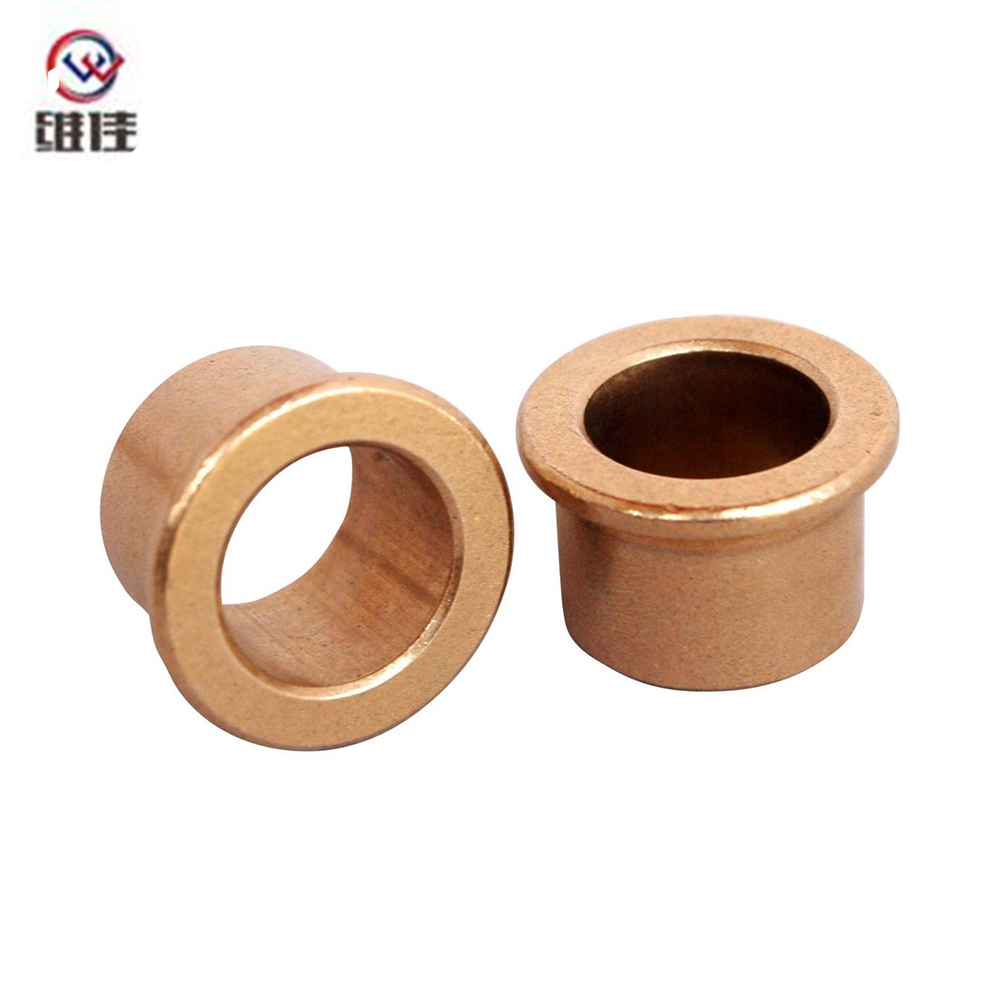 Self-Lubricating Tin Bronze Flanged BushingSintered tin bronze with oil-storing pores forms a lubricating film in service, and the integral flange positions the bushing during assembly, suiting low-friction, corrosion-resistant applications.View Product →
Materials: From Iron and Bronze to Soft Magnetic Composites
Iron and iron-carbon steels dominate powder metallurgy tonnage because they are economical and strong, and alloy combinations that are awkward to produce by melting — iron with finely dispersed copper, for instance — are routine here. Copper and tin bronze are chosen where low friction, thermal conductivity or corrosion resistance matter; stainless steel where hygiene and rust resistance are required.
Soft magnetic composites (SMC) deserve a special mention. They are made from iron particles coated with an insulating layer and pressed into complex three-dimensional shapes that stacked laminations cannot achieve, which reduces eddy-current losses in electric motor cores.
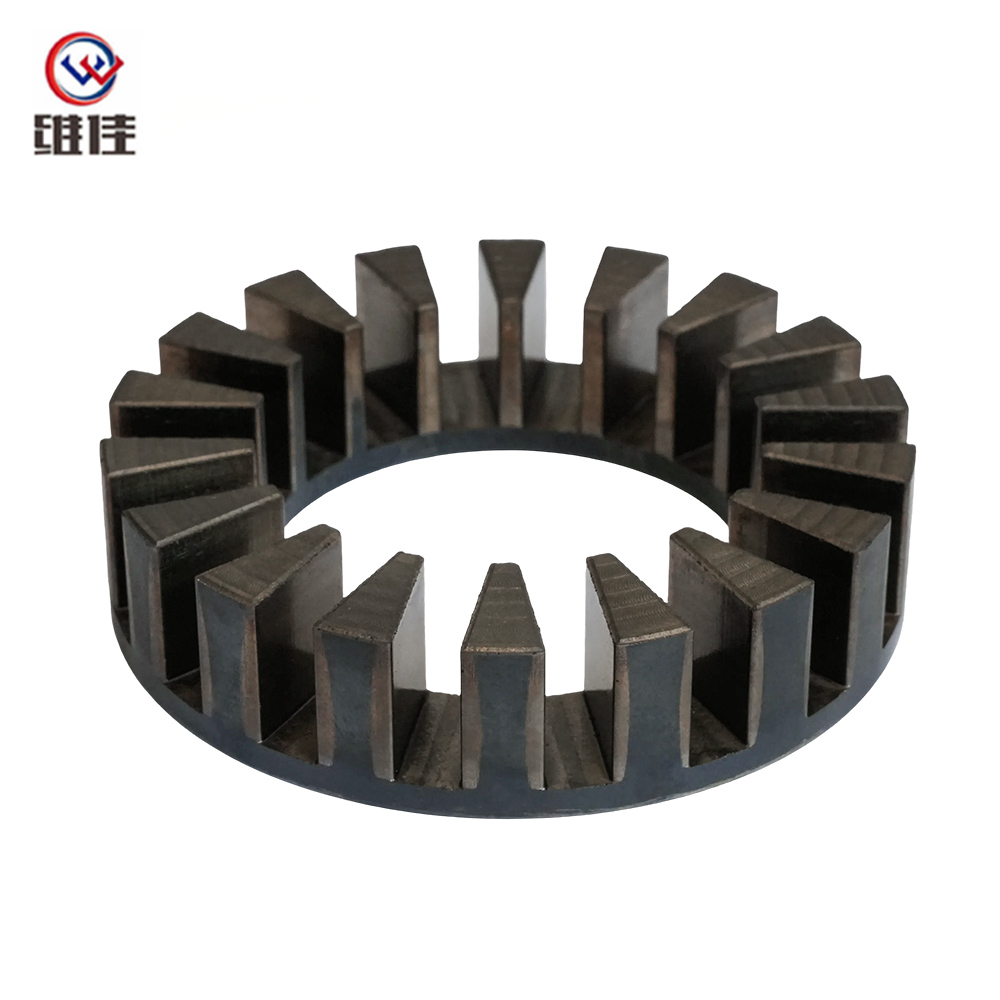 SMC Stator Core (SOMALOY 700HR-3P)Made from insulated iron particles pressed into 3D toothed shapes laminations cannot achieve, this stator core cuts eddy-current losses in high-frequency axial-flux motor applications.View Product →
Powder Metallurgy vs. Machining and Casting
No process wins on every axis. The table below summarizes where each route is strongest for small and medium structural parts.
| Aspect | Powder metallurgy | CNC machining | Metal casting |
|---|---|---|---|
| Material utilization | Typically above 90 percent; powder goes into the part | Often 50-70 percent; the rest leaves as chips | Good, but gates and runners must be remelted |
| Controlled porosity | Yes — enables self-lubrication and filtration | No | Treated as a defect to avoid |
| Geometry | Complex axial profiles formed in one press stroke; no undercuts | Nearly unlimited 3D shapes, with cost added per feature | Best for free-form and hollow shapes |
| Tolerances | Good as-sintered, tighter after sizing | Tightest, around ±0.01 mm routinely | Loosest of the three |
| Economical volumes | Thousands to millions of parts per year | Prototypes to mid volumes | High volumes with durable tooling |
The practical summary: powder metallurgy wins on material waste, batch-to-batch repeatability and engineered porosity; machining wins on flexibility, one-off work and the tightest tolerances; casting wins on free-form and hollow geometry. For a fuller breakdown, see our article on the advantages of powder metallurgy parts compared with conventional manufacturing.
When the Process Fits — and When It Does Not
Die tooling is the deciding factor. Once a die is cut, each additional part is inexpensive, but the die itself is a fixed investment, so economies usually begin in the thousands of parts and pay off fully in the tens of thousands per year. Physical limits follow the press: most die-pressed parts weigh well under 2 kg, and features such as undercuts or screw threads cannot be formed in the pressing direction, so they are machined afterwards.
The process earns its keep when volumes are high and at least one of three conditions holds: the shape is complex enough that machining it would waste material and time; the part needs controlled porosity, as self-lubricating bushings, filters and spacers do; or the alloy blend cannot practically be cast or wrought. That covers more ground than most buyers expect:
- Washing machines and home appliances — structural components formed in a single press stroke
- Power tools — gears and bearing surfaces that survive repeated shock loads
- Material handling equipment — forklift and lifting-gear wear parts
- Electric motors — SMC stator cores and bearing bushings
- Industrial braking systems — sintered friction pads
- Burners and heaters — heat-resistant iron-based structural parts
If you are holding a drawing or a sample, the fastest test is to ask a supplier three questions: does the volume justify tooling, is any feature unformable in the die, and does the part benefit from porosity? Our article on how custom powder metallurgy parts optimize industrial applications shows how machined bushings and gears are commonly re-specified as sintered equivalents once those answers check out.
On our own lines, certified to ISO 9001:2015 and IATF 16949:2016, the same logic applies: we quote powder metallurgy where it genuinely outperforms the alternative, and we say so plainly when machining is the better answer.
Frequently Asked Questions About the Powder Metallurgy Process
Is metal injection molding the same as the powder metallurgy process?
Metal injection molding (MIM) is a branch of powder metallurgy. It mixes very fine powder with a thermoplastic binder, injection-molds the feedstock, removes the binder and then sinters the part. Compared with conventional die pressing, MIM handles more complex three-dimensional geometry in smaller parts, at a higher price per piece.
Which materials can be processed?
Iron and steel alloys, stainless steels, copper and bronze, nickel alloys, soft magnetic composites, and specialty powders such as titanium and tungsten carbide. The choice follows the working conditions: load, temperature, wear and corrosion exposure.
Are sintered parts weak because they are porous?
Conventional structural parts typically sinter to roughly 85 to 95 percent of wrought density, and the design is specified around that value. Within its specified density range, a sintered steel gear can be heat treated and sized like any other steel component. The key is matching density and alloy to the load case, not treating porosity as an accident.
Why choose a sintered bushing instead of a machined one?
A machined bushing is solid, so it depends on external lubrication. A sintered bushing stores oil in its pores and feeds it to the shaft during operation, which removes routine greasing. Combined with near-net-shape forming, that is why self-lubricating bushings are among the most established powder metallurgy products.
Related products
-
-
Description: Custom powder metallurgy planetary gear with high precision, wear resistance for automotive, industrial machinery & home appliances. OEM/ODM supported.
See Details -
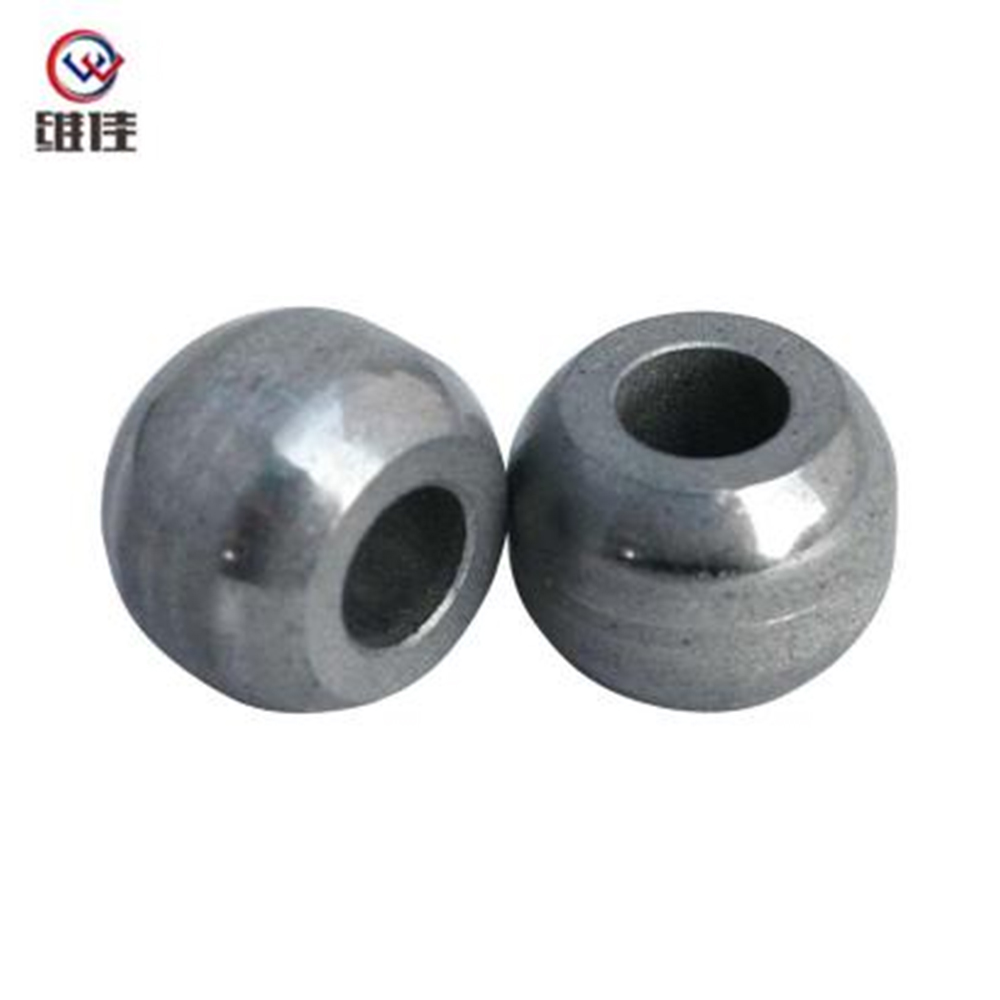
Product Description: High-precision powder metallurgy part (S14*7*10) made of iron material from Jiande Wefine, customized PM components with strict tolerance control.
See Details -
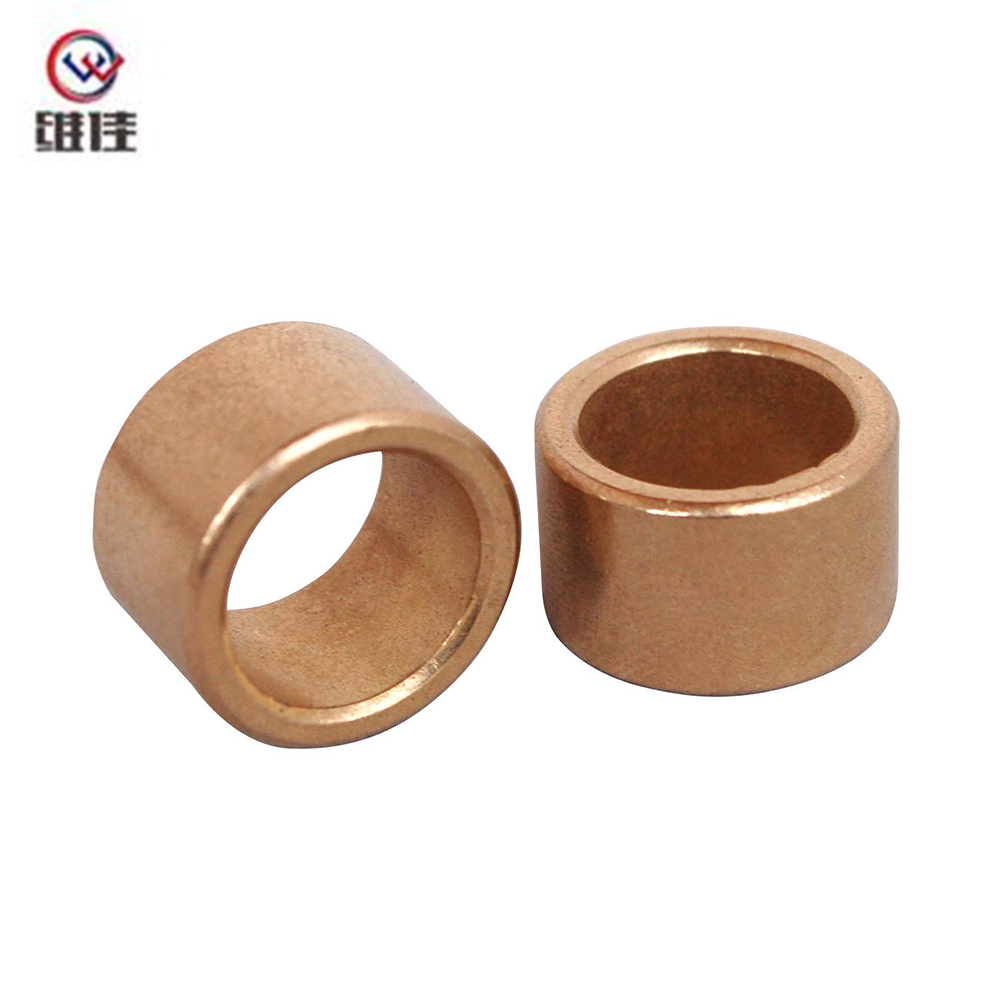
This copper-based powder metallurgy bushing is manufactured through an integrated process of compaction, sintering, sizing, and oil impregnation. It features excellent wear resistance and self-lubrica...
See Details -
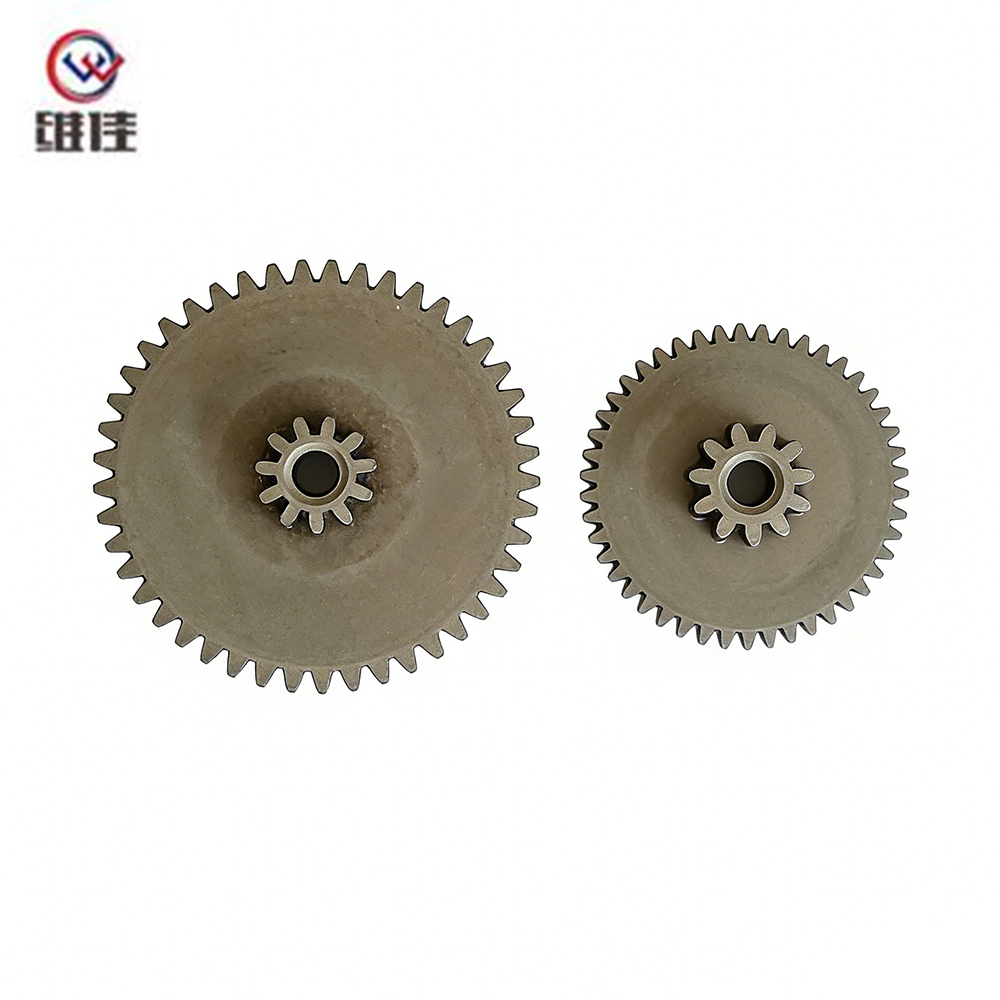
Core Specifications Parameter Specification Gear Teeth Z46 (large gear) & Z11 (small pinion) Module 0.8 Small Gear Bore 11 mm Material AB powder metallurgy (high-strength iron-based all...
See Details
Copyright © Jiande Welfine Technology Co., Ltd. All Rights Reserved. Privacy Custom Self-lubricating Sintered Bushing Manufacturers
