E-mail us: [email protected]
Tel: +86-15239857375
 English
 中文简体
中文简体

 Home / News / Industry News / Powder Metallurgy Structural Parts: A Practical Guide for Engineers and Buyers
 Powder Metallurgy Structural Parts: A Practical Guide for Engineers and Buyers
 2026.08.21
 Industry News
Imagine you need to produce tens of thousands of gear blanks each month. Machining every blank would waste expensive bar stock and consume valuable machine time, while casting may introduce porosity or inconsistent dimensions. Powder metallurgy structural parts provide a different answer: press metal powder into a near-net shape, then sinter it into a dense usable component. A sintered gear can be formed in one press stroke; a machined gear may require five or more operations. For many load-carrying parts, this PM route delivers the required strength at a lower piece cost, with material utilization often above 90%. That is why PM has become a standard process for gears, cams, sprockets, and many custom structural components.
What Are Powder Metallurgy Structural Parts?
Powder metallurgy structural parts are components made by blending metal powders with lubricants, compacting them in a die, and sintering the resulting “green” part below the melting point of the base metal. The process bonds the powder particles through diffusion, producing a part with controlled porosity and mechanical properties. The green compact is fragile at this stage, but after sintering the particles weld together and the part gains its mechanical integrity.
Unlike bearings and bushings, which are optimized for sliding contact, structural parts are designed to transmit force, motion, or torque. Common examples include gears, sprockets, cams, flanges, and custom brackets. The near-net-shape capability means many features, such as splines and keyways, can be formed directly in the die without additional cutting.

This flow is intentionally simplified. In practice, powder production, alloying additions, and secondary operations such as sizing, heat treatment, and steam treating have a decisive influence on the final part. Each of those stages can be tuned to meet specific load, wear, and corrosion requirements.
Why Choose Powder Metallurgy for Structural Components?
When you are designing for high-volume production, PM offers a combination of material efficiency, dimensional repeatability, and manufacturing cost that is hard to beat. The die forms each part in seconds, and once tooling is proven, thousands of components can be produced with minimal variation. Material waste is low because almost all powder from the feed system is reused.
PM also allows alloys that are difficult to cast or machine, such as sinter-hardened steels or carbide-containing composites. The interconnected porosity in a sintered part can be impregnated with oil to provide self-lubricating performance, which is useful in gears and other parts that cannot be easily greased.
| Factor | Powder Metallurgy | Machining | Casting |
|---|---|---|---|
| Material utilization | Above 90% typically | 40-60% common | Varies widely |
| Production rate | High with multi-cavity dies | Low to medium | Medium |
| Dimensional consistency | Good; repeatable | Excellent | Good but cycle slower |
| Design complexity | Good; limited by die ejection | Very high | High but adds cost |
| Typical batch size | High volumes | Low to medium | Medium to high |
That said, PM is not always the right answer. Very intricate three-dimensional cavities may require machining, and extremely high strength requirements may demand forged or machined alloys. The most efficient approach is to evaluate PM during the design stage, not after the part has already been optimized for another process. For a given component, the choice depends on quantities, tolerances, and whether the material can be pressed without excessive tooling complexity.
Which Materials Work Best?
Structural PM parts are predominantly made from iron-based alloys, but copper and stainless steel grades are also important. The choice depends on the load, environment, and whether the part will be heat treated.
Iron-based alloys
Iron and low-alloy steels account for the majority of PM structural parts. They offer a good balance of strength, wear resistance, and cost. Additions such as copper, nickel, and molybdenum improve hardenability and mechanical properties. Typical densities range from 6.8 to 7.4 g/cm³, depending on the pressing pressure and alloy content. A good example is our powder metallurgy double pinion gear, which is made from a sintered iron-based alloy and used in compact gearboxes.
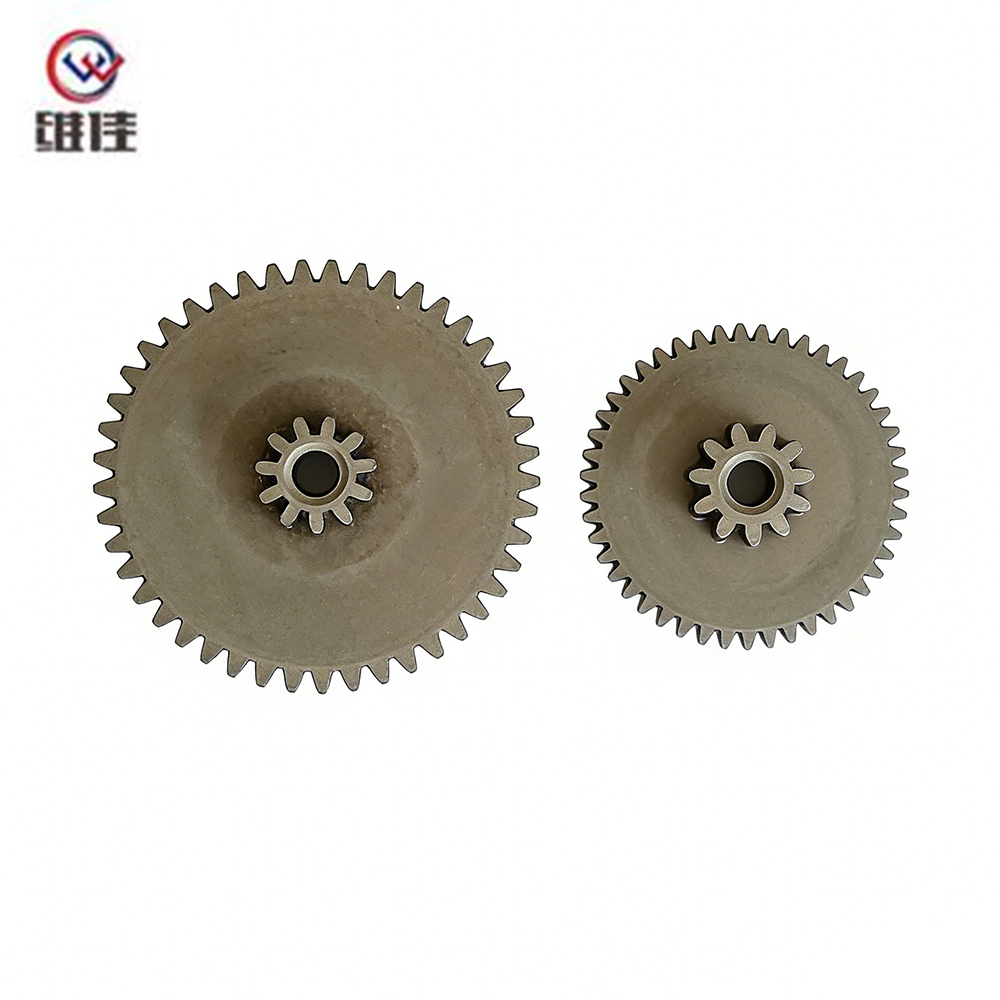 Powder Metallurgy Double Pinion Gear M0.8 ManufacturersJiande Welfine Technology Co., Ltd. is China M0.8 powder metallurgy double pinion gear manufacturers and factory, provide wholesale M0.8 ...View Product →
Copper-based alloys
Copper-based PM materials are chosen when the priority is corrosion resistance, electrical conductivity, or smooth sliding behavior. Bronze structural parts are less common as load-bearing gears but are valuable in niche applications such as small instrument mechanisms and electrical contacts where a combination of strength and conductivity is needed.
Stainless steel
Sintered stainless steel provides corrosion resistance and a clean appearance. It is more expensive than iron-based PM and is used for parts in food processing, medical equipment, and outdoor mechanisms. Grades such as 316L and 434L are common, and they can be compacted to similar densities as iron-based materials.
Design and Sourcing Checklist
A successful PM structural part project depends on early collaboration between the designer and the manufacturer. Here is the typical path we follow with customers:
1
Define material and density
Specify the required strength, hardness, and operating environment. The target density will influence strength and porosity. For example, a gear that will be case hardened needs a higher density than a low-load bracket.
2
Optimize the geometry
Ensure the part can be compacted and ejected from the die. Avoid sharp undercuts, long thin walls, and asymmetrical sections. Simple design changes, such as adding a small radius at the root of a gear tooth, can improve mold filling and reduce tool stress.
3
Agree on tolerances
PM parts are typically sintered to IT8-IT10 tolerances. If tighter tolerances are needed, discuss sizing or secondary machining. A bore that will be used as a locating surface may need a sizing pass to reach IT7.
4
Validate with samples
Before mass production, test samples to confirm dimensions, density, and metallurgical properties. This step also lets you verify that the part meets your assembly and functional requirements under real working conditions.
5
Plan volumes and lead time
Tooling takes weeks to manufacture, but once it is ready, production output is fast. Communicate your forecast early. For annual volumes below a few thousand pieces, machining may be cheaper; above 20,000 pieces per year, PM usually becomes the most economical route.
If you are still comparing process routes, our article on custom powder metallurgy design considerations explains how PM can improve component performance and simplify assembly. The main point is to balance tooling investment against per-piece savings.
Applications Across Industries
PM structural parts are found wherever metal components are needed in high volume with consistent quality. The examples below illustrate the main sectors.
Automotive
Gears, synchronizer hubs, and pump parts that must maintain tight tolerances at high operating temperatures. Automotive applications often benefit from PM's ability to combine multiple functions into one part, reducing assembly time.
Home Appliances
Washing machine transmission parts, such as our PM structural components for washing machines, combine strength with cost-effective mass production. These parts also perform quietly because the sintered structure can absorb vibration.
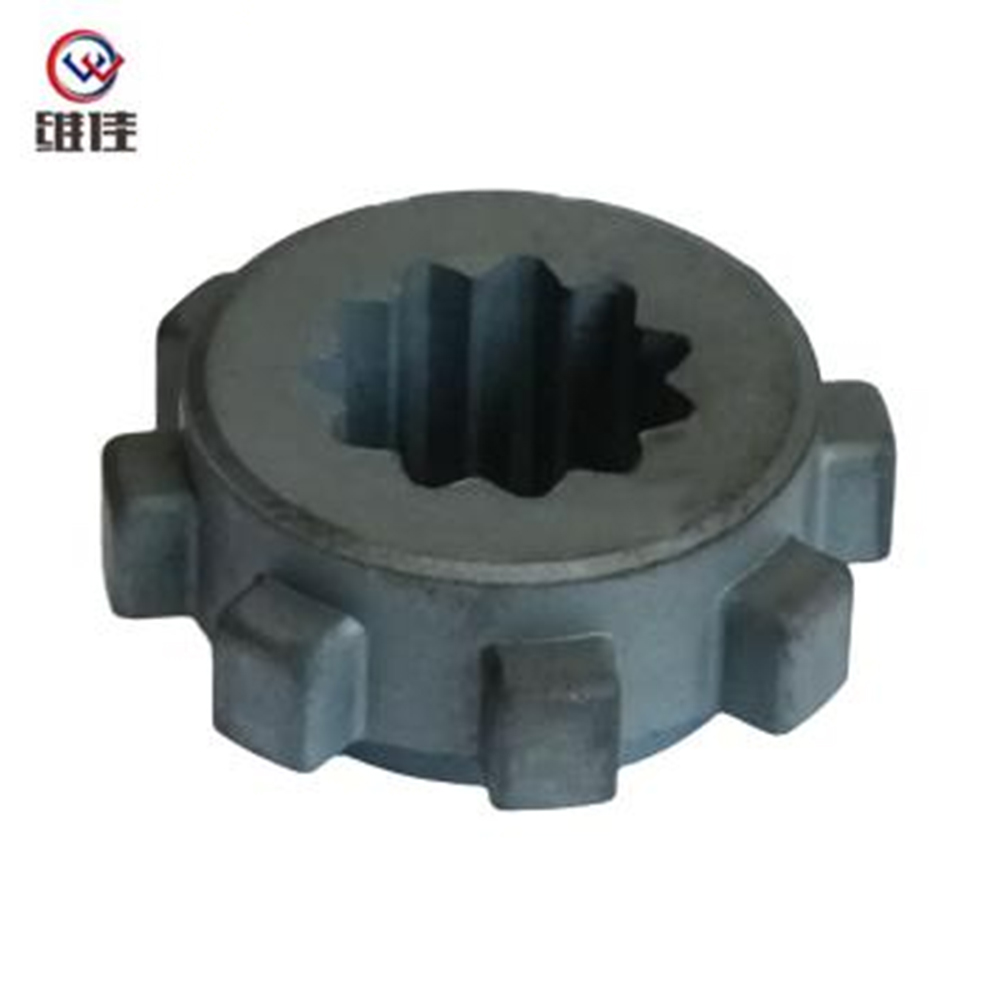 Wholesale Powder Metallurgy Structural Components for Washing Machines ManufactuJiande Welfine Technology Co., Ltd. is a China wholesale Powder Metallurgy Structural Components for Washing Machines manufacturers and O...View Product →
Industrial Equipment
Fuel heater and forklift components benefit from PM's consistent dimensional control and wear resistance. One example is our powder metallurgy components for industrial fuel heaters. Hydraulic pump parts, sprockets, and cam plates are other common uses.
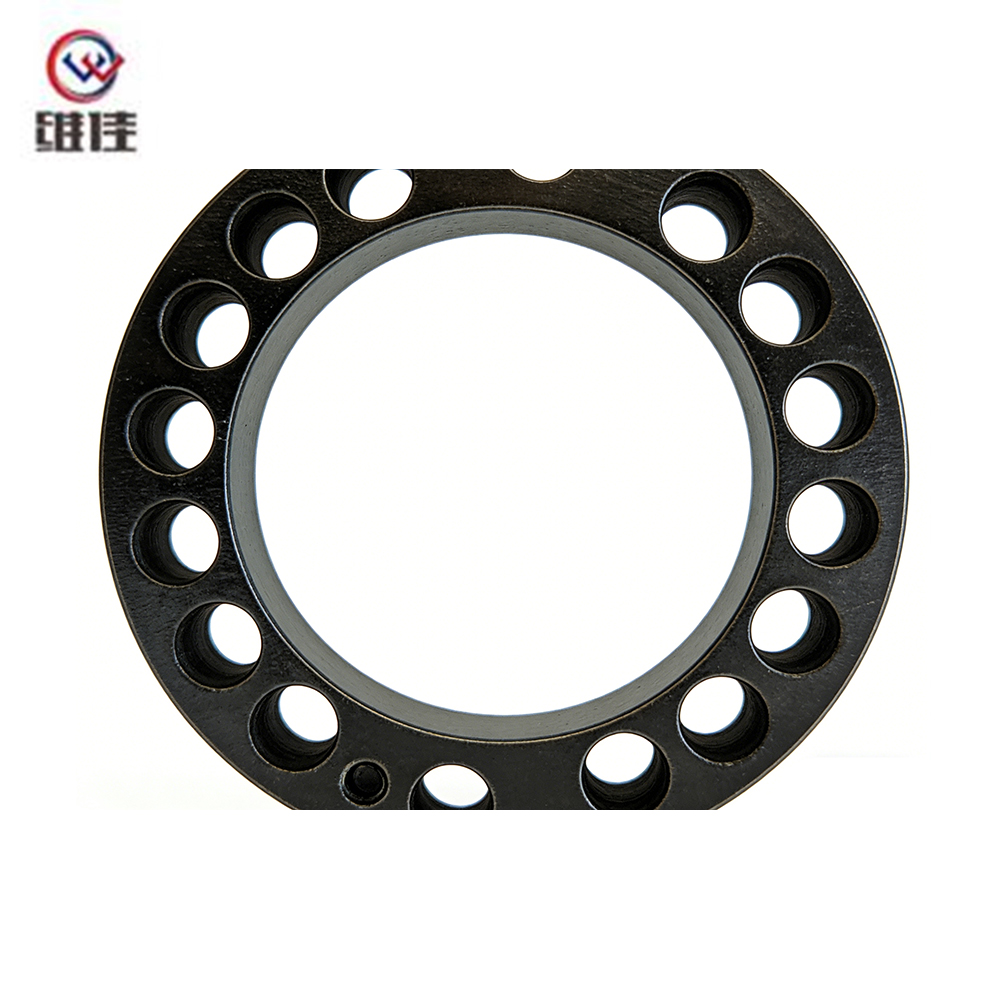 Wholesale Powder Metallurgy Components for Industrial Fuel Heaters Manufacturer,Jiande Welfine Technology Co., Ltd. is a China wholesale Powder Metallurgy Components for Industrial Fuel Heaters manufacturers and OEM/O...View Product →
Power Tools
Pinions, rotors, and impact parts need the fatigue strength and near-net shape that sintered alloys provide. The ability to produce complex tooth forms without machining makes PM ideal for small power tool gears.
Frequently Asked Questions
What tolerances can powder metallurgy structural parts hold?
As-sintered tolerances are typically in the IT8-IT10 range. With coining or sizing, you can reach IT7 or better on critical features such as bores and outer diameters. For very tight dimensions, a final machining operation is sometimes specified.
Can PM structural parts be heat treated?
Yes. Sinter-hardening, carburizing, and through-hardening are common. The alloy composition must be specified correctly to achieve the desired hardness and case depth. Density also affects response to heat treatment; higher density generally yields more consistent results.
How does porosity affect performance?
Controlled porosity can store lubricant and improve friction behavior. For high-strength applications, density can be increased by repressing or use of higher-compressibility powders. As-sintered porosity is usually between 5% and 15% by volume, depending on the material and density.
What is the typical tooling lead time?
Simple tooling can be manufactured in four to six weeks, while more complex dies with multiple levels may take eight to twelve weeks. Once the tool is ready, repeat delivery of additional quantities is fast because the PM process is highly reproducible.
Powder metallurgy structural parts are a proven answer to the pressure of high-volume production without sacrificing reliability. The key is to bring the PM manufacturer into the design conversation early. That way you can optimize the geometry, choose the right material, and validate the process before committing to tooling. If you have a drawing or sample ready, send it to our team to explore whether PM is the right fit for your component. We can review the production volume, tolerances, and secondary operations needed, then recommend the most economical route. Contact us to start the discussion.
Related products
-

-
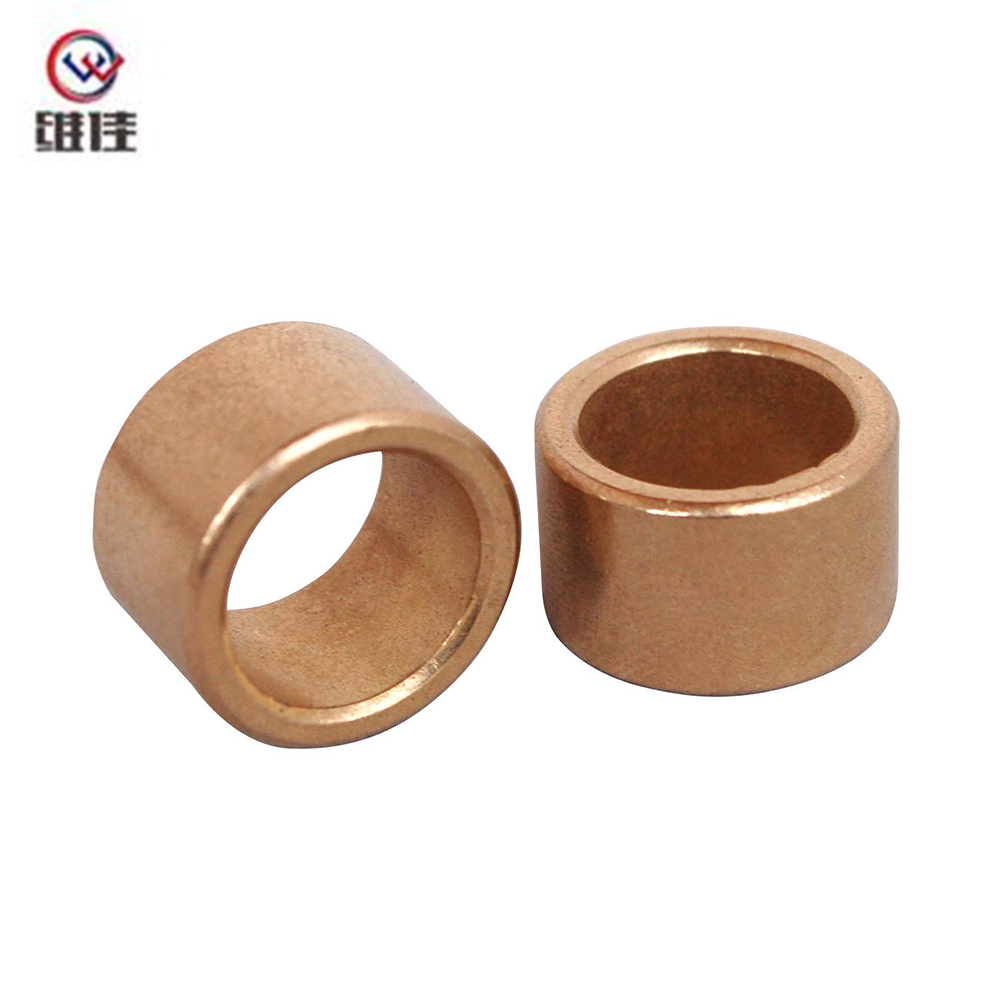
This copper-based powder metallurgy bushing is manufactured through an integrated process of compaction, sintering, sizing, and oil impregnation. It features excellent wear resistance and self-lubrica...
See Details -

Core Specifications Parameter Specification Gear Teeth Z46 (large gear) & Z11 (small pinion) Module 0.8 Small Gear Bore 11 mm Material AB powder metallurgy (high-strength iron-based all...
See Details -
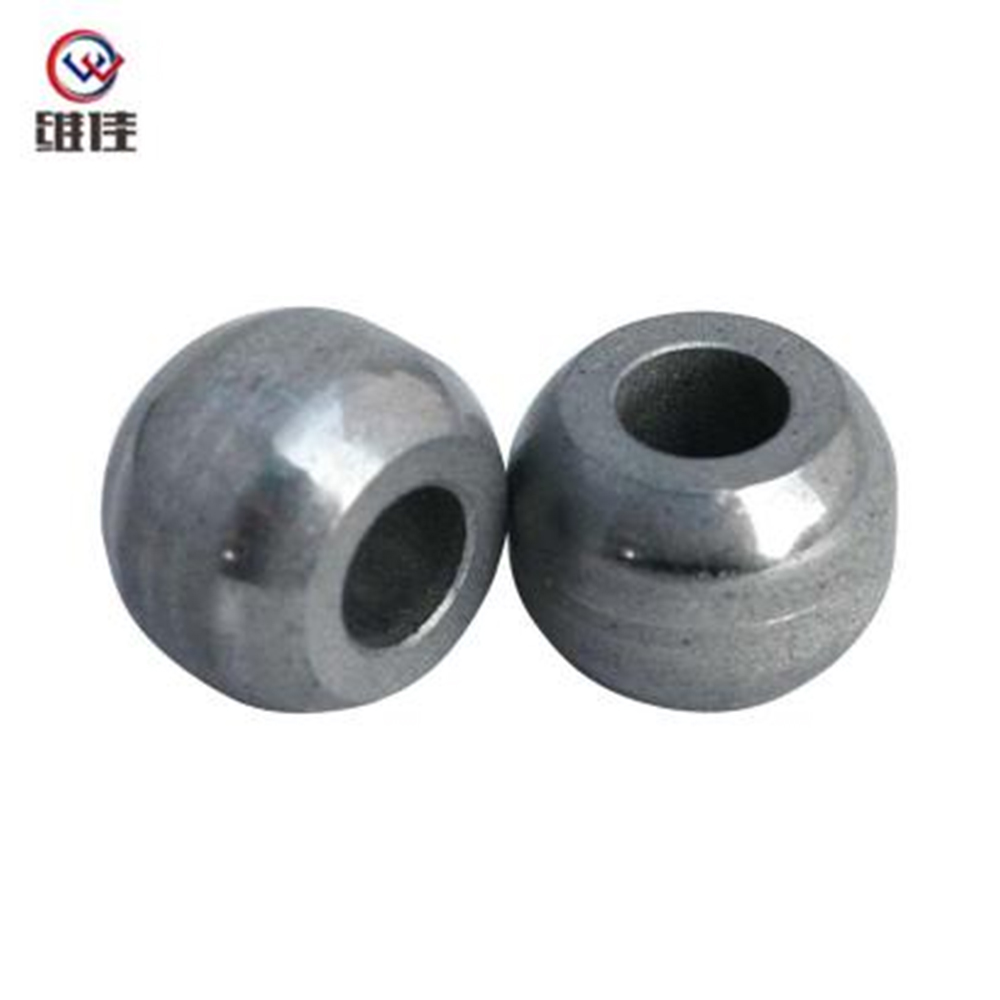
Product Description: High-precision powder metallurgy part (S14*7*10) made of iron material from Jiande Wefine, customized PM components with strict tolerance control.
See Details -
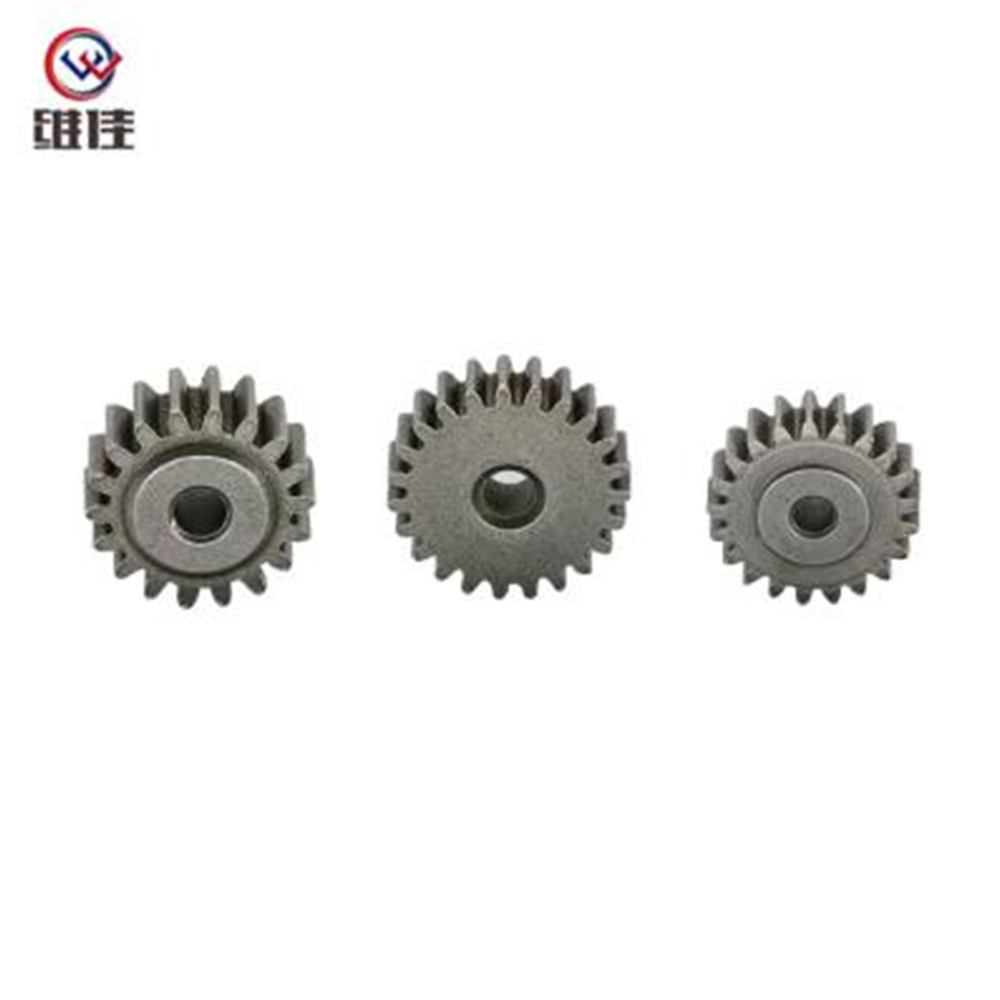
Description: Custom powder metallurgy planetary gear with high precision, wear resistance for automotive, industrial machinery & home appliances. OEM/ODM supported.
See Details
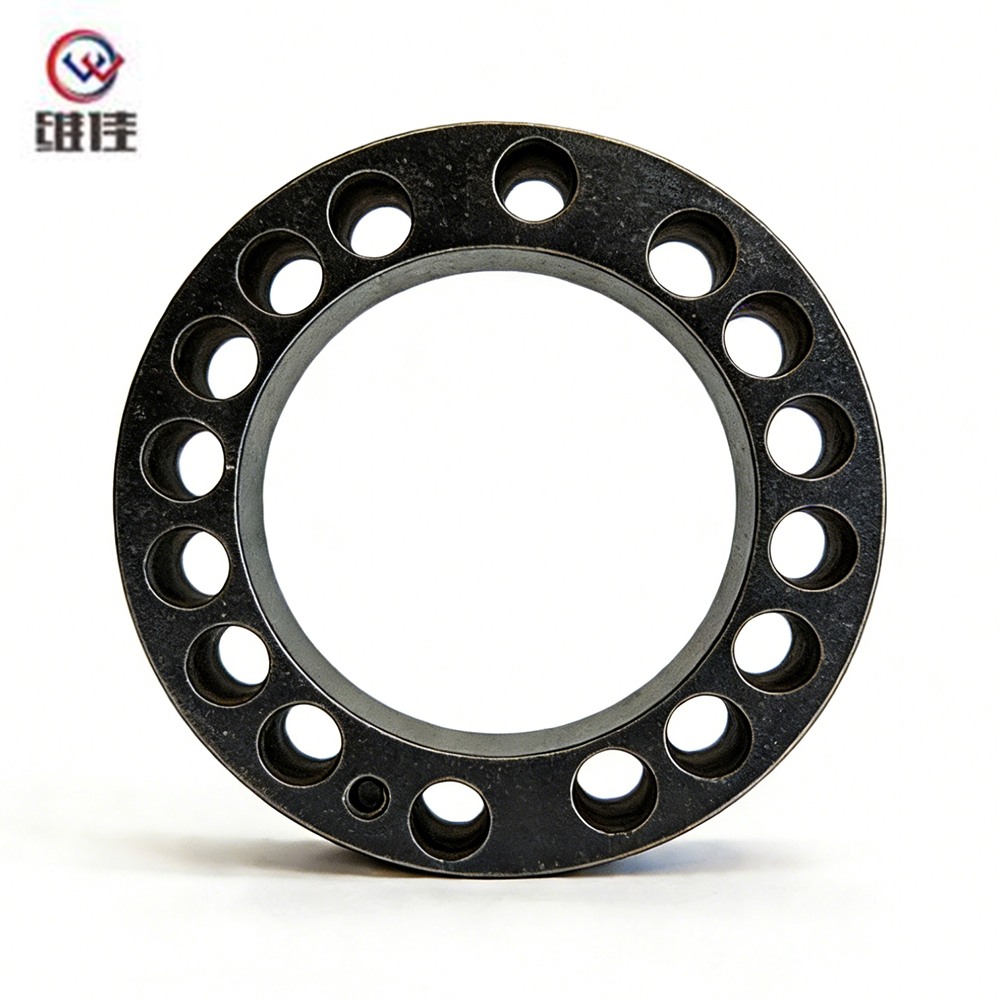
Copyright © Jiande Welfine Technology Co., Ltd. All Rights Reserved. Privacy Custom Self-lubricating Sintered Bushing Manufacturers
