 English
 中文简体
中文简体Product Description: High-precision powder metallurgy part (S14*7*10) made of iron material from Jiande Wefine, customized PM components with strict tolerance control.
See DetailsE-mail us: [email protected]
Tel: +86-15239857375


 Home / News / Industry News / What Part Shaping Operation Is Powder Metallurgy? Compaction and Sintering Explained
 What Part Shaping Operation Is Powder Metallurgy? Compaction and Sintering Explained
 2026.09.11
 Industry News
Content
- 1 What Part Shaping Operation Is Powder Metallurgy?
- 2 Inside the Operation: How Powder Becomes a Part
- 3 Four Variants of the Powder Shaping Operation
- 4 Why the Shaping Operation Matters for Design and Cost
- 5 Choosing the Shaping Operation: A Quick Reference
- 6 What to Prepare When Sourcing Sintered Parts
- 7 Frequently Asked Questions
Powder metallurgy is a solid-state, particulate shaping operation. It builds a metal part by pressing measured powder inside a rigid die, then sintering the compacted shape at a temperature below the metal's melting point, so the particles bond into a solid body without the metal ever fully melting.
That classification has real consequences for buyers and designers. The shaping operation you pick for a bushing, a gear or a bracket determines the tolerances you can hold, the material you waste, the tooling you pay for and whether the part can carry its own lubricant. Below, we place the process in the shaping-operation family, walk through its stages and compare it with the alternatives.
What Part Shaping Operation Is Powder Metallurgy?
Manufacturing engineers group primary shaping operations by the state of the material at the moment the shape is formed. Liquid-state processes include sand casting and die casting. Bulk-deformation processes cover forging, rolling and extrusion. Material-removal operations such as turning and milling shape by cutting stock away. Powder metallurgy belongs to a fourth group, particulate processing, sometimes called powder forming: the material is solid and finely divided, and the shape is imparted to it as a granular mass before it is consolidated.
On the shop floor, the shape comes from a die cavity much as it does in casting, but the bonding mechanism differs: solid-state diffusion during sintering replaces solidification of a melt. A few specialty grades use liquid-phase sintering, where a minor alloy constituent melts to speed bonding, but the structural skeleton of the part stays solid throughout.
| Shaping operation | Material state during shaping | Shape-defining step | How the material becomes one body |
|---|---|---|---|
| Sand casting | Fully liquid | Pouring into a mold cavity | Solidification on cooling |
| Forging | Solid bulk metal, usually heated | Plastic deformation between dies | Metal is already continuous |
| Machining | Solid bar or billet | Cutting chips away from stock | Not applicable |
| Powder metallurgy | Solid metal particles | Pressing powder in a rigid die | Sintering below the melting point |
Seen side by side, powder metallurgy competes mainly with casting and machining on cost at production volume, and it wins decisively on material efficiency: typically more than 95 percent of the powder ends up in the finished part, while a heavily machined component can send a third of its starting stock away as chips. If you are weighing sintered parts against cast or machined alternatives, our earlier breakdown of the advantages of powder metallurgy parts compared with conventional routes covers cost, precision and material factors in more detail.
Inside the Operation: How Powder Becomes a Part
Although the name suggests a single technique, the shaping operation is a chain of five stages, and each stage leaves a fingerprint on the finished part.
1
Powder and mix preparation
Metal powder is produced by atomization, reduction or electrolysis, then blended with alloying additions and a small dose of pressing lubricant. Particle size distribution is controlled closely because it governs how the powder packs and flows into the die.
2
Compaction, the shaping step itself
Powder is fed into a hardened die and pressed at pressures commonly between roughly 100 and 700 megapascals. The particles pack together and deform slightly, producing a green compact that already carries the part's full geometry but has only modest strength.
3
Sintering, consolidation without melting
The compact passes through a furnace held at about 70 to 90 percent of the alloy's melting temperature, around 1,100 to 1,150 degrees Celsius for iron-based grades, in a protective atmosphere. Atoms diffuse across particle contacts, necks grow between them, and the part gains final strength while remaining solid.
4
Sizing or coining, where needed
A second pressing after sintering raises density and tightens tolerances on functional surfaces such as bearing bores and gear flanks.
5
Secondary operations
Oil impregnation, machining of critical features, heat treatment, steam treatment or plating complete the part for its working environment.
Four Variants of the Powder Shaping Operation
Not every sintered part is shaped the same way. Four variants cover most of the industry, and choosing among them is largely a question of geometry, part size and annual volume.
Rigid die compaction
The workhorse of the industry. Powder is pressed between punches in a multi-level die, so gear teeth, splines and cams form directly in one stroke. It suits very high volumes, and press tonnage usually limits part weight to a couple of kilograms. Features parallel to the pressing direction are easy; cross-holes and undercuts are not.
Isostatic pressing
Powder sits in a flexible mold immersed in pressurized fluid, so pressure arrives equally from all directions and density stays uniform. Cold isostatic pressing makes large or complex green blanks before sintering; hot isostatic pressing closes residual porosity to near-full density in demanding aerospace and tooling uses.
Metal injection molding
Very fine powder is mixed with a thermoplastic binder and injected like plastic. After binder removal the part is sintered and shrinks by roughly 15 to 20 percent, a number the tool designer must predict precisely. The route yields near-full density and handles small, intricate three-dimensional shapes that die compaction cannot reach.
Powder forging and rolling
A sintered preform is hot-forged between dies to push density close to wrought levels for heavily loaded parts such as connecting rods, or rolled into strip for continuous production. Both routes combine the material efficiency of powder with the density of deformation processing.
Gears show die compaction at its best. The tooth profile of a planetary gear forms in the die in a single press stroke, which is why sintered gearing is so common in appliances, power tools and automotive actuators where hobbing would add real cost.
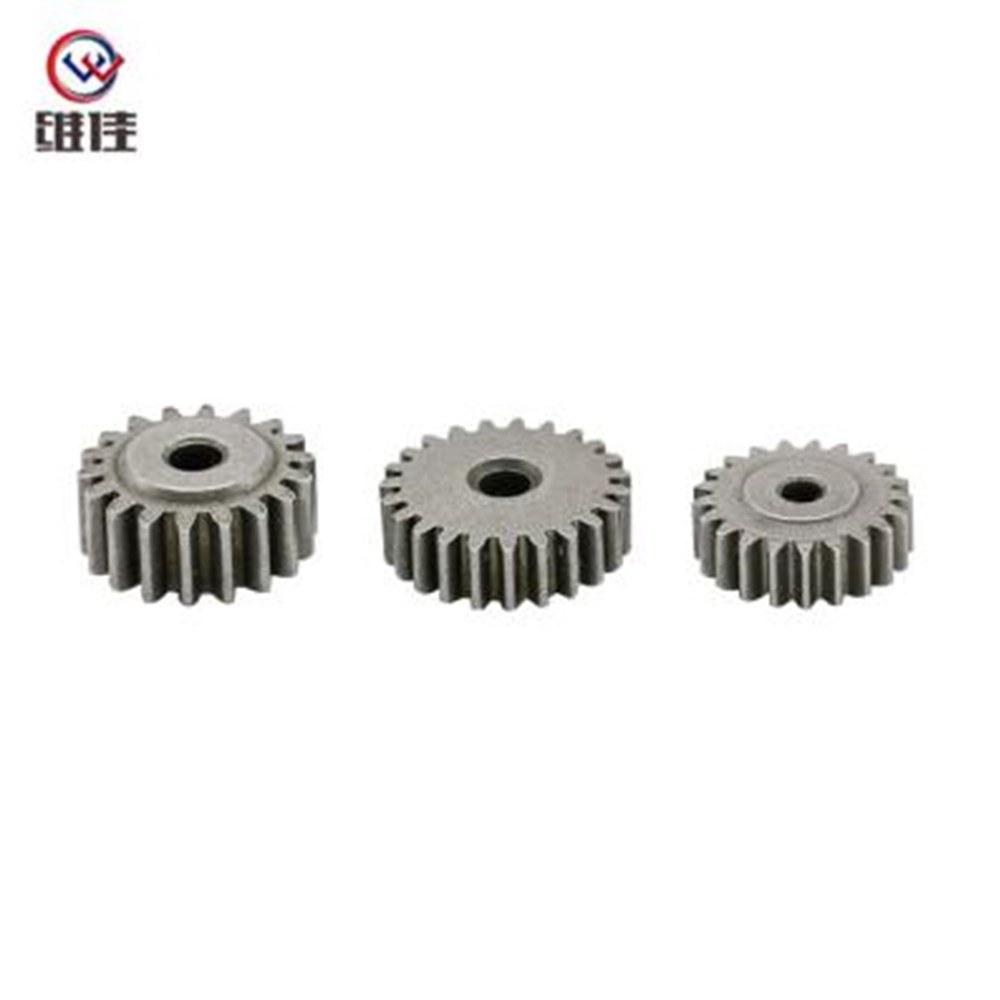 Powder Metallurgy Planetary GearDescription: Custom powder metallurgy planetary gear with high precision, wear resistance for automotive, industrial machinery home appliances. OEM/ODM supported.View Product →
Why the Shaping Operation Matters for Design and Cost
Compaction is punch-driven, and friction between the powder and the die wall means density is never perfectly uniform. A single-action press leaves the compact denser near the moving punch, so tool designers use double-action pressing, multi-level punches or carefully balanced wall thicknesses to keep gradients in check. Density gradients translate directly into strength gradients, which is why a good sintered-part drawing specifies not just dimensions but also minimum density, and where it matters.
The operation is also near-net-shape. Typically more than 95 percent of the raw powder ends up in the finished part, as-sintered tolerances of about plus or minus 0.5 percent of a nominal dimension are standard, and a sizing pass tightens critical diameters further. Features the die cannot form, such as a cross-hole or an undercut, are machined after sintering, but the bulk of the geometry carries no chip cost at all.
Then there is a capability no liquid or deformation process can copy: engineered porosity. By choosing powder size and pressing load, the producer leaves an interconnected pore network, often 15 to 25 percent of the part's volume, which is vacuum-impregnated with oil. A common bronze bearing grade in the SAE 841 specification holds at least 19 percent oil by volume and feeds lubricant to the shaft across its service life. Cast or forged parts need drilled oil galleries or separate lubrication hardware; a sintered bushing arrives as its own oil reservoir.
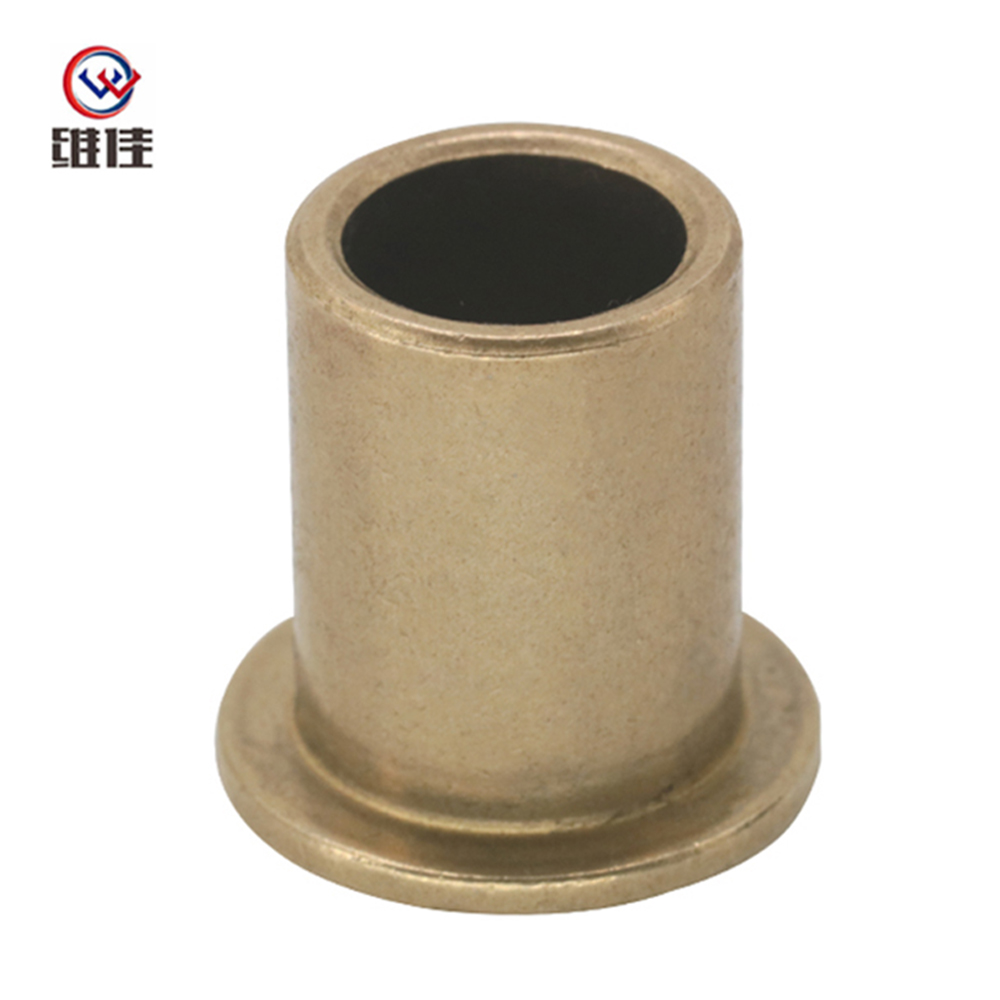 Sintered Bronze Self-lubricating BushingsOur sintered bronze self-lubricating bearings are engineered for demanding industrial applications where traditional lubrication is impractical. Designed with advanced...View Product →
Choosing the Shaping Operation: A Quick Reference
In practice the decision comes down to a handful of recurring conditions. The grid below condenses the calls we see most often.
Annual volume in the tens of thousands
Hard tooling amortizes quickly and the per-piece cost drops below cast or machined alternatives.
Self-lubrication required
Interconnected porosity plus oil impregnation makes maintenance-free bushings possible.
Complex profile, simple body
Gear teeth, splines and cams form in the die, with no gear cutting or profile milling.
Material cost is dominant
Near-net shaping keeps utilization above 95 percent and cuts chip waste to almost nothing.
Parts heavier than a few kilograms
Conventional press capacity is the limit, so consider isostatic pressing or another process.
One ultra-tight feature
Plan a sizing pass or post-sinter machining for that dimension rather than tightening the whole drawing.
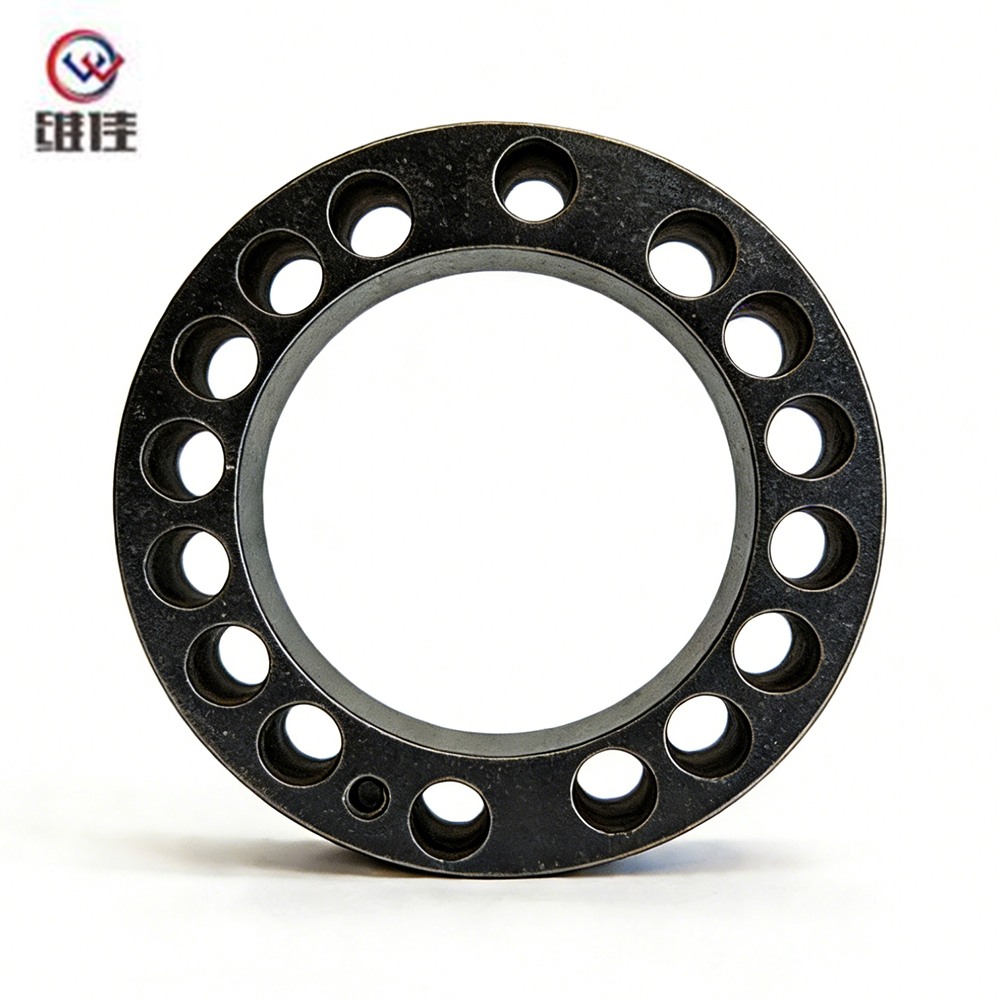
Household appliances sit squarely in this sweet spot: volumes are enormous, the parts are iron-based structural pieces such as bearing seats and brackets, and cost per piece decides the sourcing. That is why powder metallurgy structural components for washing machines and similar equipment are so widely die-compacted.
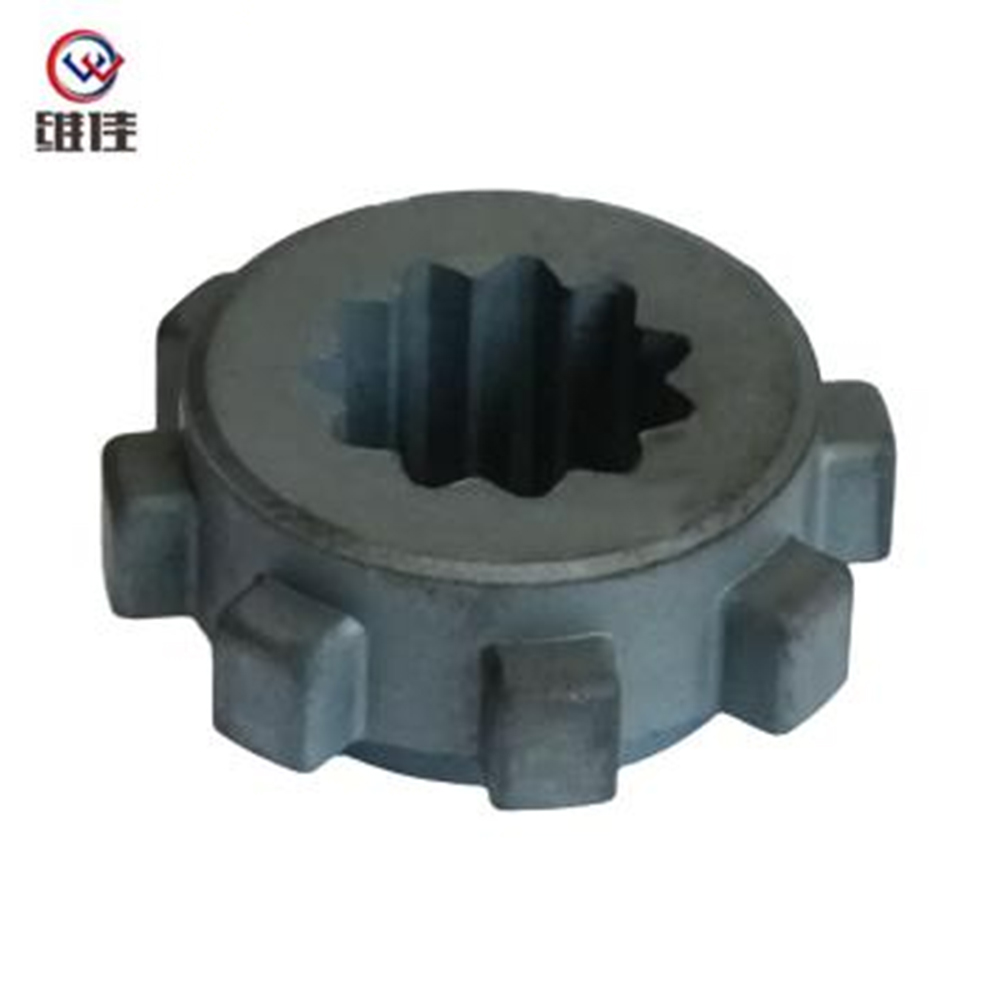 Powder Metallurgy Structural Components for Washing MachinesOur powder metallurgy structural components are precision-engineered for washing machine applications, manufactured via compaction, sintering, and blackening processes...View Product →
What to Prepare When Sourcing Sintered Parts
Because the shaping operation is die-driven, most of the engineering happens up front. A practical inquiry includes a drawing with datums and tolerances, the material system (iron, iron-copper, bronze or stainless steel), the required density or strength, the expected annual volume, and the working environment: load, sliding speed and temperature. Producers certified to ISO 9001:2015 and IATF 16949:2016 translate that input into tool design and a sintering route, and most will work from a physical sample when a full drawing is not yet available. For a sense of the range on offer, browse our custom powder metallurgy structural parts, from gears and hubs to irregular sintered shapes.
Frequently Asked Questions
Is powder metallurgy a casting operation?
No. In casting the metal is fully liquid and solidifies inside the mold. In powder metallurgy the metal stays solid from start to finish; sintering bonds the particles through diffusion at 70 to 90 percent of the melting temperature.
Which step actually shapes the part, compaction or sintering?
Compaction does. The die fixes the geometry, and sintering consolidates the compact with only small, predictable shrinkage that the tool design compensates for.
How accurate are sintered parts?
As-sintered parts commonly hold about plus or minus 0.5 percent of a nominal dimension. A sizing operation improves key diameters further, and any feature the die cannot form is machined after sintering.
Why are so many sintered bushings self-lubricating?
Because the porosity the process creates is useful. An interconnected pore network, often 15 to 25 percent of the part's volume, is impregnated with oil and releases it gradually to the shaft during operation.
Related products
-
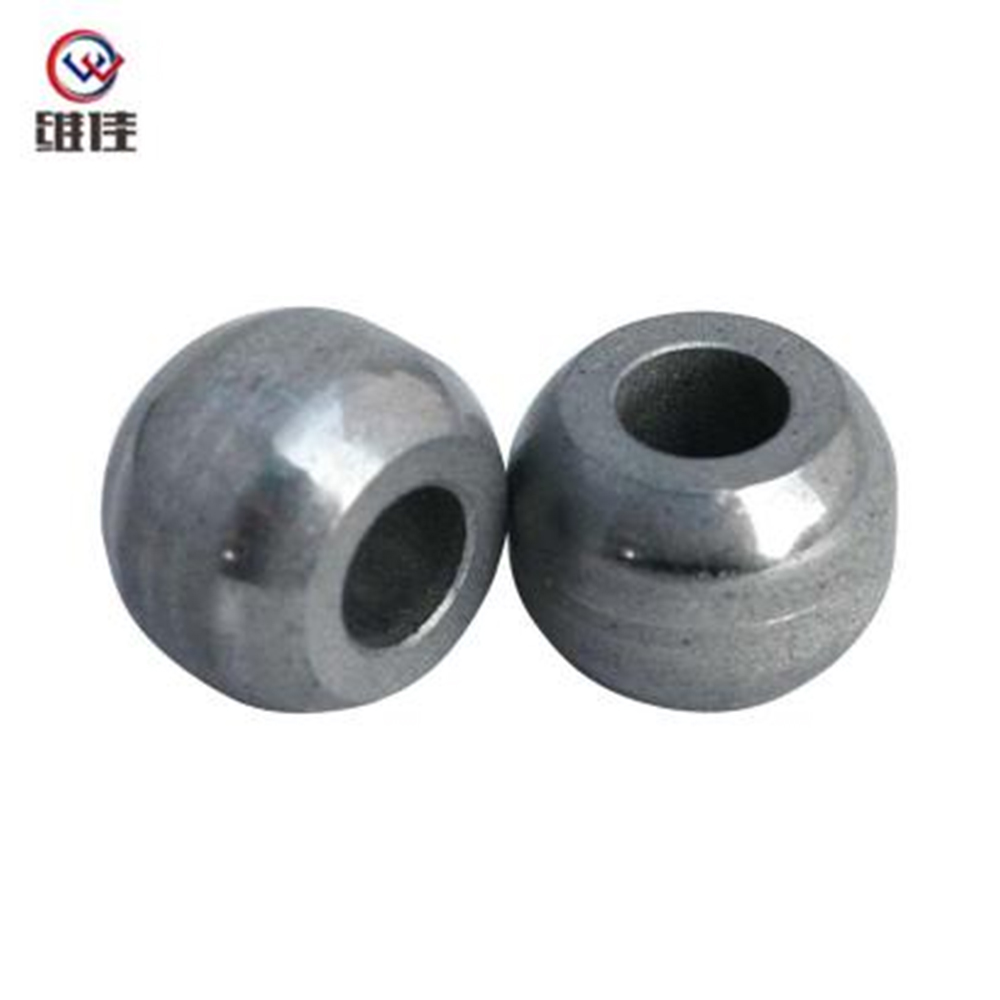
-
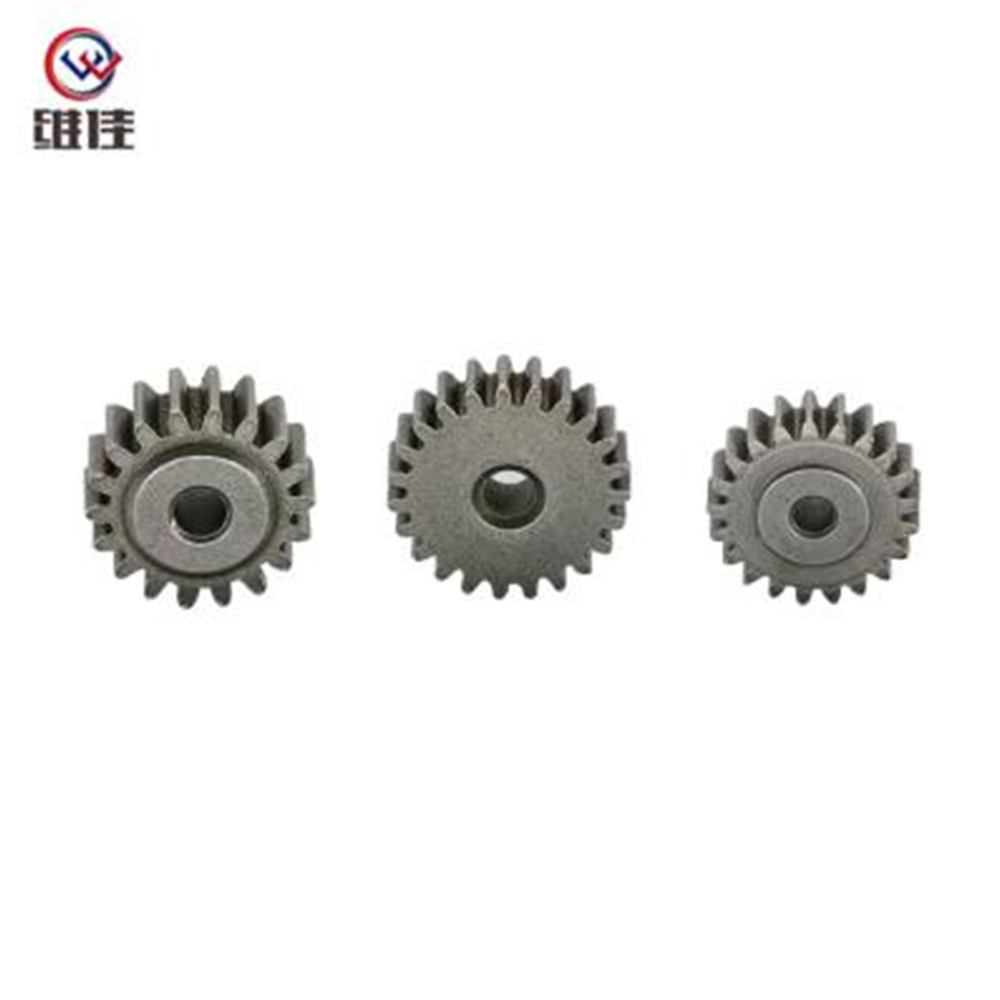
Description: Custom powder metallurgy planetary gear with high precision, wear resistance for automotive, industrial machinery & home appliances. OEM/ODM supported.
See Details -
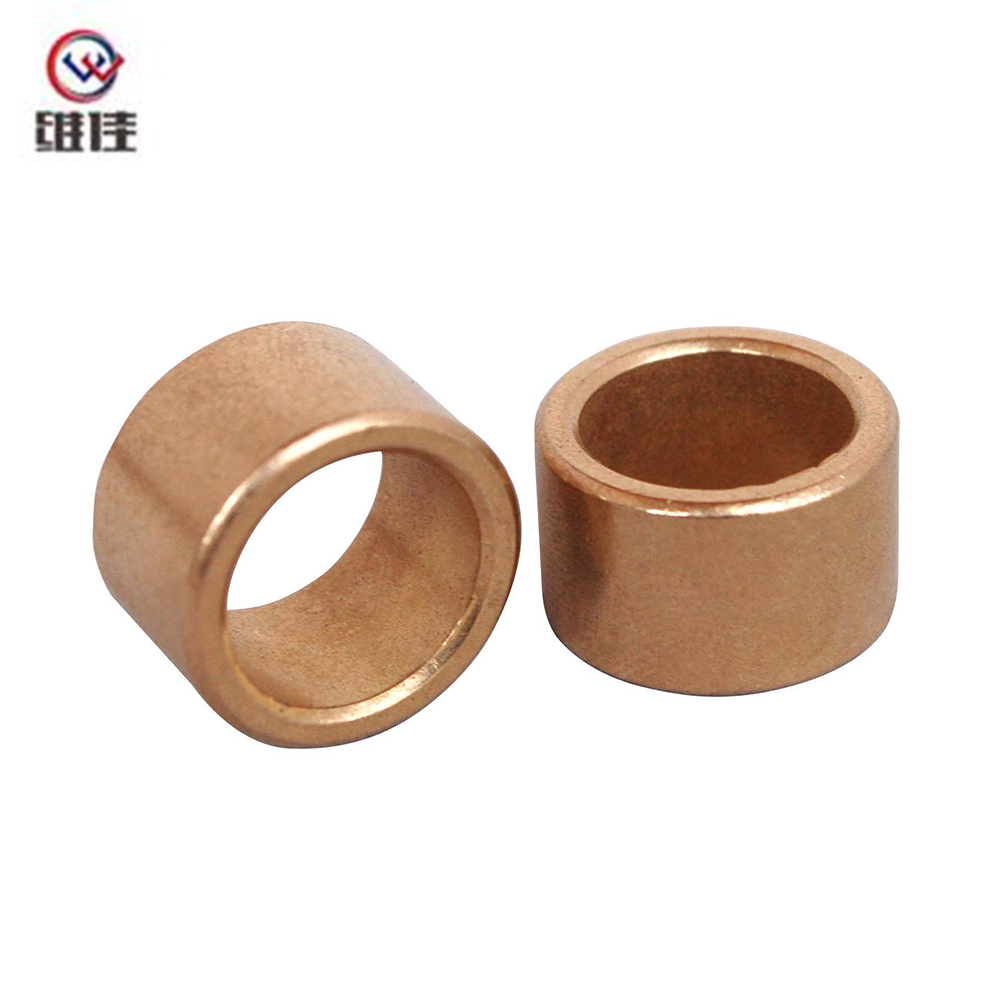
This copper-based powder metallurgy bushing is manufactured through an integrated process of compaction, sintering, sizing, and oil impregnation. It features excellent wear resistance and self-lubrica...
See Details -
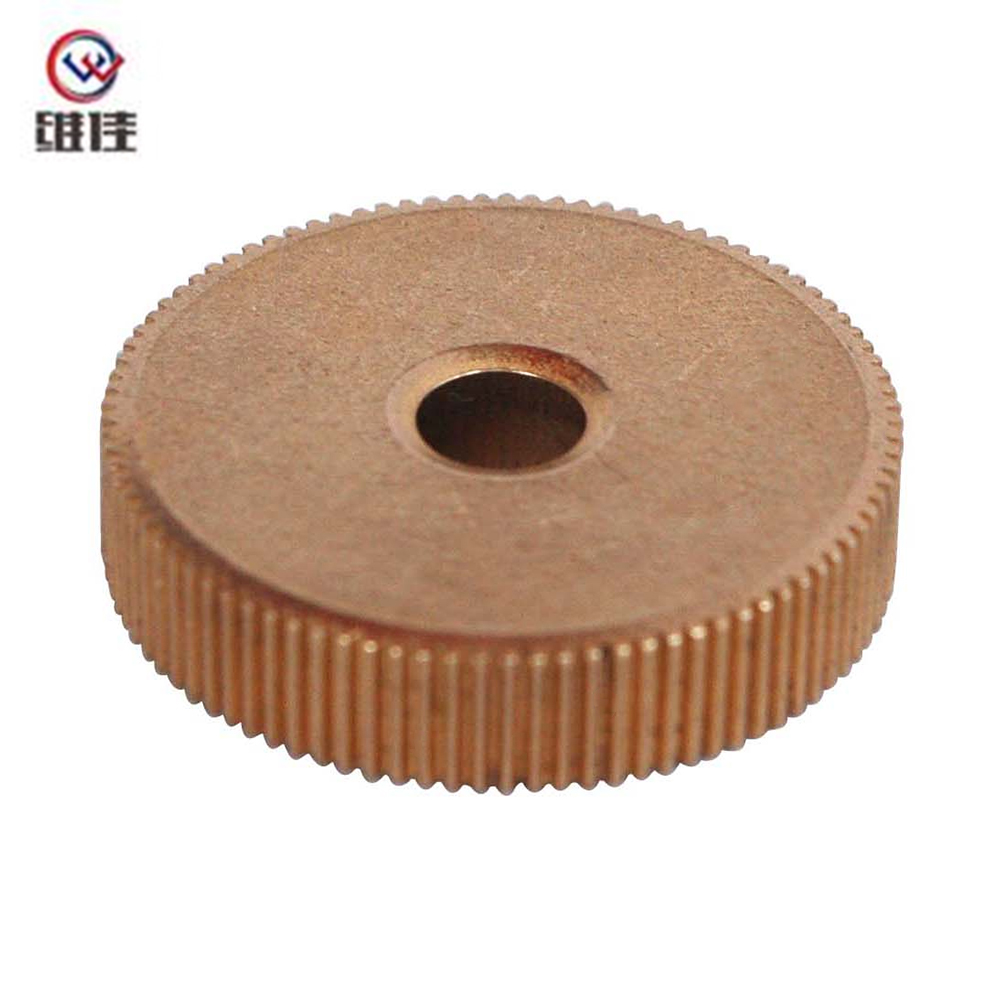
This 4×11.5×5.2mm powder metallurgy gear is manufactured through a precise press-sinter-through hole-oil impregnation process, with strict control of press density (6.7–6.8g/cm³) and sintering tempera...
See Details

Copyright © Jiande Welfine Technology Co., Ltd. All Rights Reserved. Privacy Custom Self-lubricating Sintered Bushing Manufacturers
