 English
 中文简体
中文简体Product Description: High-precision powder metallurgy part (S14*7*10) made of iron material from Jiande Wefine, customized PM components with strict tolerance control.
See DetailsE-mail us: [email protected]
Tel: +86-15239857375


 Home / News / Industry News / What Part Shaping Operation Is Powder Metallurgy? Net-Shape Forming Explained
 What Part Shaping Operation Is Powder Metallurgy? Net-Shape Forming Explained
 2026.08.28
 Industry News
Content
- 1 The Direct Answer: Net-Shape Powder Forming
- 2 How the Shape Is Created: Five Stages of the Operation
- 3 Why Compaction Defines Both Tolerances and Porosity
- 4 Net-Shape Forming vs. Machining and Casting at a Glance
- 5 Other Shaping Operations in the PM Family
- 6 What This Means When You Source PM Parts
- 7 Frequently Asked Questions
Every metal part gets its shape in one of a few ways: molten metal is poured into a mold, a solid billet is squeezed into form under pressure, or chips are cut away until only the part remains. Powder metallurgy (PM) takes a different route, which is why the question "what part shaping operation is powder metallurgy?" comes up so often among buyers and design engineers.
Powder metallurgy is a net-shape (near-net-shape) forming operation: metal powder is compacted into a precision die to the finished geometry, then sintered just below the melting point to bond the particles into a solid part. There is no melting and no chip removal. The part takes its shape while the material is still powder, and that one fact explains the process's dimensional accuracy, its material efficiency, and the applications where it excels.
The Direct Answer: Net-Shape Powder Forming
In the manufacturing classification systems most engineers learn, processes are sorted by how they create geometry. DIN 8580, the standard widely referenced in industry, divides them into six main groups: primary shaping, forming, separating, joining, coating, and changing material properties. Powder metallurgy compaction sits in primary shaping, because it creates geometry from a material that has no shape of its own — loose powder. Casting does the same thing with liquid metal; PM does it with solid particles.
The sintering stage is what separates PM from casting. Powders are heated to roughly 70–90 percent of the alloy's melting point — around 1120 °C for typical iron-based mixes, closer to 800 °C for bronzes — so the particles weld together without ever fully melting. The result is described as net-shape when a part needs no machining after sintering, and near-net-shape when only minor finishing is required.
How the Shape Is Created: Five Stages of the Operation
Conventional PM shaping runs through five stages, and each one either sets the geometry or refines it:
1
Powder Production
Metal is atomized or chemically reduced into particles, typically finer than about 150 µm. Particle size and shape control how the powder flows into the die and how densely it packs.
2
Mixing and Blending
Alloying additions and roughly 0.5–1 percent of a die-wall lubricant are blended in so the compact can be ejected cleanly without damaging the tooling.
3
Compaction
A press squeezes the powder between hardened dies at typically 100–800 MPa. The part emerges with its finished shape and enough "green strength" to be handled, at roughly 85–90 percent of wrought density for most structural grades.
4
Sintering
Parts pass through a controlled-atmosphere furnace below the melting point. Particles bond at their contact points, shrinkage stays well under one percent, and the engineered porosity network is locked in.
5
Secondary Shaping and Finishing
Sizing or coining restrikes the part for tighter tolerances, machining adds features the press axis cannot form, and oil impregnation or steam treatment can follow for bearing grades.
Think of the die as the part's blueprint: whatever the die cannot produce — undercuts, cross-holes, threads — has to come from stage five.
Why Compaction Defines Both Tolerances and Porosity
Because the die creates the geometry, compaction determines two things buyers care about most. First, accuracy: friction between the powder and the tool walls creates slight density gradients, which is why tolerances in the pressing direction run looser than those perpendicular to it. As a rule of thumb, as-sintered dimensions hold roughly ±0.1–0.3 percent of a given size, and a sizing operation can tighten critical bores and outside diameters by a factor of two to five.
Second, porosity. Compaction pressure is deliberately chosen so the part keeps an interconnected pore network — often between 15 and 25 percent of its volume. In pressure-tight parts that would be a defect, but in self-lubricating bearings it is the entire point: standardized grades such as SAE 841 specify an oil content of roughly 17–30 percent by volume, so the bushing carries its own lubricant. That is exactly how parts like sintered bronze self-lubricating bushings run for years without a greasing schedule.
sintered bronze self-lubricating bushings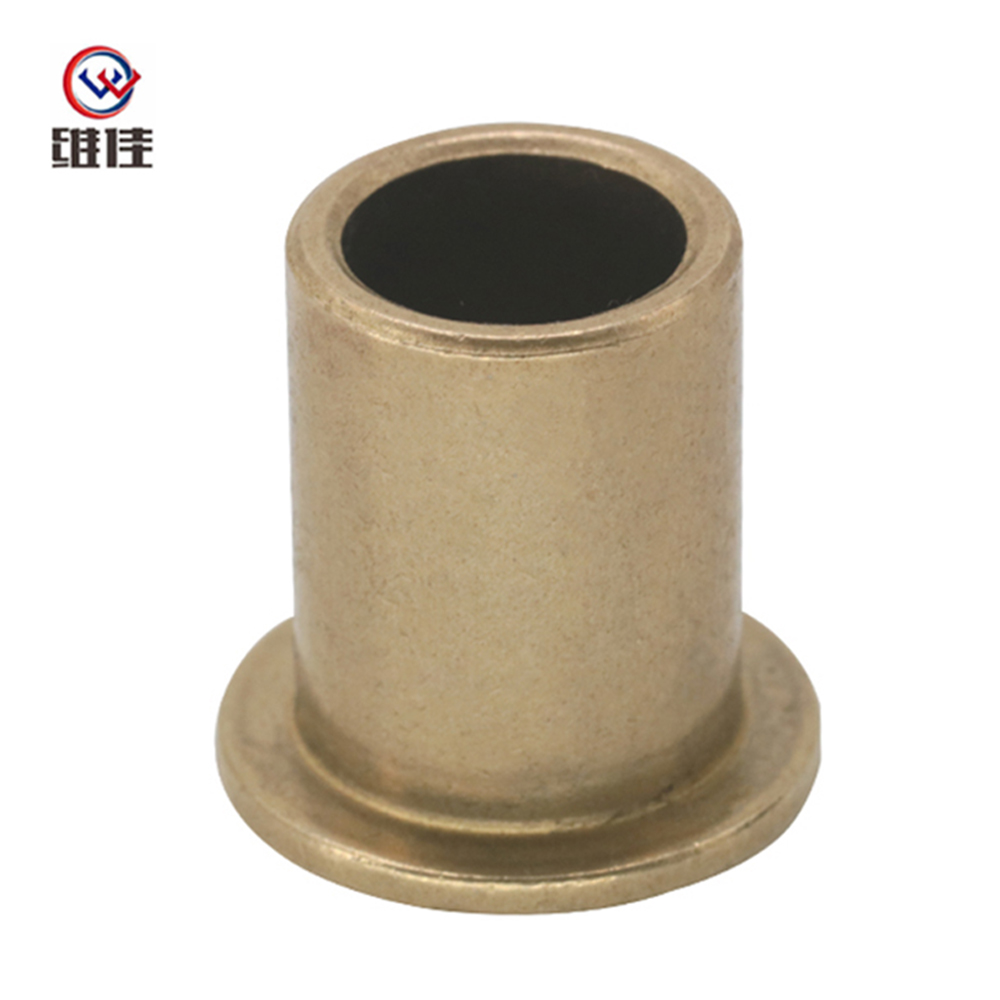 Sintered Bronze Self-Lubricating BushingsThese bushings use controlled interconnected porosity to store oil, matching the 15–25% porosity discussion and SAE 841 oil content grades, so they run maintenance-free without any greasing schedule.View Product →
The same net-shape logic applies to dense structural parts; porosity there is simply kept low through material choice and higher compaction density, or sealed where tightness matters.
Net-Shape Forming vs. Machining and Casting at a Glance
Classifying PM as a shaping operation is not academic — it tells you exactly where the cost and quality trade-offs sit relative to the alternatives:
| Aspect | Powder Metallurgy (Net-Shape Forming) | Machining (Material Removal) | Casting (Liquid Shaping) |
|---|---|---|---|
| How shape is made | Powder compacted in a die, then sintered below the melting point | Chips cut away from solid stock | Molten metal solidifies in a mold |
| Material utilization | Typically above 95 percent; almost no scrap | Complex parts can waste half or more as chips | Good, minus gates and runners |
| Tolerances | ±0.1–0.3 percent as-sintered; tighter after sizing | Very tight achievable, at added cost | Wider as-cast; finishing usually needed |
| Best geometry fit | Complex 2D profiles along the press axis: gears, flanges, keyways | Any 3D shape, in any quantity, but slower | Large or hollow parts; internal cavities with cores |
| Porosity | Engineered feature for bushings; can be sealed | None | Unplanned defects possible |
| Volume economics | Tooling cost amortizes across thousands of parts | No tooling; unit cost stays flat | Mid to high volumes |
For appliance and hardware makers, that mix usually tips toward PM once volumes reach several thousand parts a year. If you are weighing the two routes for a specific component, this breakdown of how powder metallurgy compares with traditional machining for appliance parts walks through the cost crossover in detail.
Other Shaping Operations in the PM Family
Conventional die compaction is the workhorse, but "powder metallurgy" covers several shaping operations, each trading tooling cost for geometric freedom.
Metal Injection Molding (MIM)
Powder is mixed with a polymer binder into a feedstock and injection molded like plastic, then debound and sintered. It suits small, intricate 3D parts, which shrink 15–20 percent linearly during sintering, so tooling must be cut oversized.
Isostatic Pressing
A flexible mold is pressurized from all sides — cold with liquid, hot with gas. Pressure is uniform, so density gradients shrink, but tolerances are looser and machining is normally required. It fits blanks, large parts, and low volumes.
Metal Additive Manufacturing
A laser or electron beam fuses powder layer by layer. It handles geometries no die could release, but unit cost and cycle time keep it at low volumes or high-value parts. In practice it complements press-and-sinter production rather than replacing it.
What This Means When You Source PM Parts
The practical conclusion: judge a PM supplier primarily on how well the shaping operation — die design and compaction control — is executed, because that is where accuracy, density, and porosity are decided. Four checkpoints matter most:
- Mark your critical dimensions. Tell the supplier which bores and outside diameters drive function, so a sizing operation is built into the tooling plan instead of added later.
- Respect the press axis. Undercuts and holes perpendicular to the pressing direction are possible but add secondary machining cost — flag them early.
- Specify density and oil content, not just material. For bearing grades, porosity is a functional requirement and belongs on the drawing.
- Match volume to tooling. The die amortizes across the run; below a few thousand parts a year, machining often wins.
Transmission components show the logic well: a compact body such as powder metallurgy planetary gears gets its tooth profile, hub, and keyways straight from the die, so the teeth never need cutting at all.
powder metallurgy planetary gears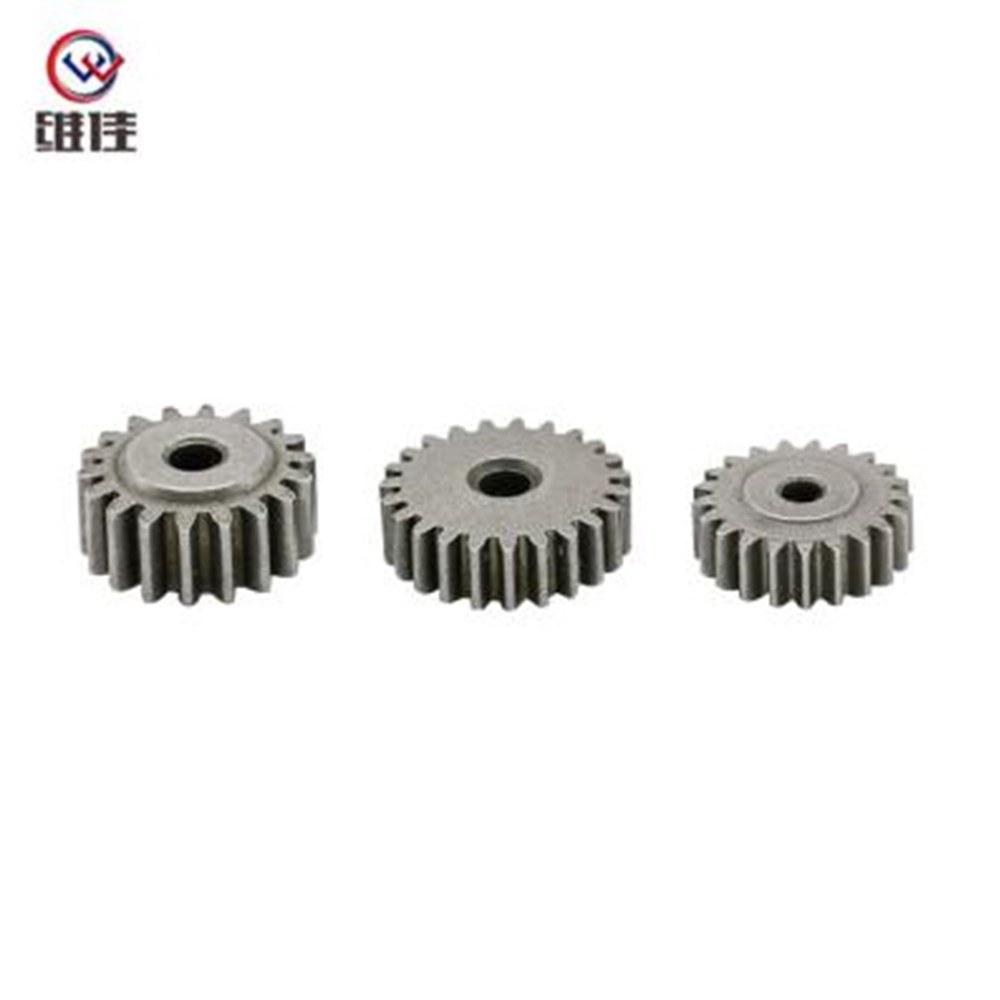 Powder Metallurgy Planetary GearDie-formed in one compacting step, this gear's tooth profile, hub, and keyways come straight from the tooling, illustrating how transmission parts achieve near-net shape without cutting teeth.View Product →
Appliance makers follow the same path for structural parts, which leave the press shaped, sized, and ready for assembly.
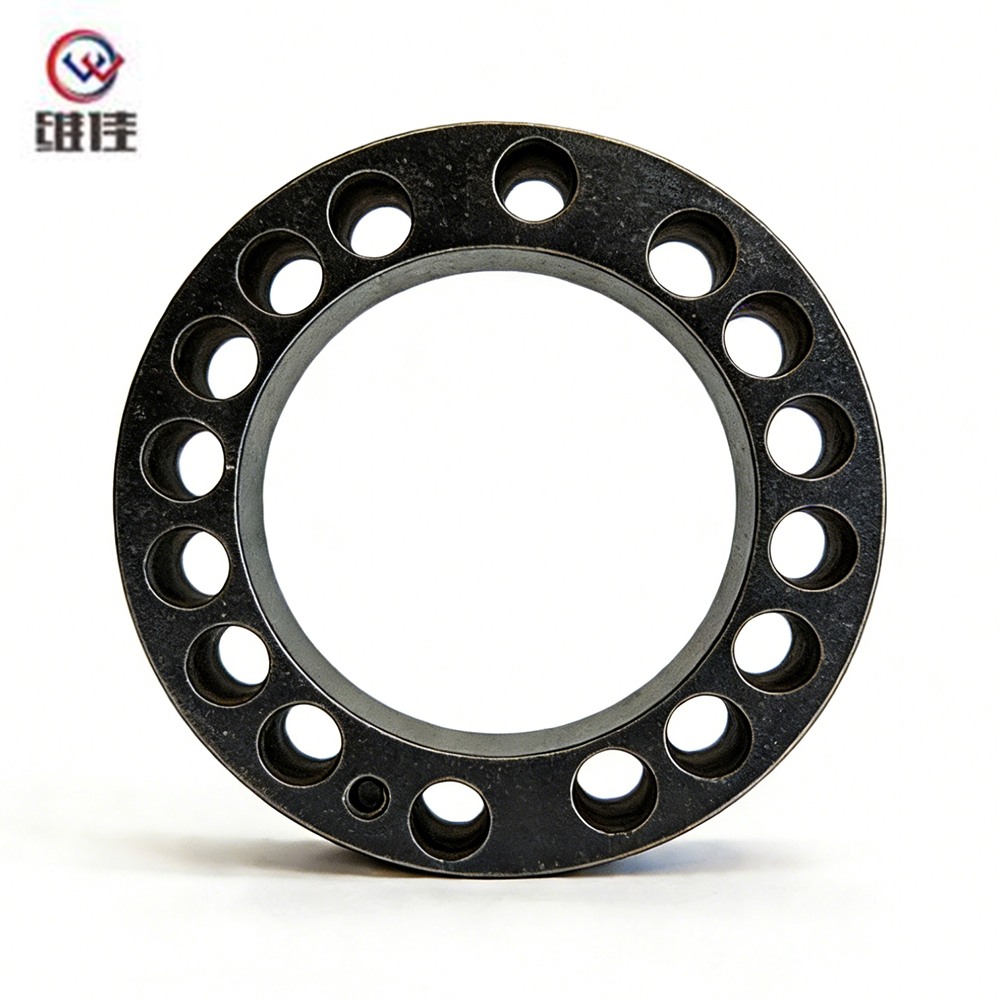
powder metallurgy structural components for washing machines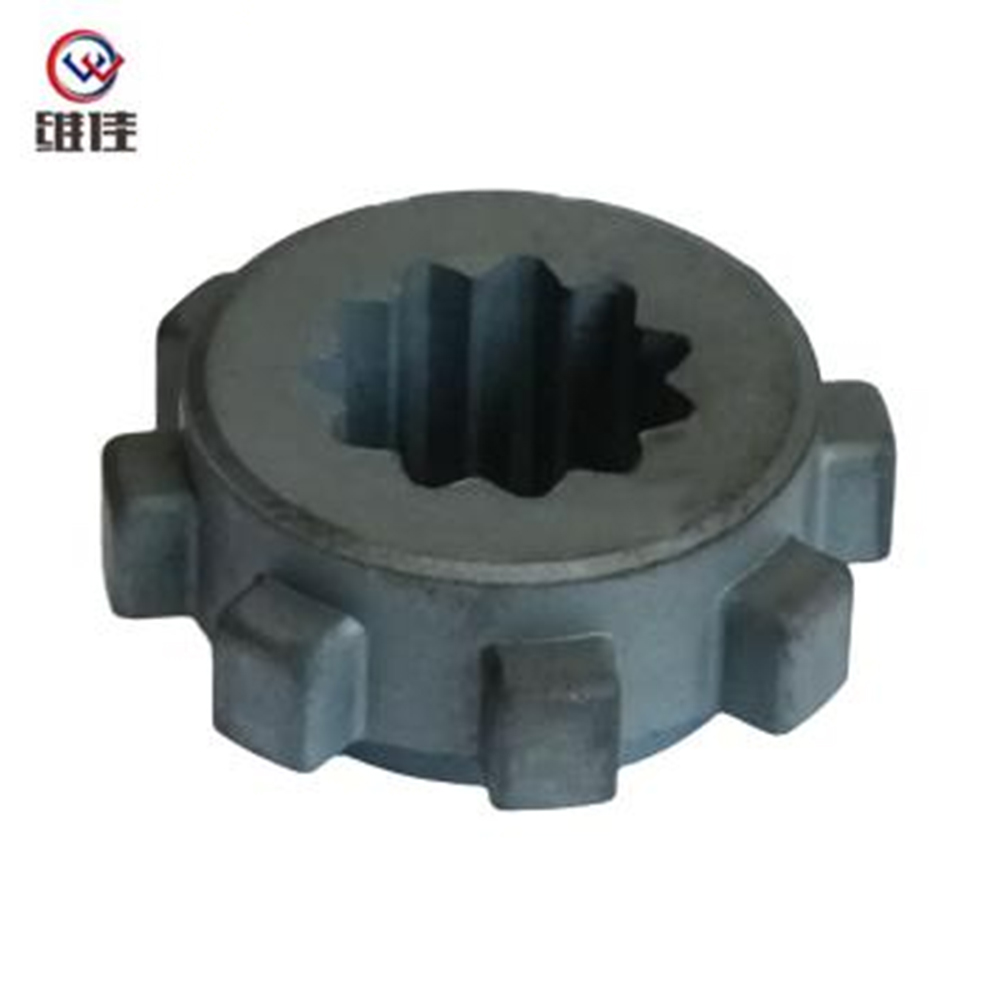 Powder Metallurgy Structural Components for Washing MachinesIron-based structural parts leave the press sized and ready for assembly, with black oxide coating for corrosion resistance and splined bores suited to washing machine clutch and transmission systems.View Product →
Material choice is the other half of the equation; this guide to which materials can be used for custom sintered metal parts covers iron, bronze, stainless, and hybrid mixes in depth.
Frequently Asked Questions
Is powder metallurgy a forming operation or a casting operation?
It is a forming (shaping) operation on solid particles. Although sintering heats the compact to 70–90 percent of the melting point, the metal never fully melts; only a few special liquid-phase grades use a small molten fraction to aid bonding.
What does "net shape" mean in powder metallurgy?
The part leaves the process at its final geometry. When sizing or minor machining is added to hit critical tolerances, the part is called near-net-shape.
How accurate is the PM shaping operation?
As-sintered dimensions typically hold about ±0.1–0.3 percent of a given size, and dimensions perpendicular to the press direction run tighter than those along it. Sizing can tighten critical features by a factor of two to five.
Is the porosity in sintered parts a defect?
Not in self-lubricating bushings — the interconnected pores are engineered to hold roughly 17–30 percent oil by volume. Where pressure tightness or fatigue strength matters, porosity is reduced through higher compaction density, steam treatment, or infiltration.
Related products
-
-
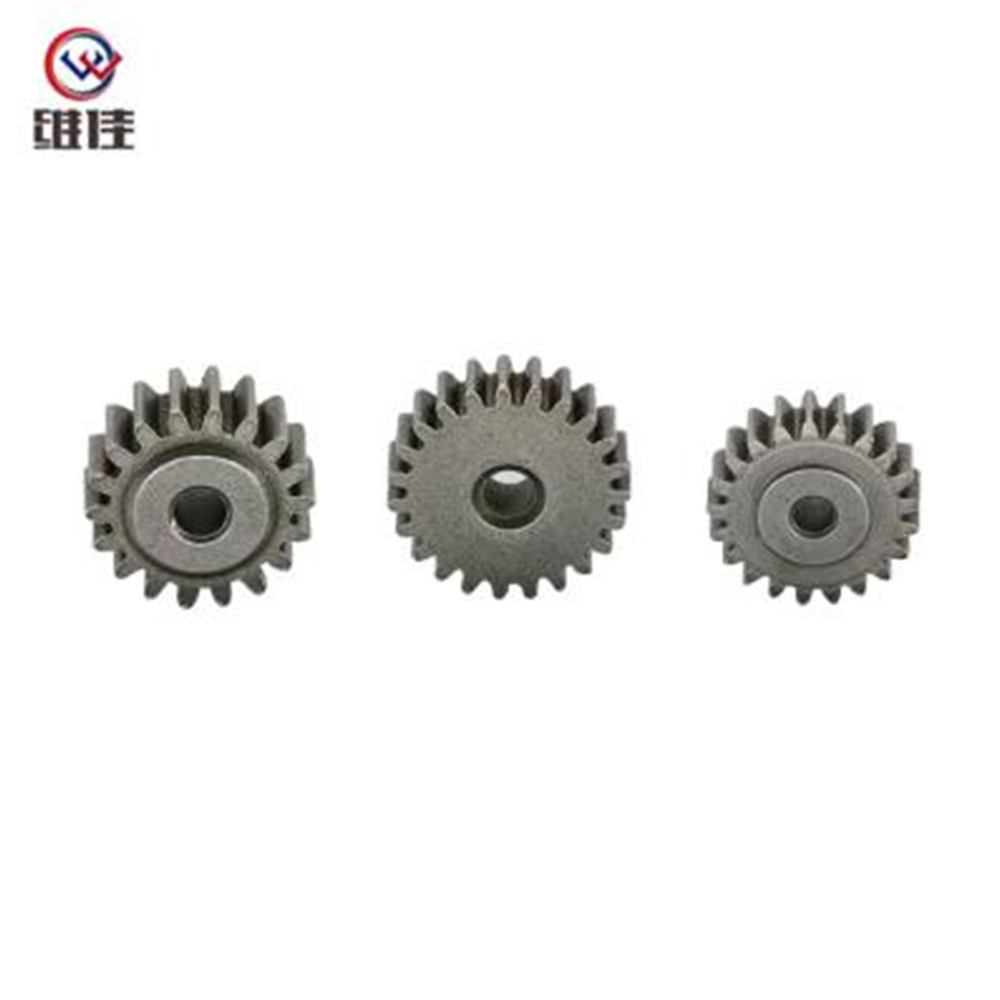
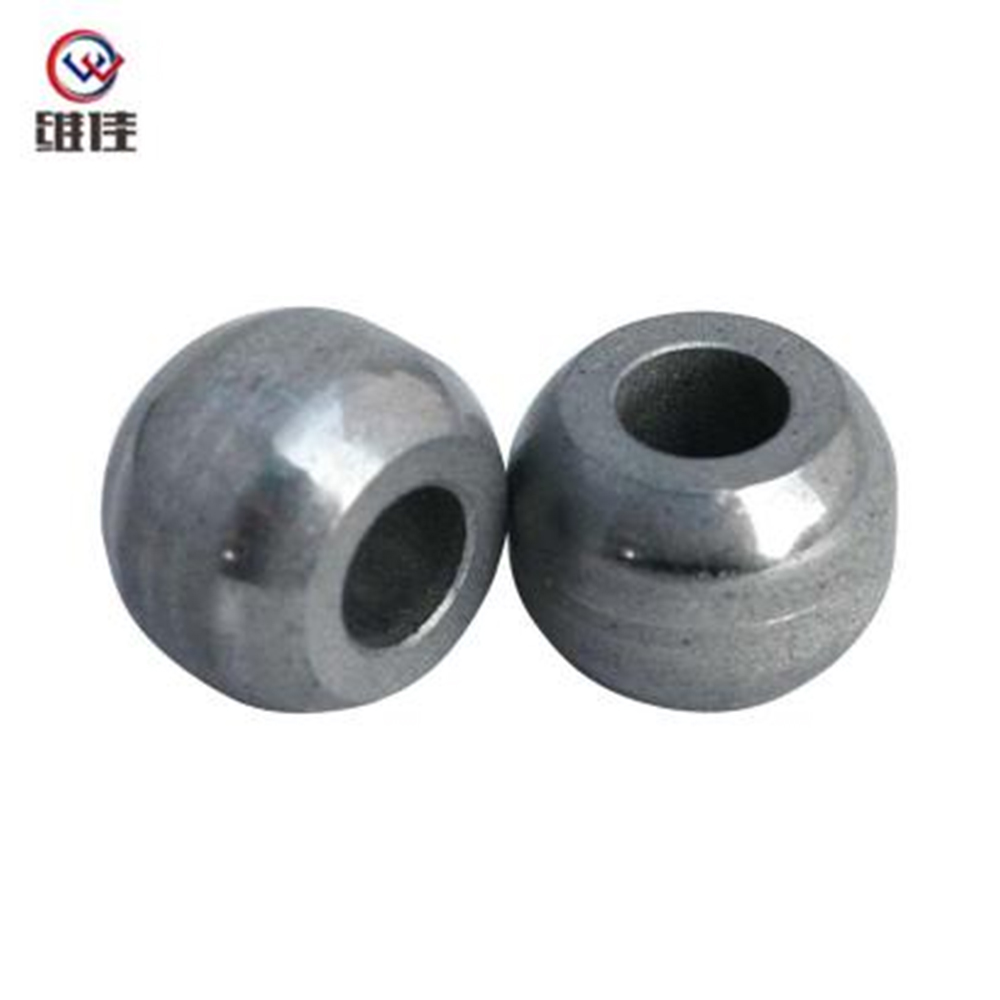
Description: Custom powder metallurgy planetary gear with high precision, wear resistance for automotive, industrial machinery & home appliances. OEM/ODM supported.
See Details -
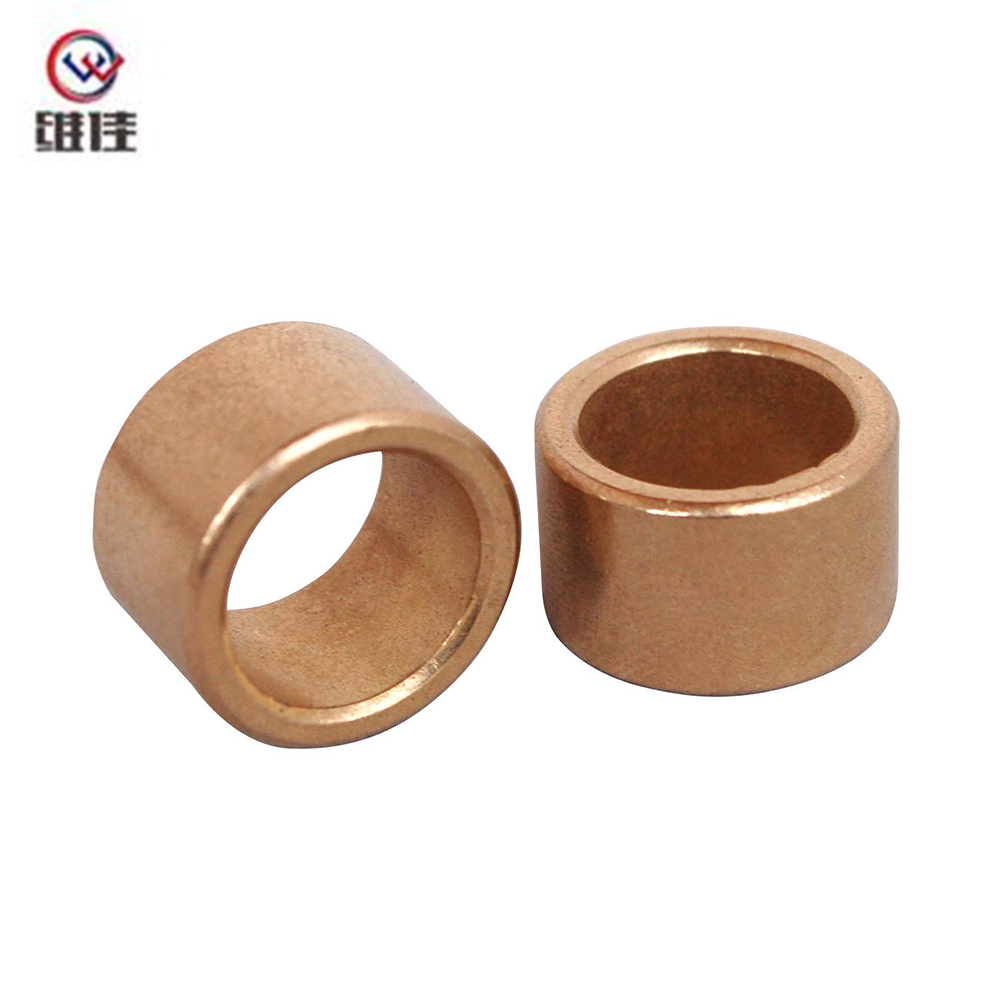
This copper-based powder metallurgy bushing is manufactured through an integrated process of compaction, sintering, sizing, and oil impregnation. It features excellent wear resistance and self-lubrica...
See Details -
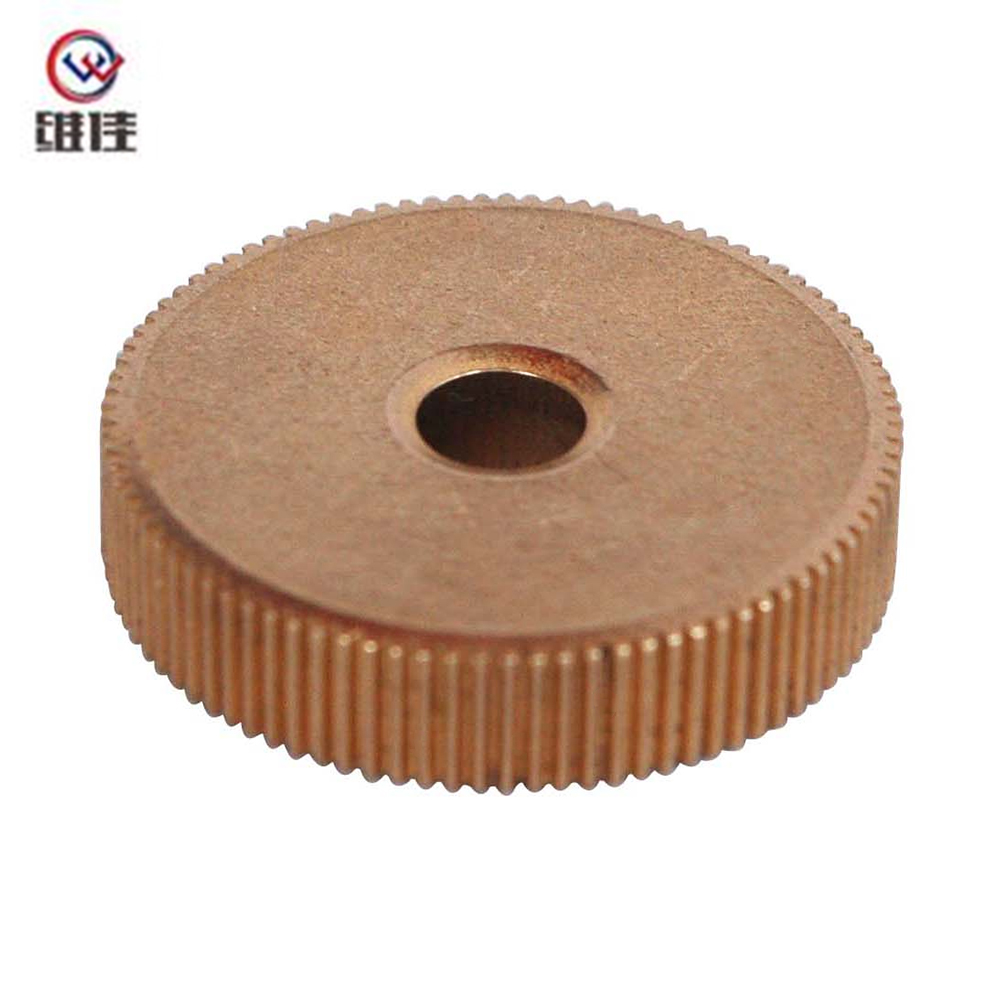
This 4×11.5×5.2mm powder metallurgy gear is manufactured through a precise press-sinter-through hole-oil impregnation process, with strict control of press density (6.7–6.8g/cm³) and sintering tempera...
See Details

Copyright © Jiande Welfine Technology Co., Ltd. All Rights Reserved. Privacy Custom Self-lubricating Sintered Bushing Manufacturers
