 English
 中文简体
中文简体Product Description: High-precision powder metallurgy part (S14*7*10) made of iron material from Jiande Wefine, customized PM components with strict tolerance control.
See DetailsE-mail us: [email protected]
Tel: +86-15239857375


 Home / News / Industry News / Powder Metallurgy Process Explained: From Metal Powder to Precision Parts
 Powder Metallurgy Process Explained: From Metal Powder to Precision Parts
 2026.09.18
 Industry News
An engineer is reviewing options for a small bronze bushing that will run against a steel shaft in a pump. The part must carry a moderate load, operate with minimal maintenance, and cost only a few cents at production volume. Powder metallurgy makes that part practical. The powder metallurgy process turns loose metal powder into a solid, dimensionally precise component by pressing it in a die and sintering it below the melting point of the metal. It is one of the most efficient routes to high-volume metal parts, competing directly with machining, casting, and forging.
What Is the Powder Metallurgy Process?
Powder metallurgy (PM) is a metal-forming method in which fine metal powders are compacted into the desired shape and then heated to bond the particles into a solid structure. Sintering, the heating stage, creates metallurgical bonds across particle contact points without melting the bulk material. The finished component has controlled density, consistent dimensions, and, when required, a deliberate pore structure that can store oil for self-lubrication.
The approach differs fundamentally from casting, forging, and machining. Casting starts from molten metal; forging works from solid stock; machining removes material from a blank. PM starts from powder and consolidates it directly into near-net shape, which is why material utilization is typically above 95 percent and why alloy combinations that are difficult to cast can be produced reliably.
The Core Steps of the Powder Metallurgy Process
Most PM production follows the same sequence: produce the powder, blend it, compact it, and sinter it. Each step sets the conditions for the next, so process control matters at every stage.
- 1
Powder production
Metal is melted and atomized into fine droplets. Gas atomization produces spherical particles that flow well in the die; water atomization produces irregular particles that interlock during pressing. Milling and chemical reduction are used for specialized materials.
- 2
Mixing and blending
The base powder is mixed with alloy additions such as copper, nickel, graphite, and internal lubricants. A uniform blend is critical, because any segregation shows up later as variation in strength and density.
- 3
Compaction
The blended powder is metered into a precision die and pressed at high pressure, typically 200 to 800 MPa. The green compact that comes out has the final shape but remains porous and relatively weak until sintering.
- 4
Sintering
The green compact moves through a controlled-atmosphere furnace and is heated below the melting point of the base metal. Diffusion bonds the particles, giving the part its mechanical strength and final dimensions. Sintering temperature, belt speed, and atmosphere are tightly controlled.
Materials Used in Powder Metallurgy
PM is compatible with a wide range of metal powders. Material selection drives strength, wear resistance, corrosion behavior, and cost, so it is usually the first decision a designer makes.
-
Iron and carbon steel
The most common PM materials, offering good strength and moderate cost for gears, hubs, and structural brackets.
-
Bronze and copper alloys
Excellent wear resistance and conformability, widely used for self-lubricating bushings that store oil in their pores.
-
Stainless steel
Corrosion-resistant grades for parts exposed to moisture, chemicals, or food-contact environments.
-
Iron-copper and alloy steels
Copper strengthens iron-based parts; nickel and molybdenum create high-strength grades for demanding service.
For a practical comparison of different bearing material families, see our overview of commonly used bearing materials.
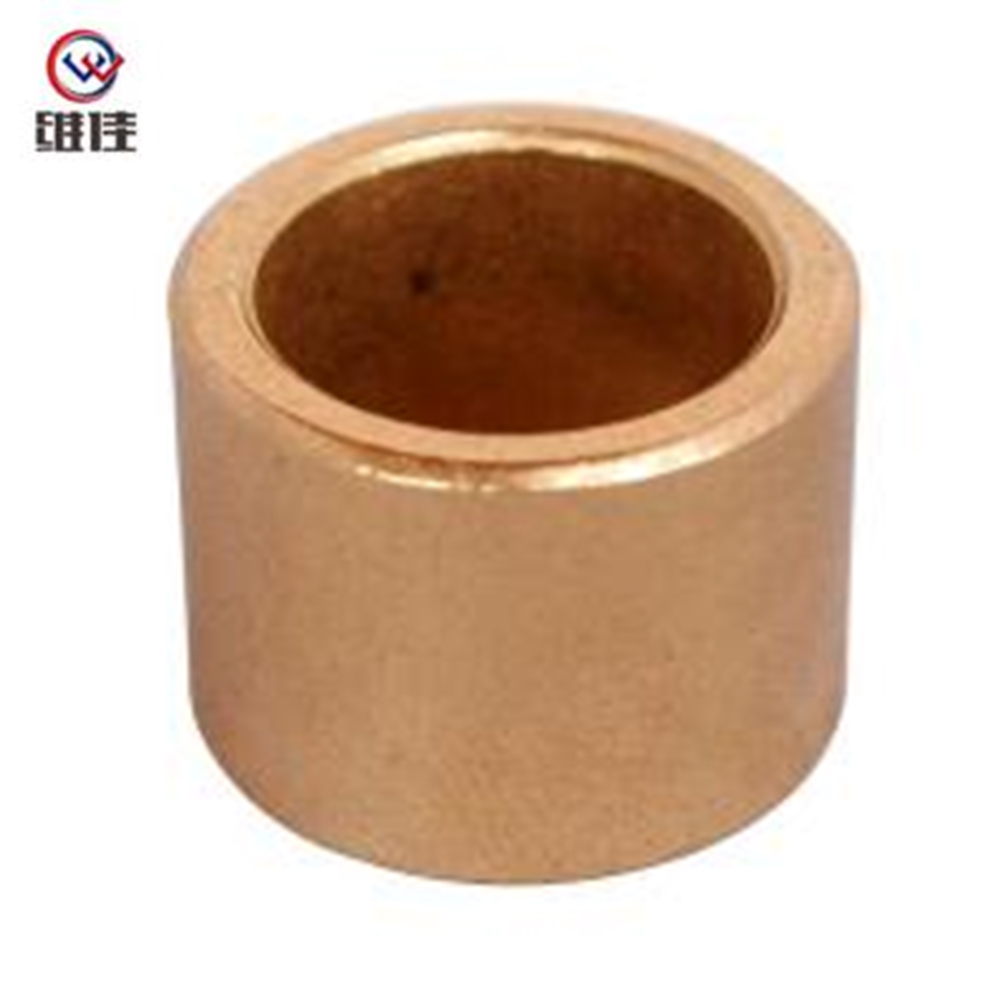 Powder Metallurgy Bronze Bushing for Precision MachineryThis oil-impregnated bronze bushing suits readers comparing bearing material families, offering wear resistance and tight tolerances for automotive, hydraulic, and precision applications.View Product →
Key Advantages and Limitations
Powder metallurgy is not the right answer for every part. Knowing where it wins and where it struggles prevents costly mistakes.
| Factor | Powder Metallurgy | Conventional Machining |
|---|---|---|
| Material utilization | Above 95 percent of input powder becomes the part | 30-70 percent; the rest becomes chips |
| Per-part cost at volume | Low once tooling is amortized | Higher, because each part carries labor and material cost |
| Shape complexity | Net-shape contours in one press stroke | Multiple setups needed for complex features |
| Mechanical strength | Good, with controlled density | Excellent, with no internal porosity |
| Design change flexibility | Die modifications are expensive and slow | Programs and tool paths are easy to update |
The big advantages are material efficiency, dimensional consistency, and the ability to produce self-lubricating structures. Once tooling is proven, a press can produce hundreds to thousands of parts per hour with minimal variation.
The limitations matter just as much. PM dies are expensive, so the process makes sense only when volume is high enough to amortize the tooling. Part size is limited by press capacity, and the residual porosity that enables self-lubrication also lowers ductility compared with wrought metal.
Secondary Operations
Many PM parts are used exactly as sintered. Others receive a secondary operation to tighten tolerances or improve performance.
- Sizing or coining - restrikes the sintered part in a die to correct dimensional drift and improve surface density.
- Oil impregnation - immerses the part in heated oil so the connected pores absorb lubricant; this is how self-lubricating bearings work.
- Heat treatment - carburizing or through-hardening raises surface hardness and wear resistance.
- Steam treatment - forms a blue-black oxide layer that improves corrosion resistance and seals surface porosity.
- Machining - grinding or turning of critical faces achieves tolerances tighter than the press can hold.
Common Applications of PM Parts
PM parts appear wherever high volume, repeatability, and material efficiency are required. Typical applications include:
- Automotive - oil pump gears, transmission sprockets, shock absorber components, and brake parts.
- Home appliances - gears and structural components in washing machines and small motors.
- Industrial equipment - self-lubricating bushings, bronze sleeves, and friction components in pumps, conveyors, and heaters.
- Power tools - sintered helical and spur gears that transfer high torque in compact housings.
- Electric motors - soft magnetic stator cores pressed from insulated iron powder.
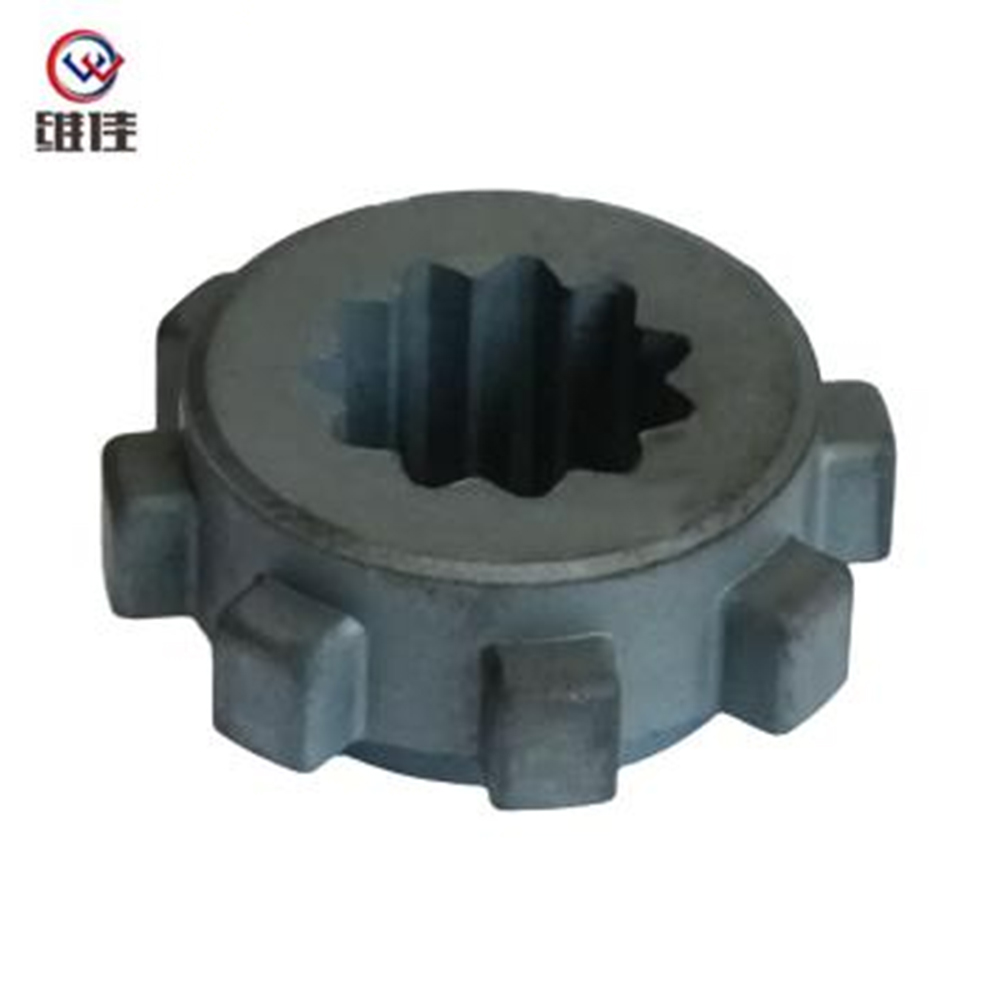 Iron-Based PM Structural Components for Washing Machine ClutchesThese sintered steel parts with black oxide coating provide torque transmission and corrosion resistance, ideal for high-load clutch and drive systems in household appliances.View Product →
 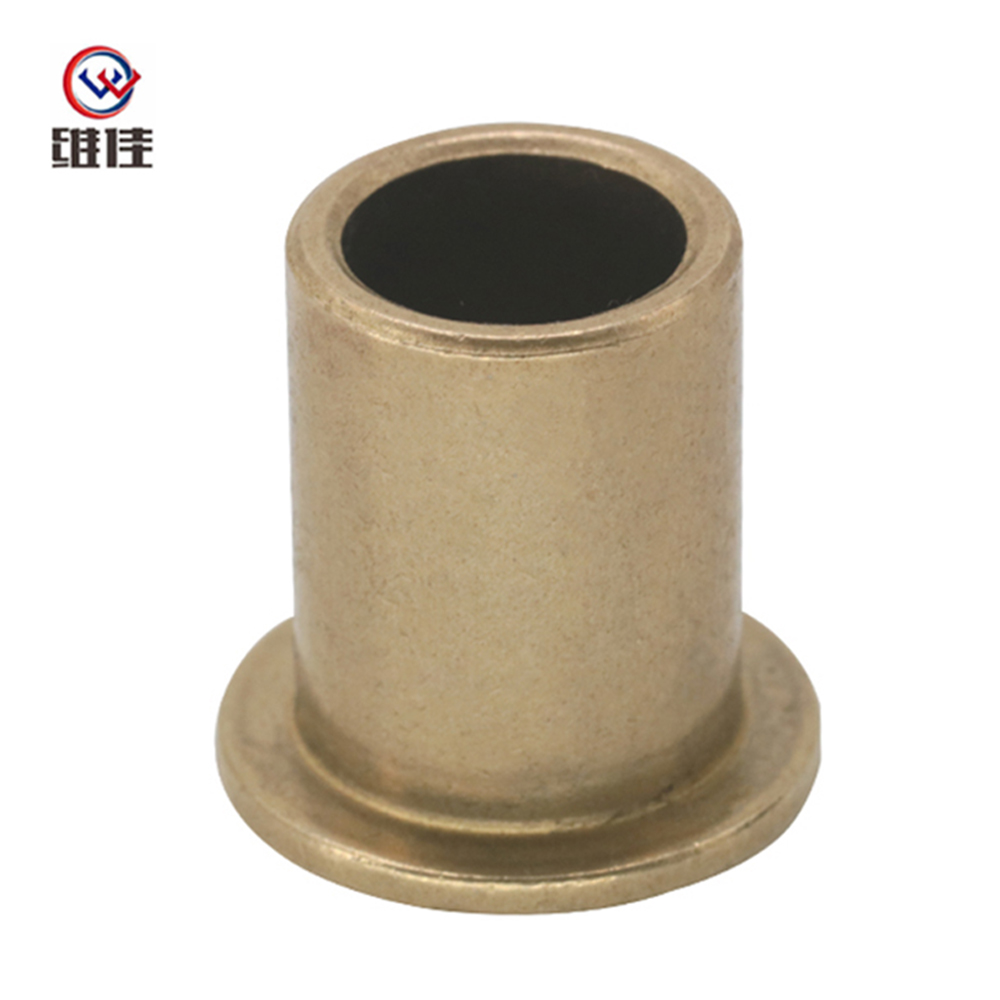 Sintered Bronze Self-Lubricating Bearing RangeThis series covers maintenance-free bronze bearings for dry or high-temperature operation, relevant after the overview of bearing materials and before discussing custom PM options.View Product →
Custom powder metallurgy parts optimize industrial applications because the material, pore structure, and geometry can be tuned to the duty cycle. If you have a drawing or sample in mind, contact us to discuss feasibility and tooling options.
Powder Metallurgy Process FAQ
What products are made with the powder metallurgy process?
PM is used for gears, bushings, bearings, structural components, brake parts, and magnetic cores across automotive, appliance, industrial, and power tool applications. Self-lubricating bearings are among the most common because the process creates the porosity needed to hold oil.
Is powder metallurgy cheaper than machining?
At sufficient volume, yes. PM consumes almost all input material and forms parts in one press stroke, which lowers per-part cost sharply. The trade-off is the die: PM tooling is expensive, so very low volumes are usually more economical to machine or cast.
What are the main limitations of the powder metallurgy process?
Three stand out: tooling is capital-intensive, so small batches are hard to justify; part size is limited by press capacity; and the porosity that enables self-lubrication also reduces ductility compared with wrought metal.
Can powder metallurgy parts be heat treated?
Yes. Sintered parts can be carburized, through-hardened, or steam treated, depending on material and density. Heat treatment is a common secondary operation for structural PM parts.
How accurate are powder metallurgy parts?
PM holds close dimensional tolerances straight from the die, and sizing or coining can tighten critical features further. Tolerances in the range of 0.05 to 0.1 mm per 25 mm are typical for structural parts.
Related products
-
-
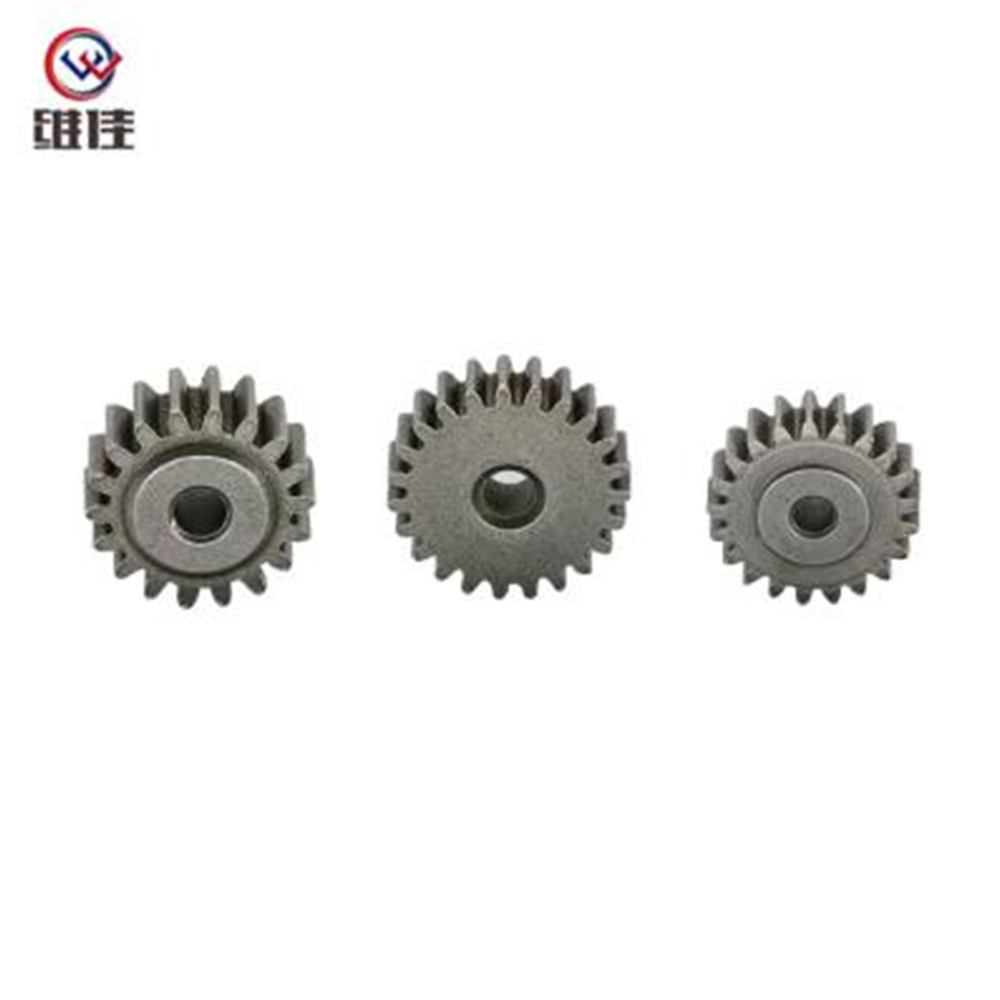
Description: Custom powder metallurgy planetary gear with high precision, wear resistance for automotive, industrial machinery & home appliances. OEM/ODM supported.
See Details -
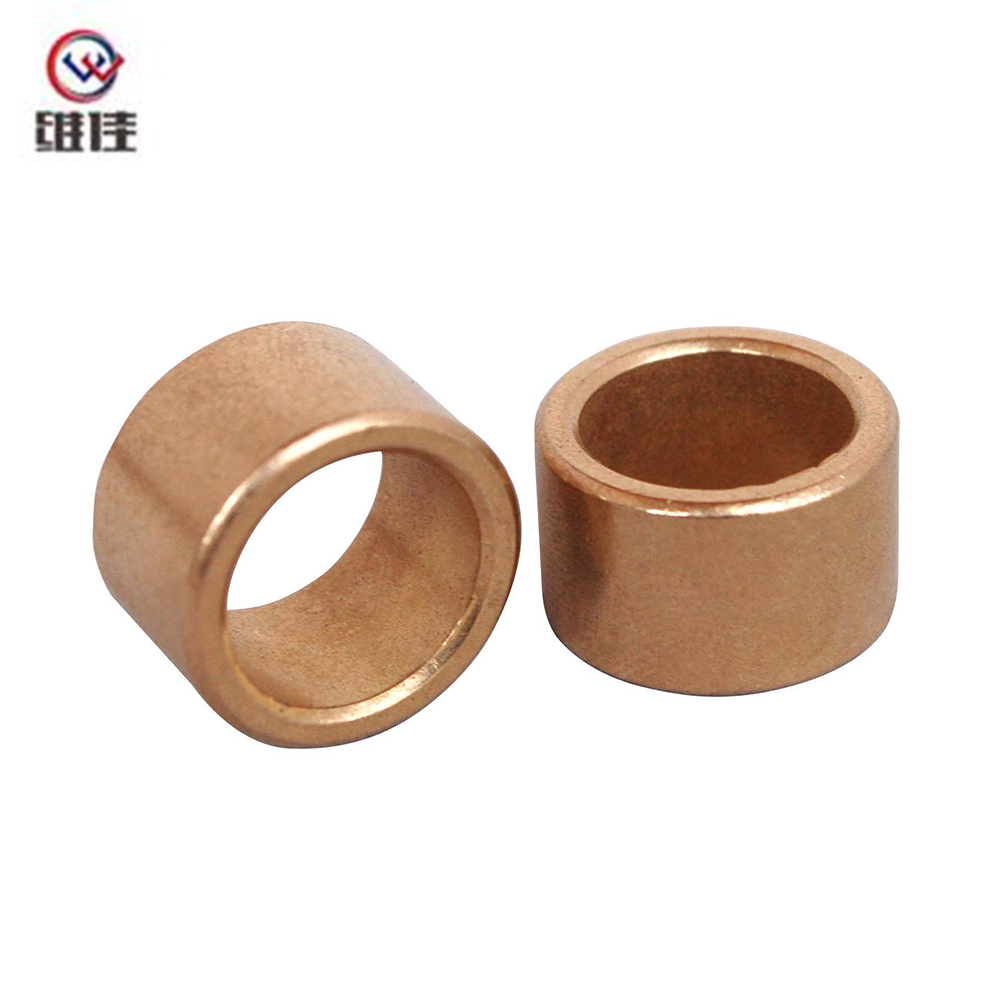
This copper-based powder metallurgy bushing is manufactured through an integrated process of compaction, sintering, sizing, and oil impregnation. It features excellent wear resistance and self-lubrica...
See Details -
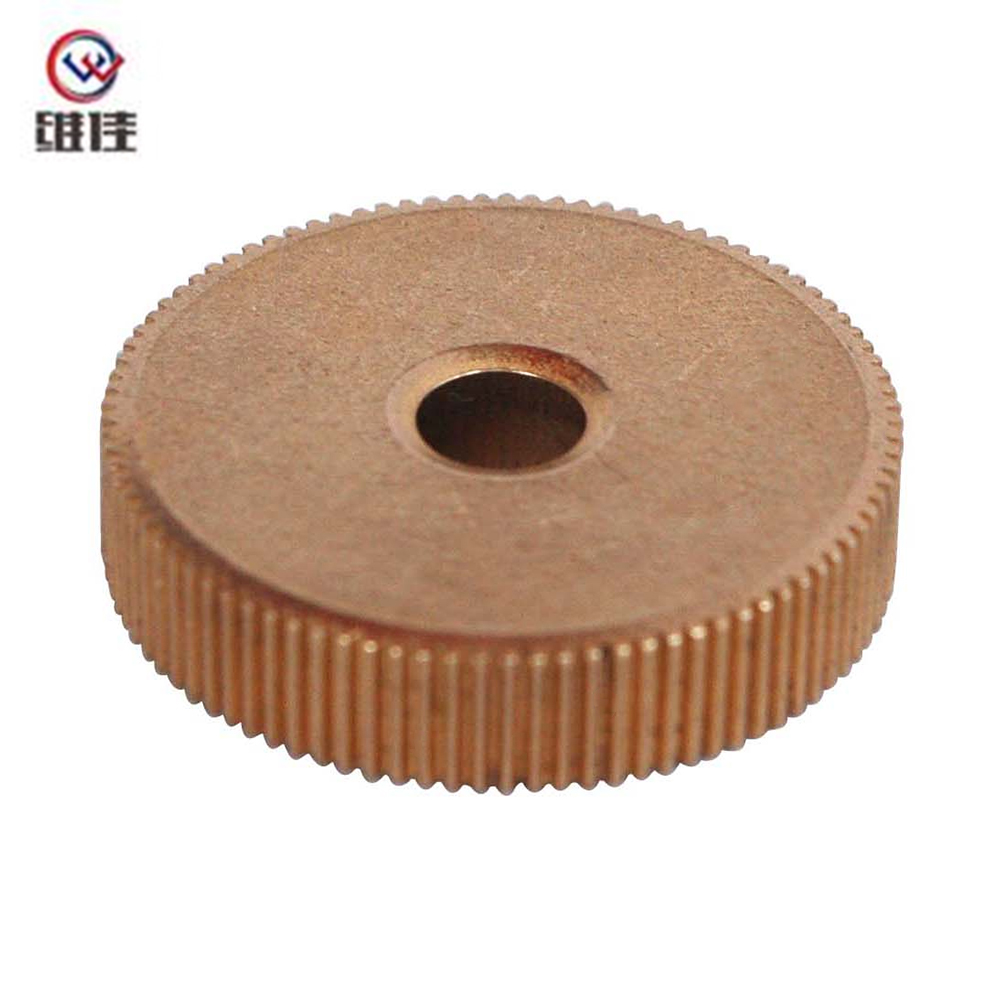
This 4×11.5×5.2mm powder metallurgy gear is manufactured through a precise press-sinter-through hole-oil impregnation process, with strict control of press density (6.7–6.8g/cm³) and sintering tempera...
See Details

Copyright © Jiande Welfine Technology Co., Ltd. All Rights Reserved. Privacy Custom Self-lubricating Sintered Bushing Manufacturers
