 English
 中文简体
中文简体Product Description: High-precision powder metallurgy part (S14*7*10) made of iron material from Jiande Wefine, customized PM components with strict tolerance control.
See DetailsE-mail us: [email protected]
Tel: +86-15239857375


 Home / News / Industry News / Metal Powder Manufacturing Methods and How They Affect Sintered Part Quality
 Metal Powder Manufacturing Methods and How They Affect Sintered Part Quality
 2026.09.25
 Industry News
Content
Metal powder manufacturing is where the properties of a sintered component are actually decided. The route used to produce a powder sets its particle size, shape, purity, and compressibility, and those characteristics travel through compaction and sintering into the finished part. As a powder metallurgy manufacturer, we see the consequences of powder choice every day: parts that press smoothly and sinter consistently come from well-controlled powder.
This article explains the main metal powder manufacturing methods, what each method means for real components, and the questions to ask before ordering sintered parts.
Why Metal Powder Manufacturing Sets Part Quality
The first thing to understand is that most powder properties cannot be fully corrected after the powder is made. Compaction can improve green density, and sintering can round pores, but nothing downstream can completely change a particle shape that is unsuited to the application.
- Particle size distribution affects die filling, pressing behavior, and dimensional stability.
- Particle shape controls how well powders interlock; irregular powders give high green strength, while spherical powders flow well but may need higher pressure to hold shape.
- Purity and oxide level influence sintering necks, final hardness, and corrosion resistance.
- Production cost decides whether a part remains economical in volume manufacturing.
Take two common components as an example. A porous self-lubricating bushing needs a powder that creates interconnected pores and a stable pressed density. A gear needs high density and predictable dimensional change. Both may be made from iron or copper-based powders, but the manufacturing route and powder grade will not be the same.
If you are evaluating a new design, the article on custom powder metallurgy parts explains how a supplier can match material and process to the application.
The Main Metal Powder Manufacturing Methods
Commercial metal powders are made by several well-established processes. The selection depends on the material, the target particle characteristics, and the cost target. The table below compares the common routes.
| Method | How It Works | Powder Shape and Quality | Typical Materials |
|---|---|---|---|
| Water atomization | A molten metal stream is broken up by high-pressure water jets. | Irregular to blocky, lower cost, some surface oxide, good compressibility. | Iron, low-alloy steel, stainless steel. |
| Gas atomization | Molten metal is disintegrated by inert gas jets such as argon or nitrogen. | Spherical, clean surface, excellent flow, higher cost. | Steel, nickel alloys, aluminium, titanium. |
| Solid-state reduction | Metal oxide is reduced with carbon or hydrogen below the melting point. | Spongy porous particles that compact easily. | Iron, tungsten, copper. |
| Chemical precipitation | Metal is precipitated from a solution or gas-phase reaction. | Very fine, high-purity particles with tight size control. | Cobalt, nickel, copper. |
| Electrolysis | Metal is deposited electrolytically and then milled into powder. | Dendritic, very high purity, good compressibility. | Copper, iron. |
| Mechanical milling | Bulk metal is ground or ball-milled into small particles. | Flaky or irregular, work-hardened, broad size range. | Aluminium, brittle alloys, reactive metals. |
Each method produces a different particle size range. Atomization tends to give engineering powders in the tens to hundreds of micrometres range, while chemical and electrolytic methods can go much finer. That is why fine powders are used in applications with thin section thicknesses or demanding surface finish requirements.
Water atomization is the dominant route for engineering PM parts because it combines high throughput with controllable particle size. It is simple and economical, which is why it dominates iron and steel powder production. Gas atomization is more expensive but produces spherical powders that are the first choice for metal injection molding and additive manufacturing.
Solid-state reduction remains relevant for self-lubricating bearing materials. The spongy, irregular particles produced by reduction are easier to press into a matrix with the interconnected porosity needed for oil retention.
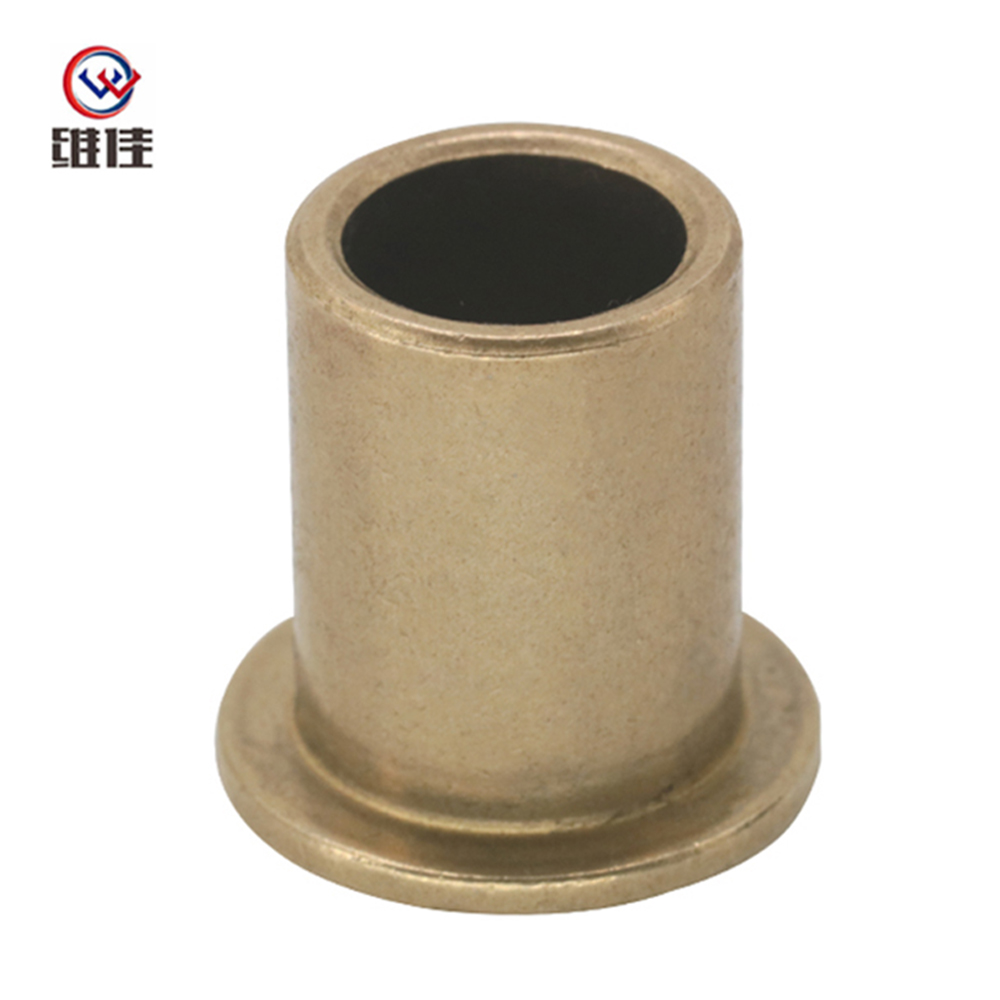 Sintered Bronze Self-Lubricating Bushings for Dry-Running ApplicationsThese sintered bronze bushings rely on powder metallurgy to create interconnected porosity for oil retention, supporting maintenance-free operation in high-load and high-temperature conditions—exactly why solid-state reduction powders are relevant for such components.View Product →
How to Match Metal Powder Manufacturing to Your Component
There is no single best powder route for every component. The right choice depends on target density, geometry, and operating environment. This quick reference grid gives a starting point.
High-density structural parts
Use water-atomized iron or low-alloy steel powder. It presses to high density at a reasonable cost.
Self-lubricating bearings
Use irregular or spongy copper/iron powder to maintain an interconnected pore network that stores and releases oil.
Complex or small precision parts
Consider gas-atomized spherical powder for metal injection molding. It gives predictable flow and uniform shrinkage.
Magnetic or specialty components
Use chemically reduced or electrolytic high-purity powders where oxides strongly affect magnetic performance.
In practice, gears and high-density structural parts use water-atomized iron powders with tight size control. The powder must fill the die uniformly so the tooth profile remains accurate and the density stays consistent across the part.
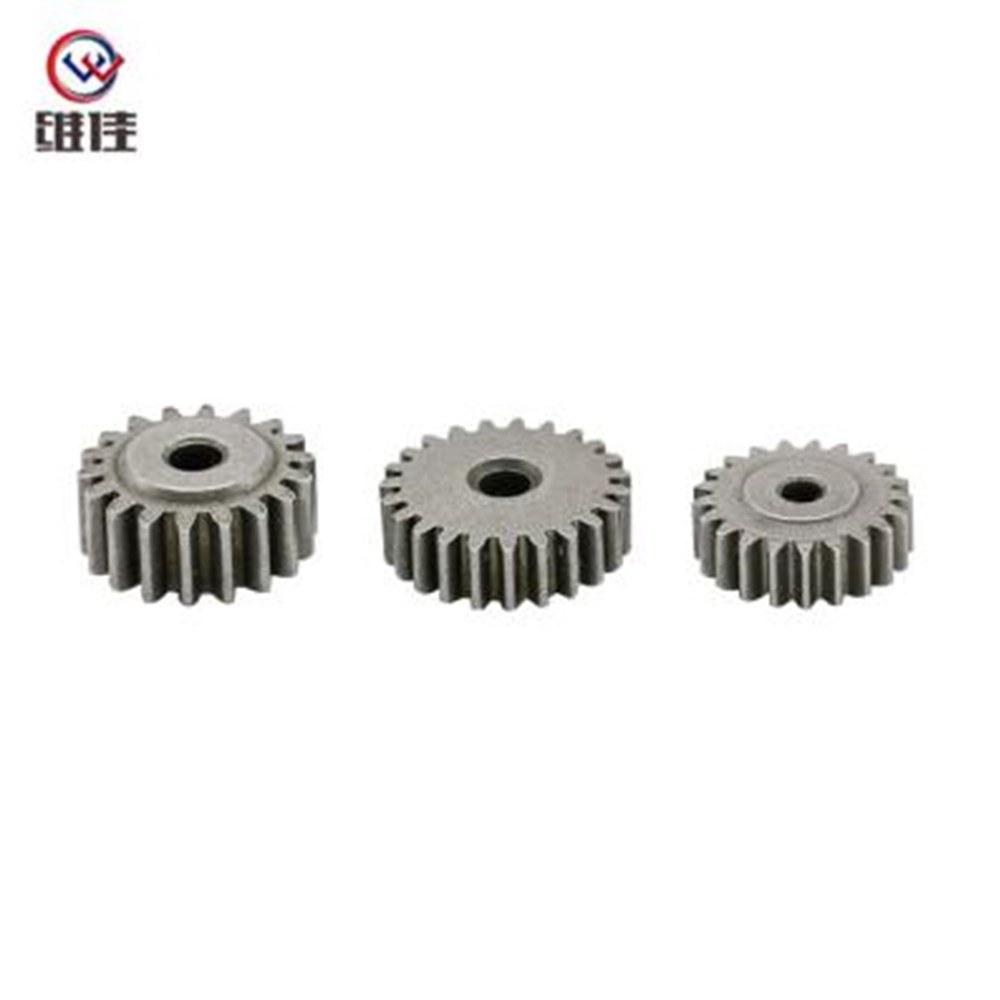 High-Precision Powder Metallurgy Planetary GearThis sintered planetary gear offers high-precision tooth profiles and self-lubricating wear resistance for automotive and industrial use. It demonstrates how water-atomized iron powders ensure uniform die filling, while its design supports cost-efficient mass production.View Product →
Balancing Powder Cost and Component Performance
Powder manufacturing cost is a large part of the total component price. Gas-atomized powders may cost more than water-atomized grades, but the improved flow and packing consistently reduce defects in complex geometries. In contrast, an irregular powder that is cheap to produce may still be the best choice when the component does not require tight tolerances or high surface finish.
For custom parts, a supplier should give a clear breakdown of the powder grade and the process route. If a component is designed with excessive density requirements, you may end up paying for a more expensive powder than the application needs. The most economical design uses the lowest-cost powder route that still meets mechanical and functional requirements.
A common mistake is to assume a finer powder always gives a better part. Fine powder improves surface finish but reduces flow and requires more care in handling. Coarser powder with a controlled particle size distribution often gives a better balance of dimensional precision and cost.
What to Ask Before Committing to a Powder Metallurgy Supplier
Because metal powder manufacturing happens upstream of everything else, the supplier's answer to a few direct questions determines how predictable your parts will be in production. These are the questions we recommend asking, and the ones we answer for our own customers.
- Which powder manufacturing route is used, and why was it chosen for this part?
- What process controls are in place for particle size, flow rate, and apparent density?
- What is the expected dimensional change from compacted size to sintered size, and how tightly is it maintained?
- What lot-to-lot consistency can you document for the base powder?
- Can you provide test data for sintered density and mechanical strength for each material grade?
A good answer should reference real powder grades and traceable records. Avoid vague commitments, and request a sample batch before high-volume production starts.
For household appliance parts such as washing machine components, careful powder selection is especially important because these parts run in long series and need repeatable mechanical properties from batch to batch.
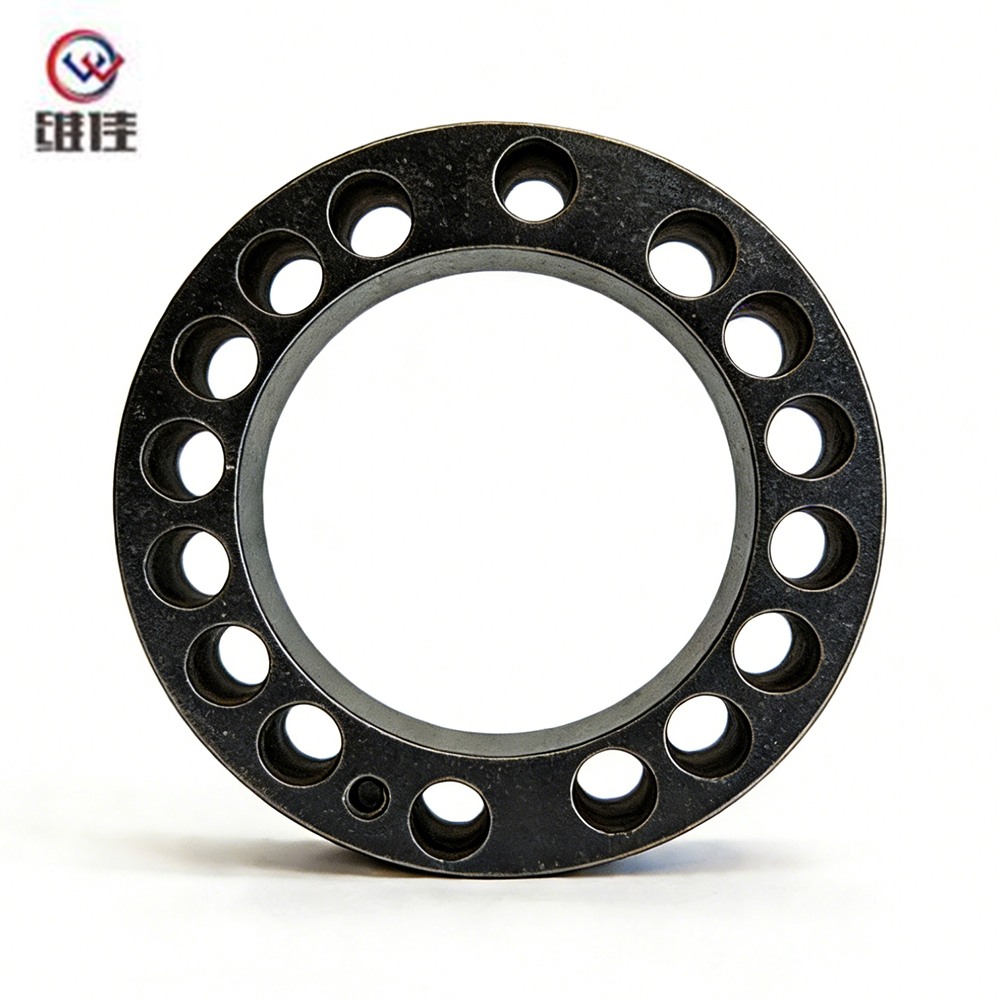
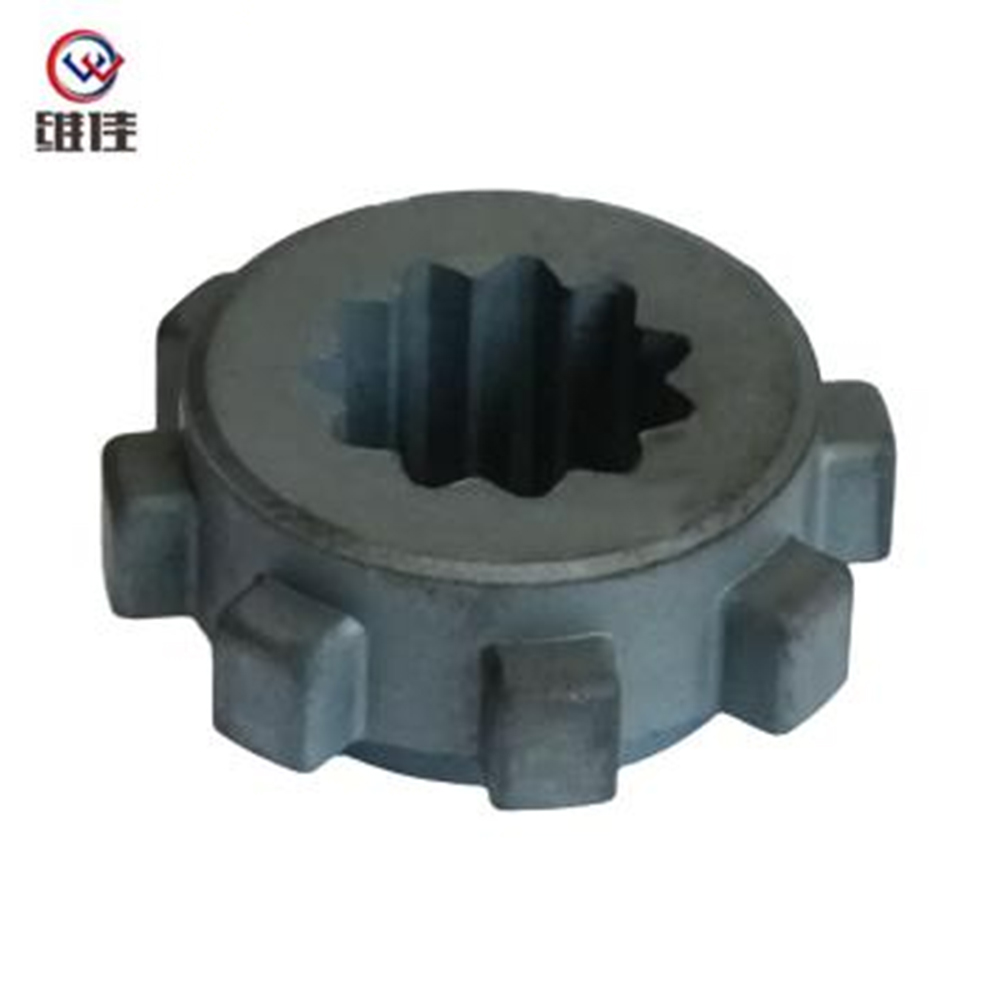 Powder Metallurgy Components for Washing Machine TransmissionsThese iron-based structural components are manufactured through compaction and sintering, then blackened for corrosion resistance, delivering consistent mechanical strength and dimensional stability for washing machine clutch and transmission systems—key considerations for long-series production.View Product →
Metal Powder Manufacturing FAQs
Why is atomization the most common metal powder manufacturing process?
Atomization works for many metals, produces high volumes quickly, and allows close control over particle size and shape. Water atomization suits iron and steel, while gas atomization suits spherical powders for advanced manufacturing routes.
What is the difference between water-atomized and gas-atomized powder?
Water-atomized powder has an irregular shape, lower cost, and good green strength. Gas-atomized powder is spherical, with better flow and higher purity, but it costs more to produce.
Does metal powder manufacturing affect the final sintered component?
Yes. Particle size, shape, oxide content, and internal structure all influence compaction, sintering, and mechanical properties. Selecting the right powder route is a critical step in PM part design.
Related products
-
-
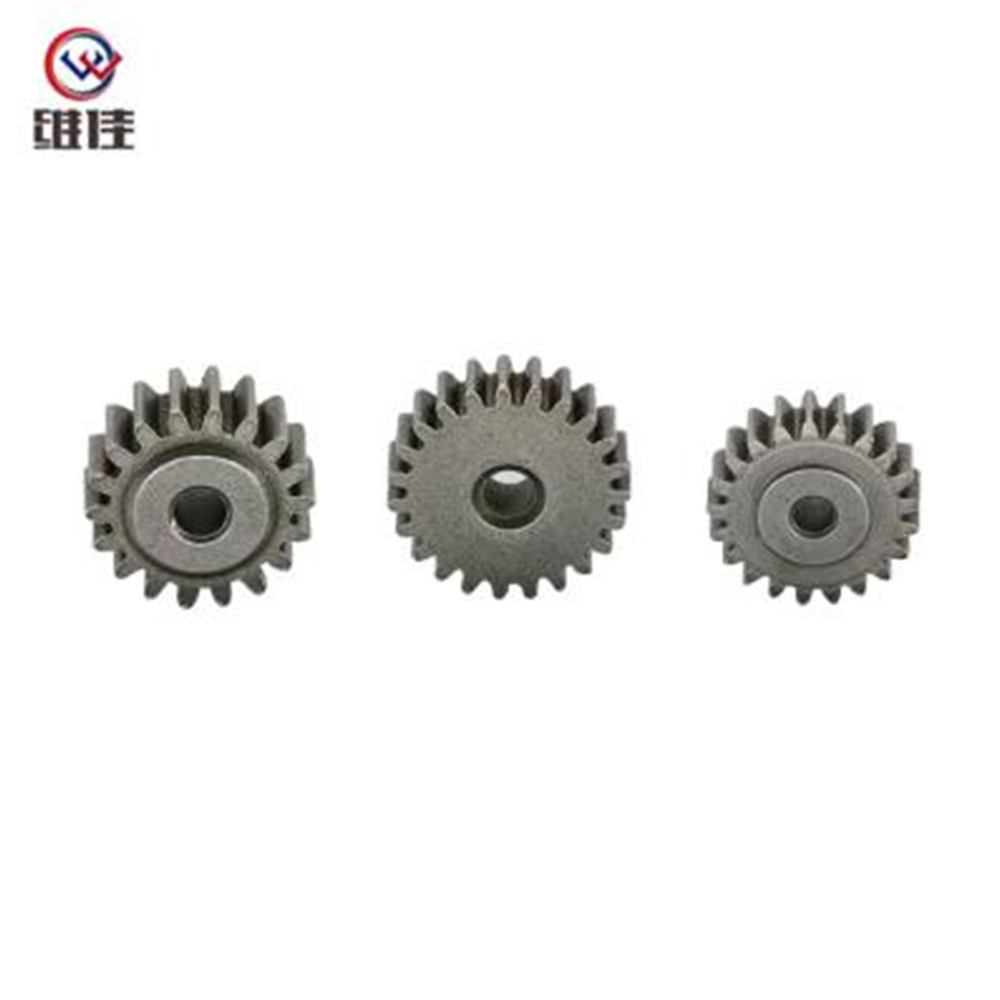
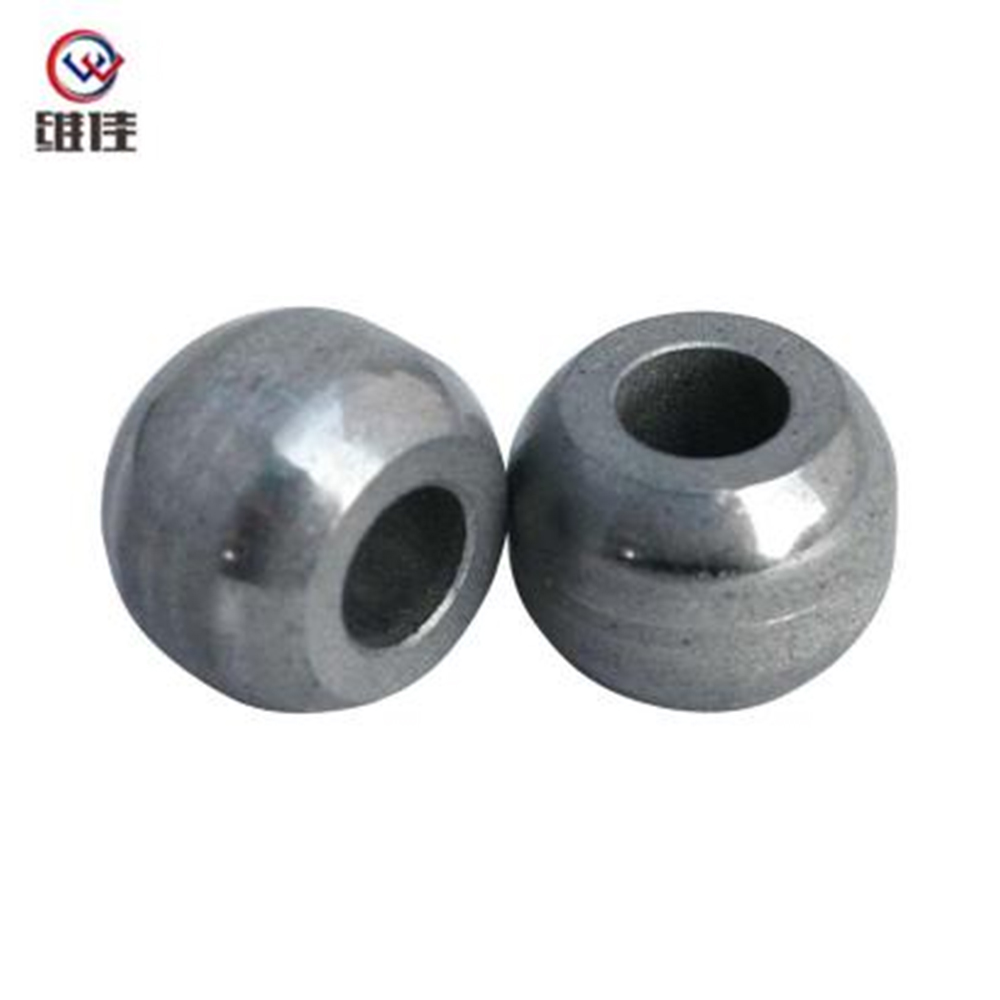
Description: Custom powder metallurgy planetary gear with high precision, wear resistance for automotive, industrial machinery & home appliances. OEM/ODM supported.
See Details -
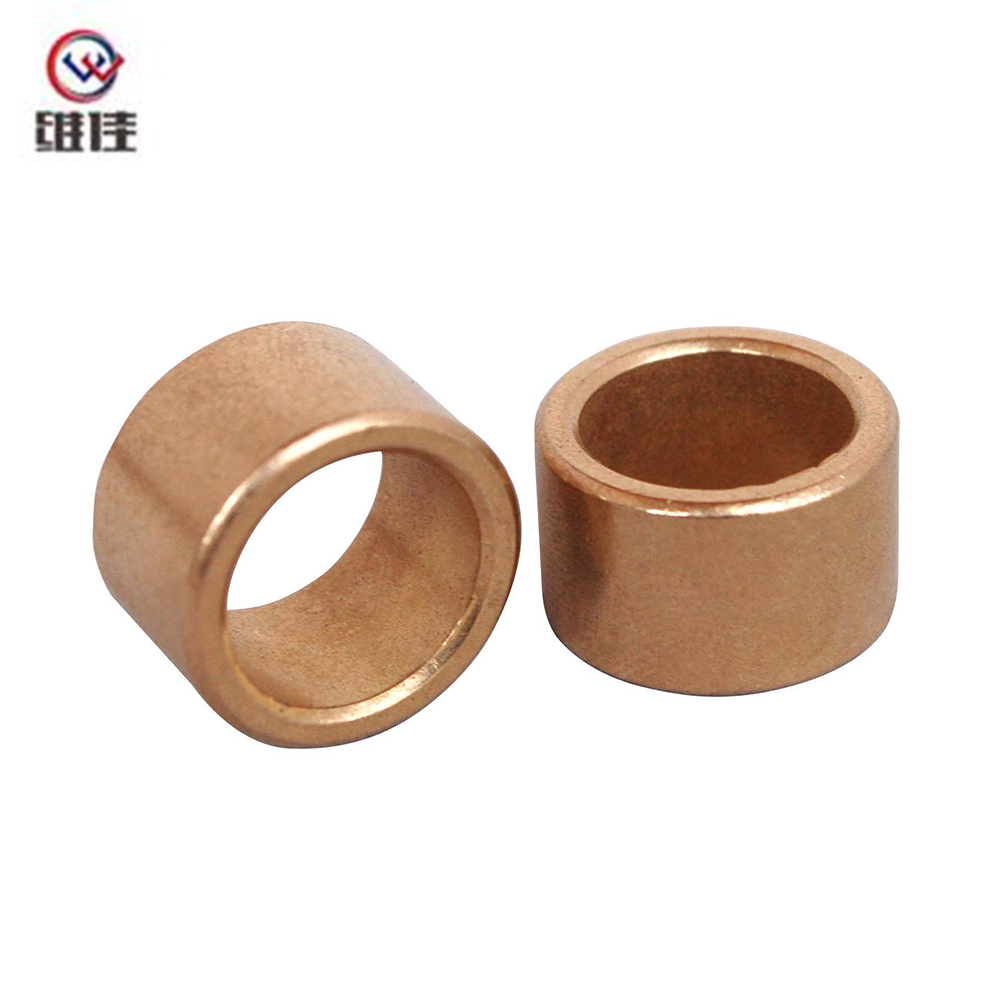
This copper-based powder metallurgy bushing is manufactured through an integrated process of compaction, sintering, sizing, and oil impregnation. It features excellent wear resistance and self-lubrica...
See Details -
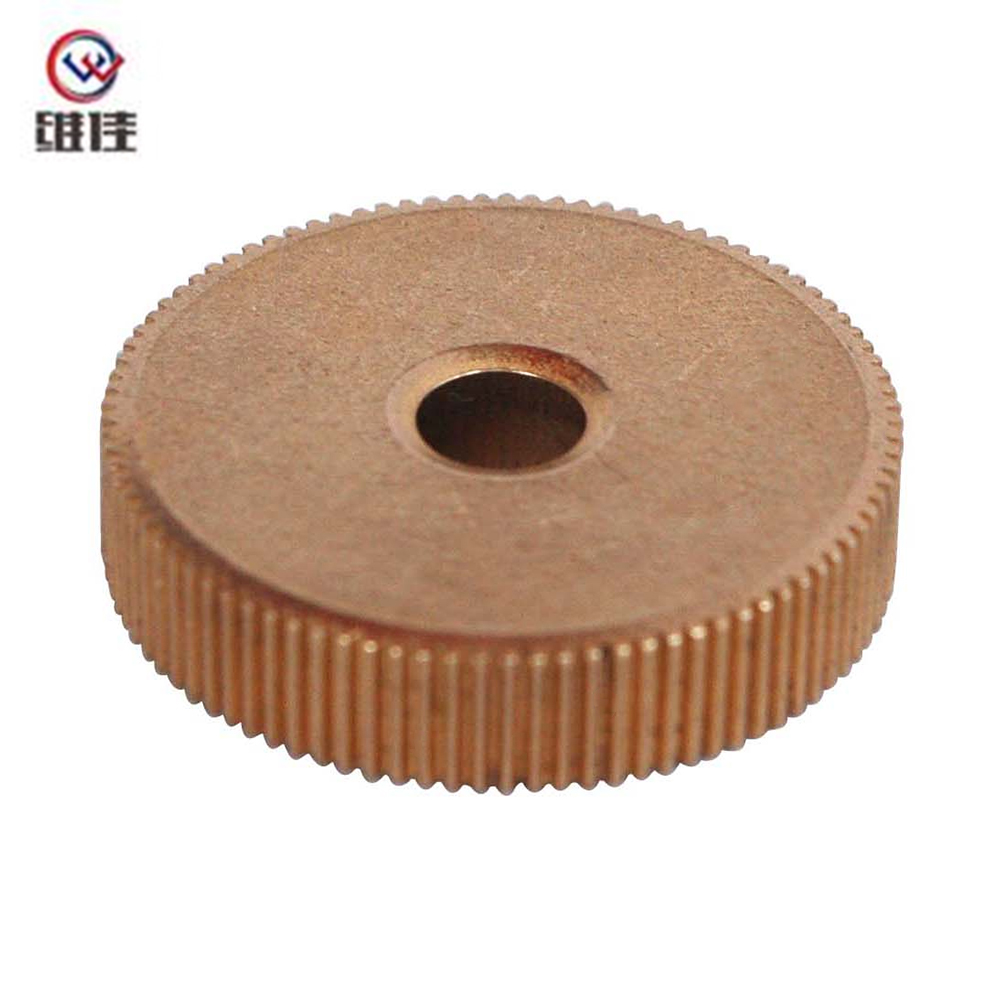
This 4×11.5×5.2mm powder metallurgy gear is manufactured through a precise press-sinter-through hole-oil impregnation process, with strict control of press density (6.7–6.8g/cm³) and sintering tempera...
See Details

Copyright © Jiande Welfine Technology Co., Ltd. All Rights Reserved. Privacy Custom Self-lubricating Sintered Bushing Manufacturers
