 English
 中文简体

This 4×11.5×5.2mm powder metallurgy gear is manufactured through a precise press-sinter-through hole-oil impregnation process, with strict control of press density (6.7–6.8g/cm³) and sintering tempera...
See DetailsE-mail us: [email protected]
Tel: +86-15239857375


 Home / Author / Shen Yiruo — Senior After-Sales Service Manager / Oil-Impregnated Powder Metallurgy Gear for Small Appliances and Precision Machinery
Oil-Impregnated Powder Metallurgy Gear for Small Appliances and Precision Machinery
 2026.11.01
 Shen Yiruo — Senior After-Sales Service Manager
Content
- 1 1. Product Overview
- 2 2. Why Powder Metallurgy Is Suitable for Small Gears
- 3 3. Controlled Manufacturing Process
- 4 4. Key Technical Advantages
- 5 5. Comparison with Injection-Molded Plastic Gears
- 6 6. Self-Lubricating Performance
- 7 7. Application Areas
- 8 8. Manufacturing Strengths and Quality Control
- 9 9. Design and Ordering Considerations
- 10 10. Noise, Vibration, and Surface Optimization
- 11 11. Environmental and Service-Life Considerations
- 12 12. Application Validation
- 13 13. Benefits for Equipment Manufacturers
- 14 14. Frequently Asked Questions
- 14.1 14.1 What are the nominal dimensions of the gear?
- 14.2 14.2 Is the gear made from steel?
- 14.3 14.3 Does the gear require additional grease?
- 14.4 14.4 How long can the oil impregnation last?
- 14.5 14.5 Can food-grade oil be used?
- 14.6 14.6 Is the gear quieter than a plastic gear?
- 14.7 14.7 Can the gear withstand an appliance jam?
- 14.8 14.8 Can the dimensions and material be customized?
- 14.9 14.9 What quality documents can be provided?
- 14.10 14.10 What information is needed for a quotation?
- 15 15. Why Select This Sintered Gear Solution?
- 16 Conclusion
- 17 References
- 18 Product: Powder Metallurgy Oil-Impregnated Gear (4×11.5×5.2mm)
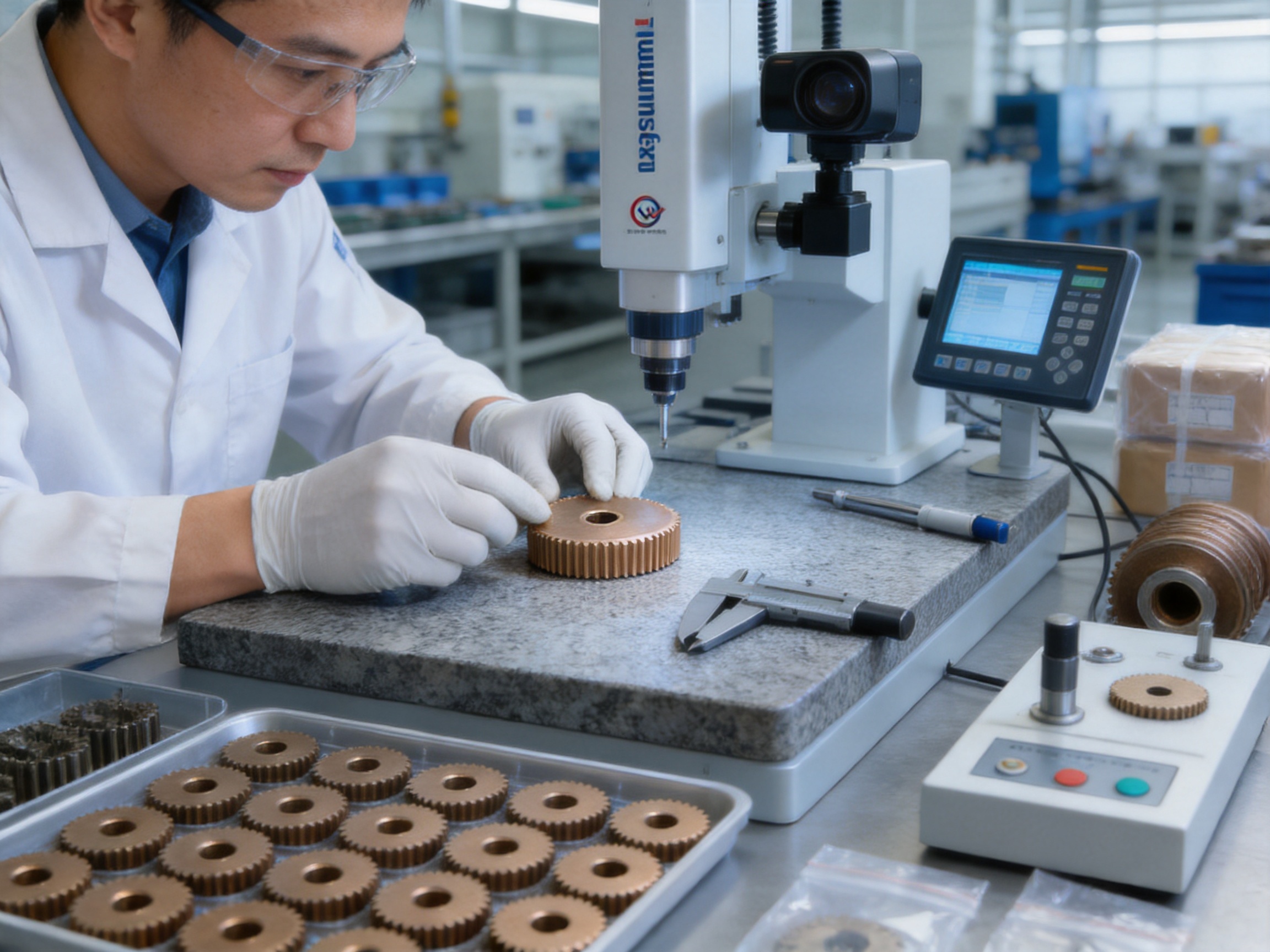
Small gears play a critical role in the performance, service life, and operating noise of household appliances, compact electromechanical equipment, and automated mechanisms. Although a gear measuring only 4 × 11.5 × 5.2 mm may appear simple, its dimensions, tooth profile, density, hardness, porosity, lubrication condition, and assembly accuracy all influence the reliability of the finished product. A minor change in bore size, tooth geometry, or thermal expansion can affect torque transmission, backlash, noise, and operating life.
The 4 × 11.5 × 5.2 mm oil-impregnated powder metallurgy gear is designed for applications requiring compact dimensions, stable mechanical performance, and maintenance-free lubrication. Manufactured through a controlled press-sinter-through-hole-oil-impregnation process, this small sintered gear combines the dimensional repeatability of powder metallurgy with the self-lubricating properties of an interconnected porous metal structure.
Compared with many injection-molded plastic gears, the sintered metal design provides higher load capacity, improved resistance to heat aging, better dimensional stability, and superior tolerance to short-term overload. These characteristics make it suitable for coffee makers, coffee grinders, food processors, juice extractors, office equipment, power tools, precision instruments, textile machinery, automotive subassemblies, and other products that operate repeatedly under moderate mechanical and thermal stress.
Jiande Welfine Technology Co., Ltd. manufactures this type of precision component using powder metallurgy forming, controlled sintering, precision machining, oil impregnation, and inspection procedures. The company supports OEM and ODM production based on customer drawings, samples, technical specifications, or application requirements.
1. Product Overview
The product is a compact oil-impregnated gear manufactured from a sintered metal material. Its nominal dimensions are 4 mm × 11.5 mm × 5.2 mm, according to the supplied product designation. The gear includes a precision through-hole for shaft assembly and is produced for applications in which reliable rotation, compact packaging, and reduced maintenance are important.
Powder metallurgy allows the gear body to be formed close to its final shape. This process is particularly valuable for small gears because it can produce repeated components with consistent geometry while reducing material waste compared with conventional machining from solid bar stock. After pressing, the compact is sintered at a controlled temperature to develop its mechanical structure. Subsequent sizing, through-hole processing, and oil impregnation help achieve the final functional requirements.
The product is manufactured with a controlled press density of approximately 6.7–6.8 g/cm³ and a specified sintering temperature of approximately 690°C for the referenced production process. Actual density, sintering conditions, material composition, dimensional tolerances, hardness, and oil type can be adjusted according to the customer’s drawing and application.
The gear is intended to provide:
Stable tooth geometry for consistent power transmission.
Reliable mechanical strength in a compact form.
Reduced friction through retained lubricating oil.
Longer service life in repeated-duty applications.
Improved dimensional stability compared with many polymer gears.
Lower routine maintenance requirements.
Compatibility with customized materials, dimensions, and lubrication specifications.
2. Why Powder Metallurgy Is Suitable for Small Gears
Powder metallurgy is a manufacturing technology in which carefully selected metal powders are compacted in a precision die and then heated below the material’s melting point. During sintering, particles bond together and form a stable metallic structure. The resulting component combines controlled porosity with useful mechanical strength.
For small gears, this technology offers several important advantages. First, the die defines the principal external geometry, allowing large quantities of similar parts to be produced with repeatable dimensions. Second, the material composition can be adjusted to balance strength, wear resistance, machinability, and oil retention. Third, the natural porosity of a sintered component can be used as a reservoir for lubricant.
Conventional machining can produce high-precision gears, but it may involve multiple cutting operations, material waste, and higher production costs for large quantities of small parts. Injection molding can produce economical plastic gears, but the final product may be affected by creep, moisture absorption, thermal expansion, and heat aging. Powder metallurgy occupies an important position between these technologies by providing a metallic gear with controlled porosity and efficient mass production capability.
The process is also suitable for design customization. Tooth count, outside diameter, bore diameter, face width, hub configuration, chamfers, material grade, density, and oil type can be developed according to a customer’s requirements. For a new project, production should be confirmed against a technical drawing, master sample, or complete gear specification.
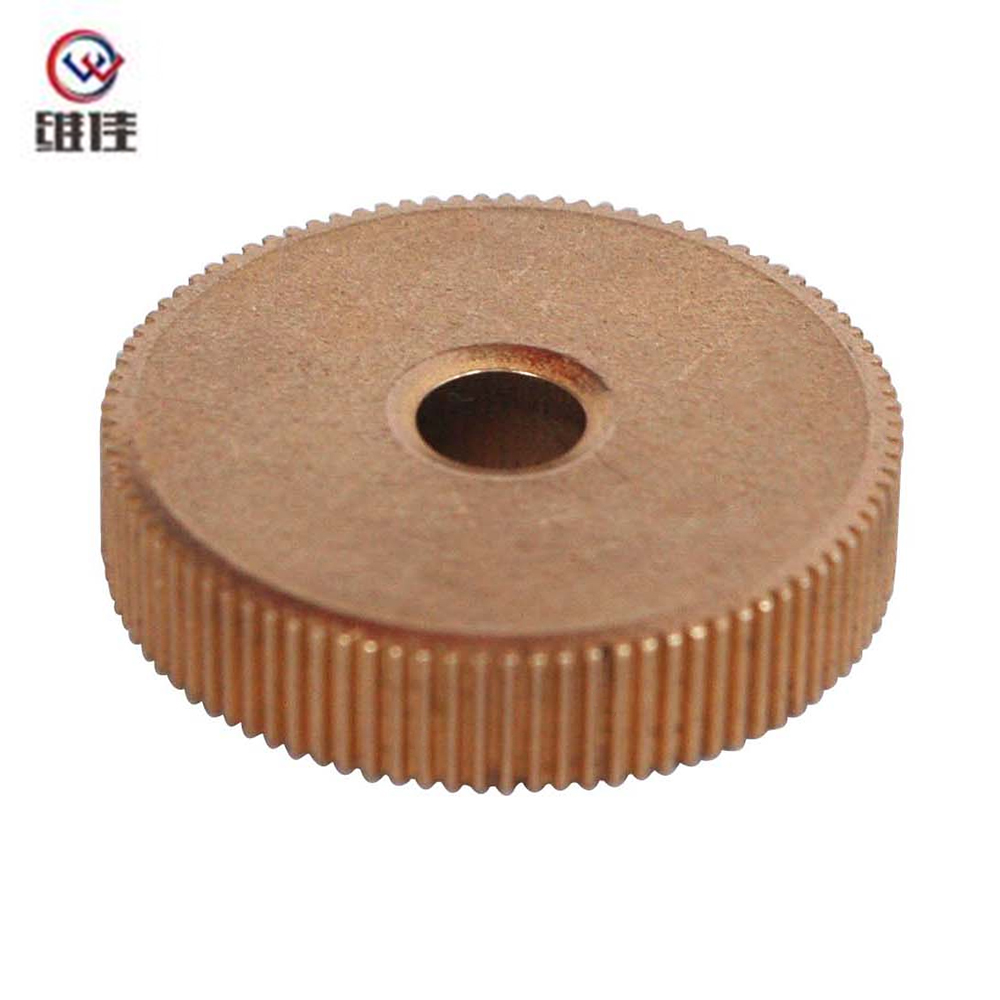
Powder Metallurgy Oil-Impregnated Gear (4×11.5×5.2mm)
3. Controlled Manufacturing Process
3.1 Powder and Material Selection
The material system is selected according to the operating torque, speed, temperature, wear conditions, noise expectations, and lubrication environment. A Fe-Cu-C material is suitable for many general-purpose applications because it offers a balanced combination of strength, machinability, wear resistance, and oil retention. For more demanding loads, alloy systems containing nickel or molybdenum may be considered.
Material selection also depends on whether the gear is used near food-processing equipment, in a humid environment, in a high-temperature motor assembly, or in a sealed gearbox. The company can evaluate the application and recommend an appropriate powder composition and impregnation oil.
Powder characteristics influence the behavior of the final gear. Particle size distribution, apparent density, compressibility, lubricant addition, copper content, carbon content, and blending uniformity all affect the compacting process. A uniform blend helps reduce density variation and improves the consistency of mechanical properties throughout the gear body.
3.2 Precision Pressing
During pressing, the blended metal powder is placed into a precision die and compacted under controlled pressure. The tool determines the basic tooth form, outside profile, bore, and face geometry. Proper filling and pressing conditions are essential because a small gear has limited material volume and may contain narrow tooth sections that are sensitive to density variation.
The referenced production process controls press density within approximately 6.7–6.8 g/cm³. This density range is intended to provide a balance between mechanical strength and sufficient open porosity for oil impregnation. Excessively low density can reduce strength and increase deformation risk, while excessively high density may reduce the available oil-holding volume.
Pressing parameters include powder fill height, compaction pressure, pressing speed, punch movement, die clearance, ejection force, and tool temperature. These parameters must be coordinated to prevent cracks, lamination, edge chipping, or uneven density. Consistent ejection is particularly important for small gears because tooth edges and thin sections can be damaged if the compact is removed unevenly.
3.3 Sintering
The pressed compact is heated in a controlled atmosphere furnace. The supplied product information specifies a sintering temperature of approximately 690°C for this gear process. Sintering bonds the powder particles and develops the required metallic structure without melting the complete component.
Temperature uniformity, heating rate, holding time, atmosphere composition, cooling rate, and furnace loading all influence the final properties. A stable atmosphere helps control oxidation and carbon balance. A consistent thermal profile supports repeatable strength, dimensional change, hardness, and porosity.
The 690°C process is selected for the referenced product and should not be treated as a universal condition for every powder metallurgy material. Different alloys and performance requirements may require different sintering temperatures and furnace cycles. Production engineers verify the process according to material specifications, geometry, and test results.
After sintering, the gear develops a stable structure capable of resisting repeated mechanical loading. The sintered metal matrix also maintains its shape better than many thermoplastic materials when exposed to elevated operating temperatures or sustained loads.
3.4 Sizing and Through-Hole Control
Small gears often require a controlled bore for accurate shaft alignment. After sintering, sizing or precision through-hole machining may be used to bring the bore and other critical features within the required tolerance. A properly controlled bore reduces eccentricity, improves concentric rotation, and helps maintain consistent gear meshing.
Through-hole processing is also important for assembly efficiency. The hole must be compatible with the shaft diameter, fit category, surface finish, and operating temperature. Depending on the application, the customer may require a clearance fit, transition fit, press fit, or a bore prepared for an additional shaft-retention feature.
Inspection may include bore diameter measurement, outside diameter measurement, face width measurement, runout testing, tooth profile inspection, and functional roll testing. For high-volume production, gauges and automated inspection methods can be used to identify dimensional drift at an early stage.
3.5 Oil Impregnation
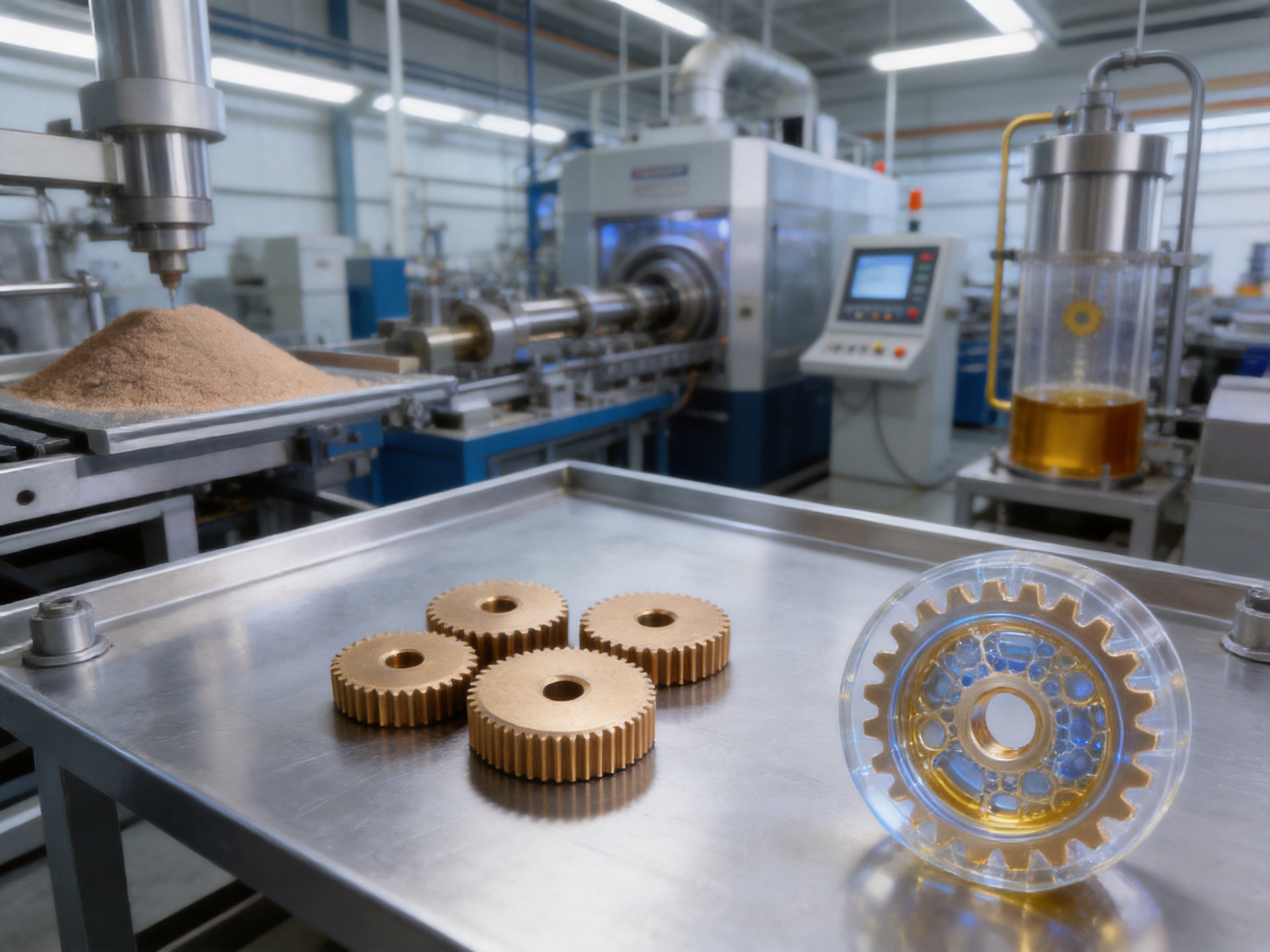
Oil impregnation is a defining feature of this gear. The interconnected pores within a sintered metal component can retain lubricating oil. Under operation, heat and movement encourage a controlled release of oil toward the tooth surfaces and bearing interfaces. When the gear stops and cools, some oil can return into the porous structure.
Vacuum impregnation is commonly used to remove air from the pores before introducing oil. The component is placed in an impregnation system, air is evacuated, and the selected oil is allowed to penetrate the pore network. Pressure or vacuum cycling may be used to improve filling consistency. The gear is then drained and cleaned so that excess surface oil does not interfere with assembly.
The supplied process information refers to open porosity in the approximate range of 18–22% and oil filling above 95% of the accessible pore volume for specified designs. These values are application-dependent and should be verified through production testing rather than assumed for every material grade or geometry.
Oil selection depends on temperature, speed, load, ambient conditions, chemical exposure, and any regulatory requirements. Industrial oil may be suitable for sealed mechanical products, while food-processing equipment may require an appropriate food-grade lubricant where relevant. The gear should not be considered suitable for direct food contact unless the complete application, lubricant, sealing method, and regulatory requirements have been reviewed.
3.6 Cleaning, Packaging, and Export Protection
After impregnation, the gear is inspected and packaged to prevent contamination, impact damage, and lubricant loss during transportation. Small gears should be protected from excessive abrasion because tooth edges and finished bores can be damaged if components move freely inside a large container.
Export-grade packaging may include compartmented trays, protective bags, moisture-control materials, and suitably labeled cartons. Packaging design depends on the delivery distance, quantity, customer assembly process, and storage conditions. Proper packaging is especially important for shipments to overseas industrial customers because repeated handling can affect small precision components even when the product itself has been manufactured correctly.
4. Key Technical Advantages
4.1 High Mechanical Strength in a Compact Form
A small gear must transmit torque through a limited tooth area. The Fe-Cu-C material systems described for this product can provide a typical tooth bending strength of approximately 250–350 MPa, depending on density, composition, heat treatment, geometry, and test method. This is substantially higher than the typical 60–80 MPa bending strength commonly associated with POM gears under comparable reference conditions.
Higher bending strength helps reduce the risk of tooth fracture when the gear experiences starting torque, repeated acceleration, temporary overload, or an appliance jam. It can also permit a more compact gear design where a plastic gear would require a larger tooth section or a wider face.
Actual allowable torque must be calculated from tooth geometry, pressure angle, face width, speed, lubrication, duty cycle, supporting shaft, mating gear, and safety factor. Material strength alone does not establish the permissible working load.
4.2 Better Resistance to Contact Fatigue
Gear teeth are exposed not only to bending stress but also to repeated surface contact. Over time, repeated contact can cause wear, pitting, tooth profile deformation, or surface fatigue. The supplied comparative data indicates a contact fatigue limit of approximately 80–120 MPa for the referenced sintered metal gear, compared with approximately 15–25 MPa for typical plastic gear conditions.
The metallic structure maintains its surface hardness and profile more effectively under repeated contact. Depending on material and treatment, the gear may have an as-sintered hardness in the approximate range of 40–60 HRB or a higher hardness after suitable heat treatment. This can support longer operating life when the gear is correctly lubricated and paired with a compatible mating gear.
4.3 Improved Stall Torque Tolerance
Small appliances can experience sudden stalls. A coffee grinder may encounter a hard bean or foreign particle, while a food processor may be overloaded by dense ingredients. A plastic gear may strip or deform when the motor continues to apply torque after the driven component stops.
The referenced sintered metal design can tolerate short-term overloads of approximately two to three times rated torque in suitable conditions. This does not mean that every gear will survive any jam or that overload testing can be omitted. The actual result depends on the tooth profile, shaft support, mating gear, motor torque, duration of the stall, temperature, and safety controls. Nevertheless, the higher strength of a sintered gear can improve robustness and reduce the probability of sudden tooth stripping.
4.4 Heat Aging Resistance
Plastic gears are sensitive to temperature because polymer chains can soften, oxidize, or lose strength during prolonged exposure to heat. POM and PA66 gears are commonly used in appliances, but their useful temperature range must be carefully considered. The supplied comparison identifies an approximate continuous operating range of 80–100°C for common plastic gear conditions and 120–150°C for oil-impregnated sintered metal gears when an appropriate oil is selected.
This higher thermal margin can be valuable in coffee makers, compact motor assemblies, and food processors where the gear is located near a heating element, motor, gearbox, or warm fluid path. The metallic matrix does not experience polymer chain degradation in the same manner as a plastic gear. The lubricant remains an important design consideration because oil viscosity, evaporation, oxidation, and compatibility can limit the practical operating temperature.
In the supplied 1,000-hour comparison at 120°C, plastic gears may lose approximately 30–50% of their original bending strength, while the sintered metal gear is described as retaining more than 90% of its strength under suitable conditions. Such data should be confirmed using the customer’s exact material, oil, load, atmosphere, and test procedure.
4.5 Lower Thermal Expansion
Dimensional changes caused by temperature can alter backlash, center distance, and bore clearance. Typical plastic materials have a coefficient of thermal expansion in the approximate range of 80–120 × 10⁻⁶/K, while sintered metal gears may have a coefficient of approximately 11–14 × 10⁻⁶/K, depending on composition and porosity.
Lower thermal expansion helps the metal gear maintain more stable tooth engagement with steel shafts and metal housings. This can reduce the risk of excessive backlash at low temperature or tight meshing and jamming at elevated temperature. The housing material, shaft material, assembly tolerance, and temperature gradient must still be considered as part of the complete mechanism.
4.6 Dimensional Stability in Humid Conditions
Nylon gears may absorb approximately 2–3% moisture by weight under certain environmental conditions. This can lead to measurable swelling and changes in bore clearance or tooth geometry. The supplied comparison indicates a possible dimensional increase of approximately 0.5–1.5% for some PA66 conditions.
Sintered metal does not absorb moisture in the same way as hygroscopic polymers. This makes the gear advantageous in appliances exposed to humidity, occasional water splash, or repeated cleaning. The gear should still be protected against corrosion where the material and environment require it. Oil impregnation can provide some protection, but it is not a substitute for appropriate corrosion control in every application.
4.7 Lower Creep Under Sustained Load
Plastic gears can creep when exposed to a constant load over weeks or months. Creep may increase backlash, reduce preload, or shift the position of an idler gear. The supplied data indicates possible plastic deformation of approximately 0.5–2% in certain sustained-load conditions, compared with less than 0.05% for the referenced sintered metal gear under comparable conditions.
Lower creep supports long-term positioning accuracy and stable gear mesh. This is useful for adjustment mechanisms, small actuators, office equipment, and appliances that remain under spring or belt tension for extended periods.
5. Comparison with Injection-Molded Plastic Gears
Plastic gears remain valuable when low noise, low weight, chemical resistance, and low initial cost are the primary requirements. They may be the best choice for lightly loaded, low-temperature, low-noise applications. However, a sintered metal gear can be more suitable when the product must tolerate heat, overload, continuous cycling, or dimensional variation caused by moisture.
| Performance factor | Oil-impregnated sintered metal gear | Typical injection-molded plastic gear | Design significance |
|---|---|---|---|
| Typical tooth bending strength | Approximately 250–350 MPa for referenced Fe-Cu-C conditions | Approximately 60–80 MPa for typical POM conditions | Higher capacity and improved resistance to tooth fracture |
| Contact fatigue limit | Approximately 80–120 MPa | Approximately 15–25 MPa | Better resistance to repeated tooth contact stress |
| Continuous temperature range | Approximately 120–150°C with suitable oil and design | Approximately 80–100°C for common POM or PA66 conditions | Greater thermal margin near motors and heating elements |
| Coefficient of thermal expansion | Approximately 11–14 × 10⁻⁶/K | Approximately 80–120 × 10⁻⁶/K | More stable mesh clearance over temperature changes |
| Moisture absorption | Negligible compared with nylon | PA66 may absorb approximately 2–3% moisture | More stable bore and tooth dimensions in humid environments |
| Lubrication | Oil retained in interconnected pores | Usually requires external grease or dry-running design | Reduced manual lubrication and maintenance |
| Noise behavior | Can be optimized, but may be 2–4 dB higher than POM in some designs | Naturally dampens vibration and noise | Plastic may remain preferable for noise-critical products |
| Stall torque tolerance | Can withstand short-term overloads of approximately 2–3 times rated torque in suitable designs | More vulnerable to tooth stripping or permanent deformation | Improved robustness during jams and overloads |
| Long-term creep | Typically very low under appropriate loading | Can increase with temperature and sustained stress | Improved long-term backlash and positioning stability |
The comparison is intended as an engineering reference rather than a universal guarantee. Performance depends on the exact material, gear geometry, manufacturing process, operating conditions, test standards, and mating components. Product validation should be completed using the final assembly.
6. Self-Lubricating Performance
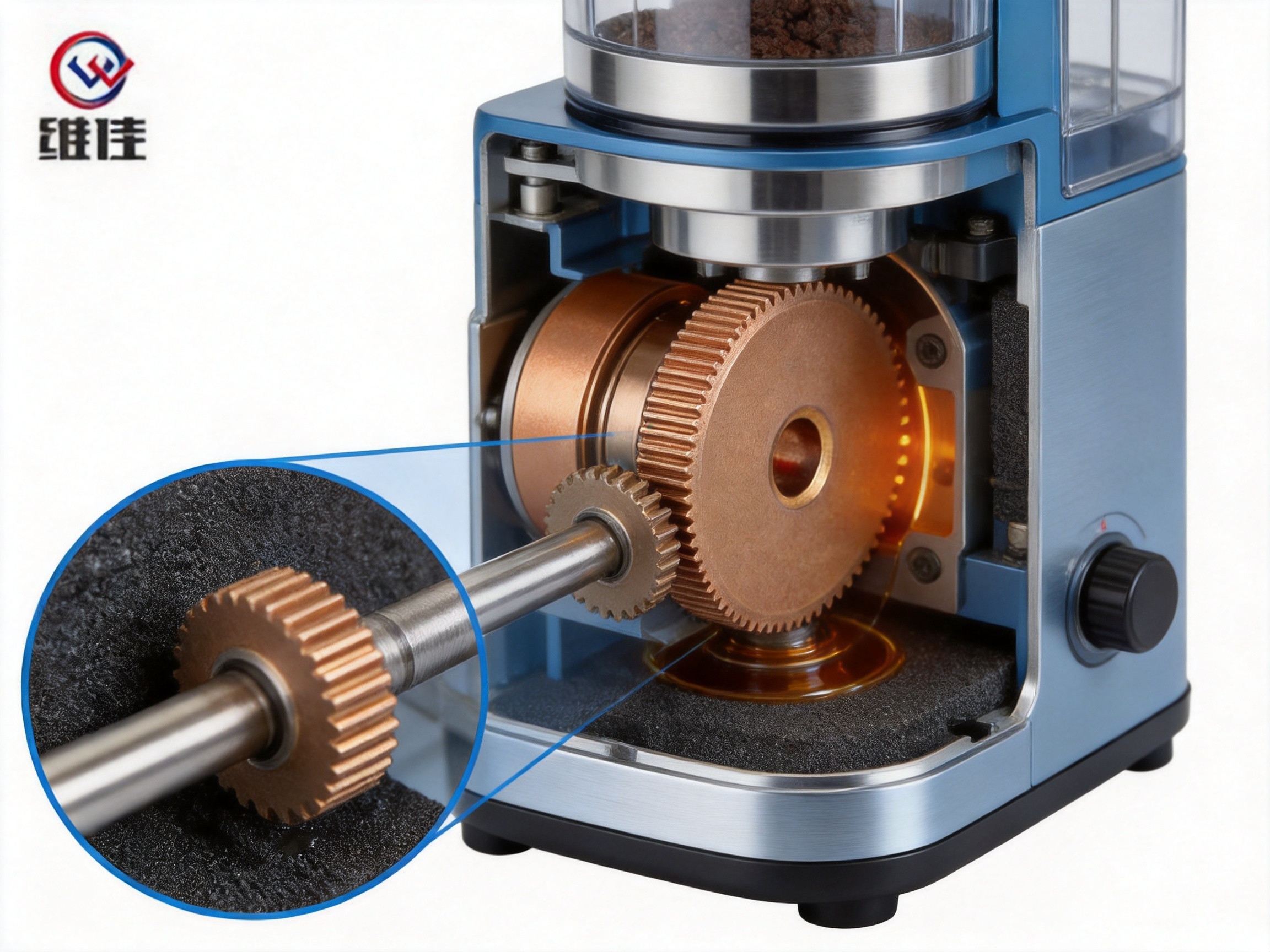
The principal benefit of oil impregnation is the creation of a built-in lubrication reservoir. Instead of relying entirely on grease applied during assembly, the porous metal structure stores oil within the gear. As the gear rotates and warms, oil can migrate toward the tooth surfaces and shaft interface.
This arrangement can reduce friction, wear, and maintenance requirements. It is especially useful in compact mechanisms where there is limited space for a grease pocket or where regular servicing is impractical. It can also reduce the risk of assembly variation caused by inconsistent manual application of grease.
Oil retention life depends on speed, temperature, load, duty cycle, surrounding materials, sealing, oil viscosity, and environmental exposure. For the referenced coffee grinder operating intermittently at approximately 70°C, the supplied information estimates effective self-lubrication for approximately five to eight years without re-oiling under typical use of five to ten cycles per day. This estimate should be treated as an application-specific reference rather than a universal service-life guarantee.
For commercial appliances operating for more than 10,000 hours, a higher oil content design, a high-temperature lubricant, improved sealing, or a serviceable lubrication structure may be recommended. Customers should provide operating speed, torque, cycle frequency, temperature, and expected life so that the impregnation design can be evaluated correctly.
7. Application Areas
7.1 Coffee Makers and Coffee Grinders
Coffee equipment may expose gears to heat, repeated start-stop cycles, vibration, and occasional overload. A grinder gear may experience a sudden increase in torque when beans bridge the grinding mechanism. The metal gear’s higher bending strength and stall tolerance can reduce the likelihood of tooth damage.
In coffee makers, gears may operate near heated water systems or compact motors. The lower thermal expansion and improved heat-aging resistance of sintered metal can help maintain stable engagement. If the component is located near a food path, the lubrication specification and enclosure design must be reviewed carefully. Food-grade lubricant may be required for the relevant application.
7.2 Food Processors and Juice Extractors
Food processors often experience intermittent high torque when cutting, chopping, or mixing dense ingredients. Moisture, cleaning procedures, and temperature changes can also affect plastic components. A sintered gear offers reduced moisture sensitivity and improved resistance to sustained mechanical stress.
The gear should be installed in a protected transmission area where it is isolated from direct food contact unless the entire design has been specifically approved for such contact. Seals, covers, cleaning procedures, and lubricant selection remain important.
7.3 Household Appliances
Compact appliances such as mixers, automatic dispensers, electric shavers, humidifiers, and small washing devices may use miniature gears for speed reduction, valve movement, positioning, or door mechanisms. The oil-impregnated design can reduce maintenance and support reliable operation in enclosed assemblies.
7.4 Industrial Automation
Small automated mechanisms require repeatable movement and stable positioning. The gear’s resistance to creep and dimensional change can be useful in feeders, indexing devices, compact actuators, textile equipment, and office machines. A customized material or heat treatment may be selected where the load cycle is more demanding.
7.5 Automotive and Electromechanical Components
Powder metallurgy gears can be used in selected automotive subassemblies, seat adjusters, window lifters, actuator systems, and other electromechanical products. Automotive use requires detailed validation for vibration, temperature cycling, contamination, fatigue, noise, and safety-related performance. The gear geometry and material must be matched to the complete system rather than selected only by nominal size.
8. Manufacturing Strengths and Quality Control
Jiande Welfine Technology Co., Ltd. was established in 2001 and specializes in powder metallurgy sintering, self-lubricating components, bushings, gears, and precision metal parts. The company operates a production base of approximately 13,039 square meters and has more than 150 employees with experience in powder metallurgy production and related machining.
The manufacturing facility is equipped with high-efficiency presses, high-temperature sintering furnaces, precision forming machines, and inspection equipment. This combination supports the complete production flow from powder compounding and pressing to sintering, sizing, machining, oil impregnation, inspection, and packaging.
The company provides OEM and ODM support based on customer drawings or samples. Engineering support may include material selection, tool design, process development, tolerance review, oil specification, prototype production, and mass-production control. This is important for miniature gears because the best design depends on the relationship between the gear, shaft, mating gear, housing, motor, and operating environment.
The company operates according to ISO 9001:2015 and IATF 16949:2016 quality management systems. These systems support controlled documentation, process monitoring, traceability, corrective action, supplier management, and continuous improvement. Certification does not replace application testing, but it provides a structured framework for consistent production and quality control.
8.1 Typical Inspection Items
Dimensional inspection can cover outside diameter, bore diameter, face width, tooth thickness, tooth profile, concentricity, parallelism, and runout. The exact inspection plan is established according to the customer’s drawing and critical-to-function characteristics.
Material and process verification may include density measurement, hardness testing, metallographic evaluation, carbon and copper analysis, porosity assessment, and sintering condition review. Oil impregnation can be evaluated through oil content measurement, extraction testing, mass change, or other agreed procedures.
Functional inspection may include gear rolling, torque testing, noise evaluation, wear testing, radial crush testing, and life-cycle testing. ASTM B328 may be used as a reference for certain powder metallurgy oil-content or related evaluation procedures, subject to agreement between the manufacturer and customer.
8.2 Process Stability
Consistency is essential for small gears because a minor process change can affect the entire assembly. Press density should be monitored to prevent excessive variation between lots. Furnace temperature and atmosphere should be recorded. Tool wear should be controlled because worn die surfaces can alter tooth dimensions or create burrs.
Oil impregnation should also be monitored. Insufficient filling may reduce self-lubricating performance, while excessive surface oil may create contamination or assembly problems. The finished gear should be handled in a way that preserves both dimensional accuracy and lubricant condition.
9. Design and Ordering Considerations
Customers requesting a 4 × 11.5 × 5.2 mm gear should provide more information than the basic outside dimensions. The following details help engineers confirm suitability:
Number of teeth and module or diametral pitch.
Pressure angle and tooth profile.
Nominal bore diameter and required fit.
Face width and any hub dimensions.
Outside diameter, root diameter, and addendum details.
Material or performance requirements.
Operating speed and transmitted torque.
Duty cycle and expected service life.
Operating temperature and ambient conditions.
Required noise level.
Mating gear material and hardness.
Required oil type, viscosity, and regulatory status.
Surface treatment or corrosion protection requirements.
Inspection standards and acceptable tolerances.
The customer should also identify whether the gear is used in a sealed gearbox, open mechanism, food-related appliance, humid environment, or high-temperature assembly. These details may affect the choice of material density, oil viscosity, porosity, surface treatment, and packaging.
10. Noise, Vibration, and Surface Optimization
Plastic gears commonly produce lower noise because polymers have a lower elastic modulus and naturally damp vibration. Metal gears may produce a sharper sound if the tooth profile, runout, center distance, or surface roughness is not properly controlled.
Oil-impregnated sintered gears can nevertheless be optimized for acceptable noise. Higher density may reduce surface roughness and local porosity-related irregularities. Precision sizing can improve concentricity and reduce runout. Tooth profile control can promote smoother engagement, while correct oil selection can reduce friction and sliding wear.
Steam treatment or other suitable surface treatments may be considered for selected applications. However, any treatment must be compatible with the gear material, dimensional tolerances, oil impregnation process, and customer environment. Noise should be evaluated in the complete appliance because motor vibration, housing resonance, shaft alignment, and mating gear condition often contribute more to overall sound than the gear alone.
For noise-critical consumer products, a plastic gear may remain the preferred solution. For products where durability, heat resistance, overload tolerance, and dimensional stability are more important, the oil-impregnated metal gear may offer a better overall balance.
11. Environmental and Service-Life Considerations
Product life depends on the interaction between material, lubrication, load, temperature, assembly, and environment. A metal gear is not automatically immune to wear, corrosion, or fatigue. Correct design and validation are necessary to achieve the intended service life.
Corrosion risk should be reviewed if the gear is exposed to water, salt, acidic food residue, cleaning chemicals, or condensation. Protective oil, compatible coatings, stainless or alloy powder systems, sealed housings, and suitable storage conditions may be considered. The selected protection should not block the pores or prevent proper oil release.
Storage conditions can also influence performance. Gears should be kept in clean, dry packaging and protected from contamination. Excessive heat during storage may reduce oil viscosity or accelerate evaporation of certain lubricants. Long-term storage requirements should be communicated before production so that packaging and oil selection can be adjusted if necessary.
At the end of service life, the metal gear may be separated from plastic, rubber, and electronic components for appropriate recycling or disposal. The oil content should be considered when defining an environmental handling procedure.
12. Application Validation
Before mass production, customers should validate the gear in the actual mechanism. Bench testing should reproduce the real torque, speed, temperature, duty cycle, lubrication condition, and assembly tolerances. Testing only the individual gear may not reveal problems caused by shaft misalignment, housing deformation, or an incorrectly matched mating gear.
Recommended validation may include dimensional inspection, initial torque measurement, running-in evaluation, temperature-rise testing, overload testing, stall testing, noise measurement, humidity exposure, thermal cycling, and endurance testing. For appliances, representative ingredients, operating programs, and cleaning conditions should be used where practical.
A life test should monitor tooth wear, oil condition, bore enlargement, backlash, noise, temperature, and torque consumption. The results can help determine whether a different density, material, oil viscosity, tooth profile, or surface treatment is needed.
If the gear is used in a safety-related or regulated system, the customer remains responsible for system-level compliance. The manufacturer can provide material and production information to support the customer’s qualification process.
13. Benefits for Equipment Manufacturers
Using an oil-impregnated sintered gear can help equipment manufacturers address several recurring design problems. The component can reduce reliance on manual grease application, simplify maintenance planning, and improve consistency between assembled products.
The higher strength of the metal structure may allow a smaller or more robust transmission design. Greater resistance to heat and creep can reduce the need to compensate for long-term dimensional changes. Stable dimensions may also simplify tolerance management between the gear, shaft, and housing.
For high-volume products, powder metallurgy can offer an efficient production route. Once the tooling and process are established, repeated parts can be produced with consistent geometry and controlled material usage. The final machining requirement can be limited to critical features, helping balance precision and cost.
Export customers can also benefit from an established supply chain, standardized quality documentation, production traceability, and packaging adapted for long-distance transportation. The referenced gear has been exported to Bulgaria and supplied to industrial customers in European markets. Export experience can support communication regarding drawings, inspection documents, packaging, delivery schedules, and technical requirements.
14. Frequently Asked Questions
14.1 What are the nominal dimensions of the gear?
The referenced gear is identified as 4 × 11.5 × 5.2 mm. Because gear dimensions can be listed in different orders, customers should confirm which measurement represents the bore, outside diameter, face width, or other feature on the technical drawing before tooling and production.
14.2 Is the gear made from steel?
The product is a sintered metal gear and may use a Fe-Cu-C material system or another alloy selected for the application. Powder metallurgy materials can contain iron, copper, carbon, nickel, molybdenum, and other alloying elements. The final composition should be confirmed in the material specification or customer-approved drawing.
14.3 Does the gear require additional grease?
Under suitable conditions, the gear is designed to provide self-lubrication through oil retained in its interconnected pores. Additional grease may not be necessary, but the decision depends on speed, load, temperature, mating gear material, housing design, and customer requirements. Adding an incompatible lubricant may reduce performance or block the pore network.
14.4 How long can the oil impregnation last?
Service life depends on temperature, speed, load, duty cycle, oil type, sealing, and environmental exposure. For a typical intermittent coffee grinder application at approximately 70°C, the supplied reference estimates five to eight years of effective self-lubrication under normal use. Higher-duty commercial applications may require a different oil, higher oil capacity, improved sealing, or a serviceable design.
14.5 Can food-grade oil be used?
Food-grade oil impregnation can be considered when the application requires it. The exact lubricant must meet the customer’s regulatory and safety requirements, such as an appropriate NSF H1 or equivalent specification where applicable. The gear should not be described as suitable for direct food contact without reviewing the complete assembly and applicable regulations.
14.6 Is the gear quieter than a plastic gear?
Not necessarily. Plastic gears usually provide better inherent vibration damping and may be quieter. A sintered metal gear can be optimized through density control, precision sizing, tooth profile accuracy, and suitable lubrication, but it may produce a slightly higher-pitched sound. The supplied reference indicates that the difference may be approximately 2–4 dB compared with POM in some conditions.
14.7 Can the gear withstand an appliance jam?
The metal gear generally offers better short-term overload tolerance than a plastic gear. Under suitable design conditions, the referenced product may withstand approximately two to three times rated torque for a short period. The exact result depends on motor torque, stall duration, tooth geometry, shaft support, temperature, and the strength of the mating gear.
14.8 Can the dimensions and material be customized?
Yes. OEM and ODM customization can include gear dimensions, tooth profile, bore, material, density, hardness, oil type, surface treatment, packaging, and inspection requirements. A customer drawing, sample, or complete technical specification is recommended for accurate quotation and engineering review.
14.9 What quality documents can be provided?
Depending on the project, documentation may include dimensional inspection reports, material certificates, density records, hardness results, oil-content measurements, process records, sample approval documents, and shipment inspection reports. The required documentation should be agreed before mass production.
14.10 What information is needed for a quotation?
Useful information includes the drawing or sample, annual quantity, forecast order volume, gear material, tooth data, bore tolerance, operating conditions, oil requirements, packaging expectations, inspection standards, delivery destination, and any required certifications. Complete information helps reduce changes after tooling begins.
15. Why Select This Sintered Gear Solution?
The 4 × 11.5 × 5.2 mm oil-impregnated powder metallurgy gear is designed for manufacturers that need more than a basic low-cost gear. Its advantages come from the combination of controlled density, stable sintering, accurate through-hole processing, oil retention, and application-oriented inspection.
Compared with many plastic alternatives, it offers higher mechanical strength, improved contact fatigue resistance, better stall tolerance, superior heat-aging behavior, lower thermal expansion, reduced moisture sensitivity, and lower long-term creep. Compared with fully machined metal gears, powder metallurgy can provide an efficient high-volume route with controlled material use and integrated porosity for self-lubrication.
The manufacturing organization behind the product contributes more than equipment capacity. More than two decades of powder metallurgy experience, a dedicated production base, trained personnel, ISO 9001 and IATF 16949 quality systems, export experience, and OEM/ODM engineering support provide a practical foundation for customized gear programs.
For small appliances and precision machinery, the most suitable gear is determined by the entire operating system. Load, speed, temperature, noise, moisture, assembly tolerance, service life, lubricant, and regulatory needs must all be considered. When these factors favor a durable, self-lubricating metal component, this oil-impregnated sintered gear provides a strong and adaptable solution.
Conclusion
A miniature gear can determine whether a compact appliance operates smoothly for months or fails after repeated overloads and temperature cycles. The oil-impregnated powder metallurgy gear described in this article addresses the most important challenges of small transmission components: limited space, repeated loading, heat exposure, lubrication access, dimensional stability, and production consistency.
Its controlled press density of approximately 6.7–6.8 g/cm³, sintering process around 690°C, precision through-hole processing, and vacuum oil impregnation create a component capable of reliable self-lubrication and stable mechanical performance. The design is particularly attractive for coffee equipment, food processors, household appliances, industrial automation, electromechanical products, and other compact mechanisms.
Compared with typical injection-molded plastic gears, the sintered metal alternative can provide substantially higher bending strength, improved contact fatigue resistance, greater thermal endurance, lower moisture sensitivity, and better long-term dimensional stability. Plastic may remain preferable where minimum noise and low weight are the dominant requirements, but sintered metal is often the stronger choice where durability and environmental resistance are priorities.
Through controlled powder metallurgy production, precision machining, oil impregnation, inspection, packaging, and customization support, Jiande Welfine Technology Co., Ltd. can supply gears according to drawings, samples, and application requirements. Final performance should always be confirmed through system-level testing, but the product provides a reliable foundation for high-volume, maintenance-conscious, and demanding small-appliance designs.
References
1. ASTM B328, Standard Test Method for Density, Oil Content, and Open Porosity of Sintered Powder Metal Structural Parts and Oil-Impregnated Bearings.
2. ISO 9001:2015, Quality Management Systems — Requirements.
3. IATF 16949:2016, Quality Management System Requirements for Automotive Production and Relevant Service Parts Organizations.
4. Powder Metallurgy Design Manual, guidelines for compacting, sintering, density control, dimensional tolerances, and material selection.
5. Standard engineering references for cylindrical involute gears, gear tooth bending strength, contact fatigue, backlash, and gear inspection.
6. Manufacturer-provided technical information for the 4 × 11.5 × 5.2 mm oil-impregnated powder metallurgy gear.
7. Manufacturer-provided comparative data for oil-impregnated sintered gears and injection-molded POM or PA66 gears in small-appliance applications.
Product: Powder Metallurgy Oil-Impregnated Gear (4×11.5×5.2mm)
Related products
-
-
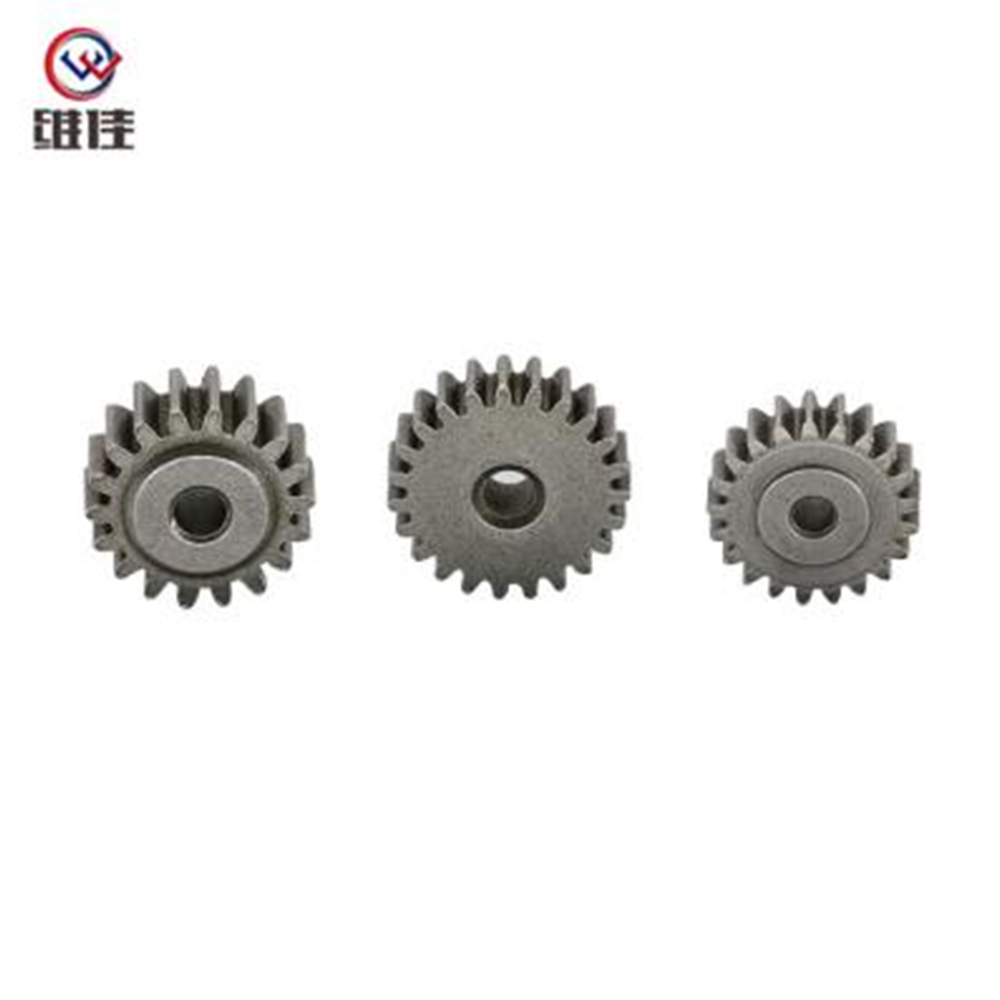
Description: Custom powder metallurgy planetary gear with high precision, wear resistance for automotive, industrial machinery & home appliances. OEM/ODM supported.
See Details -
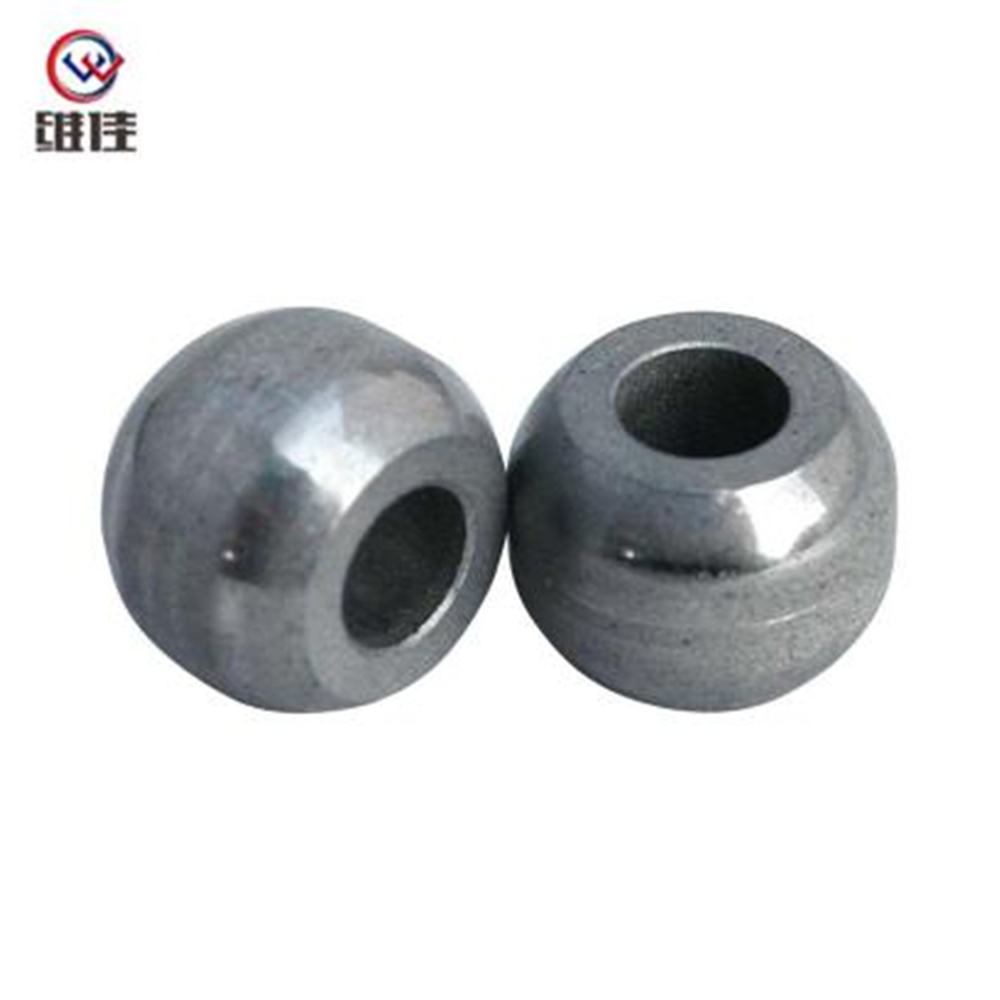
Product Description: High-precision powder metallurgy part (S14*7*10) made of iron material from Jiande Wefine, customized PM components with strict tolerance control.
See Details -
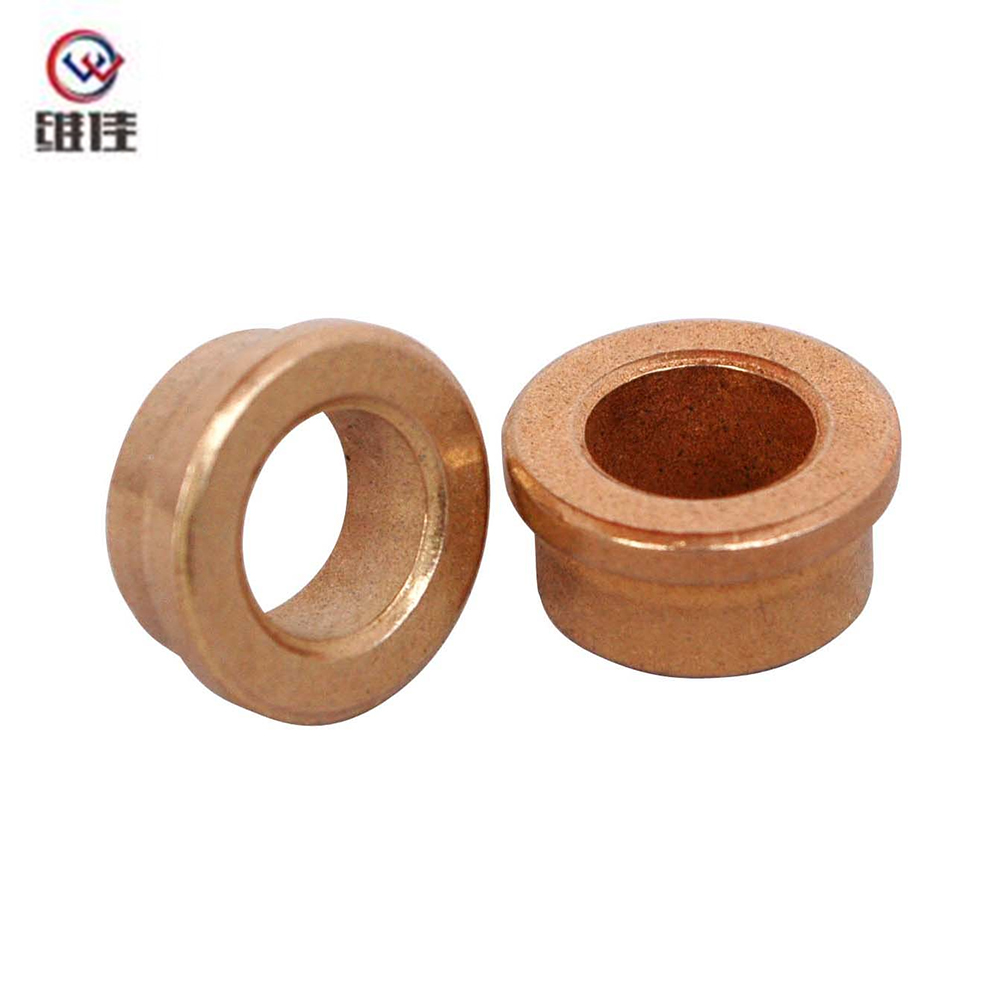
Premium Material: Our flange bushing is crafted from Sint B50 oil-impregnated bronze, featuring an 18% oil content. The high-quality tin bronze material ensures exceptional hardness, wear resistance, ...
See Details
Copyright © Jiande Welfine Technology Co., Ltd. All Rights Reserved. Privacy Custom Self-lubricating Sintered Bushing Manufacturers
