 English
 中文简体

Our sintered bronze self-lubricating bearings are engineered for demanding industrial applications where traditional lubrication is impractical. Designed with advanced powder metallurgy technology, th...
See DetailsE-mail us: [email protected]
Tel: +86-15239857375


 Home / Author / Shen Yiruo — Senior After-Sales Service Manager / Sintered Bronze Self-Lubricating Bushings: Performance, Manufacturing Excellence, and Custom Industrial Solutions
Sintered Bronze Self-Lubricating Bushings: Performance, Manufacturing Excellence, and Custom Industrial Solutions
 2026.10.28
 Shen Yiruo — Senior After-Sales Service Manager
Content
- 1 What Are Sintered Bronze Self-Lubricating Bushings?
- 2 Why Bronze Is Suitable for Self-Lubricating Bearings
- 3 Product Range and Material Options
- 4 Key Advantages Compared with Conventional Lubricated Bushings
- 5 Advanced Powder Metallurgy Manufacturing Process
- 6 Quality and Manufacturing Strengths
- 7 Design Considerations for Long Service Life
- 8 Typical Industrial Applications
- 9 Installation and Maintenance Guidance
- 10 How to Select the Right Custom Bushing
- 11 Why Choose a Specialized Sintered Component Manufacturer?
- 12 Q&A About Sintered Bronze Self-Lubricating Bushings
- 12.1 What makes a sintered bronze bushing self-lubricating?
- 12.2 Are all sintered bronze bushings oil-impregnated?
- 12.3 Can these bushings operate without external grease?
- 12.4 Are sintered bronze bushings suitable for high loads?
- 12.5 Can the bushings be customized?
- 12.6 What information should be supplied for a quotation?
- 12.7 What is the difference between tin bronze and lead bronze bushings?
- 12.8 Can sintered bronze bushings be used in vacuum environments?
- 12.9 Do self-lubricating bushings require maintenance?
- 12.10 What quality certifications are available from the manufacturer?
- 12.11 Can the manufacturer support OEM and ODM projects?
- 13 Conclusion
- 14 References
- 15 Product: Sintered Bronze Self-lubricating Bushings
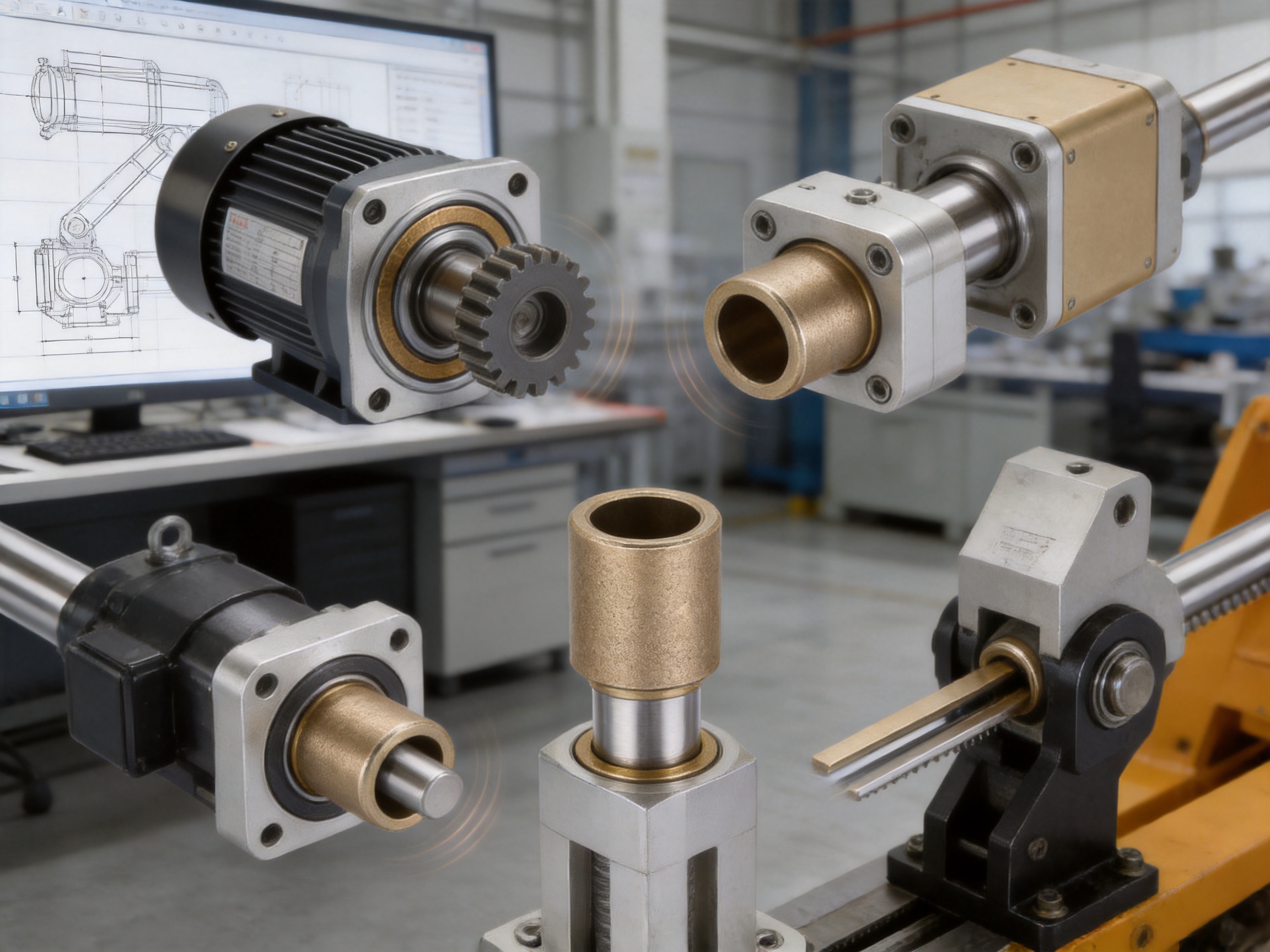
Sintered bronze self-lubricating bushings are compact, dependable components designed to support rotating, oscillating, and sliding motion in mechanical systems. They are widely used when equipment designers need stable friction performance, reduced maintenance, reliable dimensional accuracy, and long service life in environments where conventional grease or oil lubrication is inconvenient.
Produced through powder metallurgy, these bushings are formed from carefully selected metallic powders and consolidated through controlled pressing and sintering. The resulting structure can be engineered to provide a combination of strength, wear resistance, porosity, thermal stability, and lubrication retention. Depending on the material grade and operating conditions, sintered bronze bushings may be oil-impregnated, suitable for dry-running service, or produced with alloy compositions optimized for high temperature, high load, or special environmental requirements.
Jiande Welfine Technology Co., Ltd. specializes in powder metallurgy bushings, self-lubricating bushings, and precision sintered components. Established in 2001, the company combines product research and development, powder metallurgy manufacturing, precision forming, machining, and quality control. Its production base covers approximately 13,039 square meters and includes high-efficiency presses, high-temperature sintering furnaces, precision forming machines, and testing equipment.
With more than 20 years of manufacturing experience and a skilled workforce of more than 150 employees, the company provides customized OEM and ODM solutions based on customer drawings, samples, performance requirements, and application conditions. Its quality systems include ISO 9001:2015 and IATF 16949:2016 certifications, supporting consistent production for industrial, automotive, electrical, appliance, and machinery applications.
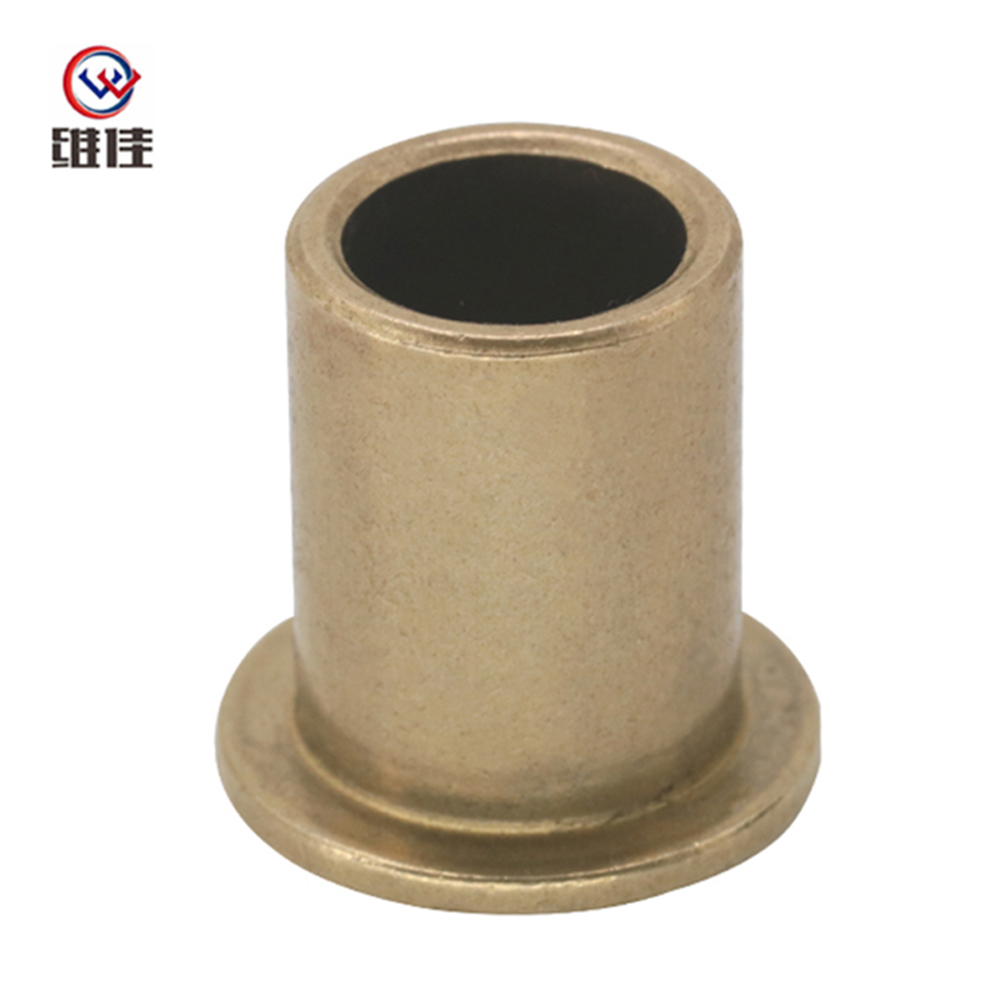
Sintered Bronze Self-lubricating Bushings
What Are Sintered Bronze Self-Lubricating Bushings?
A bushing is a machine element that supports a shaft, pin, roller, or other moving component. Unlike a rolling bearing, which uses balls or rollers to reduce friction, a bushing generally provides a sliding interface between the stationary housing and the moving shaft. The simplicity of this design makes bushings particularly attractive for compact mechanisms, oscillating joints, low-speed motion, and applications where shock loads or contamination may make rolling bearings less suitable.
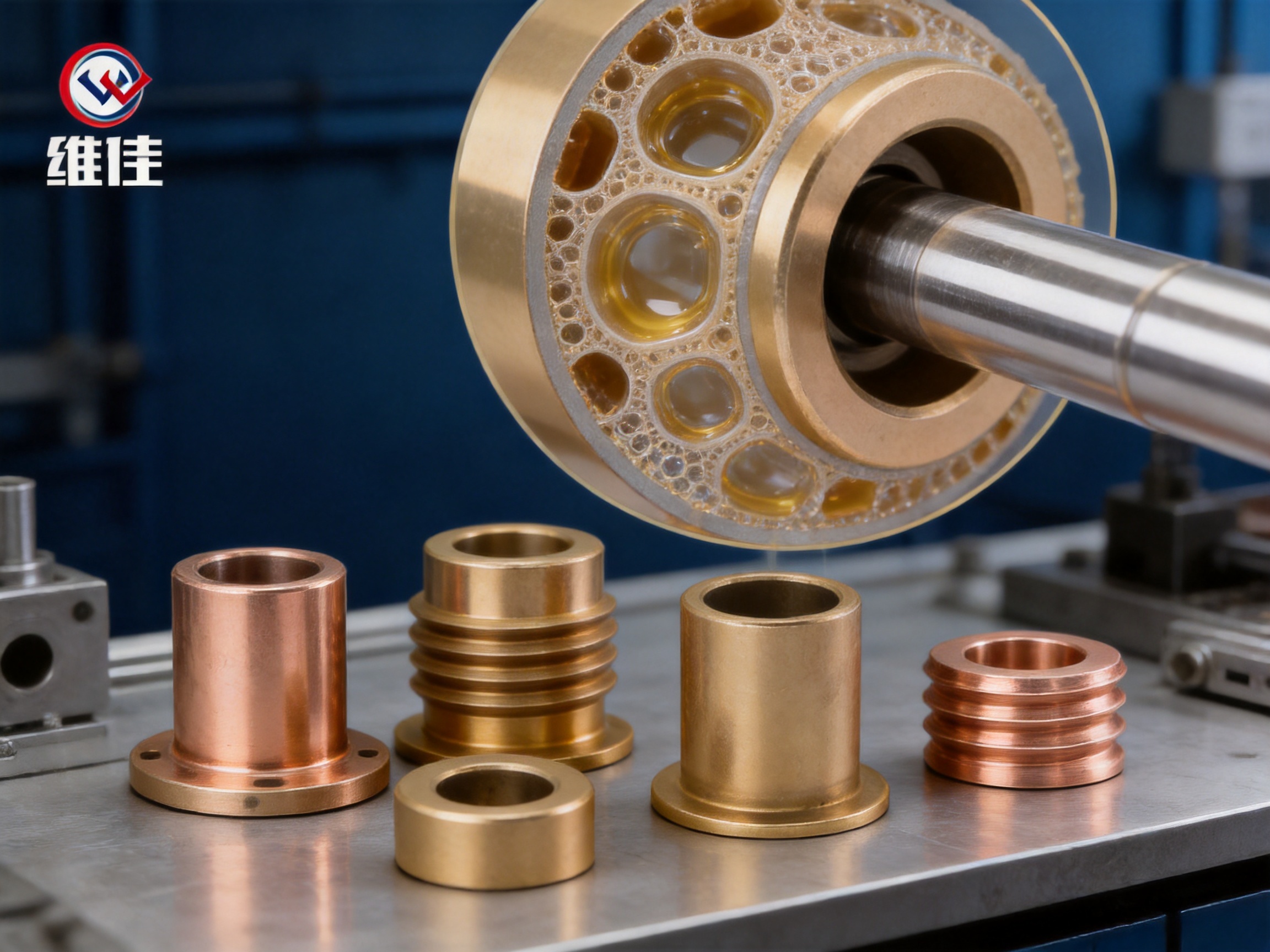
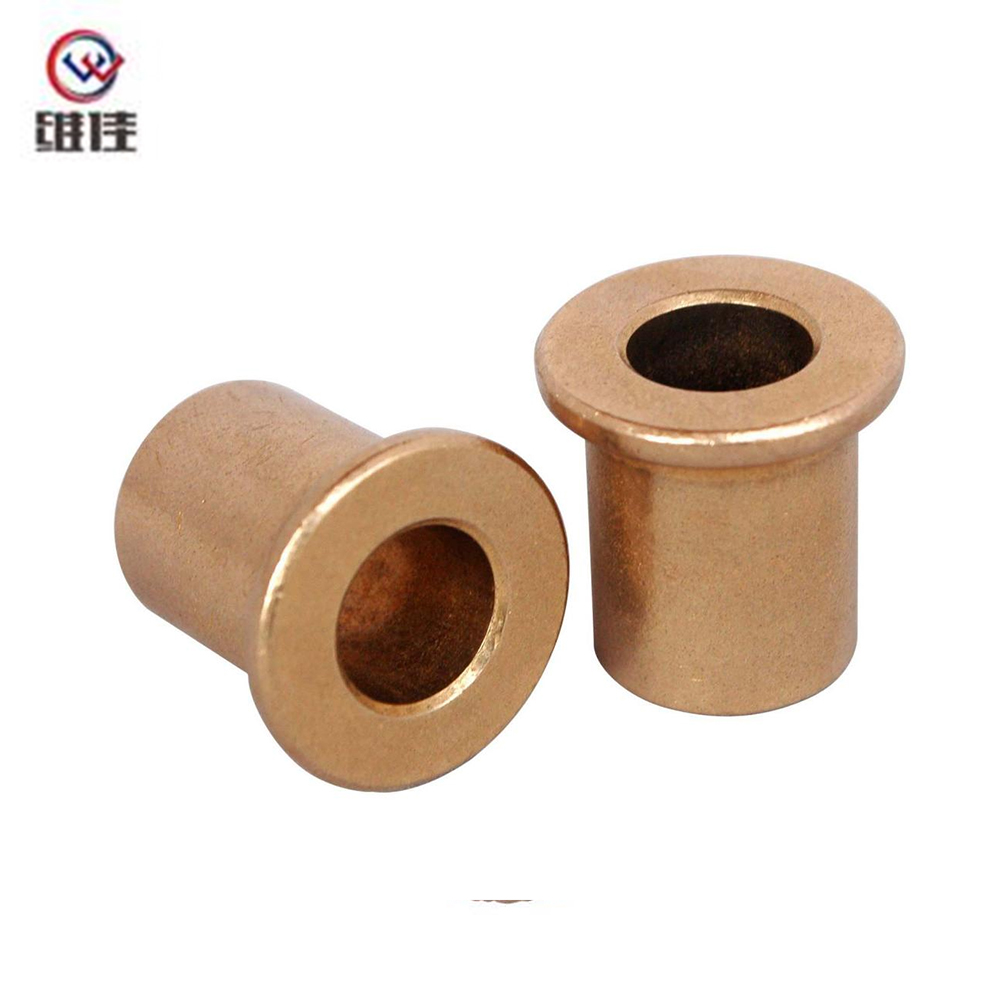
Sintered bronze bushings are manufactured from bronze-based metal powders. The powders are mixed, compacted in a die, and heated in a controlled atmosphere below the material’s melting point. This process creates a strong, near-net-shape component with a controlled internal structure. The remaining interconnected pores can be used to store lubricating oil, creating an oil-impregnated bearing that releases lubricant gradually during operation.
The self-lubricating effect does not mean that every bushing operates without any form of lubricant. In many oil-impregnated designs, the lubricant is introduced during the manufacturing process and retained within the pores of the bronze matrix. During shaft movement, heat and capillary action encourage a small quantity of oil to migrate toward the bearing surface. When the component stops, some of the lubricant can return to the porous structure.
Other sintered bronze grades may be designed for dry-running operation or may use alloy chemistry and solid lubricating additives to reduce dependence on external lubrication. The appropriate construction depends on speed, load, temperature, atmosphere, shaft material, surface finish, clearance, and expected duty cycle. Correct material selection is therefore essential to achieving the desired service life.
Why Bronze Is Suitable for Self-Lubricating Bearings
Bronze is a preferred bearing material because it offers a balanced combination of strength, machinability, thermal conductivity, corrosion resistance, and compatibility with steel shafts. Copper-based alloys can transfer heat away from the sliding interface efficiently, helping reduce localized temperature increases during continuous operation.
Bronze also has favorable friction and wear characteristics when paired with a properly finished shaft. Its relatively forgiving sliding behavior can help reduce the risk of severe damage during short periods of boundary lubrication, start-stop operation, or moderate misalignment. In addition, bronze alloys can be formulated for different requirements. Tin bronze grades may provide strong wear resistance and structural stability, while lead bronze grades may offer useful embeddability and sliding performance in suitable applications.
The porous structure produced by powder metallurgy adds another important benefit. In an oil-impregnated bushing, the pores act as microscopic reservoirs. This allows the bearing to carry lubricant within its own body rather than relying entirely on an external grease fitting, oil line, or automatic lubrication system.
Product Range and Material Options
A complete sintered bronze bearing program should cover more than one alloy or geometry. Different machines impose different demands, and a bushing that performs well in a lightly loaded household appliance may not be suitable for a continuously operating industrial mechanism.
Sintered Alloy Self-Lubricating Bearings
Sintered alloy self-lubricating bearings are designed for applications requiring controlled friction, reduced maintenance, and stable dimensional performance. The alloy composition, powder characteristics, compacting pressure, sintering cycle, and oil impregnation process can all influence the final result.
These bearings are suitable for many general industrial mechanisms, electric motor assemblies, gear systems, actuators, small transmission components, and equipment with rotating or oscillating shafts. Their performance is strongly influenced by shaft hardness, surface roughness, operating clearance, load distribution, and environmental cleanliness.
Dry-Running and High-Temperature Bearings
Some applications cannot use conventional oil because of high temperature, vacuum, contamination sensitivity, chemical exposure, or the risk of lubricant evaporation. For these conditions, specially developed dry-running or high-temperature sintered bearing materials may be considered.
Dry-running performance depends on the selected alloy system and any solid lubricating phases incorporated into the material. High-temperature service also requires attention to dimensional expansion, oxidation resistance, shaft compatibility, and changes in mechanical strength. A bearing described as high temperature should always be matched to a defined temperature range and duty cycle rather than selected solely by general product category.
Sintered Tin Bronze Bearings
Sintered tin bronze bearings, often identified within CuSn material families, are valued for their wear resistance, structural stability, and suitability for a broad range of mechanical applications. Tin bronze can provide a durable sliding surface when the bearing is properly designed and operated within its load and speed limits.
These bushings may be used in industrial equipment, automotive mechanisms, motor assemblies, gear systems, and other applications where dependable sliding support is required. The final performance depends on the specific alloy formulation and manufacturing parameters.
Sintered Lead Bronze Bearings
Sintered lead bronze bearings, commonly associated with CuPb material families, can be selected for applications where sliding behavior, embeddability, and compatibility with steel shafts are important. The lead-bearing phase may help accommodate small particles or minor surface irregularities under suitable operating conditions.
Because material regulations and environmental requirements vary by market and application, customers should specify any restrictions on lead-containing materials during the quotation and design stage. Alternative material systems may be available when lead-free construction is required.
Key Advantages Compared with Conventional Lubricated Bushings
Reduced Maintenance Requirements
The most recognizable advantage of an oil-impregnated or self-lubricating bushing is reduced dependence on external lubrication. Conventional plain bushings may require scheduled grease application, oil replenishment, lubrication channels, or centralized lubrication equipment. Each of these systems adds maintenance tasks and creates additional points of failure.
A correctly selected sintered bronze bushing contains or manages lubrication within its own structure. This can reduce maintenance frequency and help equipment operate in locations where access is difficult. It is especially valuable in compact mechanisms, enclosed assemblies, remote equipment, and systems where stopping production for lubrication is costly.
Lower Risk of Lubrication-Related Contamination
External grease and oil can attract dust, metal particles, fibers, and other contaminants. Excess lubricant may also migrate into nearby electrical components, optical systems, textiles, packaging, or finished products. Self-lubricating bushings can reduce the amount of free lubricant around the assembly.
This does not mean that sintered bronze bearings are immune to contamination. Abrasive particles can still damage the shaft and bearing surface. However, a properly selected bushing can reduce the need for exposed lubrication systems and may be more suitable for clean or contamination-sensitive designs.
Compact and Simple Design
Plain bushings generally require less radial space than rolling bearings with comparable shaft dimensions. They contain fewer individual components and do not require balls, rollers, cages, seals, or complex raceway arrangements. This makes them attractive for compact equipment and cost-sensitive mechanical systems.
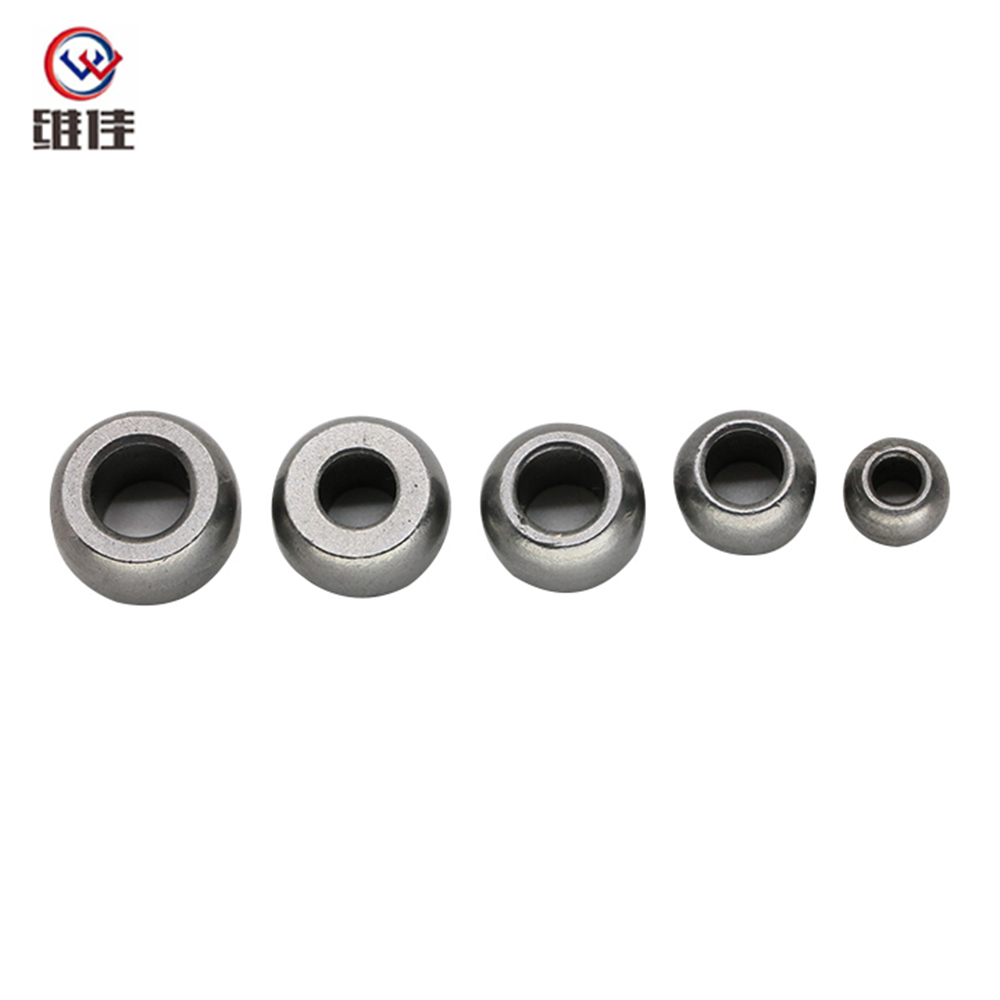
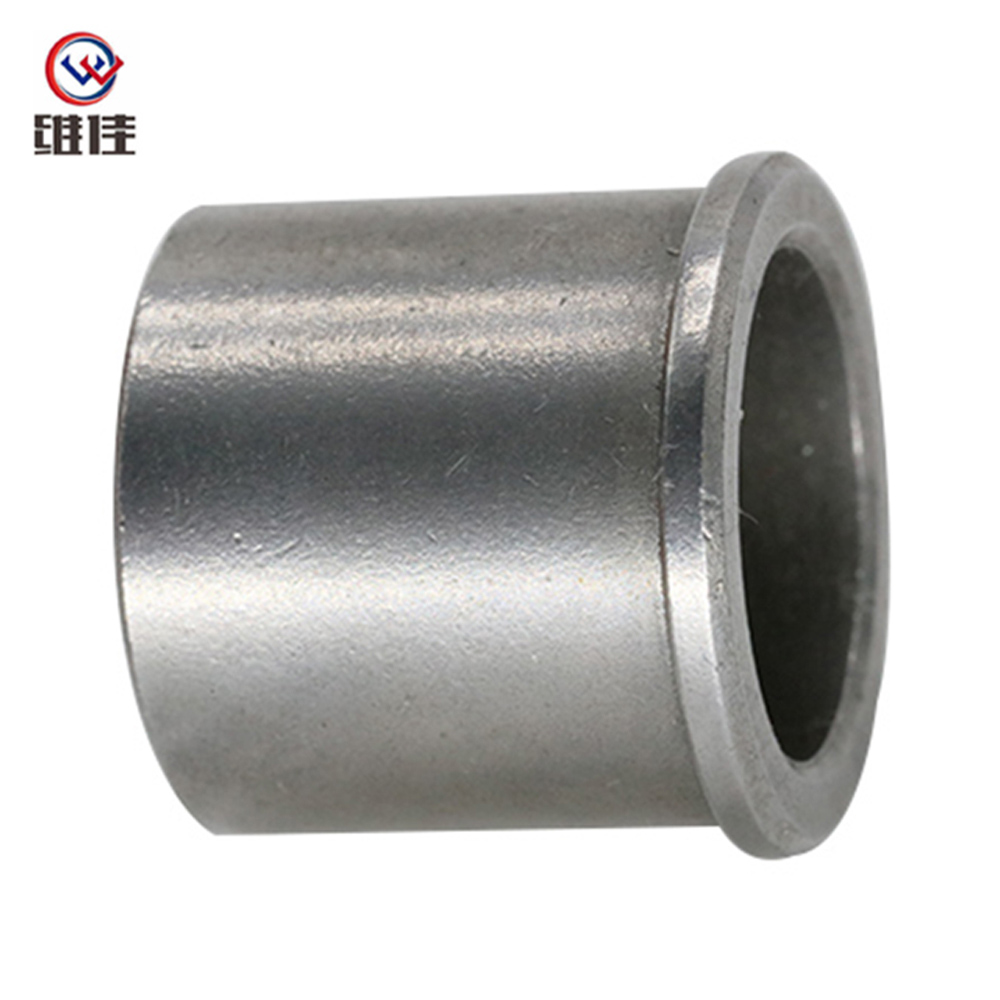
The simplicity of a bushing can also support easier assembly. A press-fit or accurately located sleeve can be installed in a housing, after which the shaft is inserted through the bore. Flanged, stepped, spherical, and custom-shaped versions can be developed when axial positioning or special mounting geometry is required.
Good Shock and Oscillation Capability
Rolling bearings can be highly effective for continuous rotation, but some mechanisms experience oscillating motion, intermittent movement, impact, or reversing loads. In these situations, a plain bushing may offer a more practical solution.
A sintered bronze bushing distributes contact over a surface area rather than concentrating contact through rolling elements. This can be advantageous in hinges, linkages, pivots, construction equipment, actuator joints, and mechanisms with frequent starts and stops. The design must still account for pressure, sliding speed, edge loading, and lubrication conditions.
Efficient Heat Management
Copper-based alloys generally conduct heat effectively. In a moving interface, heat generation is influenced by friction, pressure, speed, surface finish, alignment, and lubricant behavior. Efficient thermal transfer can help prevent excessive local temperature rise, particularly when the housing provides a path for heat dissipation.
Thermal performance is not determined by alloy conductivity alone. The entire assembly, including shaft material, housing material, clearance, ventilation, and duty cycle, must be evaluated. Nevertheless, the thermal characteristics of bronze contribute to its suitability for many continuously operating mechanisms.
Reliable Performance in Difficult Locations
Self-lubricating bushings can be useful where lubrication equipment cannot be installed or where regular access is inconvenient. Examples include internal machine mechanisms, compact motors, appliances, automated systems, and equipment installed in remote or elevated locations.
They may also be considered for vacuum-related mechanisms, dry-friction applications, and selected radioactive or chemically sensitive environments when the material, lubricant, and seal design are specifically qualified for those conditions. Extreme-environment suitability should always be confirmed through application testing and technical review.
Advanced Powder Metallurgy Manufacturing Process
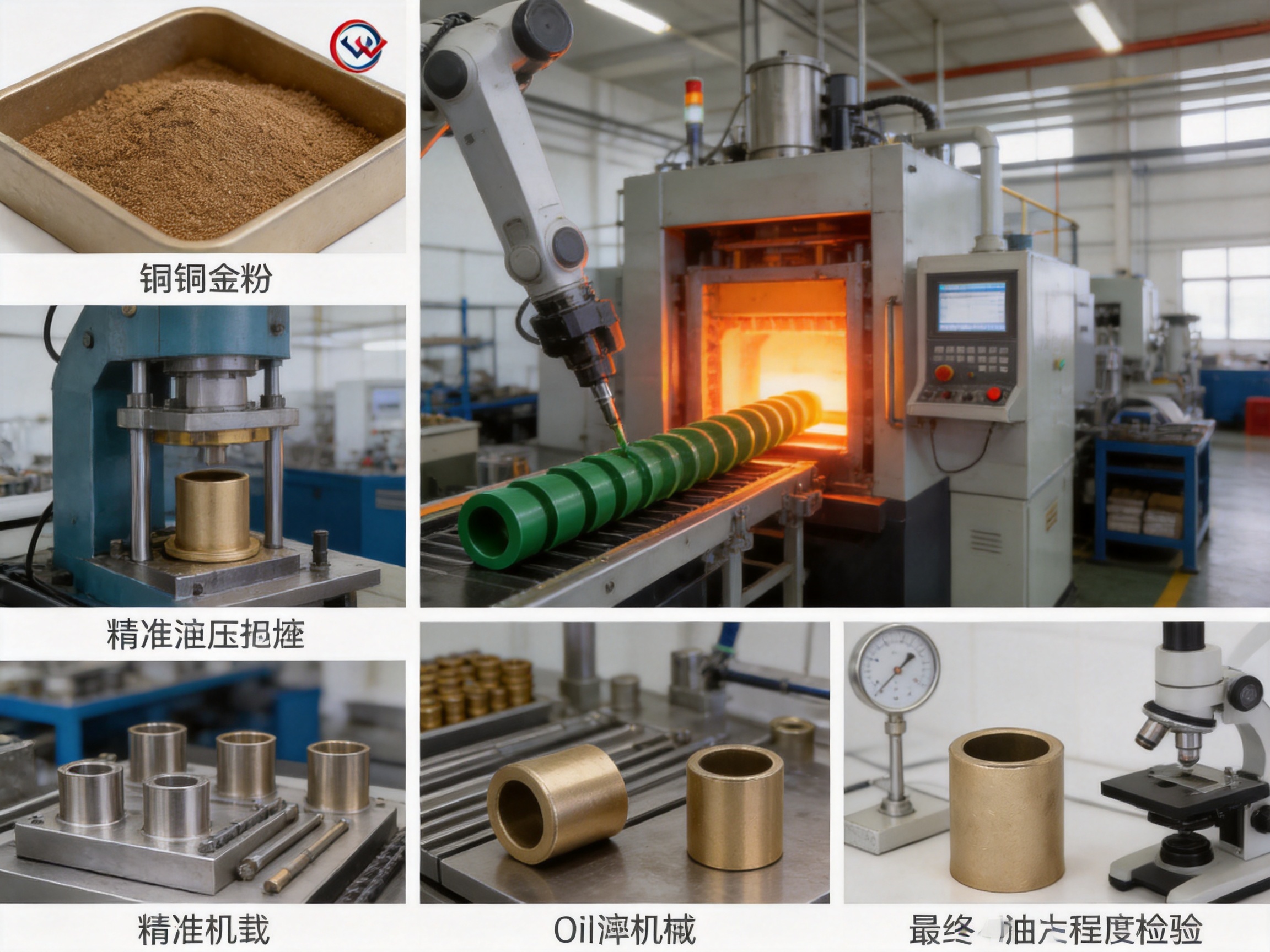
The quality of a sintered bronze bushing depends on much more than the nominal alloy designation. Powder characteristics, mixing uniformity, die design, compaction, sintering atmosphere, thermal profile, sizing, machining, impregnation, cleaning, and inspection all influence final performance.
Material Selection and Powder Preparation
Manufacturing begins with the selection of suitable metallic powders and, where required, additives or lubricating phases. Powder particle size, shape, flowability, compressibility, apparent density, and chemical composition affect how the material fills the die and consolidates during pressing.
Consistent powder preparation helps reduce density variation within the part. Uniformity is especially important in bushings because differences in density can influence strength, porosity, oil retention, dimensional change, and wear behavior.
Powders are blended according to the required material system. Mixing must be sufficiently thorough to distribute alloying elements evenly while avoiding segregation. Process controls are used to maintain repeatable batch characteristics and support stable production.
Precision Compaction
In the pressing stage, the prepared powder is placed into a tool cavity corresponding to the external and internal geometry of the bushing. High-efficiency presses apply carefully controlled force to compact the powder into a green component.
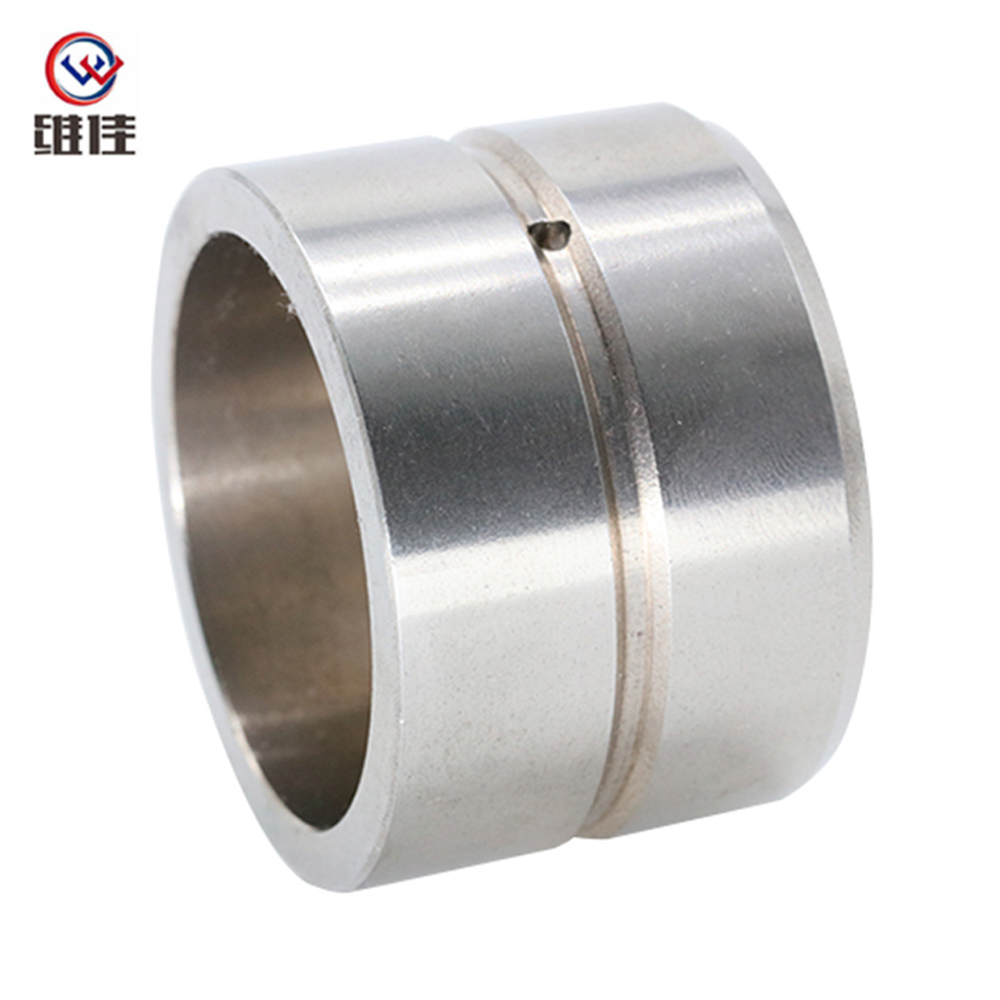
Die design is essential. Bushings may include straight bores, flanges, steps, grooves, chamfers, oil holes, or other functional features. The tooling must support consistent filling and compaction while controlling ejection forces and minimizing defects.
Compaction pressure influences green density and mechanical integrity. Excessive or uneven pressure may create cracks, lamination, density gradients, or deformation. Insufficient pressure may result in inadequate strength or dimensional instability. Experienced process engineers balance these variables according to part geometry and material behavior.
Controlled Sintering
The compacted green part is heated in a high-temperature sintering furnace. During sintering, particles bond through solid-state diffusion, creating a coherent metallic structure. The component gains strength and wear resistance while retaining a designed level of porosity.
Atmosphere control is important because oxidation, carbon variation, and contamination can affect the material. Furnace temperature, heating rate, soak time, cooling rate, and atmosphere composition must be controlled to achieve consistent metallurgical results.
For oil-impregnated bushings, the sintered structure must provide an appropriate balance between strength and interconnected porosity. Too little porosity may limit lubricant storage and release, while excessive porosity may reduce load capacity or dimensional stability. The correct balance depends on the application.
Calibration, Sizing, and Precision Forming
After sintering, components may undergo sizing or calibration to improve dimensional accuracy, roundness, straightness, and surface condition. Precision forming machines can help bring the bushing within required tolerances without removing excessive material.
Sizing is particularly valuable for the bore because the shaft-to-bushing clearance directly influences friction, heat generation, oil movement, and service life. The required clearance must account for shaft diameter, housing interference, operating temperature, material expansion, and expected load.
Precision Machining
Although powder metallurgy can produce near-net-shape parts, certain features may require secondary machining. Precision turning, boring, grinding, chamfering, grooving, drilling, or deburring may be used to achieve the specified geometry.
Machining parameters should be selected carefully because excessive cutting can close or smear pores on the functional surface. Surface condition is especially important for oil-impregnated products, where the bearing must release and redistribute lubricant during operation.
Oil Impregnation
Oil impregnation fills the interconnected pores of the sintered bronze structure with a selected lubricant. The process may involve vacuum assistance, pressure, heating, or a combination of methods to improve penetration and consistency.
Oil selection should reflect the operating temperature, speed, load, surrounding materials, chemical exposure, storage conditions, and regulatory requirements. A bearing intended for general industrial use may use a different oil from one intended for elevated temperatures or special environmental conditions.
After impregnation, excess surface oil may be removed or controlled according to product requirements. Proper handling and packaging help prevent contamination and preserve the intended lubricant condition before installation.
Cleaning and Final Inspection
Finished bushings are inspected for dimensional accuracy, surface condition, visual defects, and functional characteristics. Depending on customer requirements, inspections may include bore diameter, outside diameter, length, flange dimensions, concentricity, roundness, density, hardness, porosity, oil content, and appearance.
Inspection data can be recorded according to a defined quality plan. For automotive and other demanding applications, process documentation, traceability, control plans, and corrective-action systems can support consistent production across batches.
Quality and Manufacturing Strengths
Integrated Research, Production, and Sales
An integrated organization can respond more efficiently when a customer requires a custom bushing. Instead of treating design, tooling, production, inspection, and communication as separate activities, an integrated team can evaluate the complete product lifecycle from the beginning.
Jiande Welfine Technology Co., Ltd. focuses on powder metallurgy sintering and related precision machining. This specialization allows the company to develop solutions around material selection, shape, tolerance, porosity, oil retention, and application conditions rather than offering only standard catalog dimensions.
Experience in Custom OEM and ODM Components
Many bushing applications cannot use an off-the-shelf part. The required component may have a special flange, nonstandard length, stepped profile, oil groove, mounting feature, or application-specific tolerance. It may also need to match an existing shaft, housing, or assembly.
Custom OEM and ODM production allows customers to submit drawings, samples, three-dimensional data, or technical specifications for evaluation. The manufacturer can then review manufacturability, tooling requirements, material options, production volume, inspection standards, and expected performance.
This approach may reduce the need for unnecessary secondary operations and help customers select an economical geometry. It can also support the development of replacement parts for legacy equipment or the optimization of a component that has experienced premature wear.
Modern Equipment and Production Capacity
The company’s approximately 13,039-square-meter production base is equipped with high-efficiency presses, high-temperature sintering furnaces, precision forming machines, and testing equipment. These resources support the manufacture of powder metallurgy bushings and other precision sintered components in a controlled production environment.
Modern equipment contributes to repeatability, but equipment alone does not guarantee quality. Its value depends on correct process settings, preventive maintenance, tooling management, operator training, inspection discipline, and continuous improvement. The combination of equipment and experienced personnel is therefore important.
Quality Management Certifications
ISO 9001:2015 certification reflects the use of a structured quality management system. Such a system generally supports documented processes, customer requirement review, supplier control, inspection planning, nonconformance management, corrective action, and continual improvement.
IATF 16949:2016 certification is particularly relevant to automotive supply chains, where production consistency, traceability, risk analysis, process capability, and defect prevention are essential. These systems can give customers greater confidence when sintered bushings are used in components that require stable quality across large production volumes.
Technical Collaboration with Customers
Successful bushing design requires communication between the component manufacturer and the equipment designer. Important information includes shaft diameter and material, housing material, radial load, axial load, speed, oscillation angle, duty cycle, operating temperature, environmental contaminants, lubricant restrictions, expected service life, and installation method.
When these details are available at the quotation stage, the manufacturer can make more meaningful recommendations. The result may be a change in alloy, porosity, clearance, geometry, surface finish, oil type, or manufacturing process. This collaborative approach is more reliable than selecting a bushing based only on nominal dimensions.
Design Considerations for Long Service Life
Load and Pressure
Bushing load capacity is commonly evaluated using projected bearing area, calculated from the shaft diameter and bearing length. The actual allowable pressure depends on material, speed, lubrication, temperature, alignment, and duty cycle.
Static loads, dynamic loads, impact loads, and reversing loads should be distinguished. A bushing that supports a high static load may not tolerate the same load during continuous high-speed rotation. Oscillating motion can also produce different wear patterns from continuous rotation.
Sliding Speed
Sliding speed influences frictional heat and lubricant behavior. As speed increases, the interface may generate more heat, and the available oil film may change. Low-speed, heavily loaded motion may produce boundary lubrication, while higher-speed motion may permit more stable fluid or mixed lubrication depending on the system.
The product should be selected using a pressure-velocity assessment rather than pressure or speed alone. Application testing is recommended when the operating point approaches the material’s limits or when the duty cycle includes frequent starts and stops.
Clearance and Tolerance
Proper clearance is necessary for shaft movement, lubricant distribution, thermal expansion, and tolerance accumulation. Excessive clearance may cause vibration, uneven loading, noise, and accelerated wear. Insufficient clearance may result in seizure, especially after temperature increases or housing interference changes the bore size.
Clearance should be considered together with the installation method. A press-fit outer diameter can reduce the installed bore diameter. The manufacturer should therefore receive both the free-state bushing dimensions and the housing specifications.
Shaft Quality
The shaft is part of the bearing system. A shaft with poor roundness, excessive roughness, inadequate hardness, corrosion, or surface damage can shorten bushing life even when the bushing itself is manufactured correctly.
A suitable shaft should be clean, accurately sized, properly aligned, and finished according to the selected bearing material. Hardness and surface treatment may also be important for abrasive or high-duty applications.
Alignment and Edge Loading
Misalignment can concentrate load at one edge of the bushing. This reduces the effective contact area and can create localized wear, heat, and deformation. Long bushings are especially sensitive to shaft alignment and housing coaxiality.
Where misalignment cannot be eliminated, designers may consider shorter bearing lengths, spherical features, compliant designs, or a different bearing construction. Installation tooling should prevent damage to the bore and ensure that the bushing enters the housing squarely.
Temperature and Environment
Temperature affects oil viscosity, material expansion, strength, oxidation, and clearance. Dust, water, chemicals, corrosive vapors, vacuum, and radiation may also affect the suitability of the bushing and its lubricant.
Applications described as high temperature or extreme environment should be reviewed using actual operating data. Short-term peak temperature and continuous operating temperature should be identified separately. Storage conditions and transportation temperatures may also influence the product.
Typical Industrial Applications
Industrial Machinery
Sintered bronze bushings are used in conveying systems, packaging equipment, production machinery, indexing mechanisms, actuators, linkages, and general mechanical assemblies. Their compact form and reduced maintenance requirements can simplify machine design.
Automotive Components
Automotive mechanisms may use powder metallurgy bushings in actuators, hinges, adjustment systems, motor assemblies, transmission-related mechanisms, and other moving components. Automotive applications require consistent dimensions, repeatable material properties, and traceable quality control.
Electric Motors and Gear Systems
Small electric motors, fans, gearboxes, and drive systems often benefit from compact sliding bearings. Oil-impregnated bushings can provide quiet operation and reduce the need for regular service, provided the speed, load, temperature, and shaft conditions are appropriate.
Household Appliances
Appliances may contain motors, hinges, rollers, dampers, pivots, or adjustment mechanisms that require low noise and dependable movement. A sintered bronze bushing can be integrated into a small assembly while minimizing the need for exposed grease.
Construction Equipment
Construction equipment is exposed to high loads, vibration, dust, and intermittent operation. Sintered bronze bushings may be used in selected auxiliary mechanisms or smaller moving assemblies. Heavily loaded joints exposed to severe contamination may require specialized solid bronze, composite, or other bearing systems, so application evaluation is important.
High-Temperature Mechanical Systems
Specially selected dry-running or high-temperature sintered materials can be used in mechanisms where conventional oils are unsuitable. Examples may include furnace equipment, thermal processing machinery, selected industrial actuators, and mechanisms exposed to elevated temperatures.
Installation and Maintenance Guidance
Even a self-lubricating bushing requires correct installation. The housing should be clean, properly sized, and free from burrs. The shaft should be inspected for damage, contamination, and dimensional variation. Pressing should be performed with a suitable tool that applies force evenly to the correct surface.
Hammering directly on the bushing can deform the bore or damage the flange. If a press-fit is specified, the installation force should be controlled. After installation, the bore should be checked when necessary because the housing fit may alter its final diameter.
The shaft should be inserted without twisting or forcing it through an obstructed bore. During initial operation, the assembly should be monitored for abnormal noise, temperature, vibration, or resistance. If an external lubricant is prohibited, do not add grease or oil without confirming compatibility with the impregnated lubricant and application design.
Maintenance personnel should periodically inspect the shaft, housing, alignment, and surrounding environment. A self-lubricating design reduces routine lubrication work but does not eliminate the need to identify overload, contamination, corrosion, or misalignment.
How to Select the Right Custom Bushing
Customers requesting a quotation should provide as much application information as possible. The following details help a manufacturer recommend a suitable product:
| Requirement | Information to Provide | Why It Matters |
|---|---|---|
| Geometry | Inside diameter, outside diameter, length, flange, groove, chamfer, and special features | Determines tooling, machining, fit, and installation method |
| Motion | Continuous rotation, oscillation, reciprocation, or intermittent movement | Influences wear pattern and lubrication behavior |
| Load | Radial load, axial load, impact, and load variation | Supports material and wall-thickness selection |
| Speed | Rotational speed, sliding speed, acceleration, and duty cycle | Determines frictional heat and pressure-velocity conditions |
| Temperature | Continuous temperature and peak temperature | Influences lubricant, clearance, strength, and dimensional stability |
| Environment | Dust, water, chemicals, vacuum, radiation, or clean-room conditions | Determines environmental compatibility |
| Shaft | Material, hardness, diameter, roughness, coating, and finish | Directly affects friction and wear |
| Quality | Dimensional tolerances, inspection reports, traceability, and certification requirements | Defines production and verification procedures |
| Volume | Prototype, small batch, repeat order, or mass production | Supports tooling and cost planning |
Drawings or samples can be used as the starting point for a custom solution. The manufacturer can review whether the design is suitable for pressing and sintering, identify features that may require machining, and recommend changes that improve production stability or reduce cost.
Why Choose a Specialized Sintered Component Manufacturer?
A general machine shop may be able to produce a metal sleeve, but powder metallurgy bushings require specialized knowledge of powders, porosity, compaction behavior, sintering, oil impregnation, and dimensional control. A manufacturer focused on sintered components can evaluate the part according to its material structure and intended operating function.
Specialization also supports better process integration. Tooling can be designed around the powder compacting process. Sintering parameters can be developed for the selected alloy. Calibration and machining can be coordinated to preserve bore accuracy and surface quality. Inspection plans can focus on the dimensions and properties that matter most to bearing performance.
Welfine’s experience in powder metallurgy bushings and precision components supports this type of technical cooperation. Its production, engineering, and quality capabilities are suited to customers seeking customized self-lubricating bushings rather than generic replacement sleeves.
Q&A About Sintered Bronze Self-Lubricating Bushings
What makes a sintered bronze bushing self-lubricating?
In an oil-impregnated design, the porous bronze structure stores lubricant inside interconnected pores. During movement, a controlled amount of oil reaches the sliding surface. Some specially formulated dry-running grades use alloy structures or solid lubricating phases to reduce the need for external lubrication.
Are all sintered bronze bushings oil-impregnated?
No. Many sintered bronze bushings are oil-impregnated, but product construction varies. Some are intended for dry-running conditions, high-temperature applications, or special environments. The lubricant and material grade should be specified according to the application.
Can these bushings operate without external grease?
Many are designed to operate without routine external grease or oil. However, the answer depends on the product grade and operating conditions. Load, speed, temperature, shaft finish, and environment must remain within the design range.
Are sintered bronze bushings suitable for high loads?
They can be suitable for high static or dynamic loads when the material, geometry, clearance, and operating conditions are correctly selected. High load combined with high speed, shock, or poor alignment may require a specialized design or a different bearing material.
Can the bushings be customized?
Yes. Customization may include inside and outside diameters, length, flange geometry, grooves, chamfers, special profiles, material grade, oil type, tolerances, and inspection requirements. Drawings or samples are useful for technical evaluation.
What information should be supplied for a quotation?
Provide the component drawing or sample, shaft and housing dimensions, load, speed, movement type, temperature, environment, expected service life, quantity, and quality requirements. These details allow the manufacturer to recommend a more appropriate solution.
What is the difference between tin bronze and lead bronze bushings?
Tin bronze and lead bronze are different material families with different performance characteristics. Tin bronze is commonly selected for wear resistance and structural stability. Lead bronze may provide useful sliding and embeddability characteristics in suitable applications. The selection should consider regulations, environment, load, speed, and shaft compatibility.
Can sintered bronze bushings be used in vacuum environments?
Some designs may be suitable for vacuum service, but the lubricant, outgassing behavior, temperature, and material construction must be specifically evaluated. A standard oil-impregnated bushing should not automatically be assumed suitable for vacuum use.
Do self-lubricating bushings require maintenance?
They generally require less routine lubrication maintenance, but the assembly should still be inspected for wear, contamination, misalignment, shaft damage, and abnormal temperature or noise. Self-lubrication reduces maintenance requirements; it does not eliminate the need for equipment inspection.
What quality certifications are available from the manufacturer?
Jiande Welfine Technology Co., Ltd. operates with ISO 9001:2015 and IATF 16949:2016 certifications. These systems support documented quality management, process control, traceability, defect prevention, and continual improvement.
Can the manufacturer support OEM and ODM projects?
Yes. The company provides OEM and ODM customized bushing solutions based on customer drawings or samples. Its engineering and production capabilities support prototype evaluation, tooling development, batch manufacturing, and repeat production.
Conclusion
Sintered bronze self-lubricating bushings provide a practical solution for reducing maintenance, simplifying mechanical assemblies, controlling friction, and supporting reliable motion. Their porous metal structure can retain lubricant, while specialized material grades can be developed for dry-running, high-temperature, high-load, or environmentally demanding service.
Compared with conventional externally lubricated bushings, these products can reduce lubrication equipment, limit contamination risks, save installation space, and support dependable operation in difficult-to-access locations. Their performance depends on appropriate design rather than product selection by dimensions alone. Load, speed, clearance, shaft quality, alignment, temperature, and environment must all be considered.
Advanced powder metallurgy manufacturing provides the foundation for consistent quality. Controlled powder preparation, precision compaction, high-temperature sintering, calibration, machining, oil impregnation, and final inspection work together to produce reliable components. With more than two decades of experience, modern production equipment, a skilled workforce, OEM and ODM capabilities, and ISO 9001:2015 and IATF 16949:2016 certifications, Jiande Welfine Technology Co., Ltd. is positioned to support customers requiring customized sintered bronze bushings and precision powder metallurgy components.
For technical consultation, customers may contact Jiande Welfine Technology Co., Ltd., Genglou Houtang Industrial Zone, Jiande City, Zhejiang Province, China. Telephone: +86-15239857375. Email: [email protected].
References
1. ASM International, ASM Handbook, Volume 7: Powder Metal Technologies and Applications.
2. European Powder Metallurgy Association, Powder Metallurgy Design and Manufacturing Principles.
3. ISO 9001:2015, Quality Management Systems—Requirements.
4. IATF 16949:2016, Quality Management System Requirements for Automotive Production and Relevant Service Parts Organizations.
5. ASTM International, Standards and Test Methods for Powder Metallurgy Materials and Sintered Metal Components.
6. Metal Powder Industries Federation, Powder Metallurgy Materials and Processes Reference Information.
7. Engineering Tribology references covering plain bearings, sliding wear, lubrication regimes, and pressure-velocity evaluation.
Product: Sintered Bronze Self-lubricating Bushings
Related products
Copyright © Jiande Welfine Technology Co., Ltd. All Rights Reserved. Privacy Custom Self-lubricating Sintered Bushing Manufacturers
