 English
 中文简体

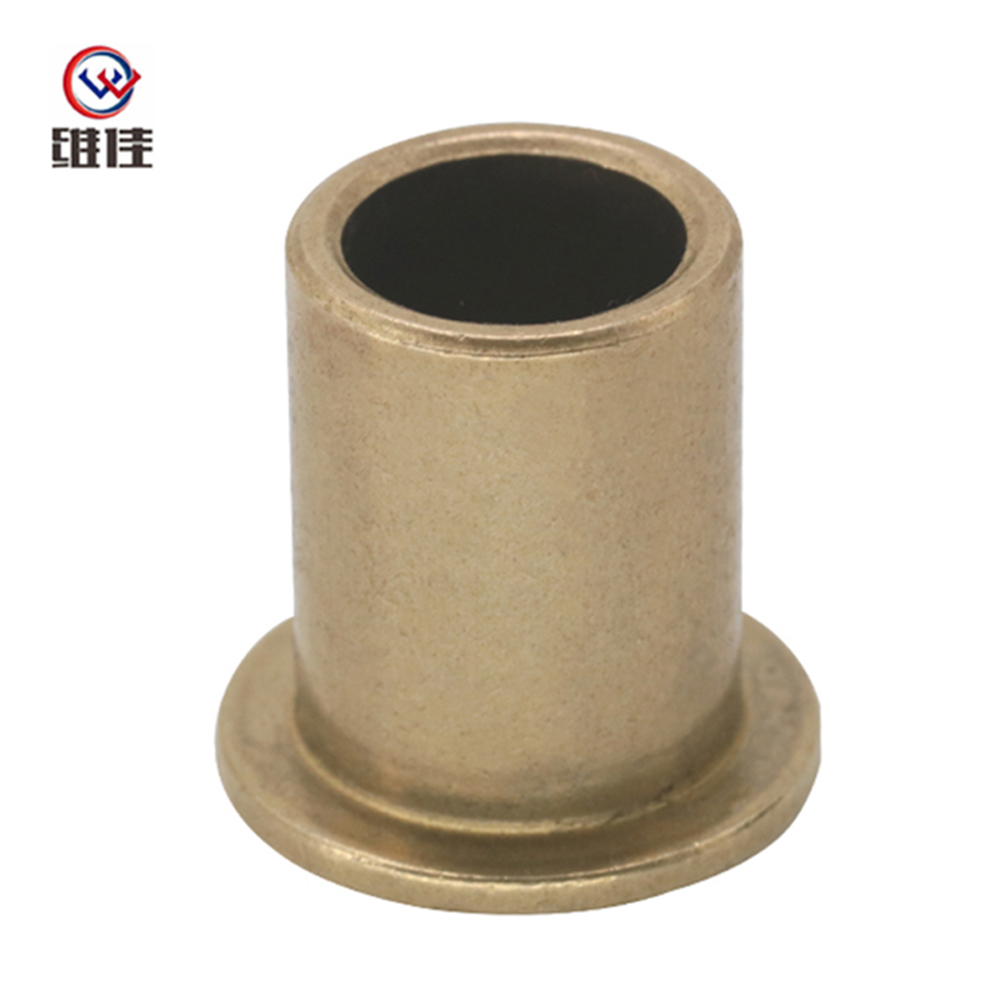
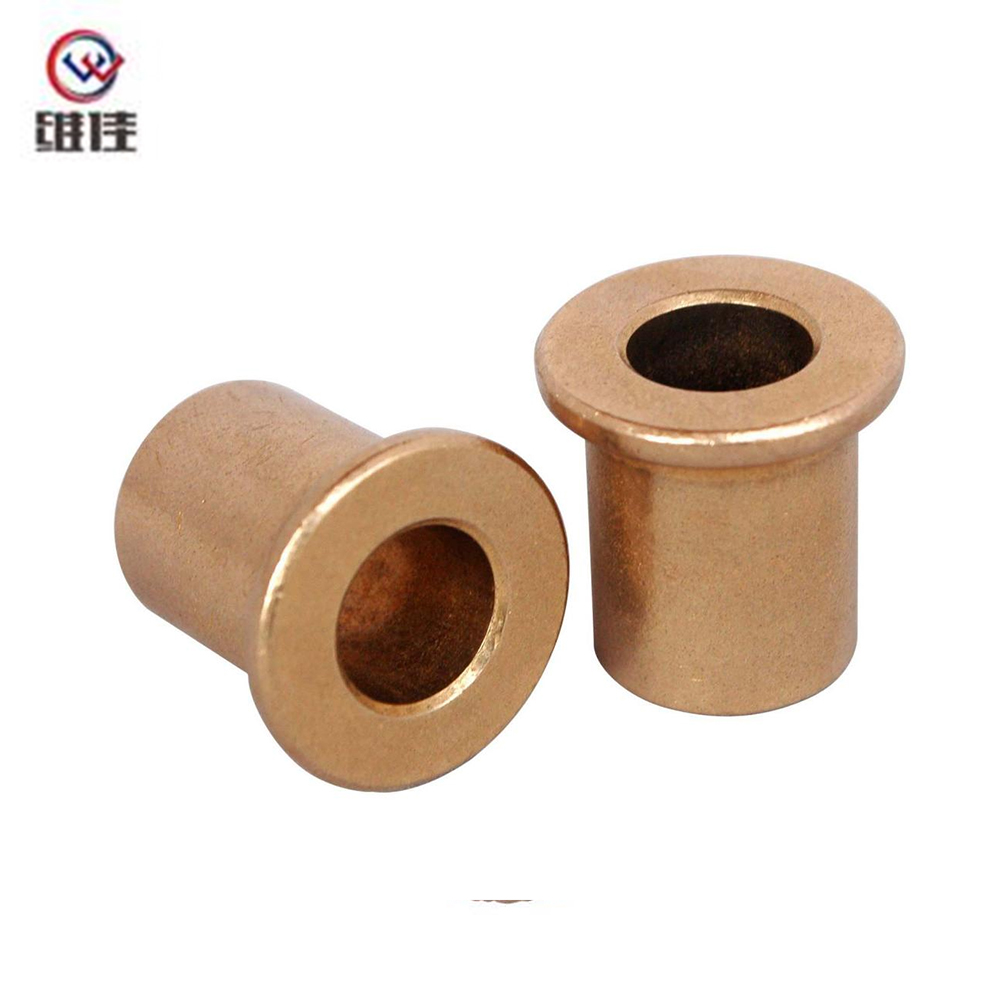
Premium Material: Our flange bushing is crafted from Sint B50 oil-impregnated bronze, featuring an 18% oil content. The high-quality tin bronze material ensures exceptional hardness, wear resistance, ...
See DetailsE-mail us: [email protected]
Tel: +86-15239857375


 Home / Author / Shen Yiruo — Senior After-Sales Service Manager / Sint B50 Oil-Impregnated Bronze Flange Bushings: A High-Performance Self-Lubricating Solution for Modern Machinery
Sint B50 Oil-Impregnated Bronze Flange Bushings: A High-Performance Self-Lubricating Solution for Modern Machinery
 2026.09.24
 Shen Yiruo — Senior After-Sales Service Manager
Content
- 1 1. Understanding the Sint B50 Oil-Impregnated Bronze Flange Bushing
- 2 2. Why Oil-Impregnated Bronze Is Attractive for Industrial Applications
- 3 3. Material Characteristics of Sint B50 Bronze
- 4 4. The Self-Lubricating Operating Principle
- 5 5. Advantages of the Flange Configuration
- 6 6. Manufacturing Process from Powder to Finished Bushing
- 7 7. Quality Control and Performance Verification
- 8 8. Competitive Advantages Compared with Alternative Bushing Solutions
- 9 9. Application Areas
- 10 10. Design and Selection Considerations
- 11 11. Customization and OEM/ODM Capabilities
- 12 12. Manufacturing Strengths of Jiande Welfine Technology Co., Ltd.
- 13 13. Cost and Lifecycle Benefits
- 14 14. Installation and Maintenance Recommendations
- 15 15. Sustainability and Resource Efficiency
- 16 16. Frequently Asked Questions
- 16.1 What is a Sint B50 oil-impregnated bronze flange bushing?
- 16.2 Does the bushing require regular lubrication?
- 16.3 What does the approximately 18 percent oil content mean?
- 16.4 Can the bushing support axial loads?
- 16.5 Is Sint B50 suitable for high-speed applications?
- 16.6 Can the flange bushing be used for oscillating motion?
- 16.7 What shaft materials are compatible with the bushing?
- 16.8 Can the bushing operate in dusty or wet environments?
- 16.9 Can customized dimensions be produced?
- 16.10 What information should be provided when requesting a quotation?
- 16.11 How does powder metallurgy reduce production cost?
- 16.12 How should the quality of a sintered bronze bushing be evaluated?
- 16.13 What certifications does the manufacturer hold?
- 17 17. Conclusion
- 18 References
- 19 Product: Sint B50 Powdered Metallurgy Oil-Impregnated Bronze Flange Bushing
Modern machinery increasingly depends on components that can operate reliably with minimal maintenance. Although bushings are compact parts, their performance has a direct influence on friction, noise, energy consumption, positioning accuracy, service life, and equipment availability. A bushing that wears prematurely or loses its lubrication can reduce the efficiency of an entire assembly. For this reason, engineers in automotive, industrial automation, agricultural machinery, household appliances, hydraulic equipment, and other industries continue to search for bearing solutions that combine stable mechanical performance with simplified maintenance.
The Sint B50 oil-impregnated bronze flange bushing is designed to meet these requirements. Manufactured through powder metallurgy and vacuum oil impregnation, it combines the strength and wear resistance of a bronze-based material with an internal lubrication reservoir. Its porous structure stores oil and releases it gradually during operation, helping maintain a lubricating film between the bushing and shaft. The integrated flange also provides positioning support and limited axial-load capability, reducing the need for separate retaining rings, washers, or spacers.
With an oil content of approximately 18 percent, Sint B50 offers a practical balance between lubricant storage, structural integrity, friction reduction, and dimensional stability. It is suitable for radial-load applications and selected combined radial-and-axial-load conditions when the speed, temperature, load, shaft finish, and operating environment are properly evaluated. Its self-lubricating design can reduce service interruptions, lower maintenance requirements, and support dependable operation in locations where regular greasing is inconvenient.
This article examines the material structure, manufacturing process, performance advantages, application range, quality-control requirements, customization capabilities, and supplier strengths associated with Sint B50 oil-impregnated bronze flange bushings.
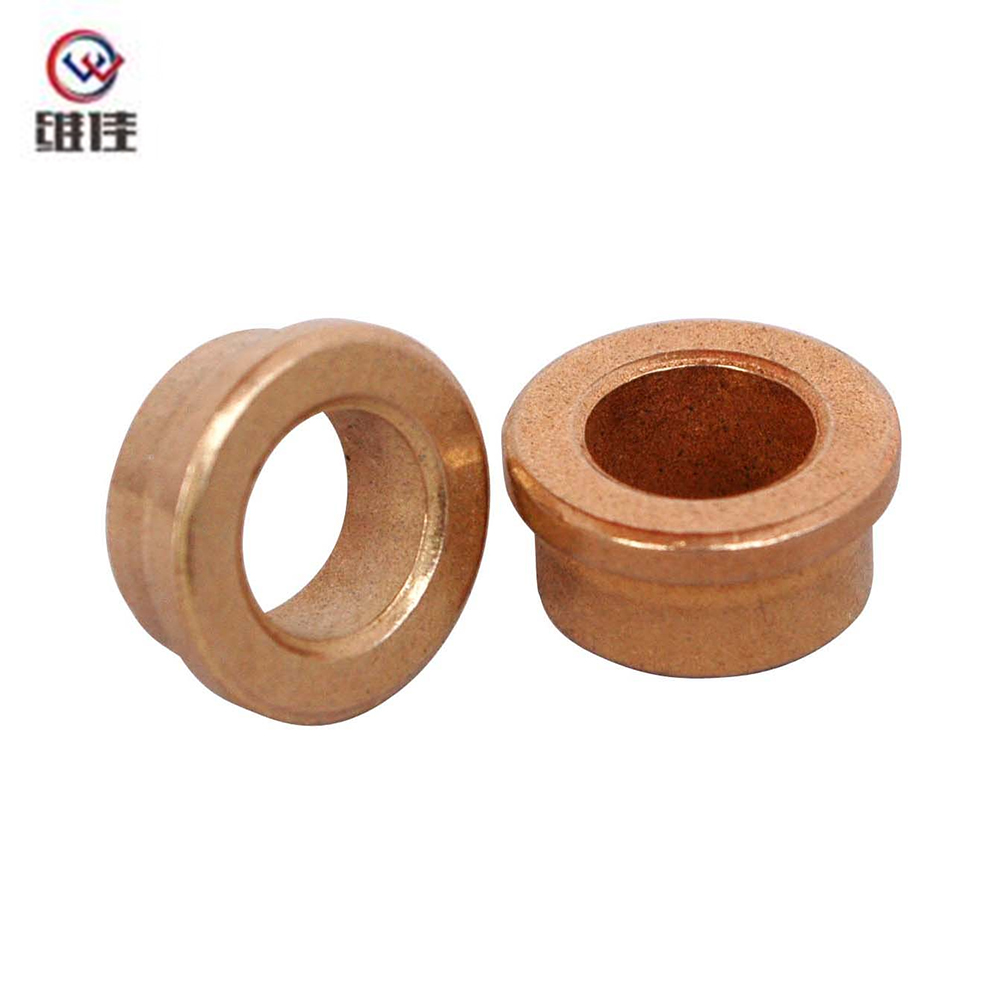
Sint B50 Powdered Metallurgy Oil-Impregnated Bronze Flange Bushing
1. Understanding the Sint B50 Oil-Impregnated Bronze Flange Bushing
A Sint B50 oil-impregnated bronze flange bushing is a plain bearing manufactured from a porous copper-based alloy. Unlike a rolling bearing, it does not contain balls, rollers, cages, or raceways. Instead, the shaft rotates or oscillates directly inside the bushing bore. The bearing surface supports the shaft while the impregnated oil reduces friction and wear.
The “flange” refers to the projecting rim formed at one end of the cylindrical bushing. This rim extends beyond the main bearing sleeve and can help locate a component axially. It can also accommodate a certain amount of axial force, depending on the flange dimensions, material strength, lubrication condition, operating speed, and application design.
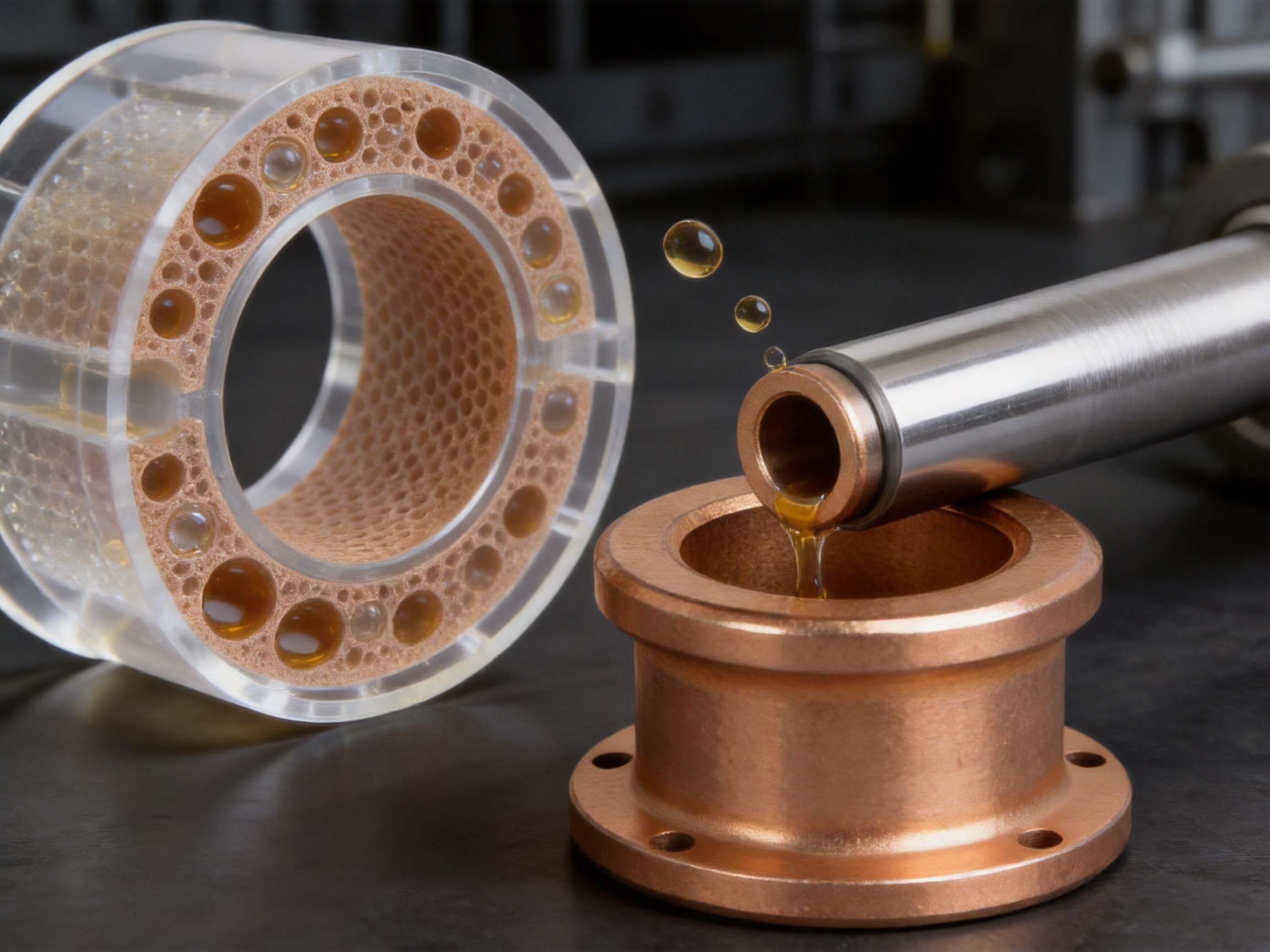
The “oil-impregnated” designation describes the manufacturing and operating principle. Powdered bronze is compacted and sintered to create a controlled network of interconnected pores. After sintering and sizing or machining, the finished bushing is placed in an oil-impregnation process, often under vacuum. Air is removed from the pore network, and lubricant is drawn deeply into the material. The result is a bearing with oil distributed throughout its structure rather than merely applied to the outer surface.
During operation, frictional heat and capillary action encourage oil to move toward the bearing interface. The oil forms a lubricating film that separates portions of the shaft from the bronze surface. When the machine stops and the component cools, some of the oil can migrate back into the porous body. This dynamic exchange supports repeated lubrication during normal service.
The product is therefore more than a simple bronze sleeve. It is a carefully engineered porous bearing system in which material composition, pore distribution, oil content, dimensional accuracy, surface finish, and operating conditions work together.
2. Why Oil-Impregnated Bronze Is Attractive for Industrial Applications
Traditional solid-metal bushings can provide good strength, but they normally depend on an external supply of grease or oil. If lubrication is forgotten, difficult to access, washed away, contaminated, or unsuitable for the operating temperature, the bushing may experience increased friction and accelerated wear. In contrast, oil-impregnated bronze contains lubricant within its own structure.
This internal reservoir provides several important advantages:
Reduced Routine Lubrication
For properly selected applications, the stored lubricant can support operation without frequent manual relubrication. This is especially useful for compact assemblies, sealed equipment, remote machinery, and mechanisms with limited maintenance access.
Stable Friction Performance
Oil released from the porous structure helps reduce direct metal-to-metal contact between the shaft and the bushing. A more stable lubricating condition can reduce friction variation, operating noise, vibration, and heat generation.
Efficient Material Use
Powder metallurgy produces components close to their final shape. Compared with manufacturing a bushing entirely from a solid bronze bar, the process can reduce material waste and shorten machining requirements, particularly for large-volume production.
Consistent Production
Controlled powder blending, compaction, sintering, sizing, machining, and oil impregnation allow manufacturers to produce repeated batches with consistent dimensions and performance characteristics. This consistency is important for automated assembly and original equipment manufacturing.
Simple Mechanical Design
A self-lubricating bushing can eliminate or reduce the need for grease grooves, external oil lines, lubrication ports, and additional maintenance hardware. The flange can also integrate a positioning function into the bearing itself.
These advantages do not mean that every oil-impregnated bushing is suitable for every operating condition. Correct selection remains essential. Load, speed, temperature, shaft hardness, alignment, contamination, oscillation angle, and installation tolerances must all be considered.
3. Material Characteristics of Sint B50 Bronze
Sint B50 is a bronze-based powder metallurgy material intended for self-lubricating bearing applications. The material is designed to provide a practical combination of hardness, wear resistance, compressive strength, dimensional stability, and oil retention. Its approximately 18 percent oil content creates a meaningful internal lubricant reserve while preserving enough metallic structure to support mechanical loads.
The bronze matrix contributes to the bearing’s ability to withstand repeated contact with a shaft. Bronze is widely used in plain-bearing applications because it offers a useful balance between strength and friction behavior. When combined with a controlled porous structure, it becomes suitable for mechanisms requiring low-maintenance sliding or rotational support.
Porosity must be controlled carefully. If the material contains too few pores, it cannot retain sufficient oil, and the self-lubricating effect becomes limited. If the material contains excessive or poorly connected porosity, its mechanical strength and dimensional stability may be reduced. The manufacturing objective is therefore not simply to maximize porosity, but to create a uniform and functional pore network.
The oil content is also important. An oil level of approximately 18 percent offers a balance between lubrication capacity and bearing strength. The selected oil should be compatible with the expected temperature, speed, load, surrounding materials, and environmental conditions. Depending on customer requirements, the lubricant system may be assessed for viscosity, oxidation resistance, temperature behavior, and compatibility with the application.
The material’s performance is influenced by the entire structure rather than by chemical composition alone. Powder size, powder blending, compaction pressure, sintering atmosphere, sintering temperature, cooling conditions, pore morphology, post-sintering sizing, machining accuracy, and oil impregnation all affect the final component.
| Performance factor | Contribution of the Sint B50 design | Importance in application |
|---|---|---|
| Oil retention | Controlled interconnected pores store approximately 18 percent lubricant | Supports self-lubrication and reduces manual maintenance |
| Wear resistance | Bronze-based matrix provides a durable sliding surface | Helps extend service life under suitable load and speed conditions |
| Dimensional consistency | Powder compaction, sintering, sizing, and precision machining are controlled | Supports accurate assembly and predictable clearance |
| Flange functionality | Integrated rim provides positioning and limited axial support | Can reduce the number of separate retaining components |
| Operating noise | Continuous oil release helps reduce friction and vibration | Useful in appliances, office equipment, motors, and compact mechanisms |
| Manufacturing efficiency | Near-net-shape powder metallurgy minimizes material waste | Supports economical production of repeated components |
4. The Self-Lubricating Operating Principle
The self-lubricating performance of the bushing begins with the porous structure created during sintering. The microscopic pores function as distributed reservoirs. After vacuum impregnation, these pores contain oil throughout the body of the bearing, including areas close to the bore surface.
When a shaft begins to rotate or oscillate, friction produces heat at the sliding interface. This heat, together with capillary forces and movement-induced pressure changes, helps the lubricant migrate toward the bore. The released oil forms a film between the shaft and bearing surface. The film reduces adhesion, limits direct contact, and helps carry away a portion of the frictional heat.
At low speeds or during intermittent movement, the lubrication mechanism may be influenced by the amount of surface contact and the duration of each operating cycle. At higher speeds, the bearing may generate more heat and require careful evaluation of load, clearance, shaft finish, and oil viscosity. In all cases, the bushing should be selected according to actual operating conditions rather than by size alone.
When operation stops, the bearing cools and the pressure balance within the pore network changes. Some excess oil can return to the pores through capillary action. This does not represent an unlimited or instantaneous recycling process, but it contributes to the long-term self-lubricating behavior for which sintered bronze bearings are known.
External lubrication may sometimes be used during installation or under special conditions, but compatibility must be confirmed. An unsuitable grease or oil may block pores, change friction behavior, attract abrasive particles, or interfere with the impregnated lubricant. Application engineers should therefore evaluate any additional lubricant before use.
5. Advantages of the Flange Configuration
A standard cylindrical bushing supports radial movement, but it may require a separate component to control axial position. The flange configuration combines a cylindrical bearing sleeve with an integrated radial shoulder. This design can improve assembly efficiency and reduce the number of individual parts.
The flange may act as an axial stop for a rotating or sliding component. It can help prevent the bushing from moving deeper into its housing and can assist with positioning during installation. In some designs, the flange also supports limited axial forces. The actual axial capacity depends on the flange thickness, contact area, material strength, lubrication, speed, and direction of movement.
Compared with a separate bushing and thrust washer arrangement, an integrated flange can simplify the structure. Fewer components may mean fewer interfaces, fewer tolerance stacks, lower assembly labor, and reduced risk of incorrect installation. This is particularly valuable in compact equipment where space is limited.
The flange can also improve replacement procedures. A technician may be able to remove and install one integrated part rather than handling multiple washers, rings, and spacers. For high-volume equipment, the reduction in assembly steps can contribute to lower production costs.
However, the flange should not automatically be treated as a complete thrust bearing. If an application involves continuous high axial loads, frequent axial sliding, shock loading, or significant thrust-generated heat, a dedicated thrust-bearing design may be required. The flange is most effective when used for positioning and moderate axial support within validated conditions.
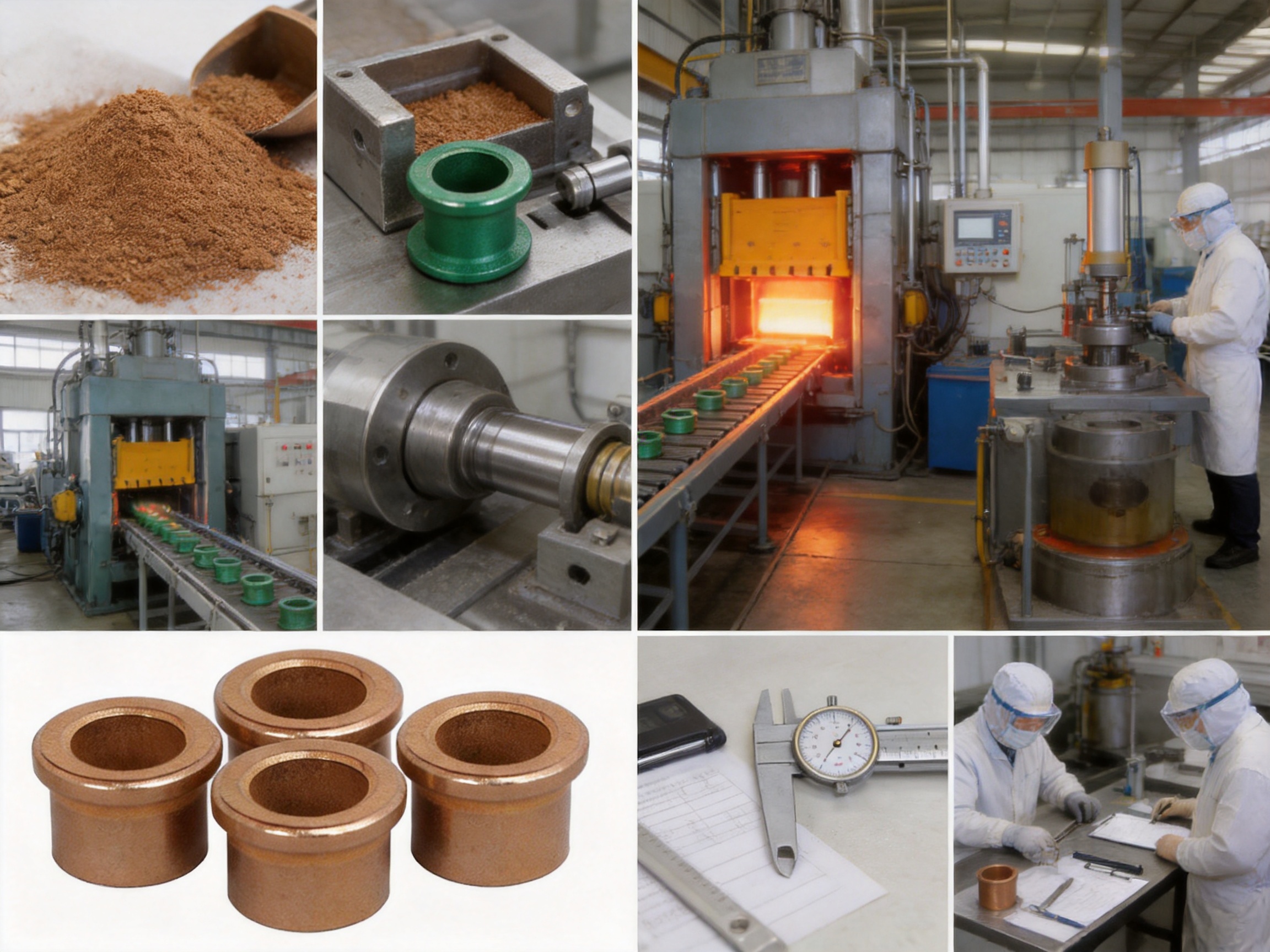
6. Manufacturing Process from Powder to Finished Bushing
6.1 Powder Selection and Blending
The manufacturing process begins with the selection of suitable copper-based and alloy powders. Powder purity, particle size distribution, morphology, flowability, compressibility, and chemical stability affect compaction and sintering behavior. Consistent raw materials help produce a uniform density distribution and predictable pore network.
Powders are blended according to a controlled formulation. The blending process must distribute alloying constituents and processing additives evenly. Inadequate mixing can create local variations in strength, porosity, hardness, or oil absorption. Proper blending is therefore an important foundation for finished-bushing reliability.
6.2 High-Pressure Compaction
The blended powder is placed into a precision die and compacted under high pressure. The tooling defines the external shape, internal bore, flange geometry, and other design features. For flange bushings, die design is particularly important because the component includes changes in cross-section and must be formed without damaging the compact.
Compaction pressure and filling control influence green density. A uniform green compact helps prevent cracks, distortion, density gradients, and dimensional variation during sintering. Advanced presses and carefully maintained tooling support repeatable production for both standard and customized geometries.
6.3 Sintering
The compacted part is heated in a controlled atmosphere furnace. During sintering, particles bond through solid-state diffusion, creating the mechanical structure of the bronze component. Temperature profile, holding time, furnace atmosphere, conveyor speed, and cooling conditions must be carefully controlled.
Sintering determines many of the final material characteristics. Insufficient sintering may produce weak particle bonds and poor mechanical strength. Excessive sintering may close too many pores, reduce oil capacity, or cause dimensional changes. The goal is to achieve sufficient structural integrity while maintaining a functional porous network.
Modern high-temperature sintering furnaces can provide stable thermal conditions and controlled atmospheres. Process monitoring helps manufacturers identify deviations and maintain batch-to-batch consistency.
6.4 Sizing and Precision Machining
After sintering, the bushing may undergo sizing, calibration, turning, reaming, grinding, or other precision operations. Sizing can improve dimensional accuracy and roundness. Machining may be used to achieve the required bore diameter, flange thickness, outer diameter, end-face geometry, and surface finish.
Precision is essential because the clearance between the shaft and bushing directly affects friction, heat generation, oil movement, noise, and service life. Excessive clearance may cause vibration and uneven loading, while insufficient clearance may lead to overheating, seizure, or difficult assembly.
Manufacturers must also control the relationship between the bore, outer diameter, and flange face. Misalignment can create uneven contact and concentrated wear. Inspection of concentricity, perpendicularity, roundness, and surface roughness is therefore important for demanding applications.
6.5 Vacuum Oil Impregnation
Once the porous bronze body has reached the required dimensions, it undergoes oil impregnation. Vacuum treatment removes trapped air from the pore network. The component is then exposed to the selected lubricant so that oil can penetrate deeply into the material.
Vacuum impregnation is more reliable than simply applying oil to the exterior because it fills internal pores rather than leaving lubrication concentrated only at the surface. The process parameters may include vacuum level, holding time, oil temperature, immersion duration, and pressure equalization. These parameters must be controlled to achieve consistent oil uptake.
After impregnation, excess surface oil may be removed or stabilized according to the product specification. The final component is then inspected, packaged, and protected against contamination before shipment.
7. Quality Control and Performance Verification
The quality of an oil-impregnated bronze flange bushing cannot be judged by appearance alone. A reliable quality system evaluates raw materials, process conditions, dimensional characteristics, mechanical properties, oil content, surface condition, and functional performance.
Dimensional Inspection
Critical dimensions typically include bore diameter, outer diameter, flange diameter, flange thickness, overall length, and any mounting or locating features. Depending on the application, manufacturers may also inspect roundness, cylindricity, concentricity, perpendicularity, and surface roughness.
Density and Porosity Evaluation
Density and porosity are closely related to oil storage and load capacity. Testing can help confirm that the material falls within the specified range. A consistent porous structure supports predictable lubricant release and mechanical behavior.
Oil Content Verification
Oil content should be controlled to ensure that the bushing has received sufficient lubricant while retaining its intended structural properties. Testing methods may include weighing before and after controlled oil removal or other validated laboratory procedures.
Hardness and Strength Testing
Hardness testing provides information about the resistance of the bronze matrix to indentation and wear. Depending on the product design, compressive strength, radial crushing strength, or other mechanical tests may also be performed.
Surface and Visual Inspection
Inspectors check for cracks, chips, burrs, deformation, abnormal discoloration, blocked pores, machining damage, and other visible defects. The bore and flange faces receive particular attention because defects in these areas can affect assembly and operation.
Functional Testing
For demanding applications, sample bushings may be evaluated on test rigs under representative loads, speeds, temperatures, and movement patterns. Functional testing can provide information about friction, temperature rise, wear rate, noise, oil migration, and service life.
Quality management is most effective when inspection is combined with process control. Preventing variation during powder blending, compaction, sintering, machining, and impregnation is generally more reliable than attempting to identify all defects only at the final inspection stage.
8. Competitive Advantages Compared with Alternative Bushing Solutions
Compared with Conventional Solid Bronze Bushings
Solid bronze bushings can offer strong mechanical support and may be suitable for heavy loads, but they usually depend on external lubrication. The Sint B50 design stores oil internally, which can reduce the need for grease lines and routine relubrication. Powder metallurgy also enables efficient production of repeated shapes with reduced material waste.
The choice between solid and sintered bronze should be based on operating conditions. Solid bronze may be preferable for extremely heavy loads, severe impact, or applications requiring frequent external lubrication. Sint B50 is particularly attractive when low maintenance, quiet operation, controlled dimensions, and self-lubrication are important.
Compared with Plastic Bushings
Polymer bushings can provide low noise, chemical resistance, and corrosion resistance. However, some plastics may soften at elevated temperatures, creep under continuous loads, or experience dimensional changes due to moisture and thermal expansion. A bronze-based sintered bushing can offer greater metallic strength and more stable load support in many mechanical environments.
Plastic may still be the better selection where electrical insulation, extremely low weight, or chemical compatibility is the primary requirement. Sint B50 is more appropriate when a metallic bearing surface, oil lubrication, and higher structural rigidity are desired.
Compared with Rolling Bearings
Rolling bearings can support high rotational speeds and provide low rolling resistance, but they contain multiple precision components and may require seals, grease, or oil. They can also be more sensitive to contamination, misalignment, shock, and installation errors.
A plain flange bushing has a simpler structure, fewer components, and a compact radial envelope. It is often economical for oscillating motion, intermittent rotation, low-to-medium speeds, and applications where quiet operation is important. Rolling bearings remain advantageous for high-speed rotation, low starting torque, or applications requiring highly defined rolling contact.
Compared with Externally Lubricated Metal Bushings
Externally lubricated bushings may perform well when a reliable centralized lubrication system is available. However, pumps, tubing, fittings, seals, and maintenance schedules add complexity. The oil-impregnated design reduces dependence on these systems, making it attractive for small mechanisms, enclosed assemblies, and equipment designed for long service intervals.
9. Application Areas
Automotive Components
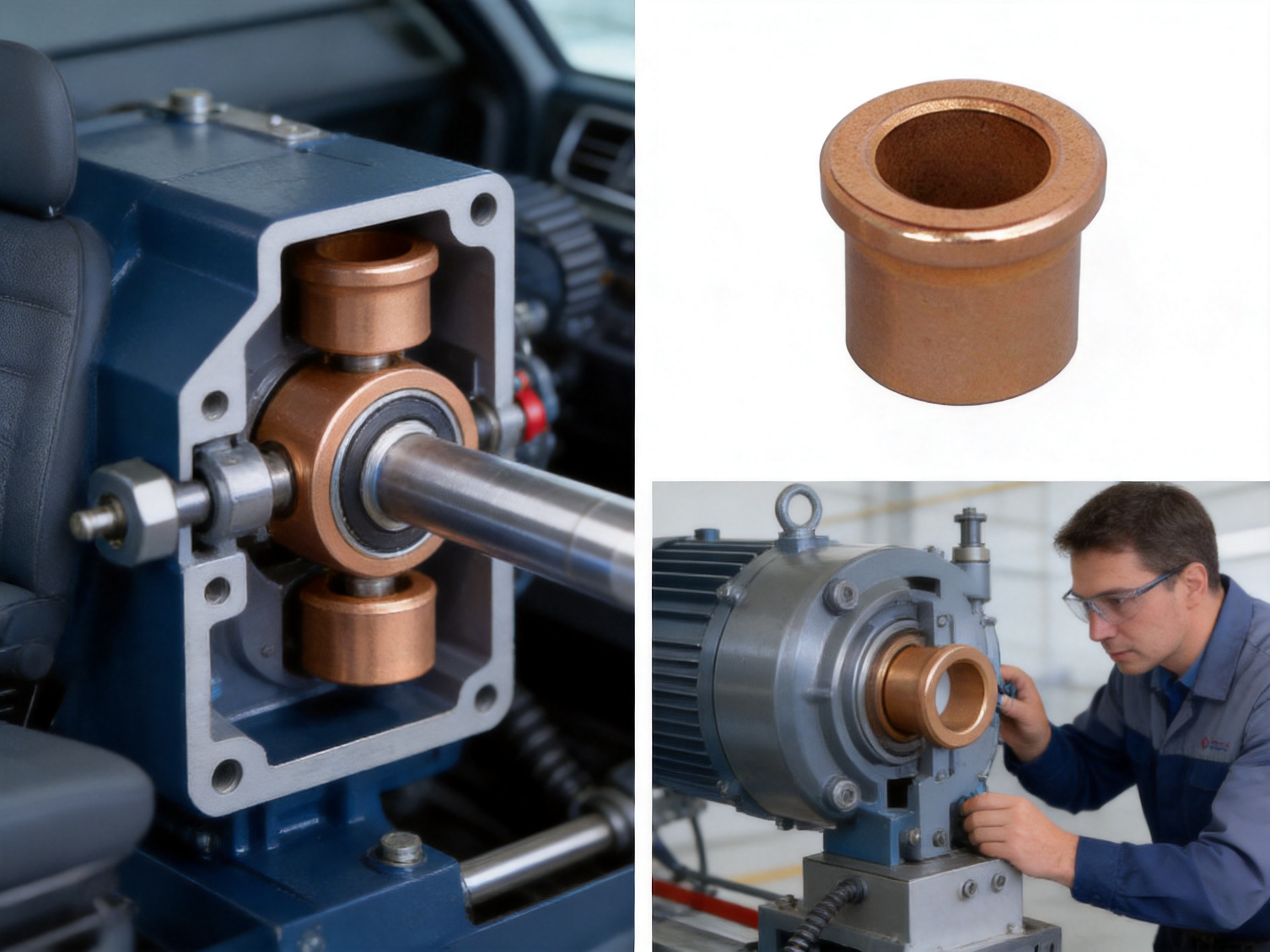
Automotive mechanisms often contain compact moving parts that operate repeatedly and may be difficult to lubricate after assembly. Oil-impregnated bronze bushings can be used in seat adjustment mechanisms, windshield wiper drives, sunroof systems, fan motors, actuator assemblies, and selected hinge or linkage designs.
The flange can help position the bushing inside a bracket or housing, while the self-lubricating structure supports smooth operation over repeated cycles. Automotive applications require careful evaluation of temperature, vibration, shock, dust, water exposure, and lubricant compatibility.
Household Appliances
Washing machines, air-conditioning units, vacuum cleaners, fans, mixers, and other appliances require components that operate quietly and consistently. The oil-impregnated bronze structure can help reduce friction and noise in motors, pivots, drive mechanisms, and adjustment systems.
Appliances may also benefit from the bushing’s compact form and low maintenance requirements. Since many consumer products are produced in high volumes, dimensional repeatability and cost-effective powder metallurgy manufacturing are important advantages.
Industrial Automation
Conveyor systems, packaging machinery, textile equipment, printing equipment, assembly machines, and automated actuators often perform repeated movements for long operating periods. Maintenance downtime can interrupt production and increase operating costs.
Flange bushings can support guide mechanisms, pivot points, rollers, levers, linkages, and low-to-medium-speed rotary shafts. Their integrated locating feature can simplify assembly, while the oil reservoir reduces the need for frequent manual lubrication.
Agricultural Machinery
Agricultural equipment contains numerous pivots and moving joints exposed to vibration, dust, intermittent operation, and changing temperatures. Oil-impregnated bushings may be used in selected linkage systems, control mechanisms, compact actuators, and rotating components.
Applications exposed to abrasive dirt or water require appropriate seals, shields, shaft materials, and installation designs. The bushing itself should not be treated as immune to contamination; environmental protection remains an important part of the overall bearing system.
Hydraulic and Pneumatic Equipment
Hydraulic and pneumatic systems contain valves, actuators, levers, guide mechanisms, and control components that may require precise, low-friction movement. A suitable bronze flange bushing can provide stable support and positioning in selected non-fluid-contacting areas.
Engineers must confirm compatibility with hydraulic fluids, additives, temperature ranges, and pressure conditions. The bearing application should be separated from direct fluid exposure unless the material and lubricant have been specifically validated for that environment.
Power Tools and Compact Equipment
Power tools and portable equipment demand compact parts that can tolerate vibration and repeated movement. Oil-impregnated bushings can be used in switches, triggers, fan assemblies, gear mechanisms, and pivot points when the load and speed are within suitable limits.
Robotics and Smart Manufacturing
Robotic joints, small actuators, automatic positioning systems, and compact gear drives often require low noise, reliable movement, and minimal service intervention. The flange design can help control axial position in space-constrained assemblies, while the porous bronze structure offers a practical self-lubricating solution for selected joints and mechanisms.
10. Design and Selection Considerations
Choosing the correct bushing requires more than matching the bore diameter. Engineers should consider the complete operating profile.
Load
Radial load, axial load, shock load, and load distribution affect bearing life. The projected bearing area is commonly considered together with the applied load to estimate bearing pressure. If the load is concentrated or misaligned, the actual contact pressure may be higher than the nominal value.
Speed and Movement Type
Continuous rotation, intermittent rotation, oscillation, reciprocation, and short-stroke movement create different lubrication conditions. A bushing suitable for low-speed oscillation may not be suitable for continuous high-speed rotation. The frequency and duration of motion should be included in the evaluation.
Temperature
Temperature affects oil viscosity, material dimensions, oxidation behavior, and clearance. High temperatures may accelerate oil loss or reduce lubricant film strength. Low temperatures may increase starting friction. The selected oil and material must be compatible with the complete operating range.
Shaft Condition
The shaft should have suitable hardness, roundness, surface finish, and corrosion resistance. A rough or soft shaft can accelerate bushing wear. Sharp edges, burrs, or poor chamfers may damage the bushing during installation.
Clearance
Correct running clearance is essential. Clearance should account for shaft size, bushing bore, housing interference, thermal expansion, speed, load, and lubricant behavior. Press-fitting the bushing into a housing can reduce the bore diameter, so the final assembled clearance should be considered rather than relying only on the free-state bore.
Housing and Installation
The housing should be rigid, clean, properly aligned, and dimensionally suitable. Installation tools should apply force evenly and avoid impact on the flange. Pressing through the bore or striking the flange directly may deform the component or damage the bearing surface.
Contamination
Dust, metal particles, fibers, water, and chemical contaminants can affect the lubricant and sliding surface. Seals, shields, filters, protective covers, and proper cleaning procedures can significantly improve service life in contaminated environments.
11. Customization and OEM/ODM Capabilities
Many equipment manufacturers require bushings that differ from standard catalog dimensions. Customization may involve bore diameter, outer diameter, overall length, flange diameter, flange thickness, chamfer geometry, oil type, tolerances, surface finish, packaging, and inspection requirements.
Custom powder metallurgy tooling can produce complex flange profiles and repeated dimensions efficiently. For smaller design changes, secondary machining may provide flexibility without requiring a completely new forming tool. The best approach depends on annual volume, geometry, tolerance, material specification, and cost objectives.
OEM and ODM cooperation generally begins with a technical drawing, sample, three-dimensional model, or application description. Important information includes load, speed, motion pattern, temperature, shaft material, housing material, environment, expected service life, and maintenance conditions. A manufacturer can then recommend material, oil content, clearance, tolerances, and manufacturing route.
Prototype samples can be used to verify fit, movement, noise, temperature, and installation behavior. For safety-critical or high-cycle applications, validation testing under representative conditions is recommended before mass production.
Jiande Welfine Technology Co., Ltd. provides customized powder metallurgy bushings and precision components according to customer drawings, samples, and technical specifications. This capability allows the company to support both standard product supply and application-specific development.
12. Manufacturing Strengths of Jiande Welfine Technology Co., Ltd.
Jiande Welfine Technology Co., Ltd. was established in 2001 and specializes in powder metallurgy sintering, self-lubricating bushings, oil-impregnated bearings, and related precision components. The company integrates research and development, production, quality management, and sales, allowing technical decisions to be coordinated across the manufacturing process.
The company operates a production base covering approximately 13,039 square meters and employs more than 150 skilled personnel. Its equipment includes high-efficiency presses, high-temperature sintering furnaces, precision forming machines, machining equipment, and testing facilities. This combination supports controlled production from powder preparation through final inspection.
Integrated Process Management
Managing multiple operations within one manufacturing system helps improve traceability and communication. Powder preparation, compaction, sintering, sizing, machining, oil impregnation, inspection, and packaging can be coordinated according to a unified specification.
Engineering and Research Support
Experienced engineering and research teams can assist with material selection, tool design, dimensional optimization, clearance recommendations, production feasibility, and performance improvement. This is particularly valuable when customers are developing a new mechanism or converting from a conventional lubricated bushing.
Advanced Production Equipment
High-efficiency presses provide controlled compaction for repeatable green parts. High-temperature sintering furnaces support stable thermal processing and atmosphere control. Precision forming and machining equipment help achieve the dimensional accuracy required for shaft and housing interfaces.
Quality Certifications
The company operates according to internationally recognized quality-management requirements and has obtained ISO 9001:2015 and IATF 16949:2016 certifications. ISO 9001 supports systematic quality planning, process control, corrective action, and customer-focused management. IATF 16949 is particularly relevant to automotive supply chains and emphasizes process consistency, risk management, traceability, and continual improvement.
OEM and ODM Service
By accepting customer drawings, samples, and technical specifications, the company can produce application-specific bushings and sintered metal components. This service supports manufacturers that require controlled dimensions, customized flange structures, special packaging, or a defined production-validation process.
The combination of more than two decades of industry experience, dedicated equipment, engineering capability, and certified management systems gives customers a stronger basis for long-term supply cooperation.
13. Cost and Lifecycle Benefits
The purchase price of a bushing is only one part of its total cost. Maintenance labor, replacement frequency, downtime, lubricant consumption, assembly time, and inventory requirements can have a greater financial impact over the equipment’s service life.
A self-lubricating flange bushing can reduce the need for lubrication points and maintenance access. If the bushing operates reliably for the required service interval, the equipment owner may benefit from fewer shutdowns and lower labor costs. The integrated flange may also reduce the number of separate components required for axial positioning.
Powder metallurgy offers economic advantages for repeated production. The process uses material efficiently and can form complex shapes with limited machining. When tooling and production volumes are properly planned, the cost per part can be competitive with or lower than that of machined alternatives.
Dimensional consistency can also reduce assembly problems. Parts that fit predictably require fewer adjustments, reduce scrap, and support automated installation. For automotive, appliance, and industrial equipment manufacturers, these indirect savings can be significant.
Lifecycle value still depends on correct design. A bushing used beyond its load, speed, temperature, or contamination limits may fail prematurely regardless of its nominal material quality. The greatest economic benefit is achieved when the component is correctly matched to the machine.
14. Installation and Maintenance Recommendations
Before installation, inspect the bushing, shaft, and housing. Remove burrs, chips, rust, and abrasive particles. Confirm that the dimensions and tolerances meet the engineering drawing. The flange should be checked for damage because deformation may affect axial positioning.
Use a suitable press or installation fixture. Apply force evenly and align the bushing with the housing bore. Do not hammer directly on the flange or use tools that can score the bearing surface. If the bushing has a defined orientation, install it according to the assembly drawing.
Check the shaft surface before insertion. The shaft should be clean, appropriately finished, and free from sharp edges. A lead-in chamfer can help prevent damage to the bore during assembly.
After installation, verify the running clearance and movement. The shaft should rotate or slide smoothly without binding. Listen for abnormal noise and check for excessive temperature during initial operation. Early monitoring can identify misalignment, insufficient clearance, excessive load, or contamination.
Although routine lubrication may not be necessary under normal conditions, the equipment should still be inspected as part of its regular maintenance program. Monitoring vibration, noise, temperature, movement resistance, and visible wear can help identify developing problems before they cause equipment failure.
15. Sustainability and Resource Efficiency
Powder metallurgy can contribute to resource efficiency by producing components close to their final geometry. Compared with extensive machining from solid bar stock, near-net-shape forming can reduce scrap and lower the amount of cutting fluid and machining energy required.
The self-lubricating design may also reduce consumption of external grease and oil during the operating life of equipment. Fewer lubrication interventions can reduce packaging waste, maintenance travel, and the risk of lubricant spills.
Longer component service life supports more sustainable equipment operation because replacement parts and associated labor are needed less frequently. However, environmental performance should be evaluated across the entire product lifecycle, including raw materials, processing energy, oil selection, transportation, service, and end-of-life recycling.
As a copper-based metallic product, the bushing may offer opportunities for material recovery at the end of its useful life. Recycling procedures should follow local regulations and should account for any lubricant or contamination remaining in the component.
16. Frequently Asked Questions
What is a Sint B50 oil-impregnated bronze flange bushing?
It is a porous bronze plain bearing produced through powder metallurgy and filled with lubricant through oil impregnation. Its cylindrical bore supports a shaft, while its integrated flange provides positioning and limited axial support.
Does the bushing require regular lubrication?
Under properly selected and controlled operating conditions, the internal oil reservoir can provide self-lubrication and reduce or eliminate routine relubrication. The actual maintenance requirement depends on load, speed, temperature, environment, shaft condition, and service-life expectations.
What does the approximately 18 percent oil content mean?
It indicates that the porous bronze structure retains a significant quantity of lubricant after impregnation. The oil is stored within interconnected pores and can migrate toward the bearing surface during operation.
Can the bushing support axial loads?
The flange can provide positioning and support for limited axial forces. It should not automatically be considered a replacement for a dedicated thrust bearing. Continuous or high axial loads require engineering evaluation of flange geometry, pressure, speed, temperature, and lubrication.
Is Sint B50 suitable for high-speed applications?
Suitability depends on the specific speed, load, clearance, temperature, shaft finish, and heat-dissipation conditions. High-speed applications should be reviewed with the manufacturer and validated through testing when necessary.
Can the flange bushing be used for oscillating motion?
Yes, oil-impregnated bronze bushings are commonly considered for oscillating and intermittent motion. The oscillation angle, frequency, load, reversal rate, and stroke length should be evaluated because these factors influence oil distribution and wear.
What shaft materials are compatible with the bushing?
Compatibility depends on hardness, surface finish, corrosion resistance, and operating conditions. Hardened or suitably finished steel shafts are commonly considered, but the exact shaft specification should be determined by the application design.
Can the bushing operate in dusty or wet environments?
It can be used in some challenging environments when the assembly includes appropriate seals, shields, protective covers, and cleaning procedures. Abrasive particles and water can reduce service life, so environmental protection should be designed into the equipment.
Can customized dimensions be produced?
Yes. Custom bore sizes, outer diameters, lengths, flange dimensions, tolerances, oil specifications, and other features can be developed according to drawings, samples, and technical requirements.
What information should be provided when requesting a quotation?
Useful information includes the part drawing or sample, annual quantity, shaft size and material, housing dimensions, radial and axial loads, speed, movement type, temperature, environmental conditions, expected service life, and packaging requirements.
How does powder metallurgy reduce production cost?
Powder metallurgy forms parts close to their final shape, which can reduce material waste and machining time. It is especially efficient for medium- and high-volume production of repeated components.
How should the quality of a sintered bronze bushing be evaluated?
Important factors include material consistency, density, porosity, oil content, dimensional accuracy, bore surface finish, flange geometry, hardness, functional performance, and the supplier’s process-control and quality-management systems.
What certifications does the manufacturer hold?
Jiande Welfine Technology Co., Ltd. has obtained ISO 9001:2015 and IATF 16949:2016 certifications. These certifications support systematic quality management and process control, including requirements relevant to automotive manufacturing.
17. Conclusion
The Sint B50 oil-impregnated bronze flange bushing is a practical solution for equipment designers seeking a combination of self-lubrication, wear resistance, dimensional consistency, compact structure, and reduced maintenance. Its porous bronze body stores approximately 18 percent oil, allowing lubricant to migrate toward the bearing surface during operation. The integrated flange adds positioning capability and can support limited axial forces while reducing the number of separate assembly components.
Compared with conventional externally lubricated bushings, plastic alternatives, and some rolling-bearing arrangements, the product offers a strong balance of simplicity, quiet operation, compactness, and lifecycle economy. Its greatest advantages are realized in low- and medium-speed rotating, oscillating, and intermittent mechanisms where maintenance access is limited and reliable sliding support is required.
Performance depends on correct engineering selection. Load, speed, temperature, clearance, shaft finish, housing accuracy, contamination, and axial-force requirements must be assessed before production approval. When these factors are controlled, the bushing can contribute to longer service intervals, lower downtime, improved assembly efficiency, and stable equipment performance.
Jiande Welfine Technology Co., Ltd. strengthens this product offering through integrated powder metallurgy manufacturing, precision machining, oil impregnation, engineering support, OEM and ODM customization, and certified quality-management systems. Its modern production base, experienced workforce, advanced equipment, and more than twenty years of industry experience provide a solid foundation for supplying reliable sintered metal components to customers in automotive, appliance, industrial, agricultural, hydraulic, automation, and other sectors.
As machinery continues to move toward higher efficiency, lower maintenance, quieter operation, and smarter manufacturing, self-lubricating bronze flange bushings remain an important component technology. Sint B50 provides a dependable and economical option for manufacturers that require repeatable performance in compact mechanical assemblies.
References
1. ISO 9001:2015, Quality Management Systems—Requirements.
2. IATF 16949:2016, Quality Management System Requirements for Automotive Production and Relevant Service Parts Organizations.
3. ASTM B438/B438M, Standard Specification for Sintered Bronze Bearings.
4. ASTM B312, Standard Test Method for Density of Compacted or Sintered Powder Metallurgy Products.
5. Powder Metallurgy Association, Technical Principles of Powder Metallurgy Manufacturing.
6. European Powder Metallurgy Association, Design and Application Guidance for Sintered Bearings.
7. Engineering references on plain-bearing design, oil-impregnated bronze materials, porosity control, and tribological performance.
Product: Sint B50 Powdered Metallurgy Oil-Impregnated Bronze Flange Bushing
Related products
-
-
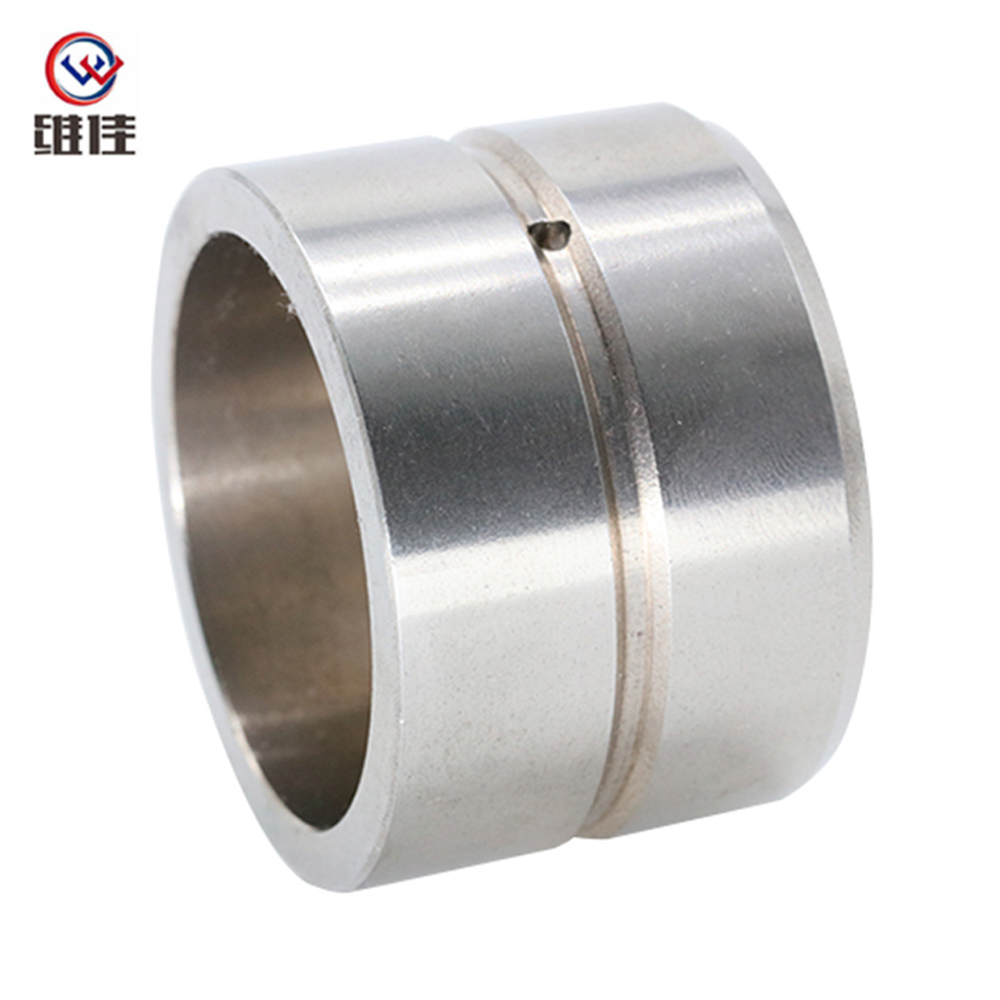
Our sintered bronze self-lubricating bearings are engineered for demanding industrial applications where traditional lubrication is impractical. Designed with advanced powder metallurgy technology, th...
See Details
Copyright © Jiande Welfine Technology Co., Ltd. All Rights Reserved. Privacy Custom Self-lubricating Sintered Bushing Manufacturers
