 English
 中文简体

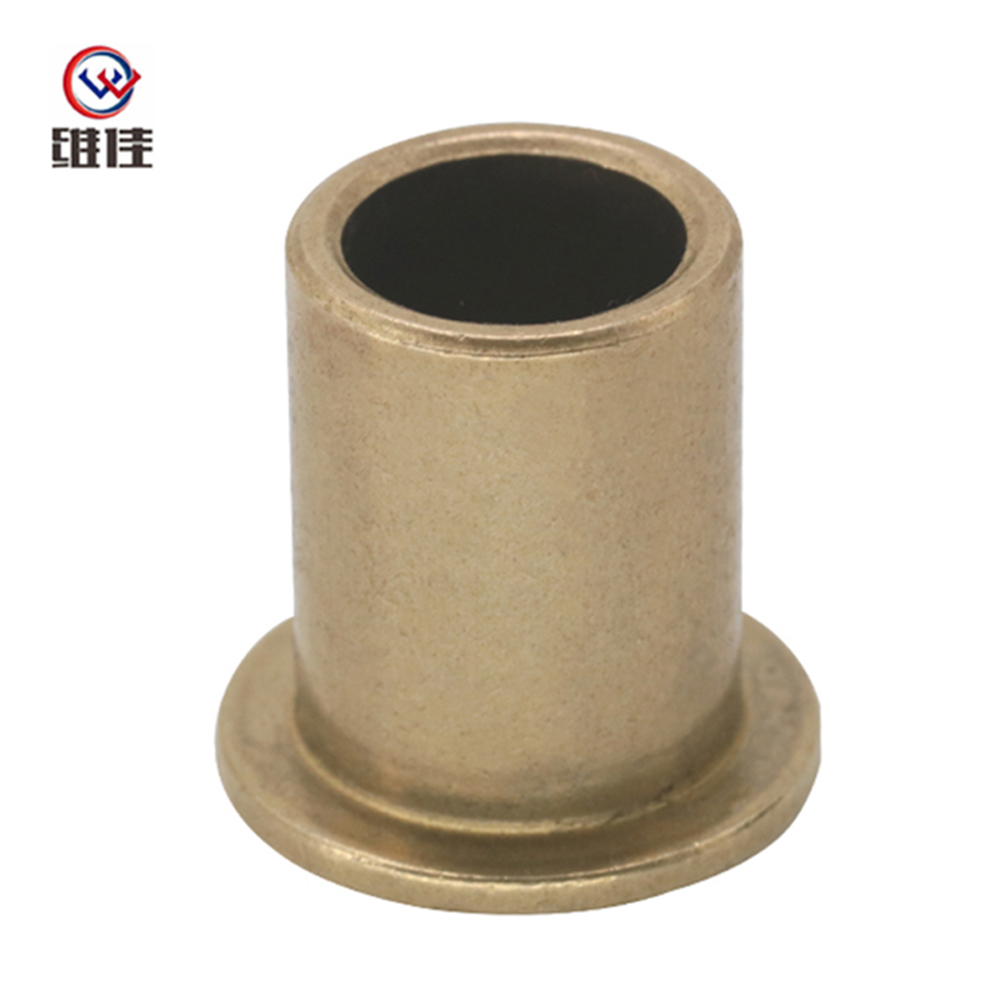
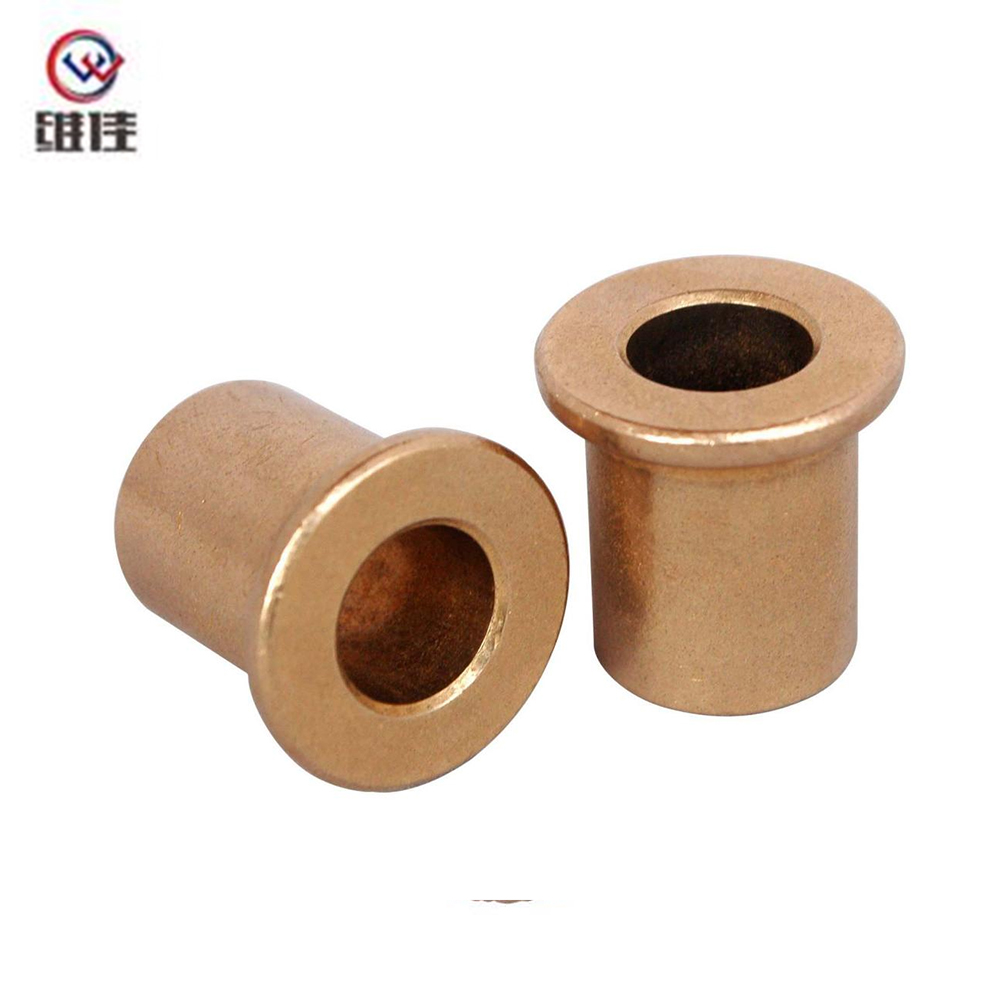
Premium Material: Our flange bushing is crafted from Sint B50 oil-impregnated bronze, featuring an 18% oil content. The high-quality tin bronze material ensures exceptional hardness, wear resistance, ...
See DetailsE-mail us: [email protected]
Tel: +86-15239857375


 Home / Author / Shen Yiruo — Senior After-Sales Service Manager / Sint B50 Oil-Impregnated Bronze Flange Bushings: A High-Performance Self-Lubricating Solution for Modern Machinery
Sint B50 Oil-Impregnated Bronze Flange Bushings: A High-Performance Self-Lubricating Solution for Modern Machinery
 2026.10.04
 Shen Yiruo — Senior After-Sales Service Manager
Content
- 1 What Is a Sint B50 Oil-Impregnated Bronze Flange Bushing?
- 2 Why Powder Metallurgy Is Suitable for Self-Lubricating Bushings
- 3 Material Structure and the Self-Lubricating Mechanism
- 4 How the Flange Design Improves Mechanical Assemblies
- 5 Key Performance Advantages Compared with Conventional Alternatives
- 6 Comparison with Other Bushing and Bearing Technologies
- 7 Manufacturing Process for Sint B50 Flange Bushings
- 8 Quality Control and Engineering Reliability
- 9 Advantages of Working with an Experienced Manufacturer
- 10 Application Areas
- 11 Application Design Considerations
- 12 Customization and OEM/ODM Support
- 13 Total Cost and Lifecycle Value
- 14 Environmental and Production Efficiency Considerations
- 15 Future Development of Sintered Bronze Bushings
- 16 Frequently Asked Questions
- 16.1 Does the Sint B50 oil-impregnated bronze flange bushing require regular lubrication?
- 16.2 What does the 18% oil content mean?
- 16.3 Can the bushing support axial loads?
- 16.4 Is this bushing suitable for high-load applications?
- 16.5 Can the bushing be used in a dirty or dusty environment?
- 16.6 What shaft surface should be used?
- 16.7 How does a flange bushing differ from a standard cylindrical bushing?
- 16.8 Can dimensions be customized?
- 16.9 What quality certifications does the manufacturer have?
- 16.10 What information should be provided for product selection?
- 16.11 Can the bushing be used in high-temperature equipment?
- 16.12 Why choose powder metallurgy instead of machining from solid bronze?
- 17 Conclusion
- 18 References
- 19 Product: Sint B50 Powdered Metallurgy Oil-Impregnated Bronze Flange Bushing
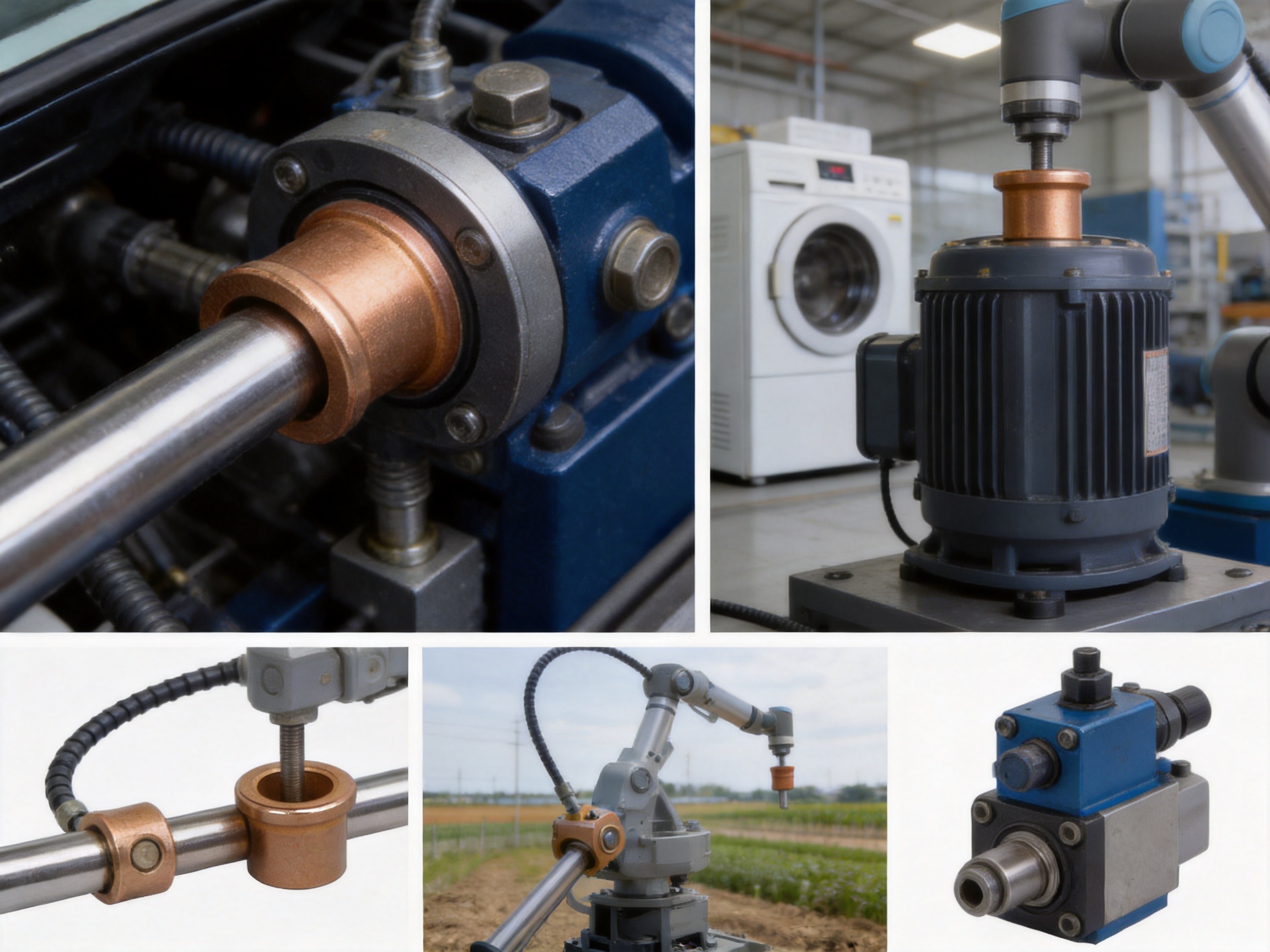
Modern machinery increasingly depends on compact, reliable, and maintenance-efficient components. Although bushings are relatively small compared with motors, frames, gears, and control systems, they have a direct influence on equipment movement, noise, energy consumption, service life, and operating stability. A poorly selected bushing can create excessive friction, accelerated wear, vibration, unplanned downtime, and costly repairs. By contrast, a correctly engineered self-lubricating bushing can support continuous operation while reducing maintenance requirements.
The Sint B50 oil-impregnated bronze flange bushing is designed for precisely this purpose. Manufactured through powder metallurgy, the bushing combines a porous sintered bronze structure with approximately 18% impregnated lubricating oil. The result is a self-lubricating plain bearing that can provide stable support for rotating or oscillating shafts without requiring frequent manual lubrication under normal operating conditions.
Its integrated flange gives the component additional positioning capability and allows it to accommodate radial loads together with certain axial forces. This feature can simplify mechanical assemblies by reducing the need for separate washers, retaining rings, spacers, or positioning components. At the same time, the bushing benefits from the dimensional consistency and material efficiency associated with powder metallurgy production.
This article examines the material structure, manufacturing process, performance advantages, application suitability, quality-control requirements, and customization capabilities associated with Sint B50 oil-impregnated bronze flange bushings. It also explains why Jiande Welfine Technology Co., Ltd. is positioned to supply reliable OEM and ODM sintered components for automotive, appliance, industrial, agricultural, hydraulic, and automation applications.
What Is a Sint B50 Oil-Impregnated Bronze Flange Bushing?
A Sint B50 oil-impregnated bronze flange bushing is a porous plain bearing produced by compacting bronze-based metal powder, sintering the compacted material at high temperature, precision sizing or machining the component, and then impregnating its interconnected pores with lubricating oil.
Unlike a rolling bearing, the bushing does not use balls, rollers, cages, or raceways. Instead, a shaft or pin moves directly against the inner bearing surface. The impregnated oil creates a lubricating film between the shaft and the bronze substrate, reducing direct metal-to-metal contact during operation.
The term “flange bushing” refers to the radial bearing sleeve and its integral flange. The sleeve supports the shaft radially, while the flange extends outward from one end. Depending on the assembly design, this flange can provide axial positioning, limit shaft movement, assist installation, and help distribute loads over a larger contact area.
The B50 designation identifies a specific oil-impregnated sintered bronze material or material family used for self-lubricating bearing applications. The product described here contains approximately 18% oil. This oil content provides a useful balance between lubricant storage capacity, mechanical strength, dimensional stability, and wear resistance.
The bushing is especially suitable for equipment that requires dependable movement but has limited access for regular lubrication. It can be used in rotational, oscillating, or sliding applications when the load, speed, temperature, shaft condition, and surrounding environment are within the material’s suitable operating range.
Why Powder Metallurgy Is Suitable for Self-Lubricating Bushings
Powder metallurgy is particularly effective for producing self-lubricating bushings because it allows manufacturers to create a controlled porous structure. Conventional machining from solid bronze produces a dense material. While dense bronze can offer excellent strength and machinability, it does not naturally provide internal reservoirs for storing and releasing oil.
In powder metallurgy production, carefully selected metal powders are blended to achieve the required chemical composition and performance characteristics. The mixture is then placed into a precision die and compacted under high pressure. This creates a near-net-shape component with a network of microscopic pores remaining between the particles.
The compact is subsequently sintered in a controlled furnace atmosphere. During sintering, the metal particles bond together and develop the mechanical strength required for service. The process preserves a carefully controlled level of interconnected porosity rather than eliminating all internal voids.
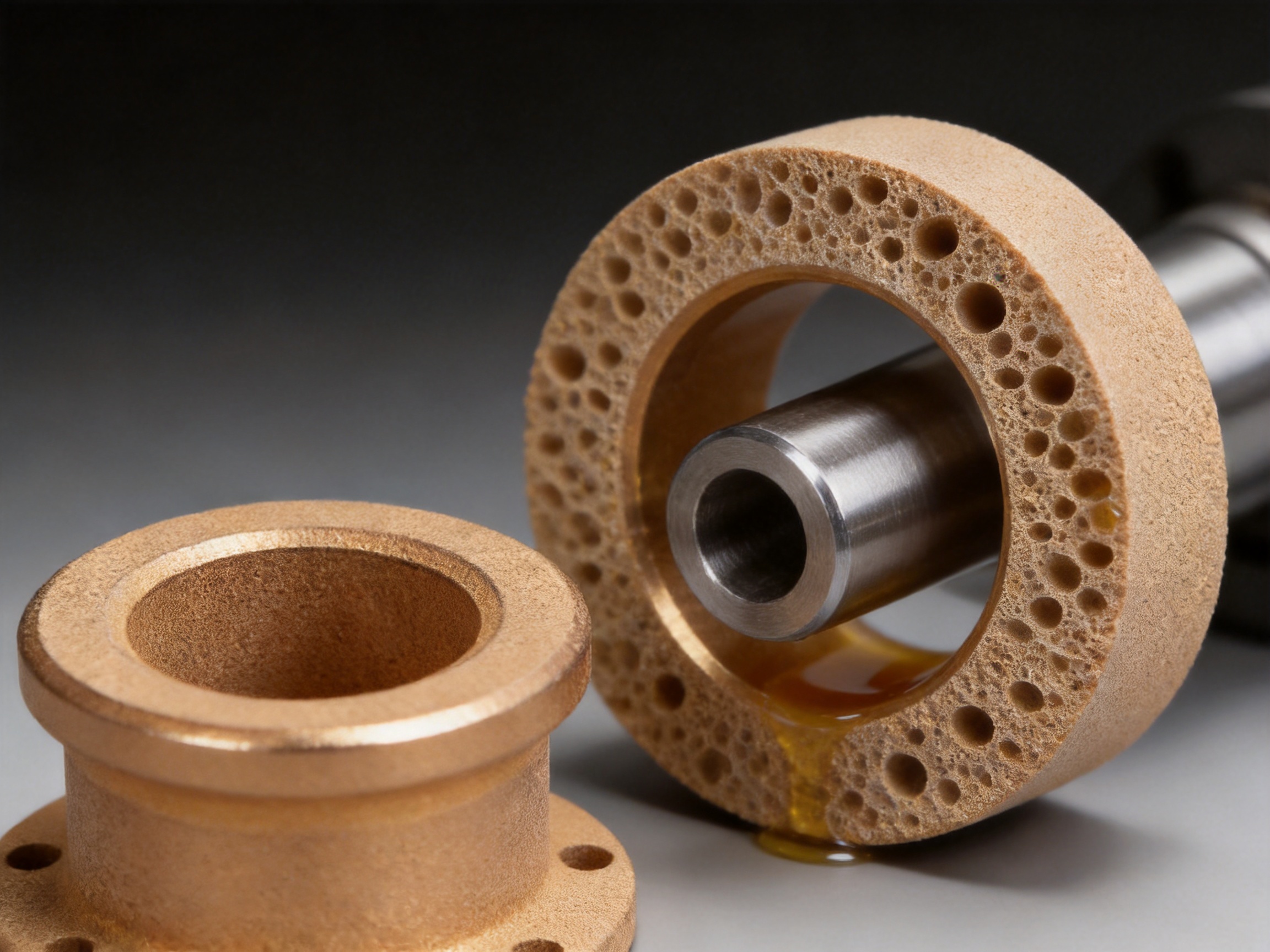
These pores perform two important functions. First, they act as reservoirs that hold lubricating oil. Second, they provide pathways through which oil can move between the internal structure and the bearing surface. The pore network must be carefully controlled because it directly affects both lubrication performance and load-bearing capacity.
If porosity is too low, the bushing may not store enough oil and may lose its self-lubricating advantage. If porosity is too high, the material may have insufficient density and strength for the intended load. Effective powder metallurgy therefore requires accurate powder formulation, stable compaction, controlled sintering, and appropriate inspection.
Compared with machining bushings from solid stock, powder metallurgy can also reduce material waste. The forming process produces components close to their final shape, which can reduce cutting operations, scrap, and production time. This is particularly advantageous for high-volume production of standardized or customized bushings.
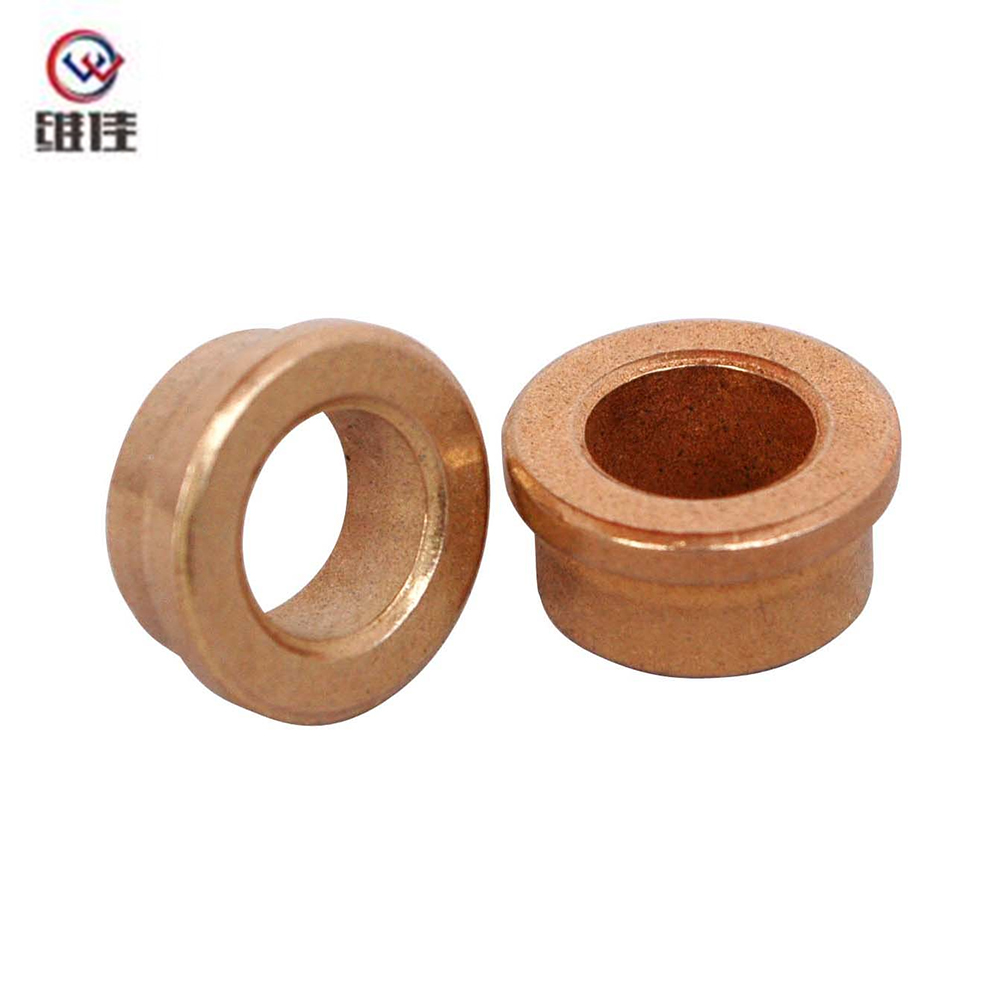
Sint B50 Powdered Metallurgy Oil-Impregnated Bronze Flange Bushing
Material Structure and the Self-Lubricating Mechanism
The self-lubricating performance of the Sint B50 bushing originates from the interaction between its sintered bronze matrix and impregnated oil. The bronze matrix provides the mechanical support needed to carry the shaft and resist wear. The oil fills the pores and forms a lubricating film during movement.
When the machine is operating, friction at the sliding interface generates heat and creates conditions that encourage oil to migrate toward the bearing surface. The oil spreads across the contact zone and reduces friction between the shaft and the bushing. This reduces direct contact, limits adhesive wear, and helps control operating noise.
When the machine stops, the temperature and pressure conditions at the bearing interface change. Capillary action and the porous structure encourage excess oil to move back into the internal reservoirs. This creates a repeating lubrication cycle in which the bushing can release and recover lubricant as operating conditions change.
This mechanism does not mean that the bushing is suitable for every environment without any additional maintenance. Extreme temperatures, very high speeds, contaminated surroundings, insufficient shaft hardness, misalignment, or excessive loading can affect lubricant behavior and wear life. Proper application engineering remains essential.
Under suitable conditions, however, the oil reservoir can provide lubrication for a long operating period without routine grease or oil application. This is particularly valuable in locations where manual lubrication is difficult, dangerous, expensive, or simply impractical.
Role of the Bronze Matrix
The bronze matrix must provide more than a container for oil. It must resist deformation, support the shaft, tolerate repeated loading, and maintain a stable bearing surface. Tin bronze is widely used for this type of application because it combines useful hardness, wear resistance, dimensional stability, and compatibility with many steel shafts.
The material also provides a practical balance between strength and conformability. Minor variations in alignment or surface condition can sometimes be accommodated more effectively than with a very hard and brittle bearing material. Nevertheless, the shaft and housing must still be manufactured and assembled according to appropriate engineering requirements.
Importance of Oil Content
The approximately 18% oil content specified for this bushing is an important performance characteristic. A sufficient oil volume supports long-term lubrication, while the bronze framework maintains the component’s structural integrity.
Oil selection also matters. Viscosity, oxidation stability, temperature capability, and compatibility with the application environment can influence performance. For specialized applications, the impregnation oil may need to be evaluated against operating temperature, speed, load, surrounding chemicals, and expected service life.
How the Flange Design Improves Mechanical Assemblies
A standard cylindrical bushing supports radial movement but may require additional components to control axial position. A flange bushing integrates a radial sleeve with an axial shoulder. This integrated design can simplify the structure of the machine and reduce the total number of parts.
When a shaft or rotating component is subjected to both radial and axial forces, the flange can provide an effective locating surface. It can help prevent the bushing from moving deeper into the housing and can also limit axial movement of the supported component, depending on the assembly configuration.
The flange may also improve installation consistency. During assembly, the flange provides a physical stop that helps control insertion depth. This can be useful in automated production lines where consistent placement is necessary for reliable operation.
Fewer components can mean fewer potential failure points. A design that uses an integrated flange may eliminate a separate washer, retaining ring, or spacer. This can reduce assembly labor, simplify inventory management, and lower the risk of incorrect installation.
The flange does not automatically make the bushing suitable for unlimited axial loading. Engineers must evaluate the flange diameter, thickness, contact area, material strength, surface pressure, and expected load direction. In many applications, the flange is best understood as an axial locating and supporting feature rather than a substitute for a dedicated thrust bearing.
Compact Design Advantages
Space efficiency is a major concern in automotive systems, appliances, power tools, actuators, and compact automation equipment. An integrated flange can provide radial support and positioning within a single compact part.
This can be especially useful where the surrounding housing has limited room for additional retaining hardware. The result may be a lighter, shorter, and more straightforward assembly without compromising the basic support function of the bearing.
Key Performance Advantages Compared with Conventional Alternatives
The Sint B50 oil-impregnated bronze flange bushing offers several advantages over conventional dry bushings, manually lubricated bronze bushings, and certain rolling-bearing solutions. The most suitable comparison depends on the application, but the following characteristics explain why sintered bronze remains widely used.
Reduced Lubrication Maintenance
Traditional solid bushings often require scheduled grease or oil application. In equipment with many bearing points, this can increase maintenance labor and create inconsistent lubrication practices. A self-lubricating bushing stores lubricant internally and releases it during operation, reducing the need for frequent manual intervention.
This advantage is important for machinery installed in inaccessible locations, enclosed mechanisms, elevated structures, production lines, and equipment that must remain operational for long periods. Reduced lubrication requirements can also lower the risk of over-lubrication, which may attract dust or contaminate nearby components.
Good Wear Resistance
The sintered bronze structure provides a durable sliding surface for correctly selected applications. The combination of a supportive metal matrix and a continuously replenished oil film helps reduce abrasive and adhesive wear.
Wear resistance depends on the actual operating conditions. Load, speed, temperature, shaft hardness, surface finish, alignment, contamination, and duty cycle all affect the final result. The product should therefore be selected using application data rather than relying only on general material descriptions.
Lower Operating Noise
Rolling bearings can produce noise from rolling elements, cages, raceways, and vibration. Dry sliding bushings may also become noisy when friction increases. The oil film in an oil-impregnated bronze bushing helps create smoother sliding contact, which can reduce friction-related noise and vibration.
This makes the bushing attractive for household appliances, office equipment, compact motors, ventilation systems, medical equipment, and other applications where quiet operation is important.
High Dimensional Repeatability
Powder metallurgy allows repeated production of complex shapes with consistent dimensions. Properly controlled dies, presses, sintering furnaces, sizing operations, and inspection systems support stable production across large quantities.
Dimensional consistency is particularly important for automated assembly. Consistent outer diameters help ensure reliable housing fits, while controlled inner diameters support predictable shaft clearance after final sizing or machining.
Efficient Material Utilization
Producing a bushing close to its final shape can reduce the amount of material removed during machining. This may improve manufacturing efficiency and reduce material waste compared with manufacturing every component from a larger solid bar.
For high-volume programs, the economic benefits can be significant. Lower material waste, shorter cycle times, and reduced secondary machining can contribute to a competitive total cost while preserving the required performance.
Integrated Axial Positioning
The flange provides a functional feature that may otherwise require additional hardware. This can simplify assembly and create a more compact mechanical design. When the flange is correctly engineered for the intended contact conditions, it can improve component positioning and reduce assembly variation.
Comparison with Other Bushing and Bearing Technologies
| Solution | Typical Strength | Potential Limitation | Why Sint B50 May Be Preferred |
|---|---|---|---|
| Solid bronze bushing | High material density and good machining flexibility | Usually requires external lubrication and may involve more machining | Provides internal oil storage and efficient near-net-shape production |
| Plastic or polymer bushing | Low weight and useful chemical resistance | Temperature, load, creep, or dimensional limitations may apply | Offers a metal matrix with good structural support and wear resistance |
| Dry composite bushing | Can operate without liquid lubricant | Performance depends strongly on lining structure and transfer film | Provides oil release from a porous bronze structure |
| Rolling bearing | Low friction at suitable speeds and loads | More components, greater sensitivity to contamination, and possible noise | Uses a compact sliding design with fewer moving parts |
| Grease-lubricated steel bushing | Simple construction and potentially high strength | Requires scheduled lubrication and sealing considerations | Reduces routine relubrication requirements |
This comparison does not suggest that one bearing type is universally superior. Rolling bearings may be preferable for high-speed rotation, while polymer or composite materials may be better for specific chemical or dry-running conditions. The Sint B50 bushing is most valuable when the equipment requires a compact metal sliding bearing, stable support, low maintenance, and self-lubricating capability.
Manufacturing Process for Sint B50 Flange Bushings
Reliable performance depends on more than the nominal material designation. Every stage of production influences the final porosity, strength, oil retention, dimensions, surface condition, and service behavior of the bushing.
1. Powder Selection and Preparation
Production begins with the selection of copper-based alloy powders and other controlled raw materials. Particle size distribution, chemical composition, flowability, compressibility, cleanliness, and storage condition all influence the compaction process.
Consistent powder preparation helps ensure that the finished material has a uniform microstructure. Raw materials with unsuitable particle characteristics may create density variation, poor pore connectivity, inconsistent strength, or dimensional instability.
2. Powder Blending
The selected powders are blended to achieve the required composition and processing behavior. Lubricants or forming aids may be incorporated into the powder mixture to improve die filling and compaction performance.
Uniform blending is important because local variations in composition can lead to differences in hardness, wear resistance, shrinkage, and oil absorption. Controlled mixing procedures help establish repeatable conditions from batch to batch.
3. Precision Compaction
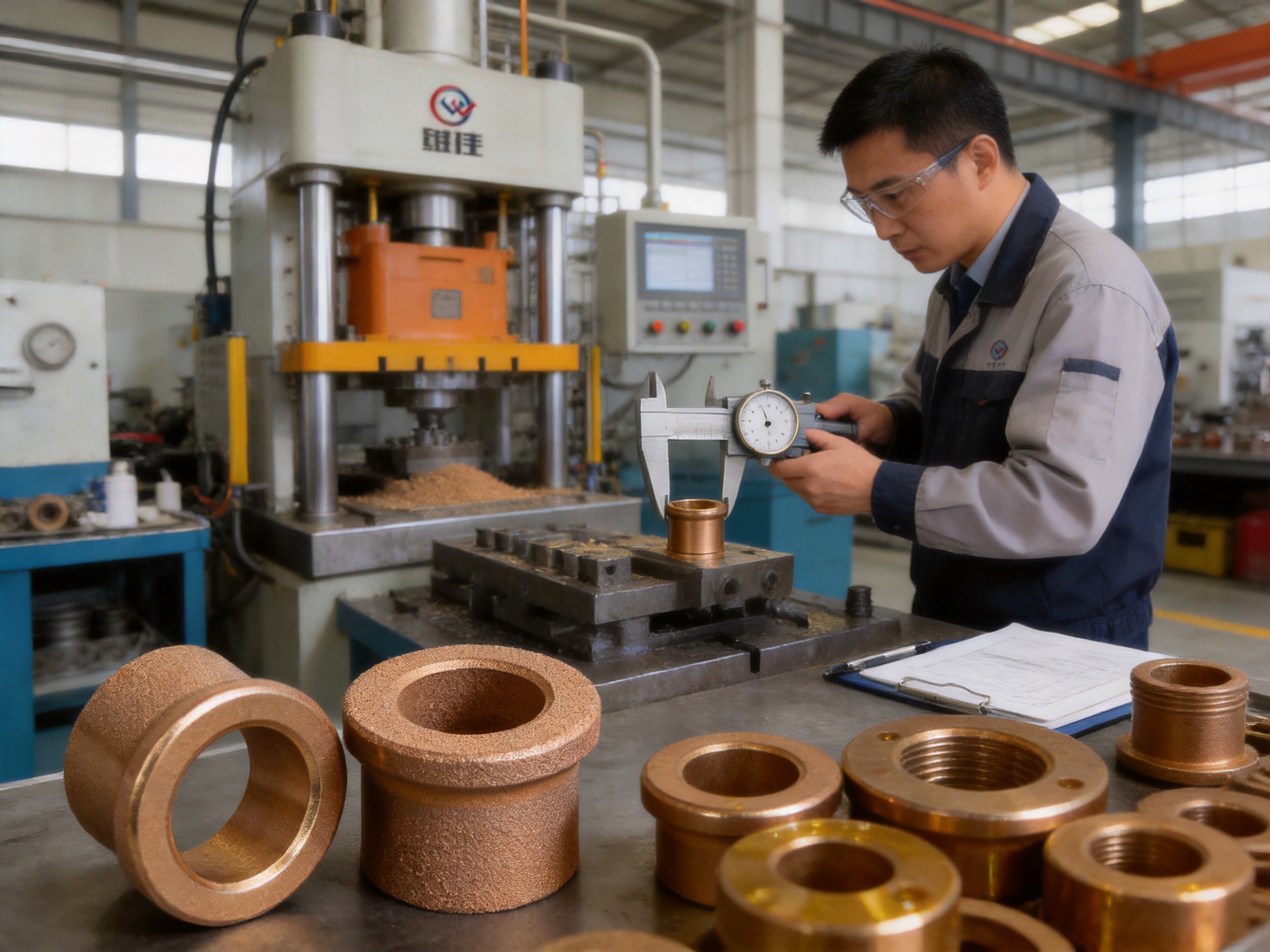
The blended powder is placed into a forming die and compacted under high pressure. The die is designed to create the cylindrical body and integral flange in a controlled near-net shape.
Compaction pressure, filling consistency, tooling condition, press alignment, and ejection behavior all influence green density. Uneven density can result in cracking, distortion, dimensional variation, or inconsistent performance after sintering.
Modern powder metallurgy presses and precision forming machines allow manufacturers to control the geometry and density distribution of the component. This is particularly important for flange bushings because the sleeve and flange must remain structurally integrated and dimensionally compatible.
4. Controlled Sintering
The compacted component, often called a green compact before sintering, is heated in a high-temperature furnace under a controlled atmosphere. The temperature profile allows the particles to bond while preserving the designed porous structure.
Sintering temperature, heating rate, holding time, cooling rate, furnace atmosphere, and loading arrangement can all affect the final properties. Excessive sintering may close too many pores, while insufficient sintering may leave the component weak or unstable.
Advanced high-temperature sintering furnaces support repeatable thermal conditions. Stable furnace management is essential for producing bushings with consistent density, strength, dimensional behavior, and oil absorption.
5. Sizing and Precision Machining
After sintering, the bushing may undergo sizing, calibration, or precision machining. These operations help achieve the required inner diameter, outer diameter, flange dimensions, surface finish, and geometric accuracy.
Sizing can improve dimensional repeatability without removing excessive material. Precision machining may be used when the design requires tighter tolerances, special grooves, chamfers, stepped profiles, or customized features.
The final inner surface must provide suitable contact with the shaft. Excessive roughness may increase friction and wear, while an inappropriate clearance may restrict movement or reduce load-carrying stability. Dimensional inspection is therefore a critical part of the process.
6. Cleaning and Oil Impregnation
Before impregnation, the sintered bushing must be cleaned and prepared so that the pores are available to receive the lubricant. Vacuum oil impregnation is commonly used to remove air from the pore network and allow oil to penetrate deeply into the component.
After the vacuum stage, pressure or controlled immersion can help drive oil into the interconnected pores. The bushing is then drained or conditioned to achieve the required oil retention and surface condition.
Uniform oil impregnation is essential. Insufficient penetration can reduce service life, while excess surface oil may affect handling, assembly, or nearby components. The process must therefore be carefully controlled and verified.
7. Final Inspection and Packing
Finished bushings are inspected for dimensions, appearance, surface condition, flange integrity, oil condition, and other customer-specified requirements. Depending on the application, testing may include density measurement, hardness evaluation, dimensional sampling, oil-content verification, and functional performance testing.
Appropriate packaging protects the bushings from contamination, impact, corrosion, and oil loss during storage and transportation. Clear identification and batch traceability also support quality management and customer service.
Quality Control and Engineering Reliability
A high-quality sintered bushing supplier must control both product characteristics and process stability. Inspection of only the final dimensions is not enough because the internal pore structure and oil distribution strongly influence performance.
Raw Material Control
Raw material inspection helps confirm that powders meet the required chemical and physical specifications. Consistent copper and tin content, suitable particle morphology, and controlled contamination levels support stable production.
Density and Porosity Control
Density and porosity are closely related to oil storage capacity, mechanical strength, and wear behavior. The target must be selected according to the application. A bushing used for a relatively high radial load may require a different density balance from one used for a light-load, low-friction mechanism.
Dimensional Inspection
Critical dimensions typically include inner diameter, outer diameter, flange diameter, flange thickness, total length, concentricity, perpendicularity, and surface finish. Inspection methods may include gauges, micrometers, coordinate measurement equipment, optical systems, or customized fixtures.
Process Traceability
Traceability connects raw material batches, forming conditions, sintering records, machining operations, oil impregnation parameters, inspection results, and packing information. This creates a documented production history that supports troubleshooting and continuous improvement.
Quality Management Systems
Jiande Welfine Technology Co., Ltd. operates under ISO 9001:2015 and IATF 16949:2016 quality management certifications. ISO 9001 provides a structured framework for quality planning, process control, customer requirements, corrective action, and continual improvement. IATF 16949 is particularly relevant to automotive supply chains because it emphasizes defect prevention, variation reduction, traceability, and process discipline.
Certifications do not replace product testing or application engineering, but they indicate that the manufacturer has established formal systems for managing quality and production consistency. For customers purchasing large quantities or integrating bushings into safety-sensitive assemblies, this type of system is an important supplier qualification factor.
Advantages of Working with an Experienced Manufacturer
Supplier capability is a major factor in the performance of powder metallurgy components. A bushing can meet a drawing dimension yet fail in service if the material composition, porosity, impregnation, or process consistency is not properly controlled.
Jiande Welfine Technology Co., Ltd. was established in 2001 and has more than two decades of experience in powder metallurgy sintering and related precision machining. Its production base covers approximately 13,039 square meters and includes presses, high-temperature sintering furnaces, precision forming equipment, machining resources, and inspection systems.
The company’s capabilities extend beyond standard catalog bushings. Its engineering teams can evaluate customer drawings, samples, dimensional requirements, load conditions, operating speeds, and installation environments. This enables the development of OEM and ODM solutions for customers with special designs or application requirements.
Experience is particularly valuable when a customer needs to balance competing requirements. Increasing density may improve strength but reduce oil storage. Reducing clearance may limit movement, while excessive clearance may increase vibration. Increasing flange size may improve axial support but require more installation space. An experienced manufacturer can help evaluate these trade-offs before mass production.
Integrated control over powder preparation, compaction, sintering, machining, oil impregnation, and inspection also reduces dependence on multiple external suppliers. This can improve communication, shorten development cycles, simplify corrective actions, and support stable long-term production.
Application Areas
Automotive Components
Automotive systems contain many compact moving mechanisms with limited access for maintenance. Sint B50 flange bushings may be used in seat adjustment mechanisms, windshield wiper systems, sunroof assemblies, cooling fan motors, actuator mechanisms, hinges, and other applications involving rotational or oscillating movement.
In these systems, low maintenance and low noise are important. The bushing must also tolerate repeated cycles, vibration, temperature variation, and limited installation space. Final selection should consider the exact duty cycle and the temperature range encountered in the vehicle.
Household Appliances
Washing machines, air-conditioning units, vacuum cleaners, fans, small motors, and other appliances benefit from smooth and quiet movement. Oil-impregnated bronze bushings can support rotating shafts and linkages while reducing the need for service during the product’s expected operating life.
Appliance manufacturers also value repeatable dimensions and cost-effective mass production. Powder metallurgy can support large production volumes while maintaining consistent geometry and minimizing material waste.
Industrial Automation
Conveyor systems, packaging machines, textile equipment, printing equipment, automated actuators, and assembly machinery often operate for long periods. Maintenance interruptions can affect productivity and delivery schedules.
A self-lubricating flange bushing can be useful in guide mechanisms, pivot joints, rollers, linkages, and compact drive systems. Its integrated flange may simplify the design of automated assemblies where accurate positioning and limited component count are important.
Agricultural Equipment
Agricultural machinery often combines repeated motion, vibration, dust, changing temperatures, and difficult service access. Bushings may be used in linkages, adjustment mechanisms, pivots, small actuators, and rotating supports.
Although oil-impregnated bushings can reduce lubrication requirements, environmental contamination must still be considered. Protective seals, suitable shaft surfaces, and appropriate housing designs may be necessary in dusty or abrasive conditions.
Hydraulic and Fluid-Control Systems
Hydraulic equipment includes numerous levers, actuators, pivots, and control mechanisms. Flange bushings can help support these moving elements and provide positioning within compact housings.
Compatibility with hydraulic fluids, additives, cleaning agents, and operating temperatures should be evaluated before approval. The bushing material and impregnation oil must be appropriate for the surrounding environment.
Power Tools and Compact Equipment
Power tools require components capable of handling vibration, repeated cycles, and compact packaging. Self-lubricating bushings can help support fan shafts, adjustment systems, triggers, linkages, and other moving mechanisms.
The bushing’s noise characteristics and dimensional repeatability can also contribute to improved user experience and consistent assembly performance.
Robotics and Smart Manufacturing
Robotic joints, compact gear systems, automated grippers, and linear or oscillating actuators often require low-maintenance support components. As smart factories operate continuously and collect data on machine condition, reducing avoidable maintenance points becomes increasingly important.
In suitable low- to medium-load applications, an oil-impregnated bronze flange bushing can provide a simple and reliable alternative to more complex bearing arrangements. Engineers should assess acceleration, reversal frequency, duty cycle, precision requirements, and environmental exposure.
Application Design Considerations
Correct installation and operating conditions are essential for achieving the expected life of a Sint B50 bushing. The following factors should be reviewed during product selection.
Load and Speed
Bushing performance is influenced by the relationship between load and sliding speed. A higher load generally increases contact pressure, while higher speed increases heat generation and oil movement. The combined load-speed condition must remain within an acceptable range for the material and design.
Radial load should be distributed evenly over the bearing surface. Concentrated loads, shock loads, or edge loading may cause premature wear or deformation. If the application includes substantial axial force, the flange contact area should be evaluated separately.
Shaft Material and Surface Finish
The shaft is part of the bearing system. A suitable shaft material, hardness, straightness, diameter, and surface finish helps create a stable sliding interface. A rough, soft, contaminated, or poorly aligned shaft can damage the bushing and accelerate oil depletion.
In many applications, a hardened and properly finished steel shaft is preferred. The exact specification depends on load, speed, environment, and expected service life.
Housing Fit and Alignment
The housing should provide adequate support without distorting the bushing. Excessive interference may reduce the inner diameter or create damaging stresses, while an insufficient fit may allow the bushing to rotate or move in the housing.
Housing and shaft axes should be aligned. Misalignment can create uneven pressure across the bearing surface, causing edge wear and unstable operation. The flange should also seat flatly against the intended locating surface.
Temperature
Temperature affects oil viscosity, oil evaporation, dimensional stability, and material strength. The intended operating temperature range should be reviewed before selecting the bushing or impregnation oil.
Short-term temperature peaks may have a different effect from continuous high-temperature operation. Customers should provide realistic thermal data to the manufacturer during product development.
Contamination and Sealing
Dust, abrasive particles, water, chemicals, and process residues can affect sliding surfaces. In contaminated environments, seals, shields, protective covers, or suitable housing designs may be required.
While the bushing reduces the need for external lubrication, it is not immune to contamination. Preventing abrasive particles from entering the interface is important for achieving long service life.
Storage and Handling
Oil-impregnated bushings should be stored in clean, dry conditions and protected from excessive heat, moisture, chemicals, and dust. They should be handled carefully to prevent dents, scratches, deformation, and contamination of the bearing surface.
Customization and OEM/ODM Support
Standard dimensions are useful for many projects, but industrial equipment frequently requires customized geometry. The flange diameter, flange thickness, sleeve length, wall thickness, inner diameter, outer diameter, oil type, tolerance, and surface treatment may all need to be adjusted.
Jiande Welfine Technology Co., Ltd. provides OEM and ODM support based on customer drawings, samples, technical specifications, or application requirements. The development process can include design review, material selection, tooling evaluation, prototype production, dimensional verification, performance assessment, and mass-production planning.
Customized features may include stepped outer diameters, special flange profiles, grooves, chamfers, oil holes, locating features, nonstandard lengths, or specific installation tolerances. Any modification must be evaluated against its influence on compaction, sintering, machining, porosity, strength, and oil impregnation.
For customers without a finalized design, application information can help the engineering team recommend a suitable configuration. Useful information includes shaft diameter, housing material, radial load, axial load, rotational or oscillating speed, cycle frequency, temperature, environment, expected service life, and available installation space.
Early technical communication is beneficial because tooling and production methods can be optimized before the design is frozen. It can also prevent problems such as insufficient flange support, unsuitable clearance, excessive wall thinness, difficult ejection, or poor oil access during impregnation.
Total Cost and Lifecycle Value
The purchase price of a bushing is only one part of its total cost. Maintenance labor, replacement frequency, machine downtime, lubricant consumption, inventory requirements, and assembly time can have a greater financial impact over the life of the equipment.
The self-lubricating design of the Sint B50 bushing can reduce routine lubrication work and help minimize maintenance interruptions. Its flange can reduce the number of separate assembly components. Powder metallurgy production can support competitive pricing in medium- and high-volume programs through efficient material use and repeatable forming.
Lower operating noise and stable movement may also provide indirect value by improving product quality, reducing vibration-related wear in neighboring components, and enhancing the user experience of finished equipment.
Lifecycle value depends on proper selection. A bushing that is under-specified for the load or temperature may create premature failure, while an unnecessarily oversized component may increase material and assembly costs. Engineering review should therefore consider both performance requirements and total operating economics.
Environmental and Production Efficiency Considerations
Powder metallurgy can reduce material waste because components are formed close to their final geometry. Compared with producing a bushing entirely by machining from solid bar stock, the process may require less cutting and generate less scrap.
The self-lubricating function can also reduce consumption of external greases and oils during normal operation. Fewer lubrication activities may reduce maintenance-related material use and help prevent lubricant contamination in surrounding equipment.
Environmental performance still depends on the complete manufacturing and service system. Energy consumption during sintering, oil selection, packaging, transportation, service life, and end-of-life treatment should be considered when evaluating sustainability.
Long service life is one of the most practical ways to reduce environmental impact. A durable component that remains in service for an extended period can reduce replacement frequency, production demand, packaging use, and maintenance waste.
Future Development of Sintered Bronze Bushings
Industrial equipment is moving toward greater automation, higher operating efficiency, reduced maintenance, and more compact designs. These trends support continued demand for self-lubricating bushings and other powder metallurgy components.
Future development may focus on improved pore-structure control, higher load capacity, enhanced wear resistance, better dimensional stability, specialized impregnation oils, and more precise forming technology. Digital process monitoring and advanced inspection may further reduce variation and improve traceability.
As robotic and automated systems become more widespread, components will need to operate reliably with fewer service interruptions. Compact flange bushings can support this trend by combining radial support, axial positioning, and self-lubricating performance in one part.
New applications may also emerge in renewable energy equipment, electric mobility, smart appliances, medical devices, automated logistics, and compact precision machinery. The suitability of the material will continue to depend on application-specific engineering, but the underlying benefits of porous bronze and internal oil storage remain highly relevant.
Frequently Asked Questions
Does the Sint B50 oil-impregnated bronze flange bushing require regular lubrication?
Under normal operating conditions and within the recommended load, speed, and temperature range, the bushing is designed to operate without routine external lubrication. Oil stored in the porous bronze structure is released to the bearing surface during operation. Additional lubrication may not be necessary, but application conditions should always be reviewed with the manufacturer.
What does the 18% oil content mean?
The approximately 18% oil content indicates the amount of lubricating oil retained within the porous sintered structure. This internal oil reservoir supports the self-lubricating mechanism. Actual oil retention and performance depend on the pore structure, impregnation process, lubricant characteristics, and operating conditions.
Can the bushing support axial loads?
The flange can support certain axial forces and provide component positioning. However, it should not automatically be treated as a dedicated thrust bearing. The allowable axial load depends on flange geometry, contact area, material strength, speed, temperature, lubrication conditions, and duty cycle.
Is this bushing suitable for high-load applications?
It can be suitable for medium-load and selected higher-load applications when the load-speed relationship, shaft condition, alignment, and temperature are appropriate. A detailed engineering assessment is recommended for heavy shock loads, continuous high-speed operation, or demanding duty cycles.
Can the bushing be used in a dirty or dusty environment?
It can be used in some contaminated environments, but protection from abrasive particles is important. Seals, covers, shields, and suitable housing designs may be required. Dust and abrasive contamination can significantly reduce the service life of any sliding bearing.
What shaft surface should be used?
A clean, properly aligned shaft with suitable hardness and surface finish is generally recommended. The exact requirements depend on the load, speed, temperature, and expected life. A rough, damaged, or excessively soft shaft can cause accelerated bushing wear.
How does a flange bushing differ from a standard cylindrical bushing?
A standard cylindrical bushing primarily provides radial support. A flange bushing includes an integral radial shoulder that can assist axial positioning, installation control, and support for certain axial forces. The flange may also reduce the need for separate retaining hardware.
Can dimensions be customized?
Yes. Customized inner diameters, outer diameters, lengths, flange dimensions, tolerances, profiles, oil specifications, and other features can be developed according to customer drawings, samples, or technical requirements.
What quality certifications does the manufacturer have?
Jiande Welfine Technology Co., Ltd. has obtained ISO 9001:2015 and IATF 16949:2016 certifications. These systems support structured quality management, process control, traceability, continual improvement, and consistent manufacturing.
What information should be provided for product selection?
Important information includes shaft diameter, housing dimensions, radial and axial loads, speed, oscillation angle, operating temperature, duty cycle, environment, expected service life, installation method, and quantity requirements. Drawings, samples, and photographs can also help the engineering team evaluate the application.
Can the bushing be used in high-temperature equipment?
High-temperature suitability depends on the bronze material, impregnation oil, clearance, load, speed, and duration of exposure. Customers should provide the continuous and peak temperatures so that the correct material and lubricant can be evaluated.
Why choose powder metallurgy instead of machining from solid bronze?
Powder metallurgy can create a controlled porous structure for oil storage, reduce material waste, support near-net-shape production, and provide consistent dimensions in high-volume manufacturing. Machined solid bronze may be preferable for some high-strength or special low-volume applications, but it does not naturally offer the same internal oil-reservoir function.
Conclusion
The Sint B50 oil-impregnated bronze flange bushing combines a durable sintered bronze matrix, approximately 18% internal lubricant, controlled porosity, precision dimensions, and an integrated flange design. These characteristics make it a practical self-lubricating solution for rotating, oscillating, and sliding mechanisms that require reliable support and reduced maintenance.
Its advantages include reduced need for external lubrication, good wear resistance, smooth and relatively quiet operation, dimensional consistency, efficient mass production, and simplified assembly. The flange further provides axial positioning and can reduce the number of separate components required in compact mechanical systems.
Performance depends on correct design and application. Load, speed, temperature, shaft finish, housing fit, alignment, contamination, and axial-force conditions must be considered before approval. When these factors are properly managed, the bushing can provide dependable service in automotive systems, appliances, industrial automation, agricultural equipment, hydraulic mechanisms, power tools, and many other applications.
With more than twenty years of experience, a modern 13,039-square-meter production base, advanced pressing and sintering equipment, precision machining capability, professional engineering support, and ISO 9001:2015 and IATF 16949:2016 certifications, Jiande Welfine Technology Co., Ltd. can provide both standard and customized sintered bushing solutions. Its OEM and ODM capabilities allow customers to develop components based on drawings, samples, and specific operating requirements.
For machinery manufacturers seeking a compact, cost-effective, and self-lubricating bearing component, the Sint B50 oil-impregnated bronze flange bushing offers a strong combination of engineering practicality and manufacturing efficiency.
References
1. Powder Metallurgy Design Manual, principles of powder selection, compaction, sintering, density control, and dimensional finishing.
2. ISO 9001:2015, Quality Management Systems—Requirements.
3. IATF 16949:2016, Quality Management System Requirements for Automotive Production and Relevant Service Parts Organizations.
4. ASM Handbook, Volume 7: Powder Metal Technologies and Applications.
5. Engineering Tribology references covering plain bearings, sliding friction, lubrication regimes, wear mechanisms, and bearing design.
6. Technical principles of oil-impregnated sintered bronze bearings, porous-material lubrication, capillary oil migration, and lubricant recovery.
7. Manufacturer technical information concerning Sint B50 oil-impregnated bronze flange bushings, powder metallurgy production, OEM manufacturing, and precision sintered components.
Product: Sint B50 Powdered Metallurgy Oil-Impregnated Bronze Flange Bushing
Related products
-
-
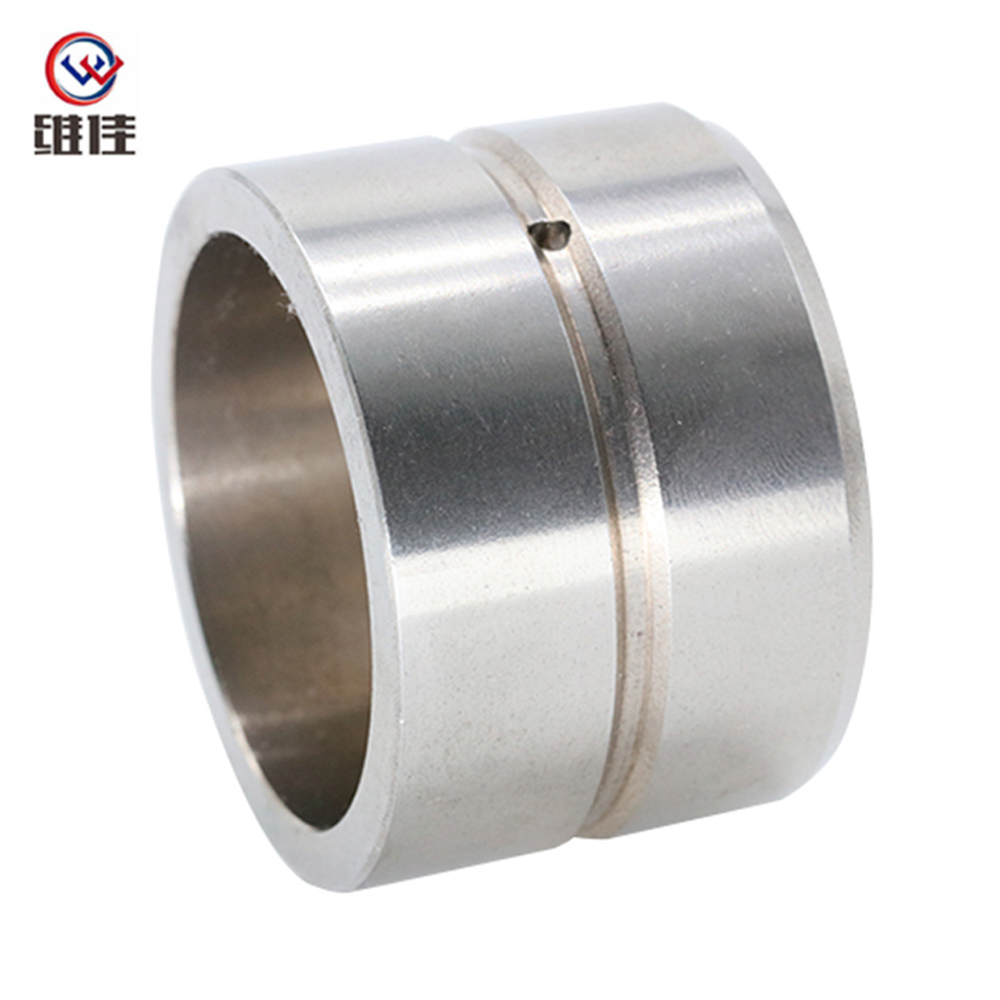
Our sintered bronze self-lubricating bearings are engineered for demanding industrial applications where traditional lubrication is impractical. Designed with advanced powder metallurgy technology, th...
See Details
Copyright © Jiande Welfine Technology Co., Ltd. All Rights Reserved. Privacy Custom Self-lubricating Sintered Bushing Manufacturers
